
Rising Golf Cart Collision Trends in Residential and Resort Communities
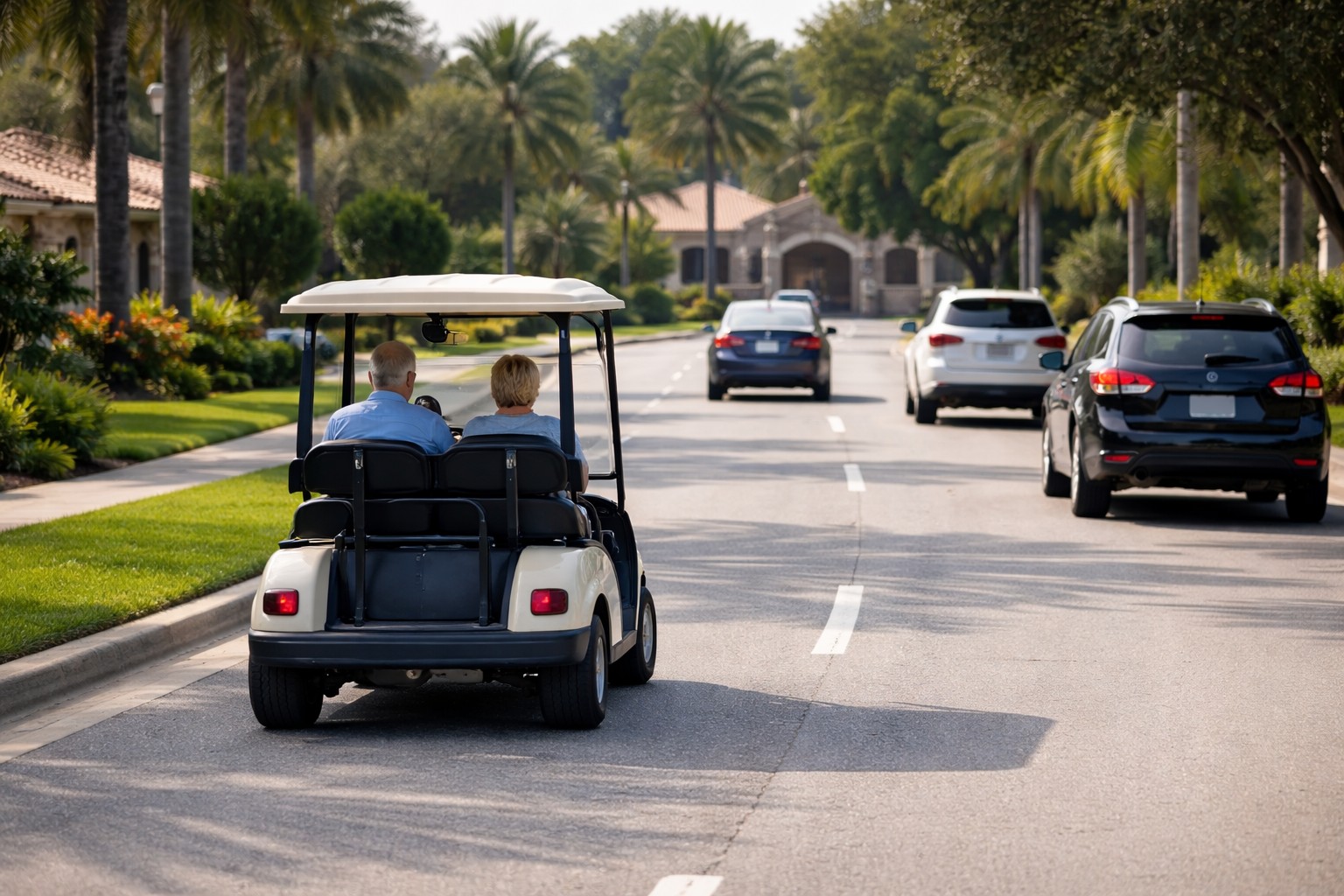
Golf carts are no longer confined to golf courses or private resort grounds. In many residential and mixed use communities, carts are now used for everyday transportation between homes, clubhouses, marinas, shops, and neighborhood amenities. This shift has changed traffic dynamics in places that were not originally designed for cart use. As a result, golf cart collisions are becoming more frequent in both residential neighborhoods and resort style developments.
These collisions often occur because golf carts occupy an unclear space between pedestrian and vehicle traffic. They move faster than foot traffic but lack the visibility, protection, and predictability of passenger vehicles. In communities where carts are common, drivers, pedestrians, and cart operators must all navigate shared spaces with different expectations, increasing the likelihood of conflict.
Expansion of Golf Cart Use in Planned Communities
Golf cart use has expanded rapidly in planned developments, retirement communities, and resort areas. In coastal regions and urban golf communities, carts are often used for short trips that would otherwise require driving. In places such as golf centered neighborhoods in Miami Dade County, residents regularly use carts to move between residential streets, club facilities, marina areas, and nearby commercial zones.
As cart use becomes normalized, exposure increases. Carts frequently operate on internal roadways, cross intersections, and interact with delivery vehicles and rideshare traffic. Many of these roads were designed exclusively for cars, without considering the braking distance, visibility limitations, or stability characteristics of golf carts. This mismatch in design contributes directly to rising golf cart collisions.
Mixed Use Roads and Expectation Failure
One of the primary contributors to golf cart collisions is expectation failure. Drivers of full sized vehicles may not anticipate encountering slow moving carts on neighborhood roads. At the same time, cart operators may assume they are easily visible or treated as standard vehicles, even when roadway design does not support that assumption.
Mixed use environments compress reaction time. Narrow streets, parked cars, landscaping, and elevation changes frequently block sightlines. In resort and marina communities, carts may emerge suddenly from side paths or parking areas. These conditions create moments where neither party has sufficient time or space to react, increasing collision risk.
Visibility Challenges and Nighttime Use
Visibility issues play a significant role in golf cart collisions. Many carts are used during evening hours for dining, social gatherings, or waterfront activities. In these conditions, carts may blend into their surroundings due to limited lighting and inconsistent reflector use.
Nighttime environments introduce glare, shadow pockets, and uneven illumination. Full sized vehicles may not detect carts until they are already close, particularly at intersections or road crossings. In coastal and resort areas where lighting varies widely, these visibility limitations are a recurring factor in residential cart related incidents.
Where Golf Carts Commonly Operate on Public and Community Roads
In many residential and resort communities, golf carts are commonly seen operating on public or semi public roadways, particularly in planned developments designed around cart travel. These roads are typically low speed and residential in character, allowing carts to move between neighborhoods, amenities, and shared spaces.
However, the presence of carts on these roads introduces complexity. Traffic control devices, signage, and roadway markings are usually designed for passenger vehicles, not carts. This inconsistency can create confusion around right of way, lane usage, and turning behavior. Golf cart collisions frequently occur at these transition points, where expectations between carts and vehicles do not align.
Secondary Risk Factors Unique to Golf Carts
Several characteristics unique to golf carts amplify collision risk and injury severity.
- Limited structural protection
Golf carts lack enclosed cabins, airbags, and reinforced frames. Occupants are exposed, increasing vulnerability during even low speed impacts. - Stability limitations
Carts have a higher center of gravity and narrower wheelbase than cars. Uneven pavement, curbs, and sharp turns increase rollover risk. - Operator experience variability
Golf carts are often operated by individuals with varying experience levels, including younger drivers or visitors unfamiliar with community traffic patterns. - Shared pedestrian spaces
In many developments, carts operate near sidewalks, paths, and crossings used by pedestrians and cyclists, increasing the chance of sudden conflicts.
Traffic Density and Community Growth
As residential and resort communities grow, traffic density increases. Delivery vehicles, service trucks, and rideshare traffic now operate alongside golf carts on a daily basis. Seasonal tourism further increases congestion in resort areas, introducing drivers unfamiliar with local cart usage patterns.
This mix of local cart operators and visiting drivers creates unpredictable traffic flow. Reduced escape space and compressed reaction windows make golf cart collisions more likely, particularly at intersections, crossings, and narrow internal roads.
Common Golf Cart Collision Patterns
- Intersection conflicts
Collisions occur when carts enter or cross intersections without being anticipated by approaching vehicles. - Rear end impacts
Vehicles misjudge cart speed and closing distance, leading to sudden braking or contact. - Sideswipe incidents
Narrow roads and shared lanes increase sideswipe risk during passing or turning. - Tip overs and rollovers
Uneven terrain, curb strikes, or sharp turns can destabilize carts even without vehicle contact.
Injury Consequences of Golf Cart Collisions
Injuries from golf cart collisions are often more severe than expected given the low speeds involved. Occupants may be ejected or thrown against hard surfaces due to lack of restraints and enclosure. Head, neck, and extremity injuries are common.
Older occupants face increased injury risk, and soft tissue injuries may develop gradually rather than immediately. These injury patterns highlight why golf cart collisions deserve closer attention within residential traffic environments.
What Happens After a Golf Cart Collision in Residential Communities
After a golf cart collision, the aftermath often feels informal compared to traditional vehicle crashes. These incidents frequently occur in residential neighborhoods or resort properties where traffic control and emergency response may not be immediate. Vehicles are often moved quickly, and environmental details may be overlooked.
This informality can affect how the collision is evaluated later. Roadway layout, lighting conditions, and shared pedestrian space may not be documented. Injuries may not be immediately obvious, especially in lower speed incidents. Understanding how these events unfold after impact helps explain why golf cart collisions are sometimes underestimated despite their potential severity.
Frequently Asked Questions About Golf Cart Collisions
Why are golf cart collisions increasing in residential communities?
Golf cart collisions are increasing as carts are used more frequently outside golf courses, particularly in planned developments and resort style neighborhoods with mixed traffic.
Do golf carts present different risks than passenger vehicles?
Yes. Golf carts lack structural protection such as airbags and reinforced frames, making occupants more vulnerable even at low speeds.
Where do golf cart collisions most often occur?
These collisions commonly occur on neighborhood streets, intersections within gated communities, shared paths, and transition points where carts interact with full sized vehicles.
Are golf cart collisions more dangerous at night?
Nighttime conditions increase risk due to reduced visibility, glare, and inconsistent lighting that make carts harder to detect.
Can injuries from golf cart collisions appear later?
Yes. Soft tissue injuries, head injuries, and joint strain may develop hours or days after a collision as inflammation increases.
Summary
Golf cart collisions are rising as carts become a common form of transportation in residential and resort communities. Mixed use roads, visibility challenges, and inconsistent roadway design create conditions where carts and vehicles interact with limited margin for error. As community layouts evolve and cart use expands, understanding these collision trends helps explain why incidents continue to increase across golf oriented neighborhoods and coastal developments.
Contact Lawlor, White & Murphey Today
If you or someone you know has experienced delayed medical care after a car accident, don’t wait any longer. Your health and your legal rights depend on timely action. Speak with a qualified personal injury attorney who can guide you through the process, help you gather evidence, and fight for the compensation you deserve.
Take the next step—schedule a free consultation with Lawlor, White & Murphey today.