
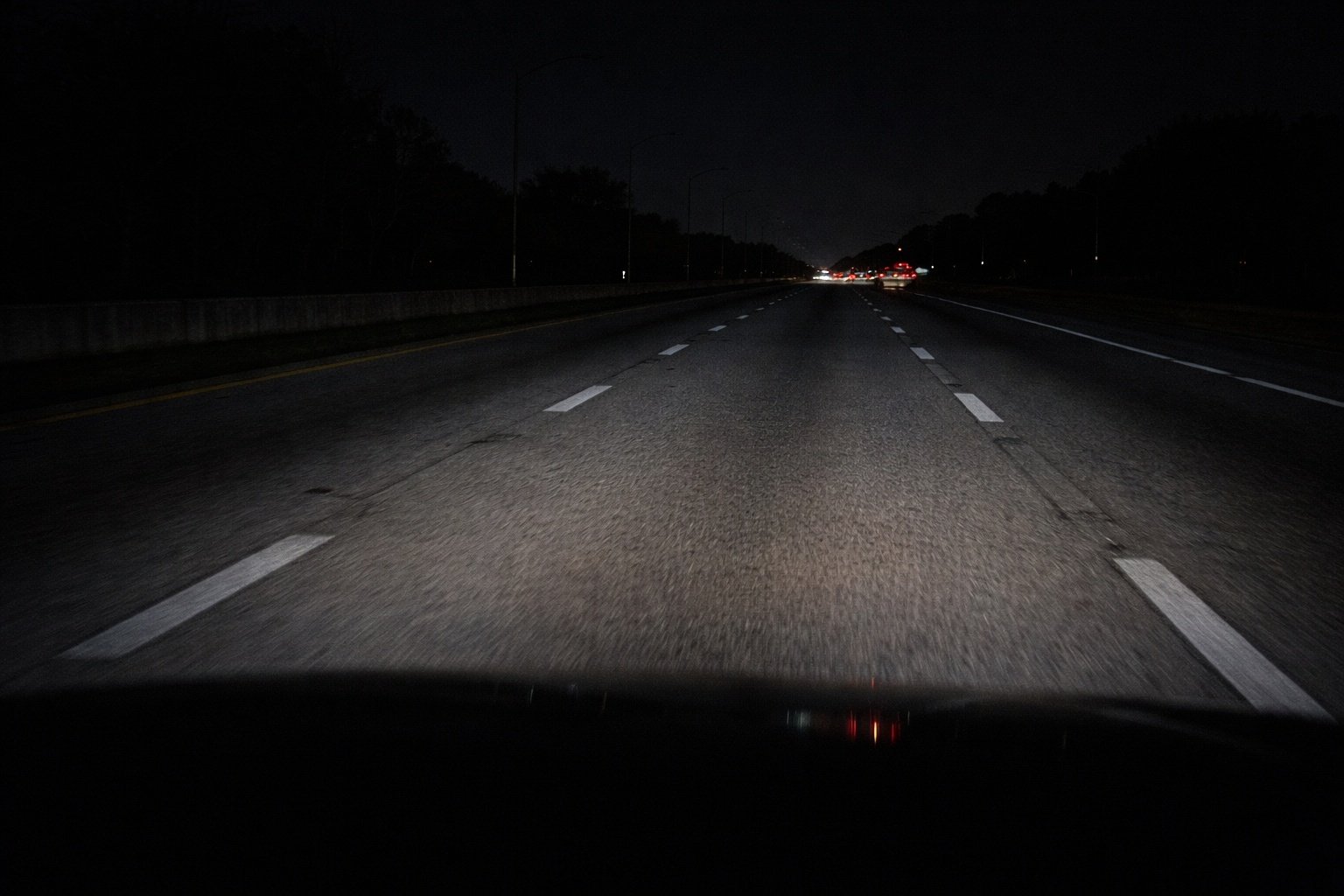
How Faded Lane Markings Increase Lane Drift and Sideswipe Accidents After Dark
Lane markings are one of the most relied upon visual systems in roadway design. During daylight hours, drivers subconsciously use painted lines, reflectors, and pavement contrast to maintain lane position and anticipate curves or merges. After dark, those same markings become primary guidance tools rather than secondary cues. When lane lines fade, nighttime driving shifts from structured navigation to guesswork. Faded markings hazards significantly increase the likelihood of lane drift and sideswipe collisions on Florida roadways.
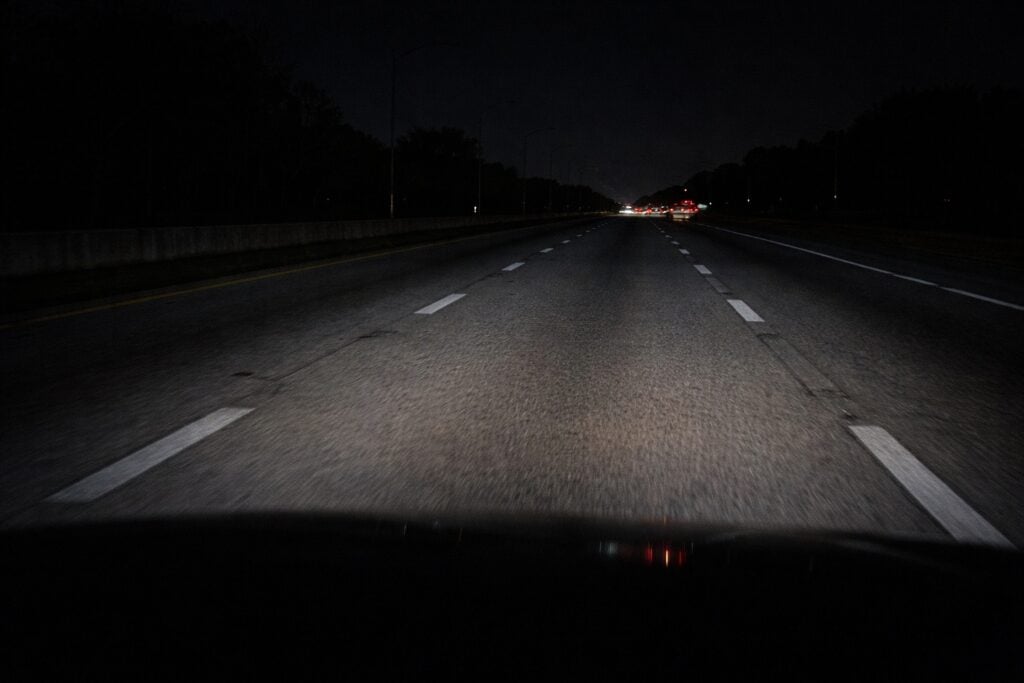
Florida drivers frequently encounter older highways, suburban arterials, and coastal routes where lane markings have deteriorated due to traffic volume, weather exposure, and delayed maintenance. At night, worn paint and missing reflectors reduce contrast between lanes and pavement. Drivers must rely on limited visual information while moving at speed, increasing the risk of gradual drift into adjacent lanes. These conditions often produce sideswipe accidents rather than dramatic impacts, but the injuries and vehicle damage can still be significant.
Why Lane Markings Matter More After Dark
During daylight hours, drivers rely on multiple visual references to stay centered within a lane. Road edges, medians, curbs, and surrounding vehicles all contribute to spatial awareness. At night, many of these references disappear. Headlights illuminate only a limited portion of the roadway, and the field of view narrows significantly.
Faded markings hazards become critical because lane paint and reflectivity are often the only visible indicators of lane boundaries. When those markings are worn or inconsistent, drivers struggle to judge lateral position. Small steering corrections become less precise, and gradual drift may go unnoticed until vehicles are already too close to one another.
This loss of clarity is especially dangerous on multi lane roads where vehicles travel side by side for extended distances. Without clear lane separation, drivers may unintentionally encroach into neighboring lanes, increasing sideswipe risk.
Lane Drift as a Collision Mechanism
Lane drift is rarely the result of a single sharp movement. Instead, it develops gradually as drivers make small steering adjustments based on incomplete visual feedback. When lane markings are faded, drivers may overcorrect or undercorrect without realizing it.
Faded markings hazards increase lane drift because drivers cannot clearly identify the center of their lane. At night, the problem worsens as glare from oncoming headlights or wet pavement further obscures remaining paint. On curved roads, the absence of visible edge lines makes it difficult to anticipate the road’s path, causing vehicles to track wide or cut inward.
These subtle movements often lead to sideswipe accidents rather than head on collisions. Vehicles traveling in adjacent lanes may make simultaneous minor corrections, bringing them into contact with one another without either driver realizing the risk until impact occurs.
Rain, Glare, and Surface Conditions in Florida
Florida’s climate intensifies the impact of faded markings hazards. Rain is frequent and often heavy, especially in coastal and central regions. Wet pavement reflects headlights, creating glare that washes out already worn lane paint. Reflective beads embedded in lane markings degrade over time, further reducing nighttime visibility during rain.
Humidity and heat accelerate paint wear, particularly on high traffic corridors. Oil residue and rubber buildup darken pavement surfaces, reducing contrast between markings and asphalt. At night, this low contrast environment makes it difficult for drivers to distinguish lanes, especially on roads without overhead lighting.
These conditions often coincide. A driver navigating a poorly marked road during rain at night faces multiple layers of reduced perception, significantly increasing collision risk.
Population Growth and Maintenance Gaps
Florida’s population growth has placed sustained pressure on roadway infrastructure. Traffic volume accelerates lane marking deterioration, particularly on suburban connectors, coastal routes, and older highways not originally designed for current demand. Maintenance schedules often struggle to keep pace with wear.
Faded markings hazards are more common in areas with frequent construction, resurfacing delays, or temporary lane shifts. Inconsistent repainting leads to partial markings that confuse rather than guide drivers. At night, these inconsistencies may cause drivers to follow outdated or incorrect visual cues.
Merges and exit ramps are especially problematic. Poorly marked transitions force drivers to make sudden lane changes or braking decisions. When visibility is limited, these maneuvers increase sideswipe and rear end collision risk.
Traffic Density and Nighttime Behavior
Traffic density plays a major role in how faded markings hazards translate into collisions. At night, drivers may assume lighter traffic reduces risk. In reality, reduced visibility combined with moderate traffic creates ideal conditions for sideswipe accidents.
Vehicles often travel closer together at night, particularly on familiar routes. Drivers rely on muscle memory and expectation rather than active visual confirmation. When lane markings are unclear, these expectations fail, and small deviations lead to contact.
Commercial traffic compounds the issue. Trucks and delivery vehicles occupy more lane width and generate airflow that can destabilize nearby vehicles. In poorly marked lanes, drivers may misjudge clearance, increasing the likelihood of sideswipe impacts.
Common Collision Patterns Linked to Faded Lane Markings
- Sideswipe accidents
Vehicles drift laterally into adjacent lanes without clear visual boundaries, resulting in door or fender contact. - Lane merge conflicts
Poorly marked merges cause sudden braking and weaving as drivers realize too late that lanes are ending or shifting. - Curve related drift
On curved roads, faded markings make it difficult to track lane direction, leading to wide turns and overlap into neighboring lanes. - Rain amplified impacts
Wet pavement glare further obscures markings, increasing collision likelihood during nighttime storms.
Injury Consequences of Nighttime Sideswipe Collisions
Sideswipe collisions are often underestimated because they may not involve high speed head on impact. However, the forces involved can still cause meaningful injuries. Sudden lateral movement places strain on the neck and spine, particularly when drivers are unprepared for impact.
Common injuries include soft tissue strain, disc aggravation, and shoulder injuries from abrupt steering corrections. Head injuries can occur if occupants strike interior surfaces during the collision. As with many low visibility accidents, symptoms may be delayed as adrenaline masks pain.
Because sideswipe accidents often appear minor at the scene, medical evaluation is frequently delayed. This can lead to prolonged recovery when injuries are not addressed early.
What to Do After a Nighttime Collision Involving Faded Markings
The steps taken after a nighttime sideswipe or lane drift collision can influence both health outcomes and documentation clarity. Visibility related accidents often leave drivers uncertain about how the incident occurred.
Important actions after a collision linked to faded markings hazards include:
- Seek medical evaluation promptly
Lateral impacts and sudden steering corrections can cause injuries that are not immediately apparent. - Document roadway conditions
Photograph lane markings, lighting conditions, weather, and pavement visibility at the scene. - Note time and visibility factors
Record whether the collision occurred after dark, during rain, or in areas with limited lighting. - Monitor delayed symptoms
Stiffness, headaches, or reduced mobility may appear hours or days later.
Frequently Asked Questions
Why do faded lane markings cause more accidents at night than during the day?
At night, drivers rely heavily on reflective paint and contrast to determine lane position. When markings are faded, visual cues disappear, increasing lane drift and sideswipe risk.
Are sideswipe accidents usually low speed collisions?
Many occur at moderate speeds, but lateral impacts can still produce significant force. Injuries may occur even when vehicle damage appears limited.
Does rain make faded markings more dangerous?
Yes. Wet pavement reflects headlights and reduces contrast, making already faded markings harder to see.
Are certain roads more affected by faded markings hazards?
Older highways, suburban arterials, coastal routes, and construction zones are particularly vulnerable due to wear and delayed repainting.
Can injuries from sideswipe accidents appear later?
Yes. Neck, back, and soft tissue injuries often develop symptoms hours or days after the collision.
Summary: Why Faded Lane Markings Remain a Serious Nighttime Hazard
Faded markings hazards undermine one of the most fundamental systems drivers rely on to navigate safely. At night, worn lane paint and missing reflectors reduce contrast, disrupt spatial awareness, and increase lane drift. Florida’s climate, traffic volume, and maintenance challenges amplify these risks.
When visibility drops and lane boundaries blur, even attentive drivers face reduced reaction time and limited corrective space. These conditions explain why faded lane markings continue to contribute to nighttime sideswipe accidents across Florida roadways.
Contact Lawlor, White & Murphey Today
Nighttime collisions involving unclear lane markings often leave drivers with delayed symptoms and unanswered questions. Reduced visibility and subtle impacts can make it difficult to understand how the collision occurred or why injuries developed later. Speak with a qualified personal injury attorney who can guide you through the process, help you gather evidence, and fight for the compensation you deserve.
Take the next step—schedule a free consultation with Lawlor, White & Murphey today.