
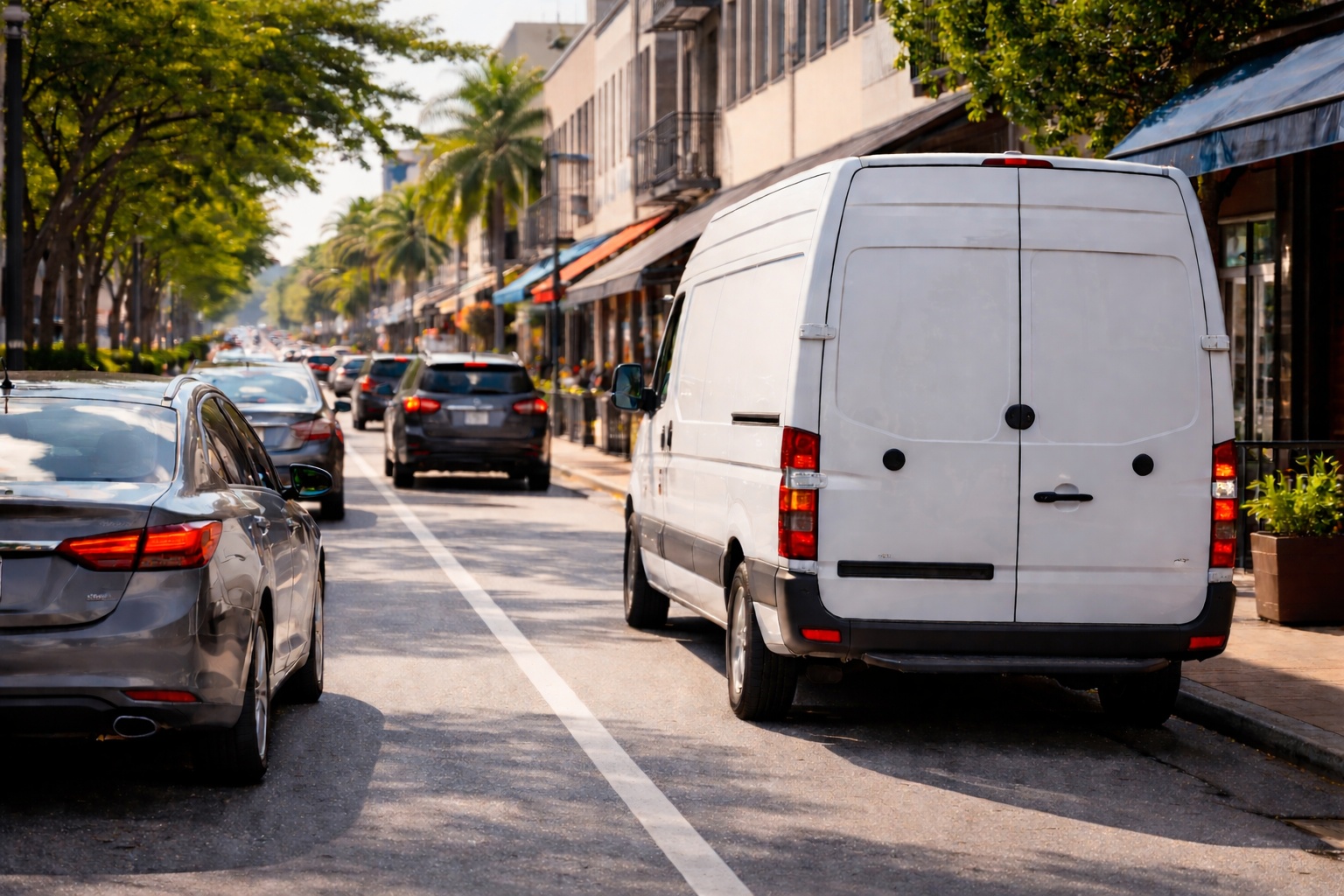
Why Commercial Delivery Vans Cause a Growing Number of Collisions in Florida Cities
Commercial delivery vans have become a constant presence on Florida city streets. The growth of e-commerce, food delivery, and same day shipping has dramatically increased the number of vans operating in dense urban environments. These vehicles navigate residential neighborhoods, downtown corridors, and retail districts throughout the day. As their presence expands, delivery van risks and collision rates rise alongside them.
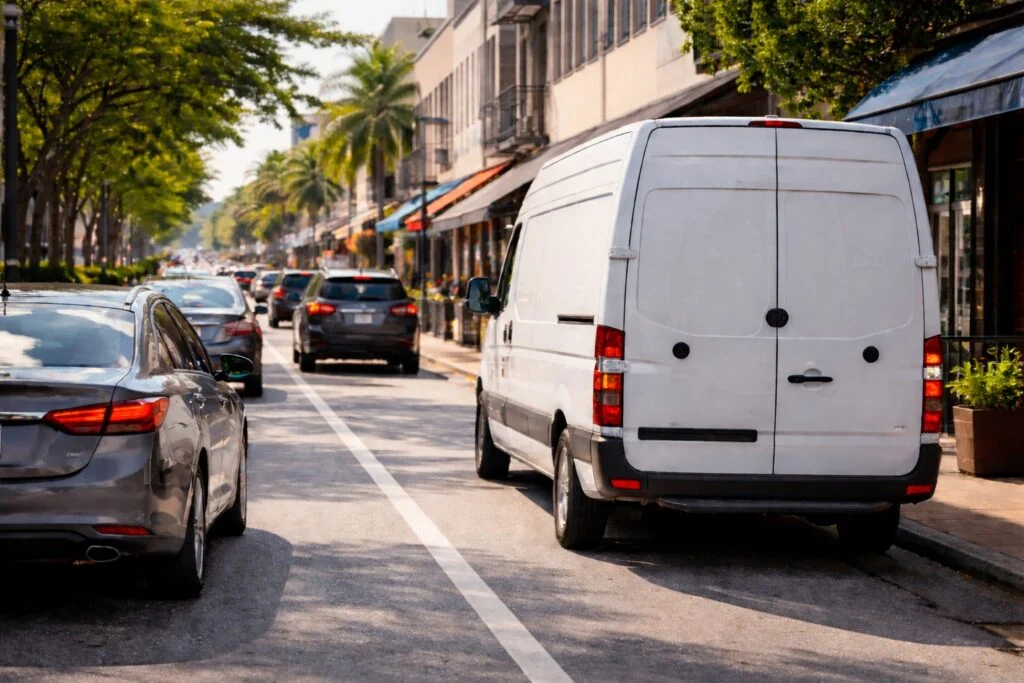
Unlike passenger vehicles, delivery vans combine large size, limited visibility, and frequent stopping patterns. They operate under time pressure and often interact with traffic in ways that disrupt normal flow. In Florida cities where streets are already congested and space is limited, these factors create conditions where collisions become more likely.
Vehicle Size, Blind Spots, and Urban Constraints
Delivery vans are significantly larger than most passenger vehicles, and their design creates substantial blind spots. High side panels, limited rear visibility, and wide turning radii reduce a driver’s ability to see surrounding traffic, cyclists, and pedestrians.
Delivery van risks increase in urban settings where streets are narrow and vehicles operate in close proximity. Drivers in smaller cars may assume they are visible when they are not. Cyclists and pedestrians may move alongside vans without realizing the driver cannot see them. These visibility gaps are especially dangerous at intersections, during turns, and when vans pull away from curbside stops.
Florida cities often feature older street layouts not designed for modern delivery fleets. Tight corners, short blocks, and on street parking further restrict maneuvering space, magnifying the impact of blind spots.
Frequent Stops, Double Parking, and Traffic Disruption
One of the defining characteristics of delivery vans is frequent stopping. Vans may pull over dozens of times per route, often in areas without designated loading zones. This leads to double parking, sudden lane blockages, and unexpected reentry into traffic.
Delivery van risks rise when stopped vehicles force surrounding traffic to merge abruptly. Drivers may swerve into adjacent lanes or brake suddenly to avoid a stopped van. These reactions create sideswipe and rear end collision hazards, particularly in dense downtown corridors.
Double parked vans also obstruct sightlines. Vehicles approaching intersections or driveways may not see cross traffic until the last moment. Pedestrians stepping around vans may emerge unexpectedly into moving lanes, adding another layer of unpredictability.
Time Pressure and Driving Behavior
Many delivery routes operate under tight schedules. Drivers may be required to complete numerous stops within limited time windows, often during peak traffic hours. This pressure can influence driving behavior even among experienced drivers.
Delivery van risks increase when drivers accelerate quickly, make abrupt lane changes, or attempt tight maneuvers to maintain schedules. In Florida cities with heavy congestion, these behaviors compress reaction time for everyone on the road.
Peak delivery periods often overlap with commuter traffic, school zones, and tourist activity. The resulting mix of vehicles, pedestrians, and delivery vans creates environments where small errors can escalate into collisions.
Cargo Distribution and Vehicle Control
Cargo weight and distribution play a significant role in how delivery vans handle. Unlike passenger vehicles, vans may carry uneven loads that shift during braking, acceleration, or turns.
Delivery van risks rise when weight shifts unexpectedly. Braking distances increase, and steering response may change mid maneuver. Drivers unfamiliar with how a loaded van behaves may misjudge stopping distance or turn radius.
This issue is particularly relevant on Florida streets with uneven pavement, potholes, or worn surfaces. Sudden stops caused by traffic disruptions can trigger loss of control or delayed braking responses.
Nighttime Deliveries and Visibility Challenges
Many deliveries occur early in the morning or late at night to avoid congestion. While traffic volume may be lower, visibility challenges increase after dark.
Delivery vans operating at night may be harder to see, especially in poorly lit areas or older districts with inconsistent street lighting. High vehicle profiles and dark paint colors can blend into the surroundings. Reflective markings vary widely between fleets.
Delivery van risks at night also increase for pedestrians and cyclists who may not expect frequent stops or loading activity in residential areas. Reduced visibility shortens reaction windows for all road users.
Loading Zones and Pedestrian Interaction
Crowded loading zones are common in Florida’s commercial districts. Vans may compete for limited curb space near restaurants, shops, and apartment buildings. When designated loading areas are unavailable, drivers improvise.
Pedestrians navigating around loading vans may be forced into traffic lanes. Cyclists may encounter blocked bike lanes and merge into vehicle traffic unexpectedly. These interactions increase collision risk even when speeds are relatively low.
In tourist areas, unfamiliarity with local traffic patterns compounds these issues. Visitors may not anticipate delivery activity in areas they associate with pedestrian use.
Common Collision Patterns Involving Delivery Vans
- Sideswipe collisions
Abrupt lane changes and narrow clearances lead to lateral impacts. - Rear end collisions
Sudden stops near delivery locations cause following vehicles to brake late. - Turning conflicts
Wide turns and blind spots increase risk at intersections. - Pedestrian strikes
Limited visibility during loading and unloading creates exposure in crowded areas. - Injury Consequences in Delivery Van Collisions
Collisions involving delivery vans often result in significant injuries due to vehicle size and weight. Even at moderate speeds, the force involved can be substantial.
Common injuries include neck and back injuries, fractures, head trauma, and soft tissue damage. Pedestrians and cyclists face especially high risk due to limited protection. As with many urban collisions, symptoms may not be immediately apparent.
Delayed pain and mobility issues are common after delivery van collisions, particularly when occupants are caught off guard by sudden impacts.
What to Do After a Collision Involving a Delivery Van
The steps taken after a delivery van collision can affect both health outcomes and the clarity of available information. Urban delivery incidents often involve multiple vehicles and limited documentation.
Important actions after a delivery van collision include:
- Seek medical evaluation promptly
Injuries may not be obvious immediately, especially after sudden stops or side impacts. - Document vehicle positions and surroundings
Photograph van placement, curb conditions, loading activity, and traffic flow. - Note visibility and lighting conditions
Record whether the incident occurred at night or in poorly lit areas. - Monitor delayed symptoms
Pain, stiffness, or dizziness may develop hours or days later.
Summary: Why Delivery Van Risks Continue to Grow
Delivery van risks are increasing as urban delivery demand expands across Florida cities. Large vehicle size, blind spots, frequent stops, and time pressure interact with congested streets to create collision hazards.
Cargo behavior, visibility challenges, and pedestrian interaction further compound these risks. Understanding how delivery vans operate within dense urban environments helps explain why collisions are becoming more common and why injuries can be significant even at lower speeds.
Frequently Asked Questions
Why are delivery vans involved in more city collisions than other vehicles?
Their size, blind spots, and frequent stopping patterns disrupt traffic flow and reduce visibility.
Do delivery vans pose higher risk to pedestrians and cyclists?
Yes. Limited visibility and curbside loading increase exposure for non motorized road users.
Are delivery van collisions more common during peak hours?
They often occur during peak traffic periods when congestion and time pressure overlap.
Does cargo weight affect collision risk?
Yes. Shifting or uneven loads can change braking and handling characteristics.
Can injuries from delivery van collisions appear later?
Yes. Sudden impacts can cause delayed neck, back, and soft tissue symptoms.
Contact Lawlor, White & Murphey Today
Delivery van collisions often involve delayed injuries and uncertainty about how events unfolded. Urban congestion, visibility limitations, and vehicle size can make these incidents difficult to understand. Speak with a qualified personal injury attorney who can guide you through the process, help you gather evidence, and fight for the compensation you deserve.
Take the next step—schedule a free consultation with Lawlor, White & Murphey today.