
Slip Hazards Near Parking Area Entrances Increase Injury Risks Inside Florida Stores
Store entrances that connect directly to parking areas are among the most hazardous interior spaces for slip and fall incidents. Shoppers transition quickly from outdoor pavement to smooth interior flooring, often without time to adjust footing or notice surface changes. Parking area fall risks are especially high during busy periods when foot traffic is constant and environmental conditions change rapidly.
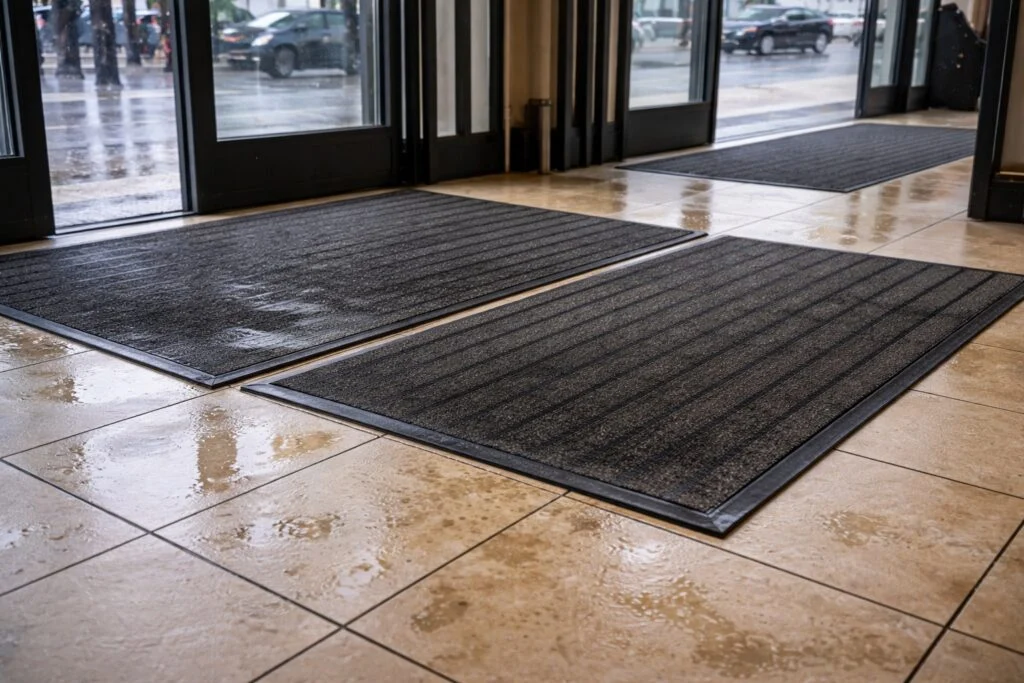
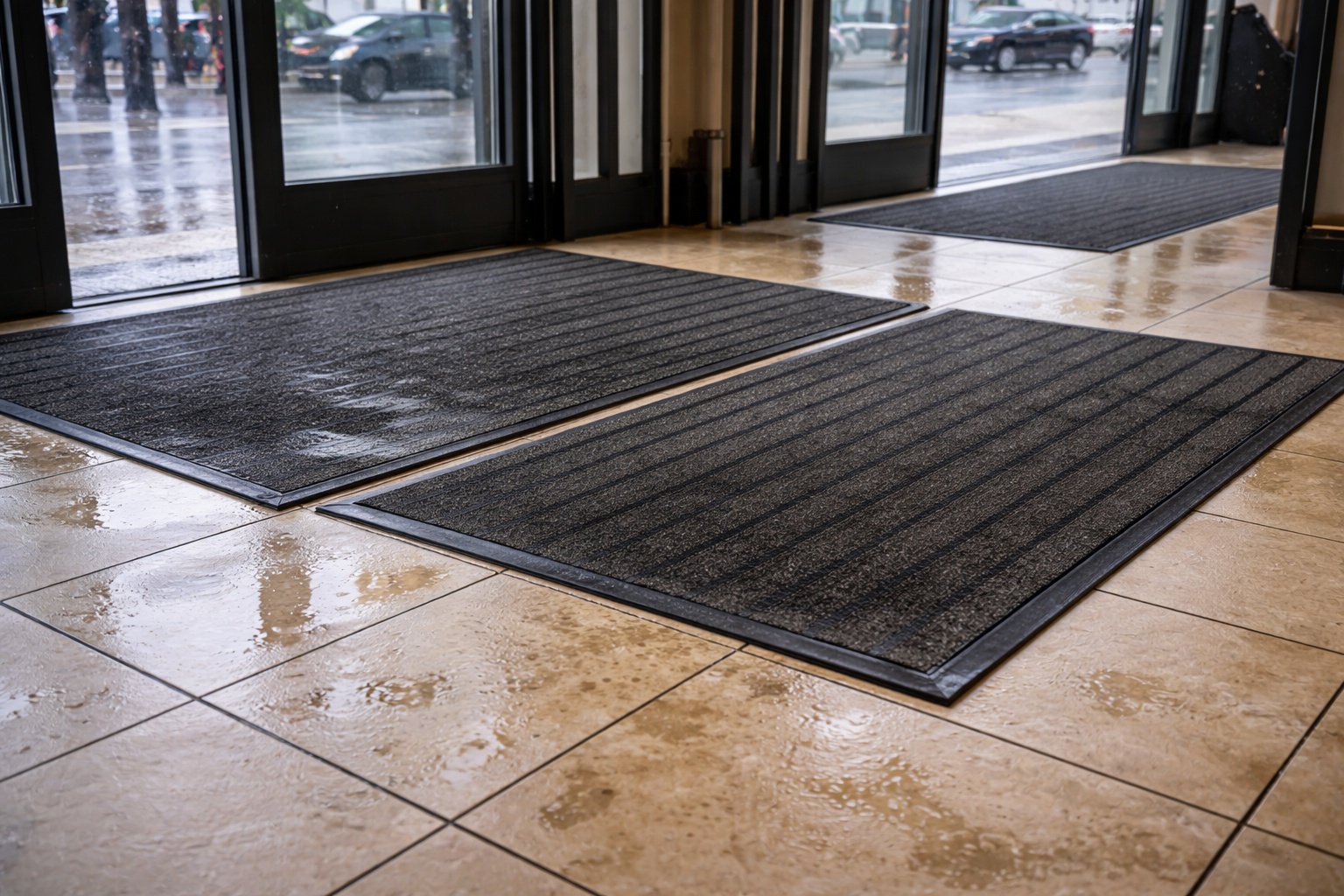
Unlike interior aisles, entry zones are exposed to weather, spills, and debris tracked in from outside. These hazards often develop faster than staff can identify and address them. As a result, the first few steps inside a store frequently present greater risk than areas deeper inside the building.
Why Parking Area Entrances Create Unique Slip Conditions
Parking area entrances function as transition zones rather than controlled interior spaces. Customers enter while carrying bags, pushing carts, or managing children, reducing their ability to scan the floor carefully. Attention is often focused on doors, signage, or oncoming foot traffic rather than surface conditions.
Parking area fall risks increase because moisture and debris are introduced continuously. Rainwater, condensation, oil residue, and dirt are tracked inside by every customer entering the store. Even during dry weather, spilled drinks or melting ice from cups can create slick spots near doors.
Because these hazards form gradually and repeatedly, they may not be immediately obvious to staff or customers until a fall occurs.
Flooring Transitions and Surface Mismatch
One of the most significant contributors to parking area fall risks is the abrupt change in flooring materials. Outdoor pavement provides texture and traction, while interior flooring near entrances is often smooth tile, polished concrete, or sealed surfaces designed for appearance and easy cleaning.
When customers step directly from rough pavement onto slick flooring, friction drops suddenly. This change is especially dangerous when shoes are wet or worn. The risk increases when floor mats are improperly placed, curled, undersized, or saturated.
Uneven transitions between pavement, thresholds, mats, and interior flooring further compound the hazard. Small height differences or shifting mats can disrupt balance at the exact moment customers are adjusting to indoor conditions.
Weather Exposure and Rapid Hazard Formation
Florida’s climate plays a major role in parking area fall risks. Sudden rainstorms, high humidity, and temperature changes create moisture accumulation near entrances. Rainwater may be tracked inside faster than cleaning crews can respond, especially during peak shopping hours.
Condensation can also form on smooth floors when cool indoor air meets warm, humid outdoor air. This moisture is often invisible, creating slick surfaces without obvious warning. Customers may not recognize the danger until traction is already lost.
These conditions are most pronounced near parking entrances because doors open frequently, allowing outside air and moisture to flow directly inside.
Crowd Flow and Limited Reaction Time
High traffic volume intensifies slip hazards near parking area entrances. During busy periods, customers move through entry zones in close proximity, limiting the ability to slow down or change direction.
Parking area fall risks increase when shoppers are forced to maintain pace with surrounding foot traffic. Sudden stops or avoidance maneuvers may not be possible. When a person slips in these conditions, others nearby may also lose balance or collide, increasing injury severity.
Shopping carts further complicate movement. Carts change center of gravity and limit a person’s ability to recover from a slip, particularly when wheels encounter wet mats or slick flooring.
Maintenance Challenges in Entry Zones
Maintaining safe conditions near entrances is more complex than in interior areas. Floor mats require frequent inspection and replacement when saturated. Cleaning crews must balance constant moisture removal with the need to keep pathways open.
Parking area fall risks rise when mats are too small, poorly anchored, or placed inconsistently. Gaps between mats and flooring can expose slick surfaces exactly where customers step first. Inconsistent cleaning schedules during peak hours can allow hazards to persist unnoticed.
Lighting also affects hazard detection. Glare from glass doors, reflections on polished floors, and shifting outdoor light can make wet areas difficult to see.
Common Slip and Fall Patterns Near Parking Entrances
- Forward slips upon entry
Loss of traction occurs immediately after stepping inside from the parking area. - Mat related trips and slides
Saturated or curled mats move underfoot or fail to absorb moisture. - Cart assisted falls
Shoppers lose balance while pushing carts across slick surfaces. - Crowd related incidents
Limited space and forced movement prevent recovery after a slip.
Injury Consequences of Entry Zone Falls
Falls near parking area entrances often result in sudden, unbraced impacts. Because slips occur unexpectedly, individuals may be unable to protect themselves during the fall.
Common injuries include wrist and arm fractures, head injuries, back injuries, and hip trauma. Soft tissue injuries to the neck and spine are also common, particularly when the fall involves twisting or abrupt stopping.
Symptoms may not be immediately apparent. Adrenaline and embarrassment can mask pain, leading individuals to underestimate the seriousness of their injuries until hours or days later.
What to Do After a Slip Near a Parking Area Entrance
The steps taken after a slip and fall near a store entrance can affect both health outcomes and the clarity of what occurred. Entry zone incidents often involve environmental factors that change quickly.
Important actions after a slip near a parking area entrance include:
- Seek medical evaluation promptly
Head, back, and joint injuries may not cause immediate pain. - Document the area
Photograph flooring, mats, moisture, lighting, and entry layout. - Note weather and crowd conditions
Record whether rain, humidity, or heavy foot traffic was present. - Monitor delayed symptoms
Pain, stiffness, dizziness, or swelling may develop later.
Summary: Why Parking Area Fall Risks Remain High Inside Stores
Parking area fall risks persist because entry zones combine constant moisture exposure, surface transitions, and heavy foot traffic into a small space. These conditions develop quickly and change throughout the day, making hazards difficult to control consistently.
Florida’s climate, busy retail environments, and structural design features amplify these risks. Understanding how parking entrances function as high risk transition zones explains why slip and fall injuries frequently occur before shoppers ever reach store aisles.
Frequently Asked Questions
Why do slip and fall accidents happen more often near parking entrances?
Because moisture, debris, and surface changes concentrate in entry zones where customers transition from outdoor pavement to indoor flooring.
Does Florida weather increase entry zone fall risks?
Yes. Rain, humidity, and condensation create slick surfaces that form quickly near entrances.
Are floor mats always effective at preventing slips?
Only when properly sized, placed, and maintained. Saturated or curled mats can increase risk.
Do shopping carts affect fall risk?
Yes. Carts alter balance and limit recovery when traction is lost.
Can injuries from entry zone falls appear later?
Yes. Pain and mobility issues often develop hours or days after the incident.
Contact Lawlor, White & Murphey Today
Slip and fall incidents near parking area entrances often leave individuals with delayed symptoms and uncertainty about how the accident occurred. Speak with a qualified personal injury attorney who can guide you through the process, help you gather evidence, and fight for the compensation you deserve.
Take the next step—schedule a free consultation with Lawlor, White & Murphey today.