
Why Gas Station Parking Areas Create Unexpected Vehicle Collision Risks
Gas stations are often perceived as routine, low speed environments where drivers briefly stop to refuel before continuing their trip. Because vehicles move slowly and drivers typically spend only a few minutes on the property, many people assume these spaces present minimal danger compared to highways or busy intersections. In reality, gas station collision risks are far more complex than most drivers realize. The design of these spaces compresses multiple traffic patterns into a very small area where vehicles, pedestrians, and delivery trucks must all navigate simultaneously.
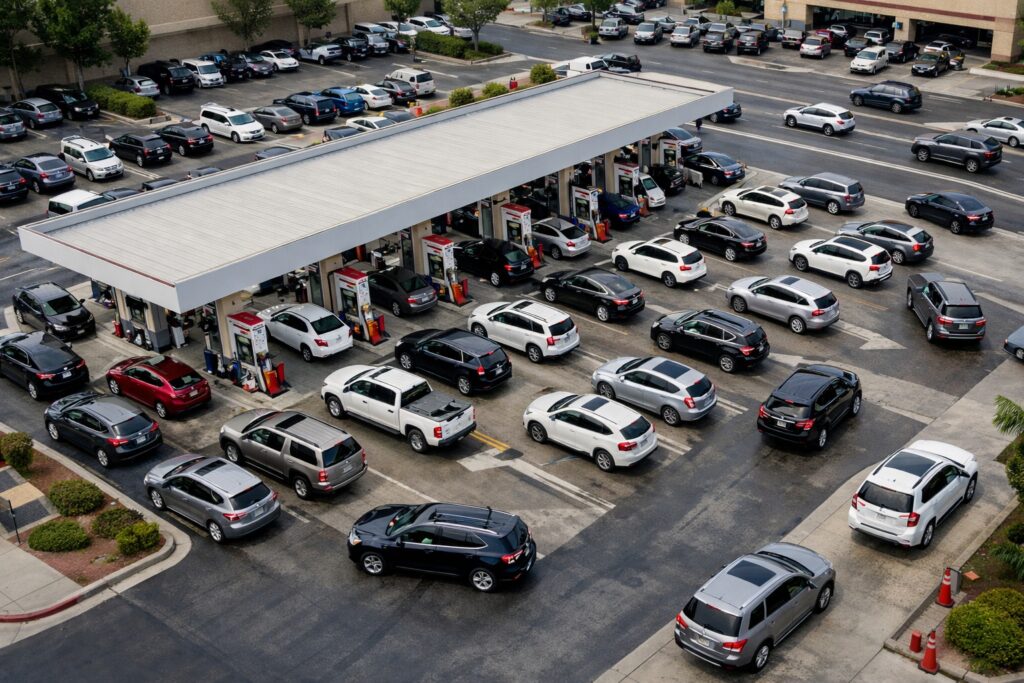
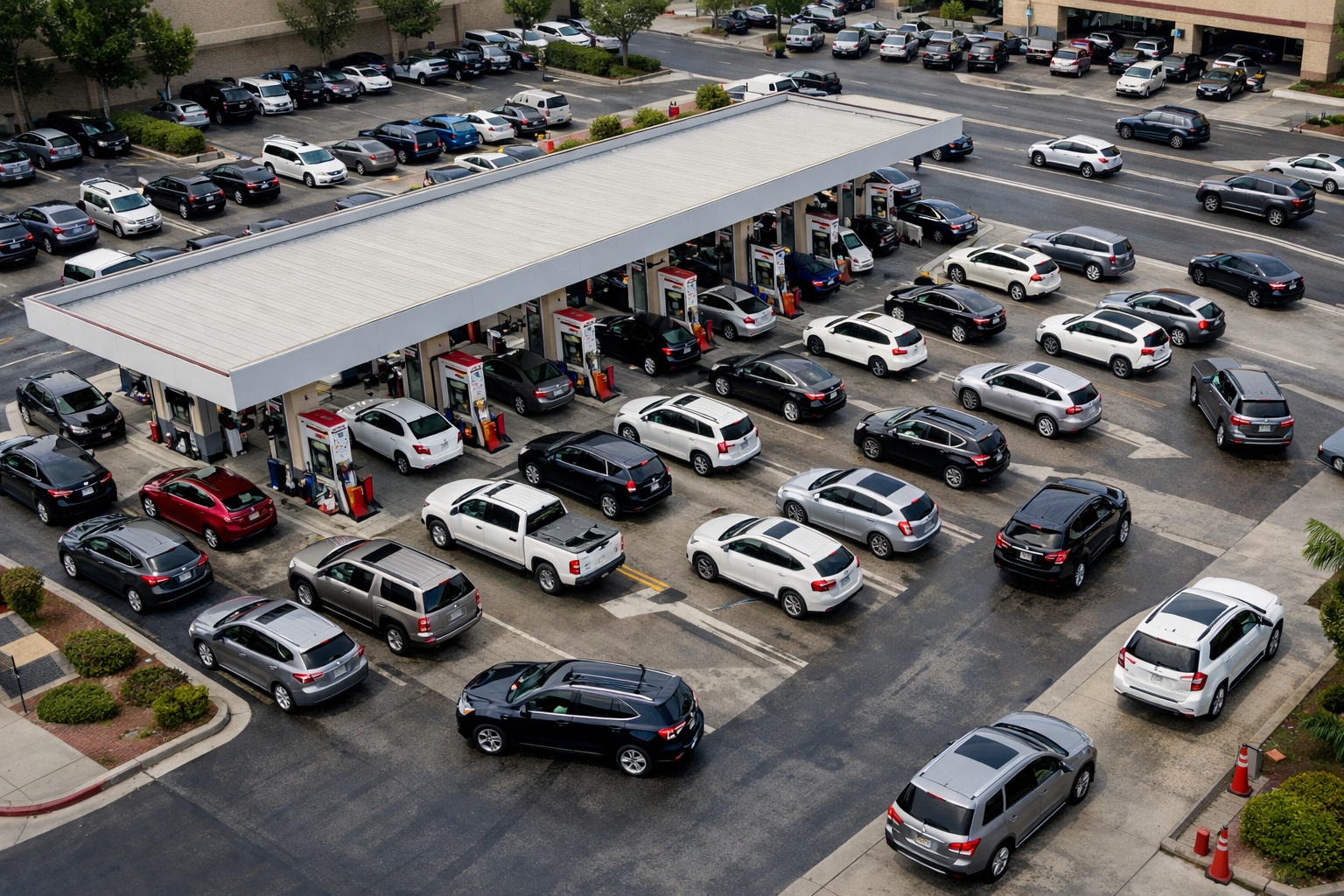
What makes these environments particularly dangerous is the combination of limited space, unpredictable movement, and obstructed visibility. Drivers entering the lot, searching for an open pump, reversing from pump stalls, or exiting toward the street often compete for the same narrow travel lanes. Pedestrians walking between pumps, convenience store entrances, and parked vehicles add another layer of unpredictability. When several vehicles attempt to move through the same confined space at once, the margin for error becomes extremely small.
How Gas Station Layouts Create Driving Pressure
Unlike standard parking lots, gas stations are not designed with clear directional flow or predictable vehicle paths. Pumps are arranged in rows that allow vehicles to approach from multiple directions, which means drivers frequently turn, stop, or reverse without warning. This constant change in vehicle movement creates pressure within the environment as drivers attempt to maneuver around one another while navigating tight spaces.
The pump islands themselves also create narrow travel corridors where vehicles must pass closely alongside each other. When large SUVs, pickup trucks, or delivery vans occupy pump spaces, they significantly reduce the amount of room available for other vehicles to move through the lot. Drivers approaching the pumps must often slow down suddenly, adjust their path, or wait for other vehicles to clear the lane. These abrupt changes in movement reduce reaction time and increase the likelihood of contact between vehicles.
Expectation Failure Inside Gas Station Traffic Flow
Drivers rely heavily on consistent visual cues when navigating traffic environments. On most roads, lanes, signage, and predictable traffic patterns allow drivers to anticipate how other vehicles will behave. Gas stations disrupt these expectations because there is rarely a clearly defined traffic pattern. Some drivers treat the space like a traditional parking lot, moving slowly while searching for a pump or a parking space. Others treat it like a drive lane, attempting to pass through quickly to reach the exit.
This mismatch in expectations creates frequent conflict points. A driver slowly backing out of a pump stall may assume surrounding vehicles will wait. Meanwhile, another driver approaching the same lane may assume traffic will continue moving forward without interruption. These conflicting assumptions shorten the reaction window and increase the likelihood of sideswipes, rear end collisions, and reversing accidents.
Environmental Conditions That Increase Risk
External conditions can further amplify gas station collision risks. Lighting, weather, and surface conditions all influence how drivers perceive space and movement within the lot. Wet pavement, glare from overhead canopy lighting, and shadows created by pump structures can reduce visibility and distort depth perception.
Several environmental factors commonly increase collision risk in these areas.
- Large vehicles blocking sightlines
Full size trucks, delivery vans, and SUVs frequently occupy pump lanes and parking areas. These vehicles create visual barriers that prevent drivers from seeing approaching traffic until the last moment. When a driver begins reversing from a pump stall or pulling forward into a lane, their view may be completely blocked by the size of neighboring vehicles. - Lighting glare and nighttime visibility
Gas station canopy lighting is designed to illuminate pump areas but often creates glare that interferes with depth perception. Bright lights shining directly into a driver’s field of vision can make it difficult to judge distance or detect moving vehicles in darker portions of the lot. - Wet pavement and fuel residue
Spilled fuel and rainwater can create slick surfaces around pump islands. When vehicles accelerate or brake within these tight spaces, traction can be reduced. Even minor loss of traction can cause a vehicle to slide slightly into an adjacent lane or parked car. - Pedestrian movement between pumps
Customers frequently walk between vehicles while heading toward the store entrance or returning to their car. Because drivers tend to focus on vehicle movement within the lot, pedestrians moving between pump islands may not be immediately visible.
Traffic Density and Proximity Pressure
Gas stations often experience sudden bursts of traffic activity during peak hours such as morning commutes or evening rush periods. When several vehicles attempt to enter, refuel, and exit simultaneously, the lot becomes crowded quickly. Drivers waiting for open pumps may stop in travel lanes, forcing other vehicles to maneuver around them.
This congestion creates proximity pressure where vehicles operate only inches apart. Drivers may attempt to squeeze through narrow gaps between pump islands or parked vehicles in order to reach an open lane. With limited space available for correction, even minor steering misjudgments can result in contact with another vehicle.
Common Collision Patterns in Gas Stations
Several collision types appear frequently in gas station environments because of the confined layout and unpredictable vehicle movement.
- Rear end collisions
Vehicles approaching the pump lanes often slow suddenly when another driver stops ahead to wait for an open pump. Drivers behind them may not anticipate the sudden stop, leading to low speed rear end impacts. - Sideswipe collisions
When vehicles pass each other within narrow pump lanes, mirrors and side panels may come into contact. This commonly occurs when drivers misjudge the available space between large vehicles. - Reversing collisions
Drivers backing out of pump stalls frequently encounter vehicles passing through the lane behind them. If visibility is blocked by neighboring cars or trucks, the reversing driver may not see approaching traffic in time. - Pedestrian contact incidents
Customers walking between pump islands or crossing from the store entrance toward their vehicle may enter the path of a moving car. Because drivers often focus on navigating tight lanes, pedestrians may not be immediately visible.
Injury Consequences From Gas Station Collisions
Although many gas station crashes occur at lower speeds than highway collisions, injuries can still occur due to the close proximity of vehicles and pedestrians. Rear end collisions may cause neck strain or back injuries due to sudden deceleration. Sideswipe accidents can lead to abrupt vehicle movement that causes occupants to twist or brace suddenly inside the car.
Pedestrian incidents are particularly concerning because individuals walking near pump areas have little physical protection from moving vehicles. Even low speed contact can lead to serious injuries involving the head, neck, or extremities. In some cases, symptoms such as neck stiffness, headaches, or back pain may not appear until hours or days after the collision.
Summary
Gas station collision risks are often underestimated because these environments appear calm and routine. In reality, gas stations compress several different traffic patterns into a small area where drivers must constantly adjust their movements. Tight pump lanes, limited visibility, unpredictable pedestrian activity, and sudden stops create conditions where reaction time is extremely limited.
When drivers treat the environment as both a parking lot and a travel lane, expectation failure occurs and conflicts between vehicles become more likely. Understanding how these spaces function can help explain why collisions occur so frequently in areas that many drivers assume are safe.
FAQ
Why do gas station parking areas have so many minor collisions?
Gas stations combine several types of vehicle movement in a very small space. Drivers are entering the lot, searching for pumps, reversing from stalls, and exiting toward the street at the same time. These overlapping movements reduce reaction time and create frequent conflict points between vehicles.
Are gas station accidents usually low speed?
Many collisions in gas stations occur at relatively low speeds because drivers are maneuvering through tight spaces. However, even low speed impacts can cause injuries due to sudden stops, twisting movements inside the vehicle, or contact with pedestrians walking near the pumps.
Why is it difficult to see other vehicles at gas stations?
Large vehicles parked at pumps often block sightlines for drivers attempting to reverse or pass through the lot. Pump islands, signage, and canopy columns can also create visual barriers that limit a driver’s ability to see approaching traffic until the last moment.
Do pedestrians face risks in gas station parking areas?
Yes, pedestrians frequently walk between pump islands and parked vehicles while heading to or from the store entrance. Because drivers focus on navigating tight lanes and other vehicles, pedestrians may not always be immediately visible.
What types of crashes happen most often in gas stations?
Rear end collisions, sideswipes, reversing accidents, and pedestrian contact incidents are the most common types of crashes in these environments. Each of these patterns results from the limited space and unpredictable movement within gas station layouts.
Contact Lawlor, White & Murphey Today
Vehicle collisions that occur in places like gas stations often catch drivers off guard. These environments appear routine, yet the tight layout, limited visibility, and unpredictable movement create conditions where accidents can happen quickly.
If you were injured in a crash caused by unsafe traffic conditions or another driver’s actions, the team at Lawlor, White & Murphey can review the circumstances surrounding the accident and help you understand your legal options.
Take the next step—schedule a free consultation with Lawlor, White & Murphey today.