
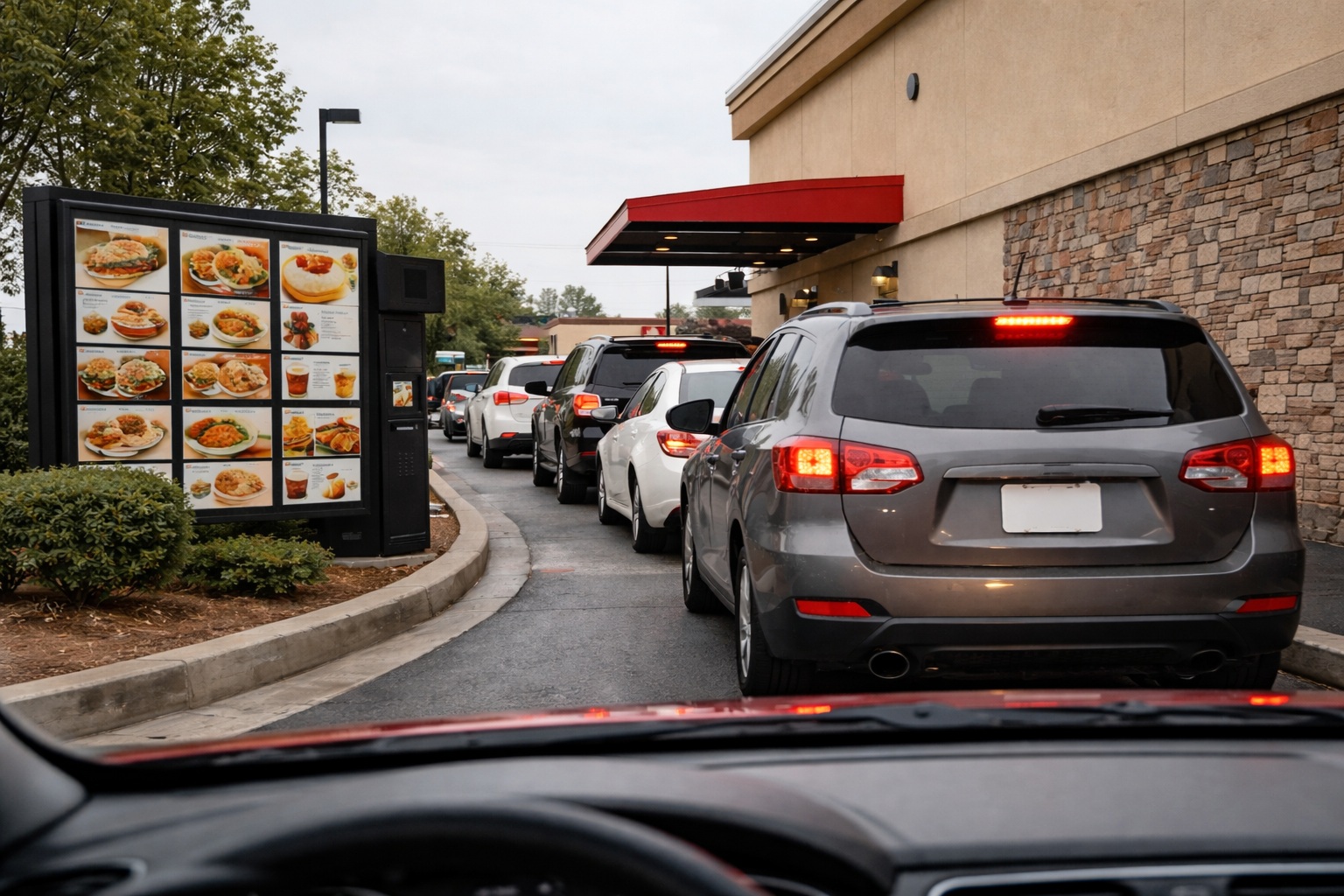
Drive Thru Crash Risks: Why Accidents Happen More Often in Restaurant Lanes
Drive thru lanes may appear simple and convenient, but they introduce unique traffic patterns that increase the likelihood of vehicle accidents. Unlike traditional roadways, these lanes combine tight physical spaces, frequent stopping, and distracted driving behaviors in a single confined environment. As a result, drive thru crash risks are often higher than many drivers expect.
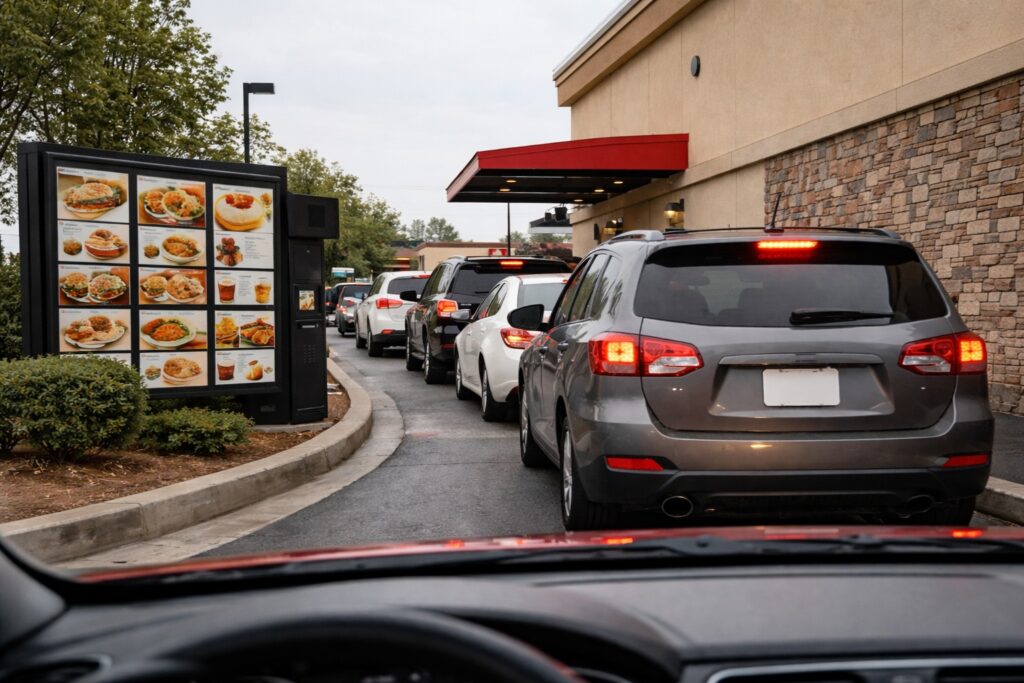
Vehicles navigating drive thru lanes must stop repeatedly, move forward slowly, and often merge back into active parking lot traffic once the order is complete. At the same time, drivers may be focused on ordering food, handling payment, or organizing items inside the vehicle. These combined distractions create conditions where attention shifts away from surrounding vehicles and pedestrians.
Because of these factors, even low speed movements inside drive thru lanes can lead to unexpected collisions.
How Drive Thru Lane Layouts Create Drive Thru Crash Risks
The physical design of most drive thru lanes plays a significant role in accident patterns. Many restaurant layouts guide vehicles through narrow corridors bordered by curbs, walls, or landscaping barriers that limit maneuverability. Drivers must follow a fixed path with little room to adjust position or avoid obstacles.
These layouts frequently include tight turns designed to route vehicles around buildings or menu boards. When drivers navigate these turns, their visibility may be restricted by structural elements or parked vehicles nearby. As a result, drivers approaching the payment or pickup window may not clearly see vehicles ahead that have stopped unexpectedly.
Drive thru crash risks increase further when vehicles exit the lane and merge back into parking lot traffic. Drivers leaving the drive thru often focus on handling food or beverages, which can delay their ability to detect approaching vehicles in the parking lot.
Distraction Plays a Major Role in Drive Thru Accidents
One of the defining characteristics of drive thru environments is the shift in driver attention. Instead of focusing exclusively on traffic conditions, drivers divide attention between multiple tasks.
Common distractions include:
- Reading menu boards
- Communicating with employees through speaker systems
- Handling cash or payment cards
- Managing food or drink items inside the vehicle
These activities may only last a few seconds, but they occur during moments when vehicles are moving slowly in close proximity to one another. Even brief lapses in attention can cause drivers to roll forward unexpectedly or fail to notice when the vehicle ahead stops.
Drive thru crash risks increase when drivers assume the vehicle ahead will continue moving. When traffic pauses suddenly, rear end collisions can occur even at very low speeds.
Limited Visibility and Tight Turns Increase Collision Risk
Drive thru lanes frequently include sharp turns that limit a driver’s ability to see the next section of the lane. Walls, landscaping features, and building corners can block sightlines until the vehicle is already committed to the turn.
In addition, large vehicles such as SUVs and pickup trucks may obstruct visibility for drivers traveling behind them. A driver following a tall vehicle may not be able to see whether traffic has stopped near the ordering station or pickup window.
These conditions increase drive thru crash risks because drivers must react quickly to unexpected stops or slowdowns in a confined space.
Barrier Impacts and Tight Lane Collisions
Concrete curbs and raised barriers are commonly used to guide vehicles through drive thru lanes. While these barriers help control traffic flow, they also create hazards when drivers misjudge spacing.
Drivers navigating tight turns may accidentally strike these barriers with their tires or wheels. In some cases, vehicles attempting to avoid barriers may drift slightly into the path of nearby vehicles, leading to sideswipe collisions.
Because these lanes provide little room for error, even small steering miscalculations can result in contact with surrounding structures or vehicles.
What to Do After a Drive Thru Lane Accident
The steps taken immediately after a drive thru collision can help clarify what occurred and ensure that any injuries are properly evaluated. Because these incidents happen in confined spaces and often involve multiple vehicles in line, documenting the scene can be especially important.
Important actions after a drive thru accident include:
- Seek medical evaluation if symptoms appear
Even low speed collisions can cause neck strain or soft tissue injuries that may develop hours after the incident. - Photograph the scene before vehicles move
Capture the positions of the vehicles, the surrounding drive thru layout, and any barriers or signage that may have affected visibility. - Document the specific location within the drive thru lane
Note whether the accident occurred near the ordering station, payment window, pickup window, or exit point. - Identify witnesses when possible
Other drivers waiting in line may have observed how the collision occurred. - Monitor delayed symptoms
Pain, stiffness, or headaches may appear later as adrenaline fades.
Summary: Why Drive Thru Crash Risks Continue to Increase
Drive thru lanes combine tight vehicle spacing, repeated stopping, and distracted driver behavior in environments where maneuverability is limited. These factors create conditions where even small mistakes can quickly lead to collisions.
The combination of narrow lanes, sharp turns, and shifting driver attention makes drive thru crash risks more significant than many drivers realize. Understanding how these environments function helps explain why restaurant drive thru lanes remain common locations for low speed vehicle accidents.
Frequently Asked Questions
Why do drive thru accidents happen so often?
Drive thru lanes require drivers to stop frequently, move slowly, and navigate tight spaces. Drivers are also often distracted by ordering food or handling payments.
Are drive thru collisions usually serious?
Most drive thru accidents occur at low speeds, but they can still cause vehicle damage and injuries such as neck strain or soft tissue injuries.
Do large vehicles increase drive thru crash risks?
Yes. Large SUVs and trucks can block visibility in narrow lanes, making it harder for drivers behind them to see stopped vehicles ahead.
Why do rear end collisions happen in drive thru lines?
Drivers may assume the vehicle ahead will continue moving forward. When traffic stops suddenly, drivers may not react quickly enough.
Can drive thru layouts contribute to accidents?
Yes. Tight turns, concrete barriers, and limited visibility can make it difficult for drivers to navigate the lane safely.
Contact Lawlor, White & Murphey Today
Drive thru accidents may seem minor at first, but collisions in confined spaces can still lead to vehicle damage, injuries, and difficult questions about how the crash occurred. Because these incidents happen in tight lanes with multiple vehicles and limited visibility, understanding what contributed to the accident is often more complicated than it initially appears.
Lawlor, White & Murphey represents individuals who have been injured in motor vehicle accidents throughout South Florida. If you or someone you know has been involved in a drive thru collision, an experienced attorney can help review the circumstances and determine the next steps.
Take the next step—schedule a free consultation with Lawlor, White & Murphey today.