
Toll Plaza Collision Risks: Why Toll Booth Lane Changes Cause Accidents
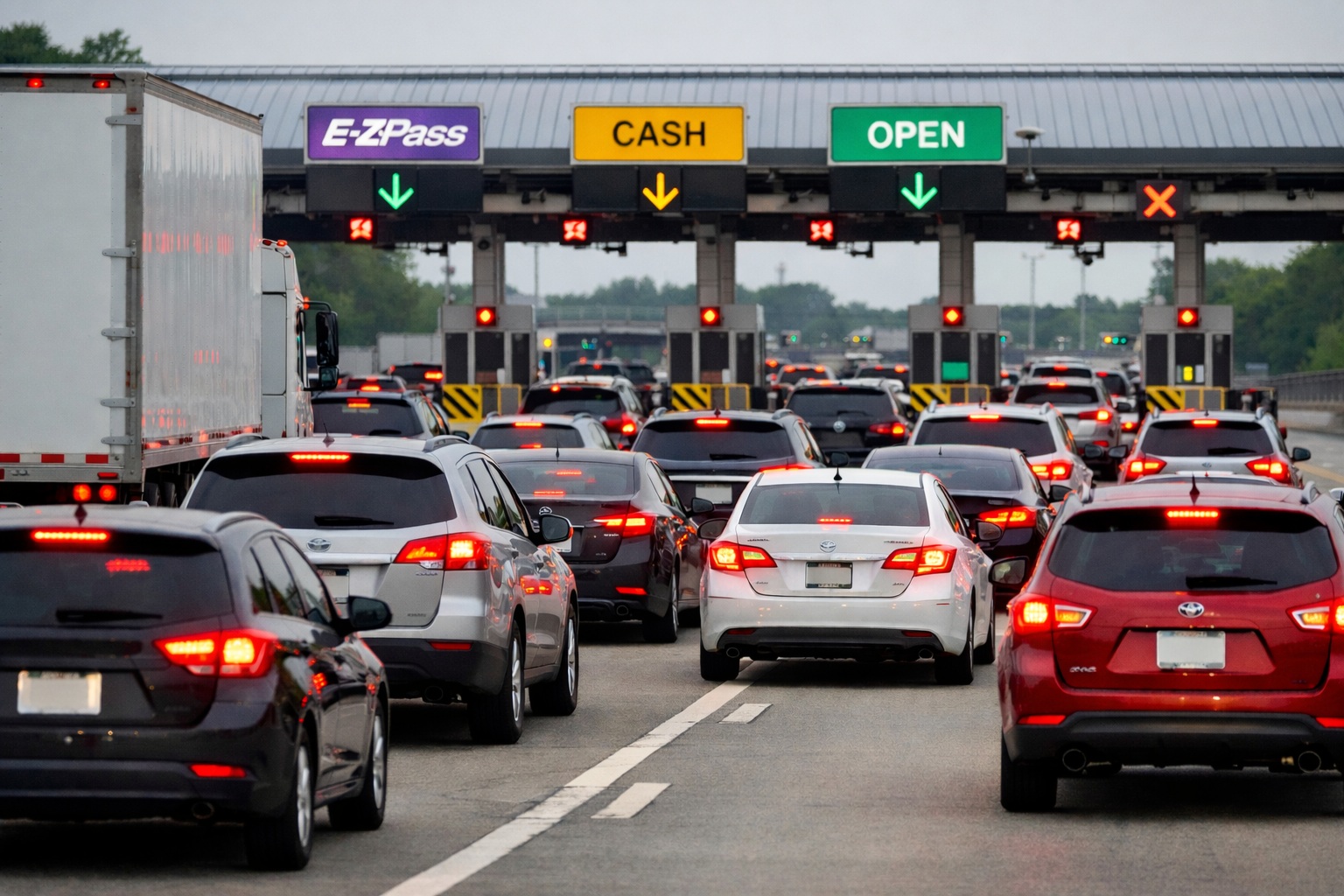
Toll plazas introduce a sudden change in driving conditions that many drivers underestimate. Vehicles traveling at highway speeds must quickly slow down, identify the correct toll lane, and position themselves accordingly within a short distance. These rapid adjustments create conditions where toll plaza collision risks increase significantly.
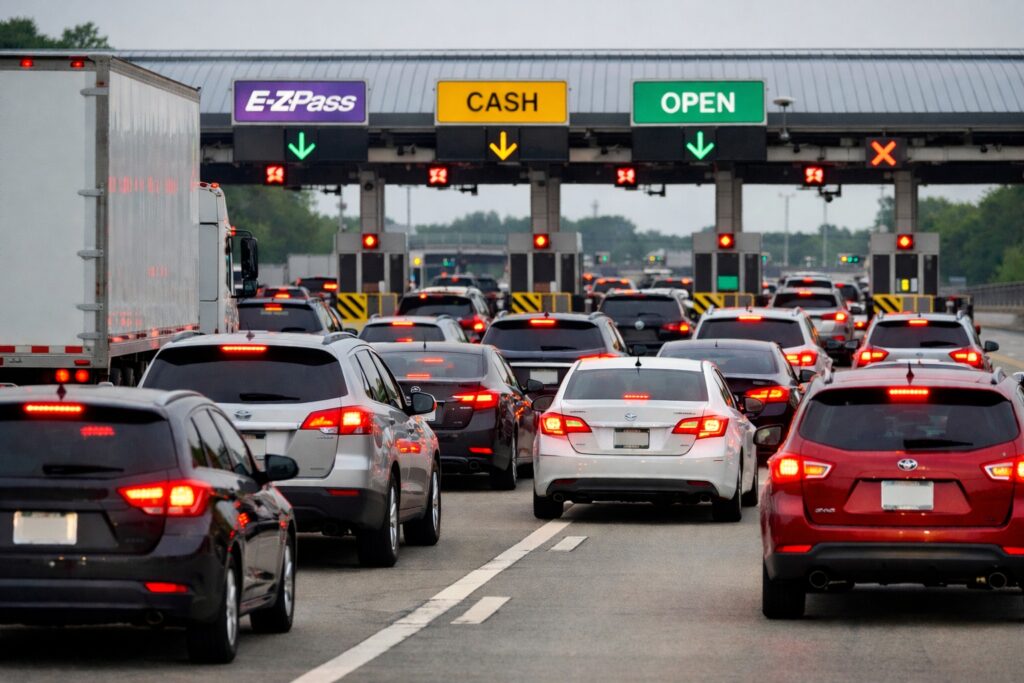
Unlike normal highway traffic, toll plazas force drivers to shift from high speed travel to slow moving lanes while simultaneously making decisions about where to merge. Drivers must determine whether they need a cash lane, an electronic pass lane, or an express lane, all while navigating surrounding vehicles attempting to do the same.
This combination of speed reduction and lane selection creates heavy traffic pressure that frequently leads to rear end collisions, sideswipe accidents, and abrupt braking events.
How Toll Plaza Layouts Increase Toll Plaza Collision Risks
Toll plaza designs typically require several highway lanes to expand outward into multiple toll lanes. After vehicles pass through the booths, those lanes compress again into fewer travel lanes. This expansion and reconvergence forces drivers to change lanes twice within a short stretch of roadway.
Drivers approaching a toll plaza must quickly scan overhead signage and determine which lane matches their payment method. If a driver realizes too late that they are in the wrong lane, they may attempt a last second lane change to reach the correct booth.
Because many vehicles are making similar adjustments at the same time, traffic patterns become unpredictable. Drivers may brake suddenly or drift across lane markings while attempting to reposition their vehicles.
These conditions significantly increase toll plaza collision risks, particularly during periods of heavy traffic.
Sudden Speed Reduction Creates Rear End Crash Hazards
One of the most common accident patterns at toll plazas involves rear end collisions. Vehicles approaching the plaza must slow dramatically as traffic compresses near the booths.
Drivers who fail to anticipate the slowdown may approach too quickly and brake abruptly. If the driver behind them does not react quickly enough, a rear end collision can occur.
This situation becomes more dangerous when traffic fluctuates between moving and stopping. Vehicles may accelerate briefly and then stop again as drivers wait to reach the toll booth.
These repeated speed changes increase toll plaza collision risks because drivers must constantly adjust following distance and braking pressure.
Lane Changes and Blind Spots Lead to Sideswipe Accidents
Another major factor in toll plaza collisions is the high number of lane changes that occur in a short distance. Drivers may weave between lanes while attempting to reach a booth with the shortest line or the correct payment option.
These movements require drivers to rely heavily on mirrors and quick blind spot checks. However, when traffic is dense, vehicles may remain hidden alongside another vehicle for several seconds.
If a driver changes lanes without fully detecting another car nearby, sideswipe collisions can occur. These accidents often happen when two drivers attempt to enter the same lane simultaneously.
Because toll plazas create a high concentration of vehicles making lane adjustments at once, toll plaza collision risks increase substantially.
Driver Confusion Contributes to Last Minute Maneuvers
Confusion about toll lane types can also lead to sudden movements. Some drivers may not immediately recognize whether a lane accepts cash, electronic toll passes, or express payments.
If a driver realizes too late that they have entered the wrong lane, they may attempt to change lanes abruptly. These last minute corrections can disrupt the flow of traffic and create dangerous situations for nearby vehicles.
Drivers unfamiliar with the toll system may also slow unexpectedly while trying to interpret overhead signs. When this occurs in dense traffic, the result may be sudden braking and close following distances.
These behavioral factors add to the overall toll plaza collision risks.
What to Do After a Toll Plaza Accident
Accidents near toll plazas often occur in areas with heavy traffic and multiple vehicles nearby. Taking the right steps after a collision can help clarify what occurred and protect your safety.
Important actions after a toll plaza accident include:
Seek medical evaluation if symptoms appear
Even minor collisions can result in neck or soft tissue injuries that may not be immediately noticeable.
Photograph the scene when it is safe
Capture vehicle positions, toll booth numbers, lane markings, and overhead signage.
Document the lane used at the time of the collision
Note whether the lane was designated for cash payments, electronic passes, or express travel.
Identify witnesses when possible
Other drivers waiting in nearby toll lanes may have observed the sequence of events.
Monitor delayed symptoms
Pain, stiffness, headaches, or dizziness may appear hours or days after the accident.
Summary: Why Toll Plaza Collision Risks Are Often Overlooked
Toll plazas create a unique driving environment where vehicles transition rapidly from highway speeds to slow moving lanes. Drivers must simultaneously slow down, select a toll lane, and adjust their position among surrounding vehicles.
These rapid adjustments reduce reaction time and increase the likelihood of sudden braking or unexpected lane changes. As traffic density increases, toll plaza collision risks rise accordingly.
Understanding how toll plaza traffic patterns work helps explain why these areas frequently become sites of rear end and sideswipe accidents.
Frequently Asked Questions
Why are accidents common at toll plazas?
Toll plazas require drivers to slow down quickly and choose a specific lane while traffic is compressed. These rapid adjustments increase the likelihood of collisions.
What types of accidents occur most often near toll booths?
Rear end collisions and sideswipe accidents are the most common because drivers brake suddenly or change lanes while approaching the toll booths.
Do electronic toll lanes reduce accident risks?
Electronic toll lanes can improve traffic flow, but accidents may still occur when drivers attempt to change lanes at the last moment.
Why do drivers change lanes suddenly near toll plazas?
Drivers may realize they are in the wrong lane for their payment method or attempt to reach a shorter line, which can lead to abrupt lane changes.
Are toll plaza accidents more common during heavy traffic?
Yes. Higher traffic volumes increase the number of vehicles slowing and changing lanes at the same time, which raises toll plaza collision risks.
Contact Lawlor, White & Murphey Today
Toll plaza accidents often involve sudden braking, lane changes, and dense traffic conditions that make it difficult to determine how the collision occurred. Understanding the sequence of events may require careful evaluation of vehicle positions, toll lane design, and driver behavior.
If you or someone you know has been injured in a motor vehicle accident, the attorneys at Lawlor, White & Murphey can help review your situation and guide you through the legal process.inter
Take the next step—schedule a free consultation with Lawlor, White & Murphey today.