
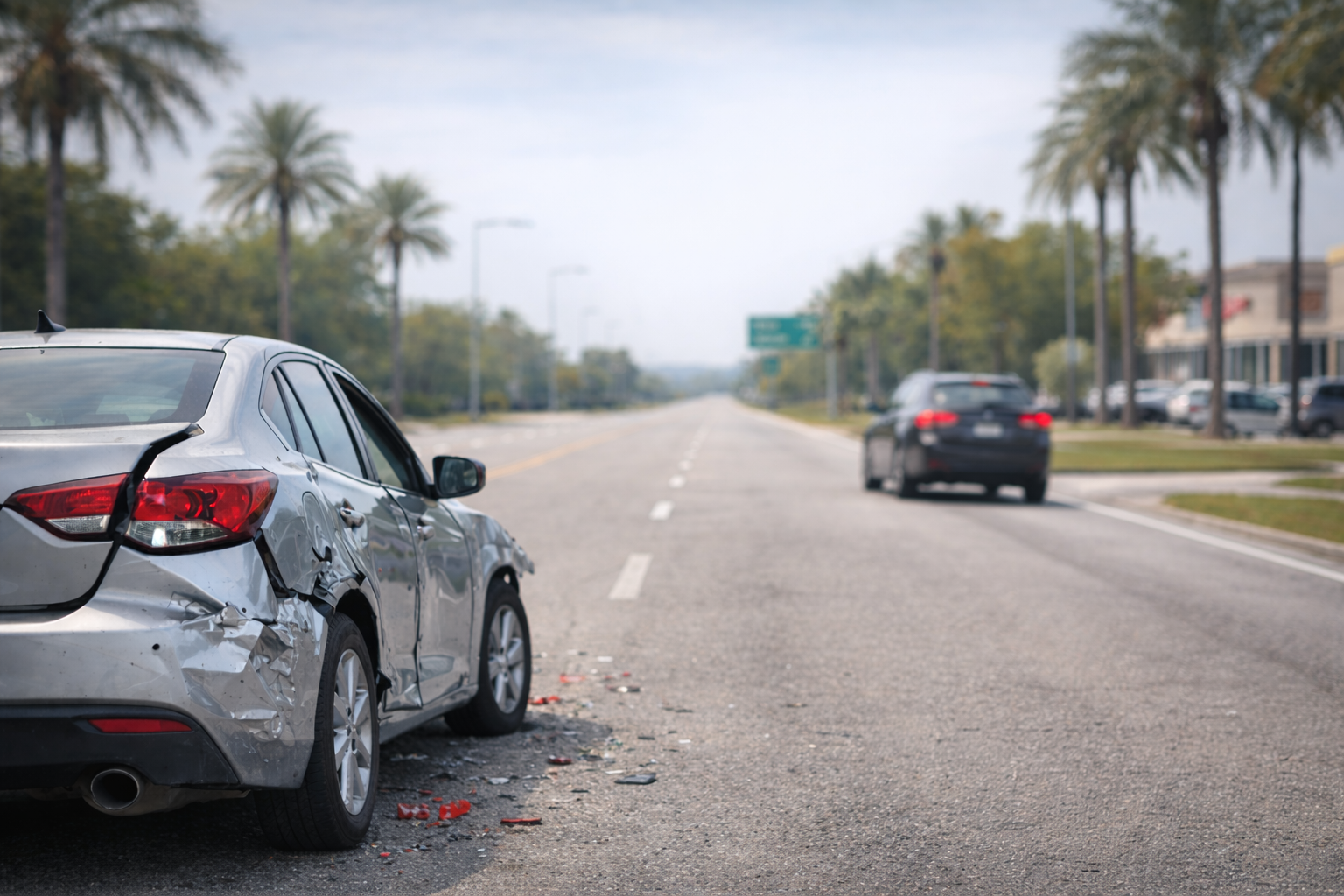
Hit-and-Run Car Accidents in Florida: Statistics, Causes, and What Happens Next
Hit and run car accidents are a serious and growing problem on Florida roads. Each year, hundreds of thousands of crashes are reported across the state, and a significant portion of them involve at least one driver who leaves the scene before exchanging information or speaking with law enforcement. For the people left behind, these incidents create confusion, frustration, and unanswered questions about what comes next.
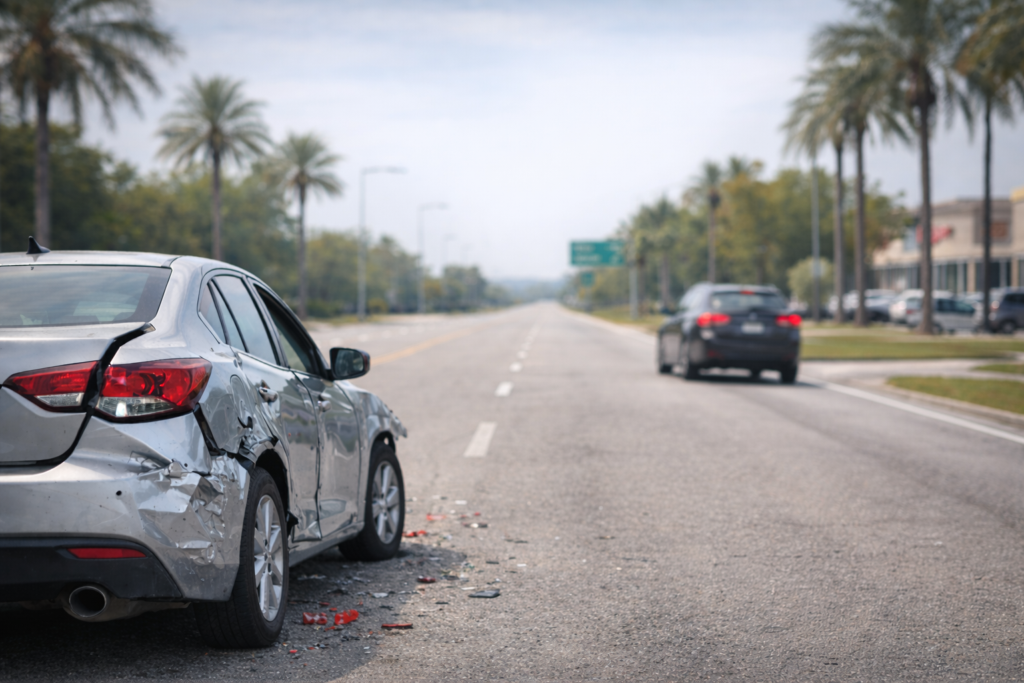
Florida consistently ranks among the states with the highest number of hit and run incidents in the country. Understanding what counts as a hit and run, why these crashes happen so often, and what typically takes place in the hours and days that follow can help shed light on one of the more difficult categories of motor vehicle accidents in the state.
What Counts as a Hit and Run in Florida
A hit and run occurs when a driver involved in a crash leaves the scene without fulfilling the responsibilities required by Florida law. These responsibilities generally include stopping at or near the scene, providing identifying information, and rendering reasonable assistance to anyone who may be injured.
Hit and run incidents are not limited to high speed highway crashes. They can happen in parking lots, residential neighborhoods, intersections, and even at low speeds. A driver who backs into a parked car and drives away without leaving a note has technically left the scene of a crash. So has a driver who clips a cyclist and continues down the road without stopping.
Florida law treats leaving the scene of a crash as a serious matter, with penalties that escalate based on whether the incident involved property damage, injury, or death.
How Common Are Hit and Run Crashes in Florida
Florida reports some of the highest hit and run numbers in the country. According to data published by the Florida Department of Highway Safety and Motor Vehicles, roughly one out of every four crashes in the state involves a driver who leaves the scene. That figure has remained stubbornly high over the past several years, even as overall traffic safety initiatives have expanded.
The vast majority of these incidents involve property damage only, with no reported injuries. However, a meaningful percentage result in serious bodily harm, and a smaller but tragic number involve fatalities. Pedestrians and bicyclists are disproportionately represented in the most serious hit and run cases, often because they have no protection against the impact of a vehicle.
Urban areas tend to see higher hit and run rates than rural ones. Counties with large populations and dense traffic, including Miami Dade, Broward, Hillsborough, and Orange, regularly report some of the highest totals in the state.
Why Drivers Flee the Scene
There is no single reason why a driver chooses to leave the scene of a crash, but certain patterns appear repeatedly in hit and run cases across Florida. Some of the most common factors include:
Driving without insurance
Florida has one of the highest uninsured driver rates in the country. Drivers without valid coverage may panic and flee rather than face the financial consequences of a crash.
Driving without a valid license
Drivers whose licenses have been suspended, revoked, or never issued may leave the scene to avoid being identified.
Impairment
Drivers who are under the influence of alcohol or drugs sometimes flee in an attempt to avoid arrest and additional charges.
Outstanding warrants or unrelated legal issues
Some drivers leave the scene because they fear that any contact with law enforcement could lead to consequences unrelated to the crash itself.
Driving a stolen vehicle
Drivers operating stolen cars almost always flee crashes to avoid being connected to the theft.
Panic or fear
In some cases, drivers simply panic in the moments after a crash and make a poor decision they later regret.
While these factors help explain the trend, they do not change the responsibilities that Florida law places on every driver involved in a crash.
Common Locations and Situations
Hit and run crashes happen in nearly every type of driving environment, but certain situations seem to produce them more frequently than others. Parking lots are one of the most common locations, particularly at shopping centers, grocery stores, and apartment complexes where vehicles are constantly moving in and out of tight spaces.
Intersections are another frequent setting, especially when one driver runs a red light or makes an illegal turn and causes a collision before continuing through the intersection. Late night crashes also tend to involve a higher percentage of hit and run incidents, often because traffic is lighter and drivers may believe they can leave without being seen.
Pedestrian and bicycle crashes represent a particularly serious category. Because the impact often happens quickly and without other vehicles nearby, the driver may feel they have an opportunity to leave before anyone identifies them.
What Typically Happens After a Hit and Run
When a hit and run crash occurs, several important steps generally follow in the hours and days afterward. These can include:
Law enforcement response
Officers respond to the scene, document the crash, and begin gathering information about the vehicle that left.
Witness statements
Anyone who saw the crash may be asked to describe the vehicle, the driver, the direction of travel, and any other identifying details.
Surveillance footage review
Investigators often check nearby businesses, homes, and traffic cameras for video that may have captured the incident or the fleeing vehicle.
Vehicle and debris analysis
Pieces of the fleeing vehicle, such as broken headlight covers, side mirrors, or paint transfers, can sometimes help identify the make and model.
Crash report preparation
A written crash report is prepared, which becomes part of the official record of the incident.
Insurance notification
The drivers and property owners involved typically notify their insurance carriers, who begin their own internal review of the incident.
These steps form the foundation of how hit and run incidents are documented and investigated in Florida.
Summary: Why Hit and Run Crashes Remain a Serious Concern
Hit and run car accidents continue to be one of the most challenging categories of motor vehicle incidents in Florida. The state’s high traffic volume, large uninsured driver population, and dense urban centers all contribute to a problem that has remained persistent for years.
Understanding what counts as a hit and run, how often they occur, and why drivers choose to flee helps explain why these crashes generate so much frustration for the people left behind. While the reasons drivers leave the scene vary widely, the impact on victims, witnesses, and investigators is consistently significant.
Frequently Asked Questions
What is considered a hit and run in Florida?
A hit and run occurs when a driver involved in a crash leaves the scene without providing identifying information or rendering reasonable assistance, as required by Florida law.
How common are hit and run crashes in Florida?
Roughly one out of every four crashes in Florida involves a driver who leaves the scene, making the state one of the leaders in hit and run incidents nationwide.
Why do drivers leave the scene of a crash?
Common reasons include lack of insurance, suspended licenses, impairment, outstanding warrants, and panic in the moments after the crash.
Where do most hit and run crashes occur?
Parking lots, intersections, and urban areas tend to see the highest number of hit and run incidents, though they can happen anywhere.
Are pedestrians and cyclists more vulnerable in hit and run crashes?
Yes. Pedestrians and bicyclists are disproportionately represented in the most serious hit and run incidents because they have no physical protection against the impact of a vehicle.
Contact Lawlor, White & Murphey Today
Hit and run crashes raise difficult questions about identification, investigation, and the path forward for the people left behind. Because these incidents often involve missing information and uncertainty, understanding how Florida handles them is an important part of any conversation about a recent crash.
If you or someone you know has been injured in a motor vehicle accident, the attorneys at Lawlor, White & Murphey can help review the situation and provide insight into how these complex traffic environments contribute to collision risk.
Take the next step—schedule a free consultation with Lawlor, White & Murphey today.