
Underride Truck Collisions: Why These Crashes Are So Catastrophic
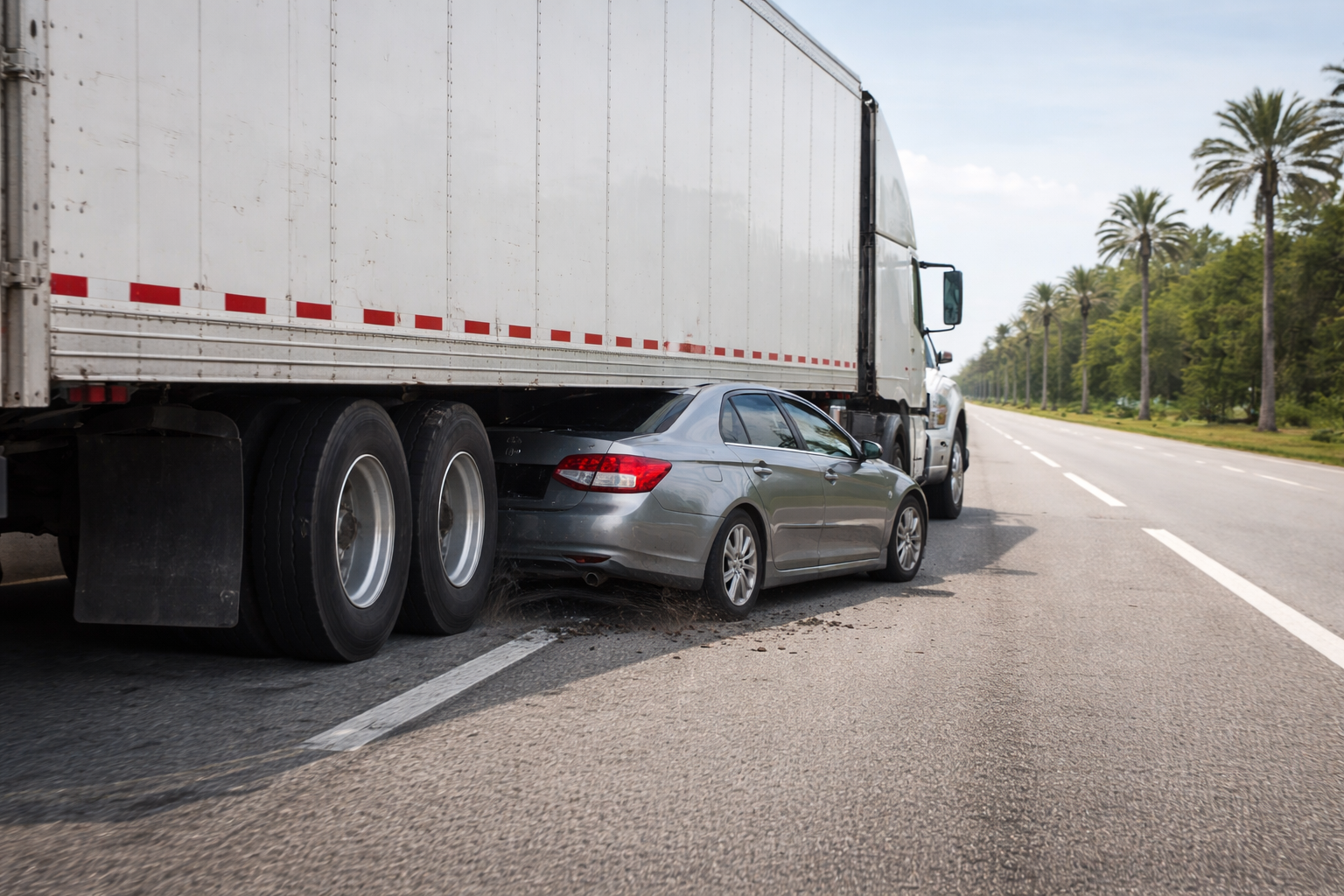
Underride truck collisions are among the most severe and devastating types of motor vehicle accidents on American roadways. These crashes occur when a smaller passenger vehicle slides beneath the body of a large commercial truck, often with catastrophic results. Because of the size difference between passenger cars and tractor trailers, the outcomes of these collisions are frequently far worse than those of standard rear end or side impact crashes.
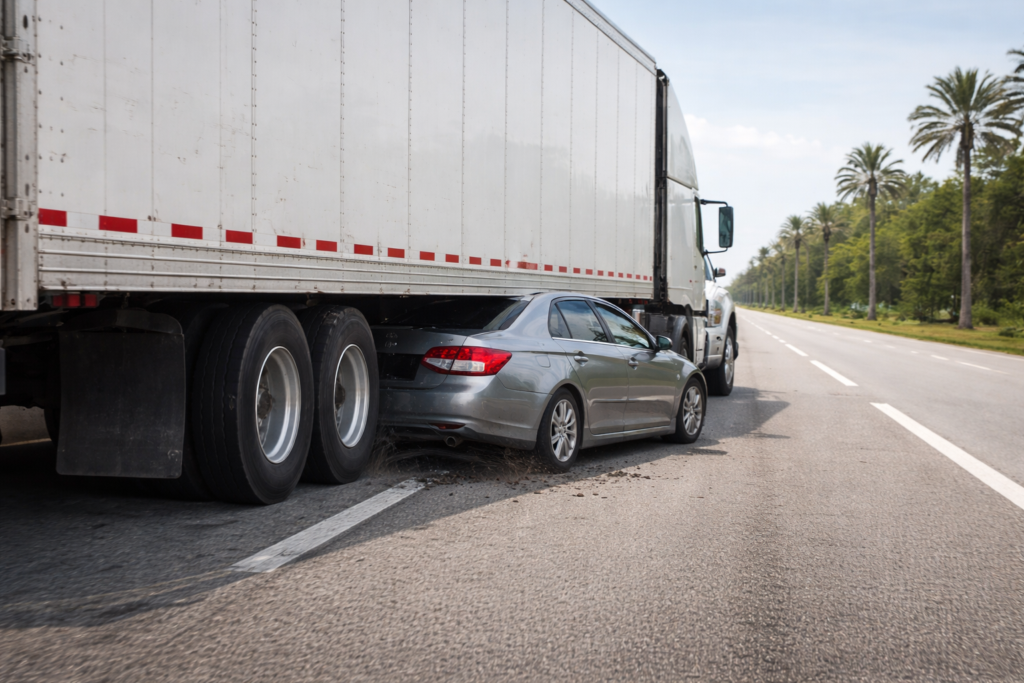
Florida highways see a steady flow of commercial truck traffic every day, particularly along major corridors like I 95, I 75, and I 10. With that volume comes an ongoing risk of underride incidents, which have drawn increasing attention from federal regulators, safety advocates, and the general public over the past several years. The following sections take a closer look at what underride collisions are, why they are so dangerous, and how regulations have evolved in response to them.
What Is an Underride Collision
An underride collision occurs when a passenger vehicle strikes a large truck or trailer and slides partially or fully beneath the truck’s body. Instead of the two vehicles colliding bumper to bumper, the smaller vehicle passes under the truck’s frame, which sits significantly higher off the ground than a standard car or SUV.
These crashes happen most often with tractor trailers, box trucks, and other large commercial vehicles that have high ground clearance and long flat sides or rear ends. Because the impact point is often above the hood of the passenger vehicle, the truck’s body can make direct contact with the windshield, roof, and passenger compartment, bypassing the crumple zones and safety structures designed to protect occupants in a typical collision.
The Three Main Types of Underride Crashes
Underride crashes generally fall into three categories based on the direction of impact. Each type carries its own distinct risks and safety challenges.
Rear underride
This is the most commonly discussed type of underride crash. It occurs when a passenger vehicle strikes the back of a trailer, often in stop and go traffic or when a truck is slowing unexpectedly. The front of the car slides beneath the rear of the trailer, with devastating consequences for the driver and front seat passengers.
Side underride
Side underride crashes happen when a passenger vehicle strikes the side of a trailer, typically during a turn or when a truck is crossing an intersection. These crashes are often deadly because most trailers do not have protective guards along their sides.
Front underride
Front underride crashes are less common but still occur, particularly in head on or angled collisions where a passenger vehicle strikes the front of a large truck. The height difference can allow the car to slide underneath the truck’s front bumper and cab.
All three categories share the same fundamental problem. The passenger vehicle is unable to engage the truck’s body in a way that allows modern safety features to perform as designed.
Why These Crashes Are So Deadly
Underride collisions are catastrophic for several reasons related to the physics of the impact and the design of modern passenger vehicles.
Modern cars are built with crumple zones, reinforced bumpers, airbags, and reinforced passenger compartments that are designed to absorb and redirect crash forces. These safety systems rely on the assumption that the first point of contact will be the front or rear of the vehicle, at roughly the same height as the bumpers of other passenger vehicles.
When a car slides beneath a truck, however, the first point of contact is often the windshield or the A pillars rather than the bumper. That means the built in safety systems never have a chance to engage properly. Airbags may deploy, but the roof, windshield, and upper passenger compartment absorb the full force of the impact.
The height differential also means that the truck’s frame or trailer bed can intrude directly into the passenger area, sometimes causing severe injuries to the head, neck, and upper body. Survivability in these crashes is often significantly lower than in other types of truck collisions.
Common Factors in Underride Crashes
While underride crashes can happen in many different scenarios, certain factors appear repeatedly in incident reports. These include:
Sudden braking or stopped trucks
Rear underride crashes often occur when a truck stops unexpectedly due to traffic, mechanical problems, or roadway obstacles.
Poor visibility at night
Many trailers have limited reflective markings, and their dark colored sides and rears can be difficult to see in low light conditions.
Turning or crossing maneuvers
Side underride crashes frequently happen when a truck is turning across lanes of traffic, blocking the roadway while a passenger vehicle approaches.
Weather conditions
Rain, fog, and other weather events reduce visibility and traction, increasing the chances of a rear end crash with a slow moving or stopped truck.
Distracted or fatigued driving
Drivers of passenger vehicles who are not fully alert may not notice a slow moving truck until it is too late to react safely.
These factors do not always occur together, but they appear frequently enough in crash data to shape the ongoing conversation about underride safety.
Federal Regulations and Safety Guards
The federal government has taken steps over the years to reduce the frequency and severity of underride crashes. Rear underride guards, also known as ICC bumpers, have been required on most large trailers in the United States for decades. These guards are metal structures attached to the rear of a trailer that are designed to prevent passenger vehicles from sliding underneath in a rear end collision.
However, safety advocates have long pointed out that older rear underride guards were often inadequate, particularly in offset or high speed impacts. Updated federal standards have been introduced in recent years to improve the strength and design of these guards.
Side underride guards remain a topic of ongoing debate. Unlike rear guards, side underride protection is not federally required on most trailers. Safety organizations have pushed for mandatory side guards for years, and several legislative proposals have sought to expand the requirements. The issue remains an active area of regulatory discussion.
Front underride protection has received less attention historically but is another area where safety advocates continue to push for improvements.
Summary: Why Underride Crashes Remain a Serious Concern
Underride truck collisions continue to be one of the most severe categories of motor vehicle accidents on American roadways. The combination of the size difference between passenger vehicles and large trucks, the bypassing of built in safety features, and the vulnerability of occupants during these impacts all contribute to the catastrophic nature of these crashes.
Although federal regulations have addressed some aspects of underride safety, the issue remains a persistent concern for drivers, researchers, and traffic safety organizations. Understanding how these crashes occur and why they are so dangerous helps explain why they continue to receive attention at both the state and federal level.
Frequently Asked Questions
What is an underride crash?
An underride crash occurs when a passenger vehicle slides partially or fully beneath a large truck or trailer during a collision, often with catastrophic results.
Why are underride crashes so dangerous?
The height difference between a car and a large truck means that the car’s built in safety features, such as crumple zones and airbags, cannot engage properly, and the truck’s body may intrude directly into the passenger compartment.
What are the main types of underride crashes?
The three main types are rear underride, side underride, and front underride, each involving a different direction of impact between the passenger vehicle and the truck.
Are rear underride guards required on trucks?
Yes. Most large trailers in the United States are required to have rear underride guards, though the adequacy of older designs has been an ongoing concern.
Are side underride guards required?
No. Side underride guards are not federally required on most trailers, although safety advocates have pushed for mandatory requirements for years.
Contact Lawlor, White & Murphey Today
Underride truck collisions raise complex questions about vehicle design, federal safety standards, and the factors that contribute to some of the most severe crashes on American roadways. Because these incidents often involve serious consequences, understanding how they happen is an important part of any conversation about a recent crash.
Take the next step—schedule a free consultation with Lawlor, White & Murphey today.