
Why Boating Season Sparks More Collisions on Florida Roads
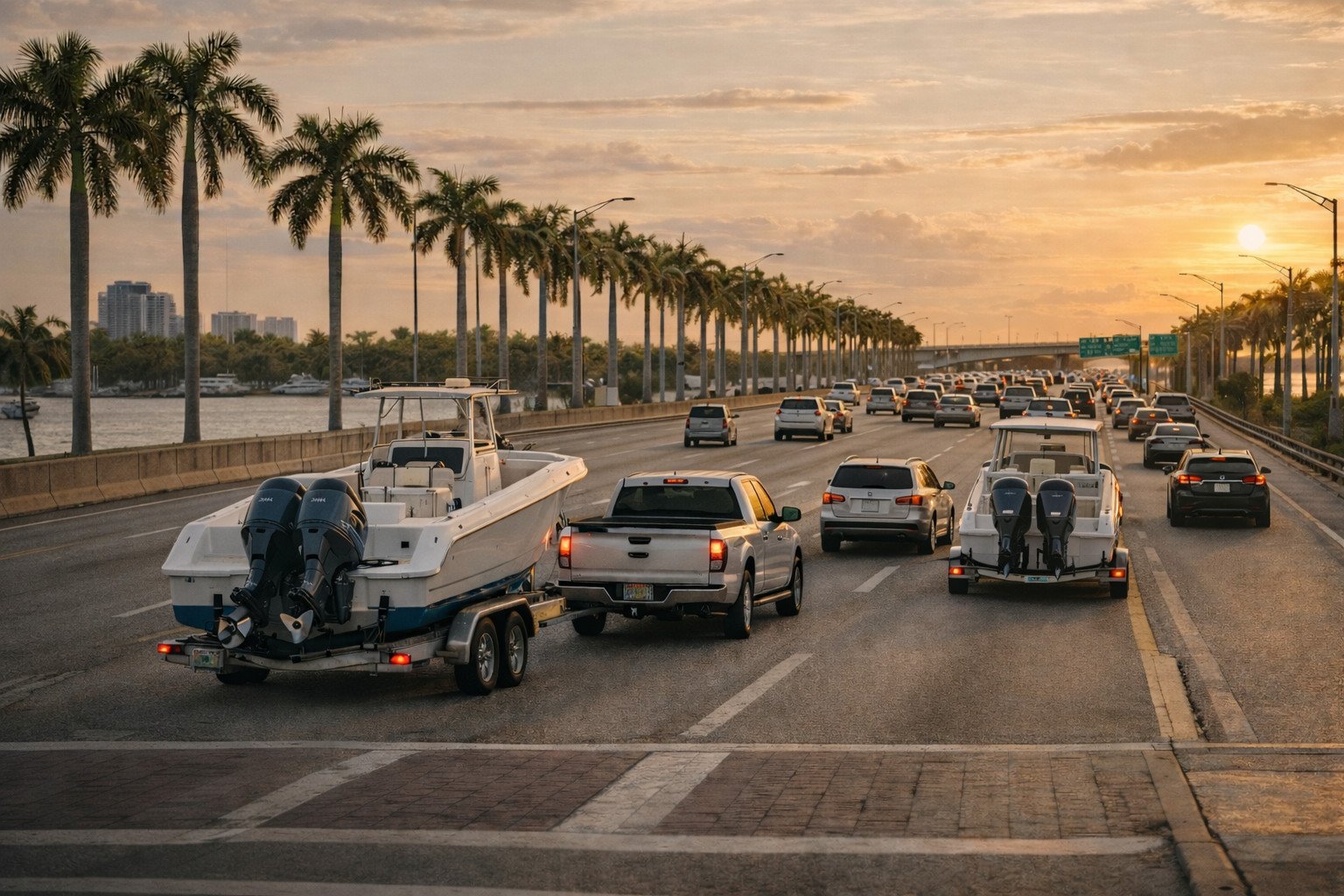
Florida’s roadways undergo noticeable changes during boating season. As warmer weather arrives, thousands of residents and tourists tow boats to marinas, launch ramps, and coastal destinations across the state. This seasonal shift adds heavy trailers and towing vehicles to roads that already experience significant daily traffic. The result is a measurable increase in boating roadway collisions throughout Florida, particularly in coastal and waterfront regions.
Unlike typical commuter traffic, boating season introduces vehicles with different handling characteristics and drivers with varying levels of towing experience. Towing vehicles accelerate more slowly, require longer stopping distances, and need additional space to turn and merge. When these factors combine with congested coastal corridors and weekend travel surges, collision risks rise sharply and leave little margin for error.
Many boating related crashes occur near waterfront destinations, highway ramps, and bridge approaches. These locations often experience sudden traffic changes, limited visibility, and lane reductions. Understanding why these accidents happen requires examining how boating season alters traffic behavior and roadway conditions across Florida.
Why Does Boating Season Lead to More Roadway Collisions?
Boating season creates driving conditions that differ significantly from everyday travel. Drivers towing boats must manage larger vehicles while navigating crowded roads, unfamiliar routes, and time sensitive travel schedules. These demands increase mental workload and reduce reaction time, especially in high traffic environments.
Boating roadway collisions often involve drivers who do not regularly tow trailers. Inexperience combined with high traffic volume makes it harder to anticipate hazard
1. Inexperienced Towing Drivers on Florida Roads
Many boating roadway collisions involve drivers with limited towing experience. Some individuals tow boats only a few times per year, often during holidays or weekends when roads are busiest. These drivers may not be fully prepared for the changes in braking distance, turning radius, and lane positioning required when towing a trailer.
Inexperience can lead to hesitation, delayed braking, or overcorrection during turns. On busy Florida roads, these errors leave little room for recovery and frequently result in rear end or side impact collisions. These risks increase further when drivers are distracted by navigation or traffic conditions.
2. Trailer Stability and Load Management Issues
Trailer stability plays a major role in boating roadway collisions. Improper hitching, uneven weight distribution, or shifting loads can cause trailers to sway or behave unpredictably, especially at highway speeds. Even small stability issues can escalate quickly in congested traffic.
When trailer sway begins, drivers may react abruptly by braking or steering sharply. These responses often worsen instability and increase the risk of losing control. In dense traffic, a swaying trailer can quickly trigger multi vehicle collisions involving several lanes of traffic.
3. Navigation Errors Near Marinas and Launch Points
Boating destinations are often located along coastal roads, service drives, or secondary highways that are unfamiliar to visiting drivers. Missed turns, sudden lane changes, and abrupt stops are common as drivers attempt to reach marinas or ramps on time.
These navigation errors frequently lead to rear end collisions and sideswipe accidents, particularly when traffic volumes are high and reaction time is limited. Congested access roads leave little space for corrective maneuvers once a mistake is made.
How Congestion Increases Collision Risk During Boating Season
Florida roadways experience significant congestion during peak boating months. Highways, coastal arterials, and bridge approaches often operate near capacity, especially on weekends and holidays. Towing vehicles must navigate stop and go traffic while managing longer stopping distances and reduced maneuverability. Congestion increases the likelihood of chain reaction collisions. When traffic slows suddenly, drivers following towing vehicles may not anticipate delayed braking. These crashes often involve multiple vehicles and can block lanes for extended periods, increasing the risk of secondary accidents.
Common Risky Driver Behaviors
Examples include:
- Sudden slowdowns near marina access roads
- Lane merges at bridge approaches
- Traffic backups caused by drawbridge openings
- Heavy recreational traffic mixed with commercial vehicles
These conditions are particularly hazardous when towing drivers are fatigued, unfamiliar with the area, or attempting to maintain highway speeds in dense traffic.
Coastal Corridors and High Risk Boating Travel Zones
Certain Florida roadways consistently experience higher collision rates during boating season. These areas combine heavy recreational traffic with limited roadway space and frequent access points to waterfront destinations.
High risk boating travel zones often include:
- Coastal highways serving marinas and waterfront parks
- Bridge approaches near inlets and causeways
- Roads leading to public boat ramps
- Urban waterfront districts with pedestrian activity
Drivers entering these zones may encounter sudden congestion, narrow lanes, and unpredictable traffic behavior, all of which contribute to boating roadway collisions during peak travel periods.
Injuries Common in Boating Roadway Collisions
Boating roadway collisions often involve larger vehicles and heavier loads, increasing injury severity. Even moderate speed crashes can produce significant force due to trailer weight and vehicle length, especially in multi vehicle incidents.
Injuries frequently seen in these crashes include:
- Traumatic brain injuries from sudden deceleration
- Neck and spinal injuries caused by forceful impacts
- Chest injuries from seat belt restraint forces
- Fractures to arms, legs, or ribs
- Internal injuries that may not be immediately apparent
Because many boating related crashes occur away from a driver’s home area, injured individuals may face additional challenges accessing follow up care and managing recovery.
Insurance and Claim Challenges After Boating Related Crashes
Boating roadway collisions can complicate insurance claims. Multiple vehicles, towing equipment, and out of state drivers may be involved. Determining fault often takes longer, especially when accounts differ or equipment condition is disputed.
Insurance issues may include:
- Coverage questions related to trailers
- Disputes involving multiple insurers
- Delays caused by out of state policyholders
- Challenges obtaining witness statements
These factors make early documentation and accurate reporting especially important following boating related crashes.
What To Do After a Boating Roadway Collision
Crashes during boating season often occur in busy or unfamiliar locations, increasing stress and confusion. Taking certain steps can help protect health and preserve important information while details are still fresh.
Step 1: Seek medical evaluation, even if injuries seem minor.
Step 2: Document the crash scene, including trailer position and roadway conditions.
Step 3: Collect contact and insurance information from all involved parties.
Step 4: Keep records of symptoms and medical treatment.
Step 5: Save travel details related to boating activity if applicable.
Frequently Asked Questions
Why do boating roadway collisions increase during boating season?
Boating season increases trailer traffic, congestion, and the number of inexperienced towing drivers on Florida roads. These factors combine to elevate collision risk.
Are boating roadway collisions more severe than typical accidents?
They often are. The added weight and size of towing vehicles increase impact forces, especially in multi vehicle crashes.
Where do boating related roadway crashes happen most often?
Most occur near marinas, boat ramps, coastal highways, and bridge approaches where traffic patterns change quickly.
Does trailer sway contribute to boating roadway collisions?
Yes. Improper hitching or load distribution can cause trailers to sway, leading to loss of control and collisions.
Can injuries appear after leaving the crash scene?
Yes. Adrenaline may mask pain initially. Symptoms such as stiffness, headaches, and back pain may develop hours or days later.
Summary: Why Boating Season Increases Roadway Collision Risks
Boating season significantly alters driving conditions across Florida. Increased trailer traffic, limited towing experience, congested coastal corridors, and navigation challenges combine to raise boating roadway collisions. These crashes often involve multiple vehicles and serious injuries, particularly during weekends and holidays.
Understanding how boating season affects roadway behavior helps explain why collision rates rise during Florida’s busiest recreational months and why heightened awareness is critical during this period.
Contact Lawlor, White & Murphey Today
If you or someone you know has experienced delayed medical care after a car accident, don’t wait any longer. Your health and your legal rights depend on timely action. Speak with a qualified personal injury attorney who can guide you through the process, help you gather evidence, and fight for the compensation you deserve.
Take the next step—schedule a free consultation with Lawlor, White & Murphey today.