
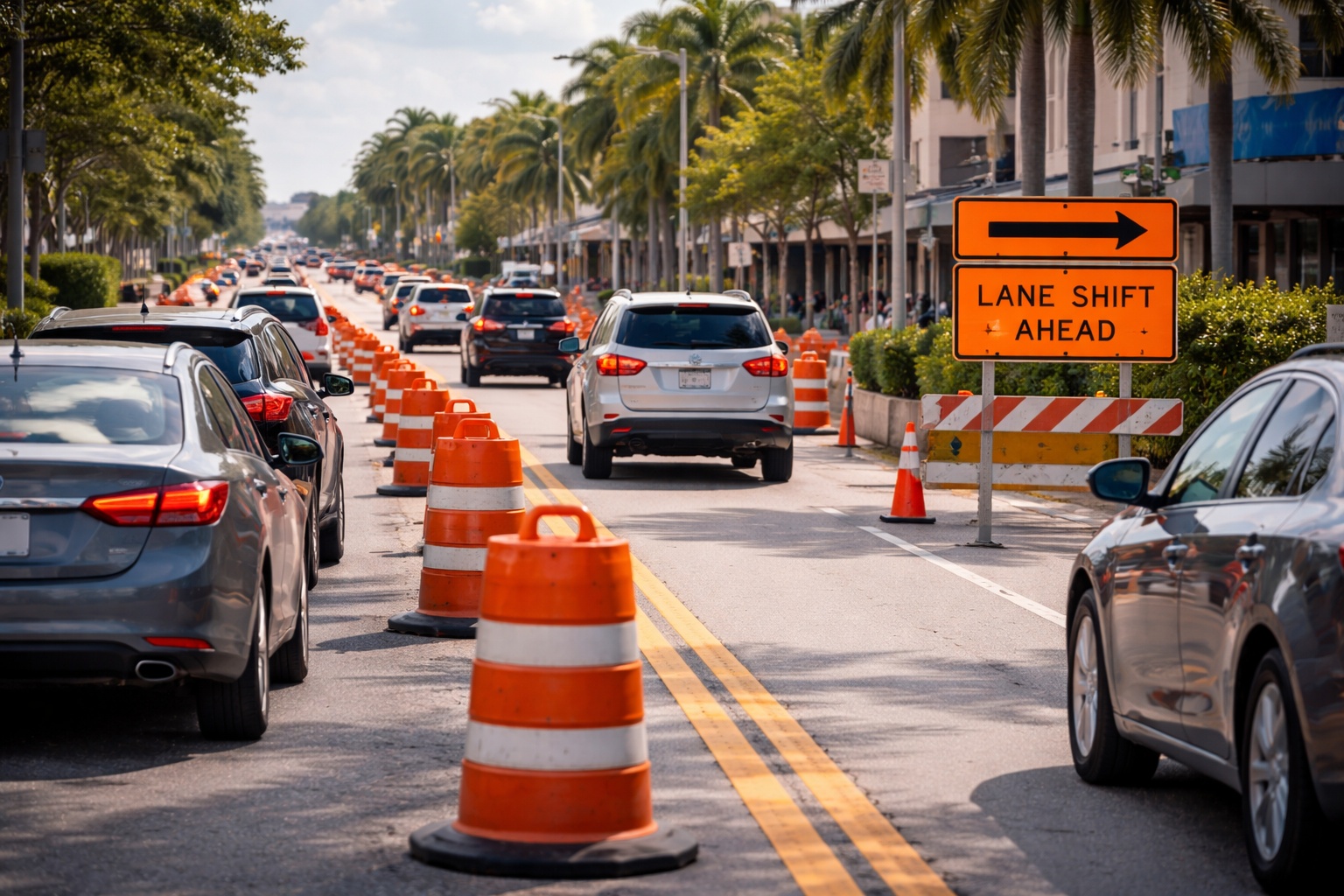
Why Construction Detours Create Unexpected Vehicle Collision Hazards on Florida Streets
Construction detours are intended to keep traffic moving while roadway work is completed, but they often introduce new risks that drivers do not anticipate. Motorists rely heavily on routine, visual familiarity, and predictable traffic flow when navigating daily routes. When detours disrupt those expectations, reaction time narrows and collision risk increases. Detour collision hazards are especially common on Florida streets where population growth, tourism, and year round construction combine.
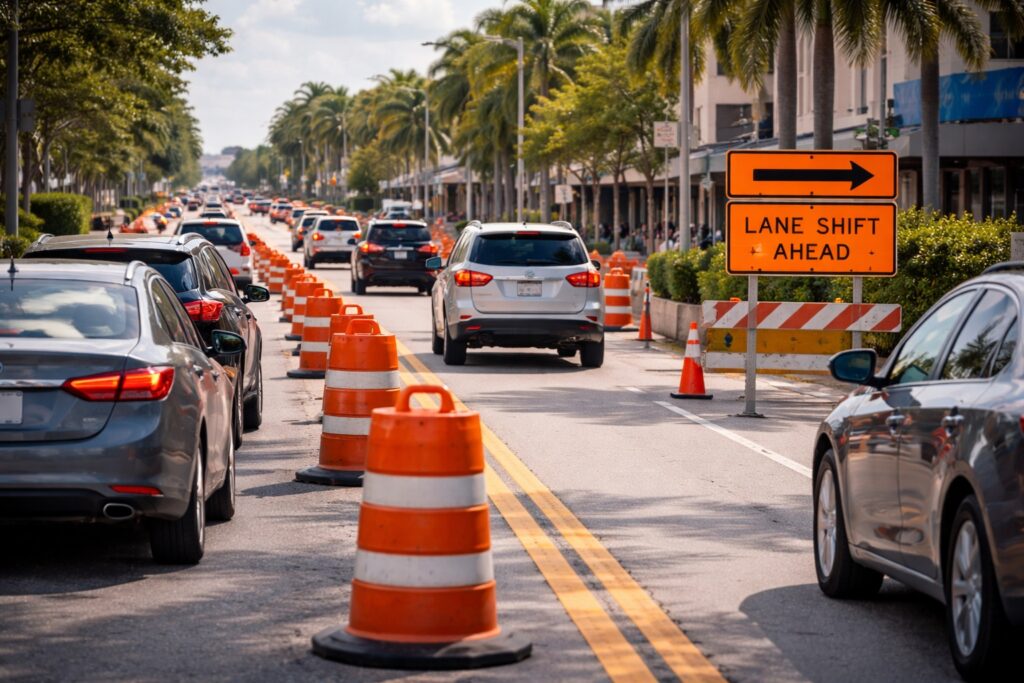
Unlike permanent roadway changes, detours are temporary and frequently adjusted. Drivers may encounter different lane configurations, signal timing, or routing from one day to the next. This instability creates environments where even attentive drivers struggle to process information quickly enough to avoid conflict.
How Detours Disrupt Driver Expectation
Drivers build mental maps of the roads they use regularly. These maps guide decisions about speed, lane choice, turning behavior, and stopping distance. Construction detours undermine those expectations by altering traffic patterns without providing enough time for drivers to adapt.
Detour collision hazards often arise when drivers assume familiar conditions still apply. A lane that normally continues straight may suddenly shift or end. A turn lane may be repurposed as a through lane. When these changes appear with limited warning, drivers must make rapid corrections in constrained spaces.
Expectation failure is particularly dangerous at intersections. Drivers may enter an intersection expecting a standard signal cycle, only to encounter altered timing or temporary stop controls. These surprises increase the likelihood of rear end collisions and intersection conflicts.
Temporary Lane Shifts and Narrowed Travel Space
Temporary lane shifts are among the most common contributors to detour collision hazards. Construction zones often reduce lane width to accommodate equipment or barriers. Drivers accustomed to standard spacing suddenly find themselves navigating tighter lanes with little margin for error.
Narrowed lanes reduce lateral clearance between vehicles, increasing the risk of sideswipe collisions. When traffic is heavy, drivers may drift slightly while adjusting to new lane positions. Even small steering errors can result in contact when space is limited.
In some cases, detours route vehicles onto streets not designed for high volumes of traffic. Residential roads and secondary streets may lack adequate lane width, shoulders, or turning radii, further increasing collision risk.
Signage Limitations and Information Overload
Clear signage is critical in construction zones, yet detour collision hazards often stem from inadequate or inconsistent information. Temporary signs may be placed too close to decision points, giving drivers little time to respond. In other cases, signage may conflict with existing pavement markings or permanent signs.
Drivers processing multiple signs in quick succession may miss critical instructions. This information overload increases hesitation, abrupt braking, and last second lane changes. When multiple drivers react differently to the same signage, collisions become more likely.
Nighttime conditions amplify these issues. Reflectivity varies across temporary signs and barriers, making some warnings difficult to see after dark or in rain.
Blocked Sightlines and Visual Obstructions
Construction equipment, barriers, and materials frequently block sightlines that drivers rely on to anticipate traffic movement. Detour collision hazards increase when visibility around corners, driveways, and intersections is reduced.
Blocked sightlines make it harder to judge oncoming traffic speed and position. Drivers entering from side streets or driveways may not see approaching vehicles until the final moments. These conditions increase the risk of angle collisions and sudden braking incidents.
Pedestrians and cyclists navigating detour areas also contribute to unpredictability. Temporary walkways and crossings may place foot traffic in unfamiliar locations, adding another layer of complexity for drivers.
Last Minute Merges and Sudden Traffic Compression
Detours often require traffic to merge abruptly when lanes are closed or rerouted. These merges frequently occur with limited advance warning, forcing drivers to make quick decisions under pressure.
Detour collision hazards rise sharply at merge points where traffic density increases suddenly. Drivers may brake aggressively or attempt to force entry into congested lanes. These behaviors contribute to rear end collisions and sideswipes, particularly during peak traffic hours.
Commercial vehicles face additional challenges in these environments. Trucks require more space and time to maneuver, and abrupt detours can disrupt their ability to merge smoothly, affecting surrounding traffic.
Changing Conditions and Driver Fatigue
One of the defining characteristics of construction detours is inconsistency. Lane layouts, signage, and routing may change daily or weekly. Drivers cannot rely on memory alone and must remain constantly alert.
Over time, this constant adjustment contributes to driver fatigue. Repeated exposure to detour collision hazards reduces attention and increases the likelihood of mistakes. Familiar routes become mentally taxing rather than routine.
In Florida, prolonged construction schedules mean drivers may encounter detours for months at a time. This extended exposure increases cumulative risk.
Common Collision Patterns in Construction Detour Zones
- Rear end collisions
Sudden braking due to unexpected lane endings or signal changes. - Sideswipe accidents
Reduced lane width and abrupt merges bring vehicles into close contact. - Intersection conflicts
Altered signal timing and blocked sightlines disrupt crossing movements. - Wrong way entries
Confusing signage leads drivers into opposing traffic or restricted lanes.
Injury Consequences Linked to Detour Related Collisions
Collisions in construction detour zones often occur at moderate speeds but involve abrupt stopping or lateral impact. These forces can produce meaningful injuries even when vehicle damage appears limited.
Common injuries include neck and back strain, disc aggravation, and soft tissue injuries. Head injuries may occur when occupants are caught off guard and unable to brace. As with many environment driven collisions, symptoms may develop hours or days after the incident.
Because detour related collisions often feel avoidable in hindsight, injured individuals may underestimate the seriousness of their injuries and delay medical evaluation.
What to Do After a Collision in a Construction Detour Zone
The steps taken after a detour related collision can influence health outcomes and documentation clarity. Temporary traffic setups can make it difficult to reconstruct what occurred.
Important actions after a construction detour collision include:
- Seek medical evaluation promptly
Sudden braking and lateral impacts can cause delayed injuries. - Document the detour setup
Photograph signage, lane markings, barriers, and equipment placement. - Note lighting and visibility conditions
Record whether the collision occurred at night, in rain, or during reduced visibility. - Monitor delayed symptoms
Pain, stiffness, or dizziness may appear hours or days later.
Summary: Why Detour Collision Hazards Persist on Florida Streets
Detour collision hazards arise because temporary traffic patterns disrupt driver expectations, reduce visibility, and compress decision making into unfamiliar spaces. Narrowed lanes, unclear signage, blocked sightlines, and sudden merges create environments where even cautious drivers struggle to react in time.
Florida’s ongoing construction activity, combined with heavy traffic and frequent routing changes, amplifies these risks. Understanding how detours alter normal driving conditions explains why collisions remain common in construction zones across the state.
Frequently Asked Questions
Why do construction detours cause more collisions than permanent road changes?
Detours change frequently and disrupt familiar patterns, giving drivers less time to adapt and increasing expectation failure.
Are detour collisions more common at night?
Yes. Reduced visibility makes temporary signage and lane shifts harder to detect after dark.
Do narrowed lanes increase sideswipe risk?
Yes. Reduced lane width leaves little room for correction and increases lateral contact between vehicles.
Why are rear end collisions common in detour zones?
Unexpected lane endings and signal changes cause sudden braking in dense traffic.
Can injuries from detour collisions appear later?
Yes. Sudden stops and side impacts often cause delayed neck, back, and soft tissue symptoms.
Contact Lawlor, White & Murphey Today
Construction detour collisions often involve confusion, delayed injuries, and uncertainty about how the incident occurred. Temporary traffic setups and changing conditions can make these crashes difficult to understand. Speak with a qualified personal injury attorney who can guide you through the process, help you gather evidence, and fight for the compensation you deserve.
Take the next step—schedule a free consultation with Lawlor, White & Murphey today.