
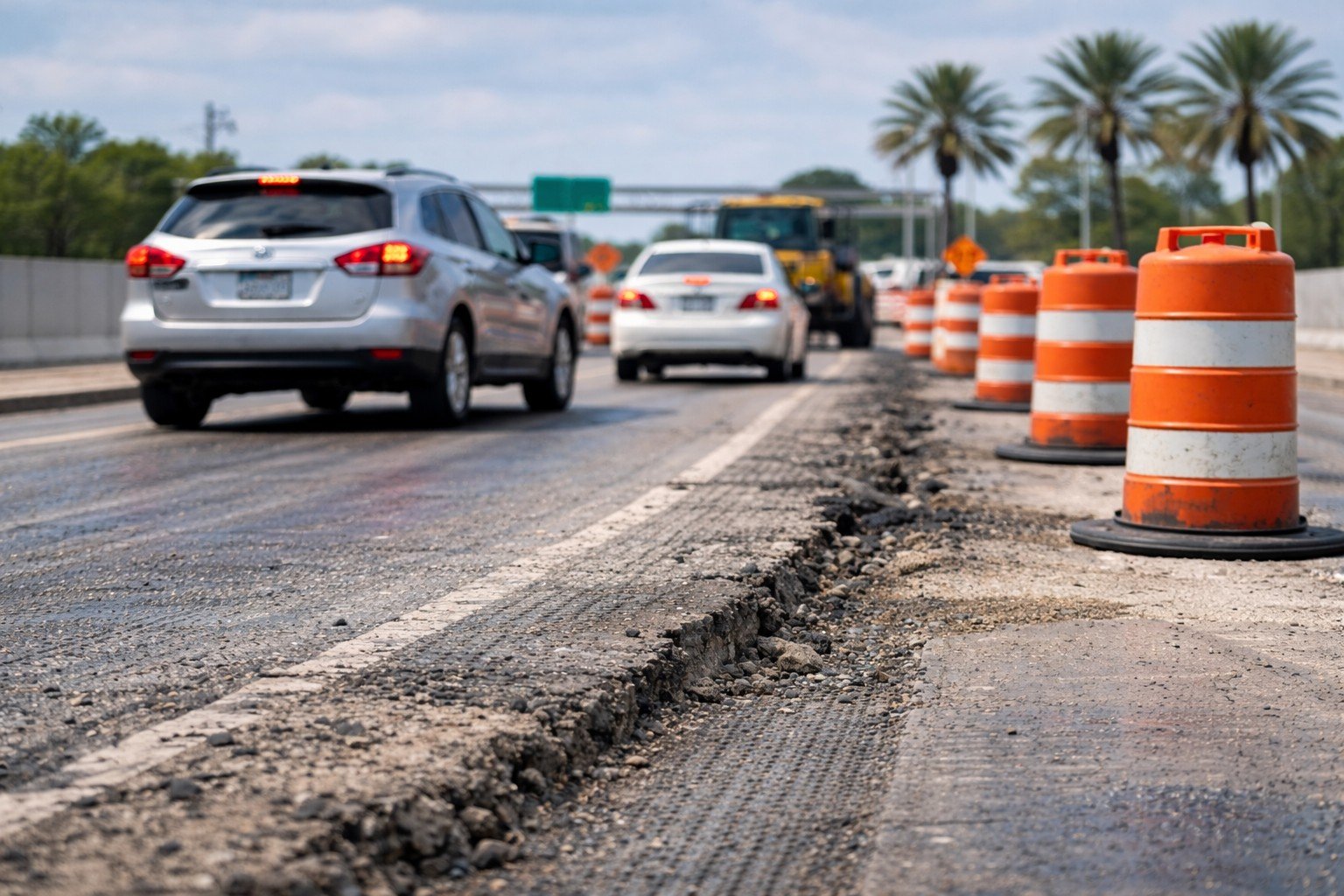
Construction Zones in Florida Create High-Risk Driving Conditions
Construction zones are often treated as short interruptions in otherwise familiar roadways. Drivers expect inconvenience, not danger. In reality, these environments force rapid changes in speed, positioning, and decision making while traffic continues to flow through narrowed and unfamiliar paths.
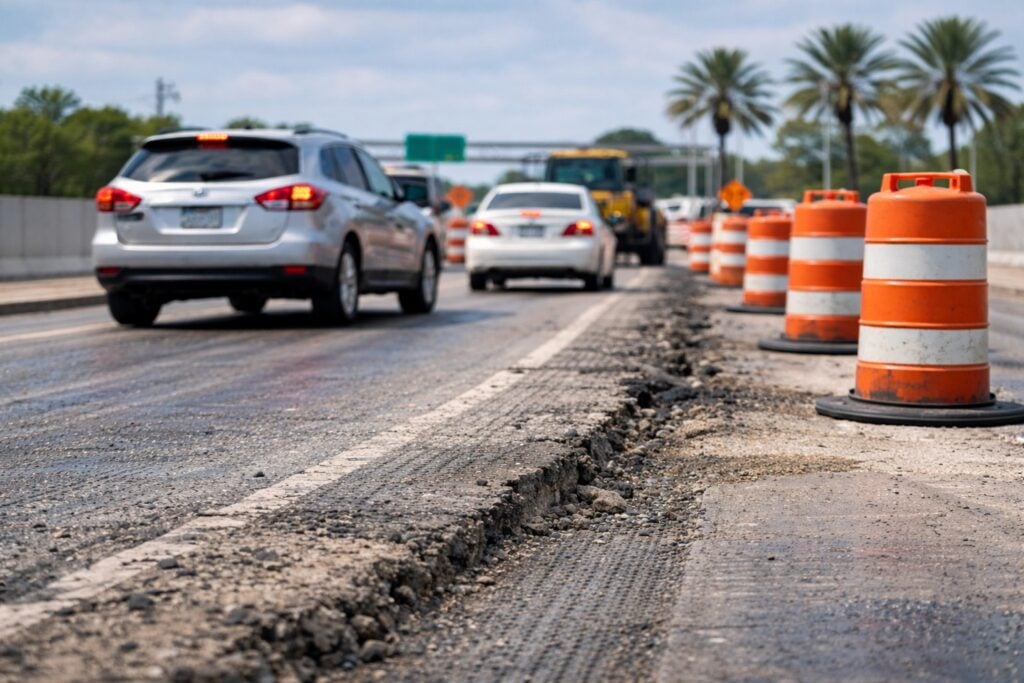
Construction zone collision risks increase because drivers are asked to adapt to layouts that may change daily. Lane shifts, temporary barriers, and altered traffic patterns remove the visual cues drivers rely on to anticipate movement. Unlike permanent road designs, construction zones offer little consistency, which increases uncertainty and compresses reaction time. This risk is especially pronounced in Florida, where roadway construction is ongoing and work zones are a routine part of daily travel rather than an occasional event.
Temporary Design Forces High-Risk Driving Decisions
Unlike completed roadways, construction zones rely on temporary design solutions that prioritize efficiency over clarity. Cones, barricades, temporary striping, and movable barriers redirect traffic through narrowed paths that demand precision. These designs eliminate the buffer zones drivers rely on to correct mistakes.
Narrowed lanes require constant steering control, especially when vehicles pass closely at speed. Barriers prevent evasive maneuvers if traffic slows suddenly. Drivers cannot drift, brake late, or change lanes gradually without consequence. The result is a driving environment where small misjudgments escalate quickly into collisions.
Construction zone collision risks are driven less by reckless behavior and more by forced decision density. Drivers must read signs, follow explains unfamiliar curves, adjust speed, and anticipate congestion all at once, often with limited visual information and no margin for recovery.
Lane Shifts, Detours, and Expectation Failure
One of the most dangerous aspects of construction zones is how they break driver expectations. Drivers rely heavily on consistency to anticipate traffic flow. Construction zones remove that consistency.
Temporary lane shifts may curve abruptly or narrow without sufficient advance notice. Detours reroute traffic through unfamiliar paths that may not handle the increased volume smoothly. Navigation systems often fail to reflect temporary changes, leaving drivers unprepared for sudden turns or merges.
When expectations fail, hesitation and last-second decisions follow. Drivers brake hard, merge late, or drift into adjacent lanes. These reactions increase the likelihood of sideswipes and rear-end collisions, especially in congested work zones.
Pavement Conditions and Environmental Stressors
Construction activity often leaves behind uneven pavement, exposed milled surfaces, or temporary patches. These surfaces affect vehicle stability and braking performance, particularly at higher speeds. Drivers may experience unexpected vibrations or loss of traction that prompt sudden braking.
Florida’s weather compounds these issues. Rain interacts with unfinished pavement, metal plates, and debris, reducing grip and increasing stopping distance. At night, temporary lighting may create glare or shadowed areas that distort depth perception and obscure lane markings.
These environmental stressors quietly increase construction zone collision risks by reducing both traction and visibility at the exact moments drivers need clarity most.
Congestion and Stop-and-Go Pressure
Construction zones routinely create sudden congestion, even outside peak travel hours. Lane closures reduce capacity, causing traffic to slow or stop abruptly. Drivers approaching at speed may not see backups until it is too late to respond smoothly.
Stop-and-go traffic increases rear-end collisions, particularly when following distances shrink due to narrowed lanes. Barriers and equipment limit lateral escape options, leaving drivers trapped in tight corridors when traffic stalls.
This pressure environment elevates stress and reduces reaction time, increasing the likelihood of mistakes even among cautious drivers.
Common Collision Patterns in Construction Zones
While conditions vary by project, construction zones tend to produce consistent accident types due to their design constraints.
- Rear-end collisions caused by sudden slowdowns near lane closures
- Sideswipe accidents during lane shifts or merges
- Single-vehicle crashes involving barriers, cones, or uneven pavement
- Collisions with construction equipment entering or exiting traffic
These patterns reflect environmental pressure rather than aggressive driving. The design itself funnels vehicles into high-risk interactions.
What to Do After a Parking Garage Collision
The steps taken after a parking garage accident can significantly influence both health outcomes and the clarity of available information. Even low speed collisions inside garages can involve forces that lead to meaningful injuries.
Important actions after a parking garage collision include:
- Seek medical evaluation promptly
Head, neck, and soft tissue injuries may not cause immediate pain. Early evaluation helps identify injuries that can worsen over time. - Photograph the scene before vehicles are moved
Capture vehicle positions, nearby pillars, ramps, signage, lighting conditions, and any visible obstructions. These details are difficult to reconstruct later. - Document the garage layout and level
Note the specific level, ramp, or turn where the collision occurred. Garage design features often play a role in how accidents happen. - Identify witnesses when possible
Other drivers or pedestrians in the garage may have observed part of the incident. Their perspective can help clarify events. - Monitor symptoms that develop after leaving the scene
Keep track of pain, stiffness, dizziness, or other symptoms that appear hours or days later. Delayed symptoms are common in confined space collisions.
Garage related injuries often involve awkward angles and sudden stops, which can lead to lingering discomfort or mobility issues if left unaddressed.
Frequently Asked Questions
Why do construction zones increase collision risks even when speed limits are reduced?
Construction zones reduce available space and alter traffic flow in ways that limit reaction time. Narrowed lanes, shifting layouts, and sudden congestion mean drivers have less room to brake, steer, or recover from minor mistakes. Lower speeds do not eliminate risk when margins for error disappear.
Are rear end collisions common in Florida construction zones?
Yes. Lane closures and reduced capacity often cause sudden slowdowns, especially near merges and detours. Drivers approaching at speed may not anticipate stopped traffic until they are close, increasing the likelihood of rear end crashes.
How do lane shifts and temporary striping contribute to accidents?
Temporary lane shifts require drivers to follow unfamiliar curves and alignments, sometimes with minimal advance notice. When striping is unclear or inconsistent, drivers may drift or make last second corrections, increasing sideswipe collision risk.
Do construction zones pose greater risks at night?
Yes. Nighttime construction often relies on temporary lighting that can create glare, shadows, or uneven illumination. Reduced visibility makes it harder to see barriers, lane markings, and equipment, especially when combined with fatigue or wet pavement.
Can injuries from construction zone accidents appear later?
Yes. Sudden braking and abrupt impacts can cause neck, back, and soft tissue injuries that may not be immediately obvious. Symptoms such as stiffness, headaches, and soreness often develop hours or days later as inflammation increases.
Summary: Understanding Risk Inside Florida Construction Zones
Construction zones create temporary driving environments that demand constant adjustment from drivers while removing the margin for error they rely on elsewhere. Narrowed lanes, shifting layouts, surface hazards, and congestion combine to elevate construction zone collision risks across Florida roadways.
These risks are not simply the result of inattentive driving. They are shaped by environments that compress space, disrupt expectations, and limit recovery options. As Florida continues to expand and modernize its infrastructure, construction zones will remain a consistent source of vehicle collisions.
Contact Lawlor, White & Murphey Today
If you or someone you know has experienced delayed medical care after a car accident, don’t wait any longer. Your health and your legal rights depend on timely action. Speak with a qualified personal injury attorney who can guide you through the process, help you gather evidence, and fight for the compensation you deserve.
Take the next step—schedule a free consultation with Lawlor, White & Murphey today.