
The Growing Collision Risks Drivers Face from Distracted Pedestrians in Florida Cities
Florida city streets are often treated as controlled environments where traffic signals, crosswalks, and predictable pedestrian behavior create order. Drivers enter downtown corridors expecting pedestrians to wait for signals, move steadily through crosswalks, and remain visually aware of surrounding traffic. These assumptions shape how motorists judge timing, distance, and turning decisions. Distracted pedestrian risks challenge those assumptions and introduce instability into spaces already defined by congestion and limited visibility.
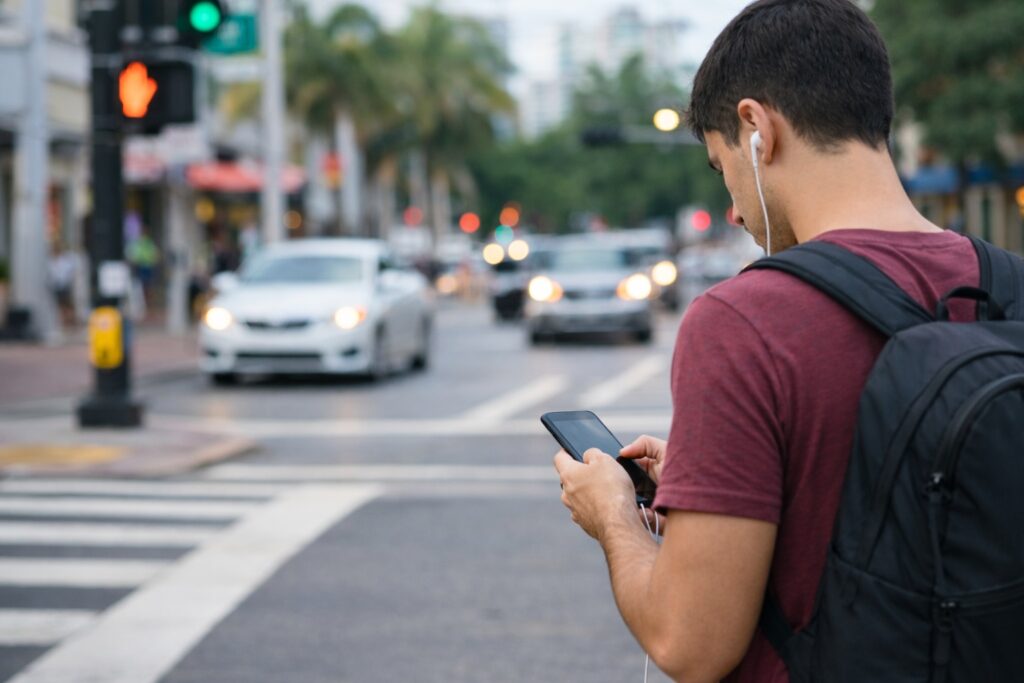
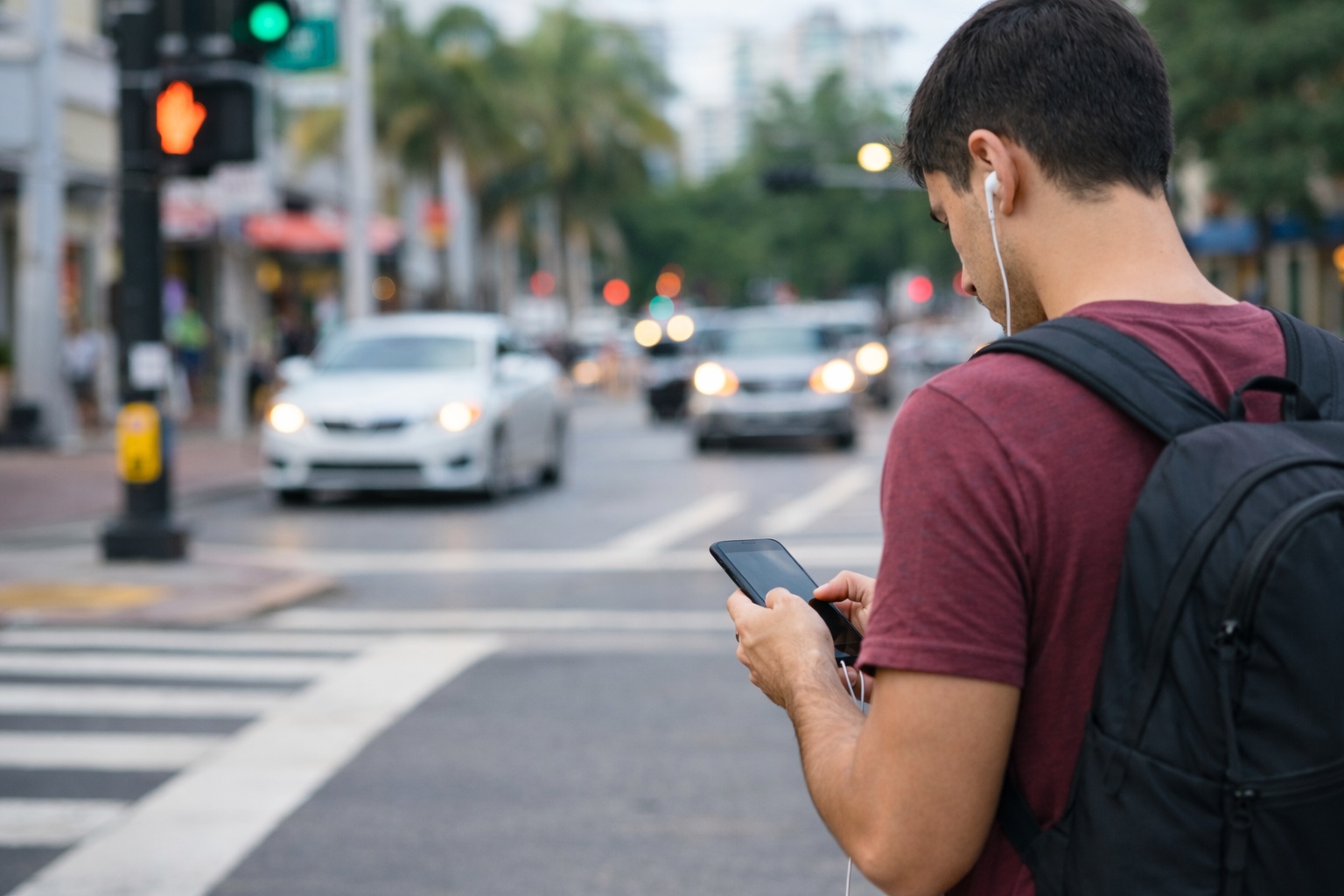
As phones, headphones, and wearable devices become constant companions, pedestrian movement patterns have changed. Individuals step off curbs early, hesitate mid crossing, or reverse direction while focused on screens. These behaviors are not isolated incidents but recurring disruptions that compress reaction time for drivers navigating dense urban zones. In Florida cities where tourism, nightlife, and mixed use development intensify foot traffic, distraction creates unpredictable hazards that drivers have little room to absorb.
How Urban Design Amplifies Distracted Pedestrian Risks
Urban corridors in Florida are built to accommodate large volumes of vehicles and pedestrians simultaneously. Areas such as Brickell, Las Olas, and beachfront districts combine wide intersections, curbside activity, and frequent turning movements. Drivers rely on consistent pedestrian flow to anticipate when crossings will occur and how long they will last. When distraction alters that flow, the environment becomes reactive rather than predictable.
Distracted pedestrian risks emerge when movement no longer aligns with signal timing. A pedestrian stepping into a crosswalk several seconds early or lingering past the signal phase forces drivers to adjust decisions already in motion. Right turns, left turns, and lane changes become higher risk because drivers are forced to reassess mid maneuver. These disruptions occur in spaces with minimal buffer zones, increasing the likelihood of sudden braking or contact.
Tourist heavy areas further compound the issue. Visitors unfamiliar with local traffic patterns may misjudge distances or signals. When distraction is layered onto unfamiliarity, drivers encounter pedestrians whose behavior does not match expected visual cues or timing, reducing the margin for safe reaction.
Expectation Failure Between Drivers and Pedestrians
Drivers develop expectations based on repeated exposure to similar traffic environments. These expectations allow for smoother navigation and safer decision making. Distracted pedestrian risks arise when those expectations fail without warning. A driver preparing to complete a turn may suddenly encounter a pedestrian who stops, backs up, or steps forward unexpectedly after noticing a missed signal or dropped item.
Visual communication plays a critical role in driver pedestrian interaction. Head position, walking pace, and eye contact signal intent. Pedestrians focused on devices remove these cues, forcing drivers to make assumptions with incomplete information. This expectation failure shortens reaction windows and increases the likelihood of abrupt responses.
At night or in low light conditions, the problem intensifies. Distracted pedestrians may not compensate for reduced visibility by increasing awareness. Drivers relying on anticipation rather than direct visibility may not detect movement until it is too late to respond smoothly.
Intersection Design and Signal Timing Pressures
Florida city intersections are often wide and multi phased to manage heavy traffic volumes. While designed for efficiency, these layouts increase risk when pedestrian behavior becomes inconsistent. Long crossing distances encourage late starts or rushed finishes. Distraction makes it more likely that pedestrians misjudge signal timing or pause mid crossing.
Drivers approaching these intersections calculate movement based on expected clearance times. When a distracted pedestrian extends their presence beyond that window, drivers are forced into sudden braking or evasive maneuvers. In dense traffic, these reactions can ripple outward, increasing the chance of secondary collisions.
Signal synchronization across multiple intersections adds another layer of pressure. A single delayed crossing can disrupt traffic flow, creating congestion that compresses spacing and elevates collision risk throughout the corridor.
Environmental Factors That Increase Collision Exposure
Environmental conditions often magnify distracted pedestrian risks without drawing attention to themselves. Weather, lighting, and surface conditions quietly reduce perception and control, increasing the impact of even minor behavioral lapses.
Rain common in Florida reduces visibility and creates reflective glare on pavement. Distracted pedestrians may not adjust pace or positioning accordingly, while drivers struggle to detect movement through windshield distortion. Lighting inconsistencies from decorative fixtures, tree cover, or partial outages create shadowed areas where pedestrians emerge suddenly into view.
These factors layer together, reducing reaction time for drivers already managing complex environments.
- Lighting inconsistencies: Uneven illumination obscures depth perception and delays pedestrian detection. Distracted pedestrians are less likely to position themselves where they are clearly visible.
- Weather related visibility loss: Rain and humidity reduce contrast and clarity. When attention is divided, pedestrians may step into lanes without recognizing how visibility has changed.
- Crowded curbside activity: Valet zones, rideshare pickups, and delivery vehicles compress pedestrian movement into narrow spaces. Distraction increases the chance of sudden entry into active lanes.
- Surface traction changes: Wet or uneven pavement affects braking and steering response. Drivers have less ability to compensate for unexpected pedestrian movement.
Traffic Density and Forced Proximity in Florida Cities
High traffic density defines many Florida urban areas. Vehicles operate in close proximity with limited spacing, especially during peak hours and evening activity. In these conditions, drivers cannot easily maneuver around sudden hazards. Distracted pedestrian risks escalate because any unexpected movement immediately affects multiple vehicles.
Forced proximity means that one driver’s reaction often triggers a chain response. Abrupt stops to avoid a distracted pedestrian can lead to rear end collisions or sideswipes as surrounding vehicles struggle to react within compressed distances. The original hazard may involve a single pedestrian, but the consequences extend across the traffic flow.
In nightlife and entertainment districts, these conditions persist late into the evening, increasing fatigue and reducing tolerance for sudden changes in movement patterns.
What to Do After a Collision Involving a Distracted Pedestrian
The actions taken after a collision involving a distracted pedestrian can significantly affect both physical recovery and the clarity of what occurred. Even when vehicle damage appears minor or speeds were low, sudden braking or evasive maneuvers can place substantial stress on the body. These incidents often unfold quickly and leave drivers uncertain about how the collision happened or whether injuries are present.
Important steps after a collision involving distracted pedestrian movement include:
- Seek medical evaluation promptly
Neck, back, and soft tissue injuries may not cause immediate pain following abrupt stops or sudden steering corrections. Early medical evaluation can help identify injuries that develop as inflammation increases over time. - Document the scene and surroundings
Photograph vehicle positions, crosswalks, signal phases, curb locations, and nearby obstructions. Details such as lighting conditions, pedestrian placement, and traffic flow are difficult to recreate later. - Note intersection or roadway layout
Record the specific intersection, lane configuration, or turning area where the incident occurred. Design features and visibility constraints often influence how these collisions develop. - Identify witnesses when possible
Other drivers, pedestrians, or nearby workers may have observed the events leading up to the collision. Their observations can help clarify pedestrian movement and timing. - Monitor delayed symptoms
Pay attention to stiffness, headaches, dizziness, or discomfort that appears hours or days later. Delayed symptoms are common after sudden braking or low speed impacts.
Collisions involving distracted pedestrian behavior often place drivers in reactive positions with limited time to respond. Injuries from these incidents may not be immediately apparent, but can affect mobility and comfort if left unaddressed.
Frequently Asked Questions
How does pedestrian distraction increase collision risk for drivers?
Pedestrian distraction disrupts the visual and timing cues drivers rely on to anticipate movement. When pedestrians are focused on phones or headphones, they may step into crosswalks early, pause unexpectedly, or reverse direction without warning. These behaviors shorten driver reaction windows and increase the likelihood of sudden braking or contact.
Why are these collisions more common in Florida city environments?
Florida cities combine dense traffic, wide intersections, tourism, and nightlife into compact spaces with limited visibility. Drivers must process multiple variables at once, including turning traffic and heavy foot movement. Distracted pedestrian behavior adds unpredictability to environments that already leave little room for error.
Do distracted pedestrian collisions usually happen at low speeds?
Many of these incidents occur at lower speeds, particularly during turns or stop and go traffic. However, low speed does not eliminate injury risk. Sudden stops or evasive maneuvers can still place significant stress on the neck, back, and head.
Why are injuries often delayed after these incidents?
The forces involved in abrupt braking or steering can cause soft tissue strain and inflammation that develops gradually. Adrenaline and shock may mask pain at the scene. Symptoms such as stiffness, headaches, or reduced mobility often appear hours or days later.
What makes fault and documentation more complicated in these situations?
Distracted pedestrian incidents often unfold quickly and may not be fully captured by cameras or witnesses. Disagreements can arise over signal timing, pedestrian movement, or visibility. These factors can make it harder to clearly reconstruct how the collision occurred.
Summary: Why Distracted Pedestrian Risks Continue to Rise
Distracted pedestrian risks reflect a growing mismatch between urban design, behavioral patterns, and driver expectations. Florida city environments compress vehicles and pedestrians into spaces with limited room for error. When distraction disrupts visual cues and timing consistency, reaction windows narrow and collision potential increases.
Tourism, nightlife, and dense development amplify these dynamics by introducing unfamiliar pedestrians into already complex traffic systems. Understanding how distraction alters pedestrian behavior helps explain why these collisions persist and why they remain a significant risk in Florida cities.
Contact Lawlor, White & Murphey Today
If you or someone you know has experienced delayed medical care after a car accident, don’t wait any longer. Your health and your legal rights depend on timely action. Speak with a qualified personal injury attorney who can guide you through the process, help you gather evidence, and fight for the compensation you deserve.
Take the next step—schedule a free consultation with Lawlor, White & Murphey today.