
Driver Mistakes After a Crash That Make Accident Analysis More Difficult
The moments immediately following a vehicle collision often determine how clearly the event can be evaluated later. While drivers naturally focus on safety, stress and confusion can lead to overlooked details that play a critical role in understanding how the crash occurred. These post collision errors frequently arise not from recklessness, but from the pressure of the situation and the instinct to resolve it quickly.
Accident analysis depends on physical evidence, environmental context, and accurate descriptions captured close in time to the impact. Vehicle positions, roadway conditions, and visibility factors begin changing almost immediately after a crash. When those elements are disturbed or ignored, reconstructing the sequence of events becomes far more difficult. Understanding how post collision errors affect accident analysis helps explain why small oversights can have lasting consequences.
Environmental Pressure Immediately After a Collision
Crash scenes are unstable environments where multiple risks exist at once. Vehicles may be stopped in active lanes, traffic continues moving nearby, and drivers may be concerned about secondary collisions. This pressure often leads to rushed decisions that unintentionally erase important context.
In Florida, collisions frequently occur in high traffic corridors, tourist areas, and congested urban roadways. Limited shoulder space and constant traffic flow increase urgency. Drivers may feel compelled to move vehicles quickly or leave the area without fully observing surrounding conditions. These environmental pressures increase the likelihood of post collision errors that affect later analysis.
How Vehicle Movement Creates Post Collision Errors
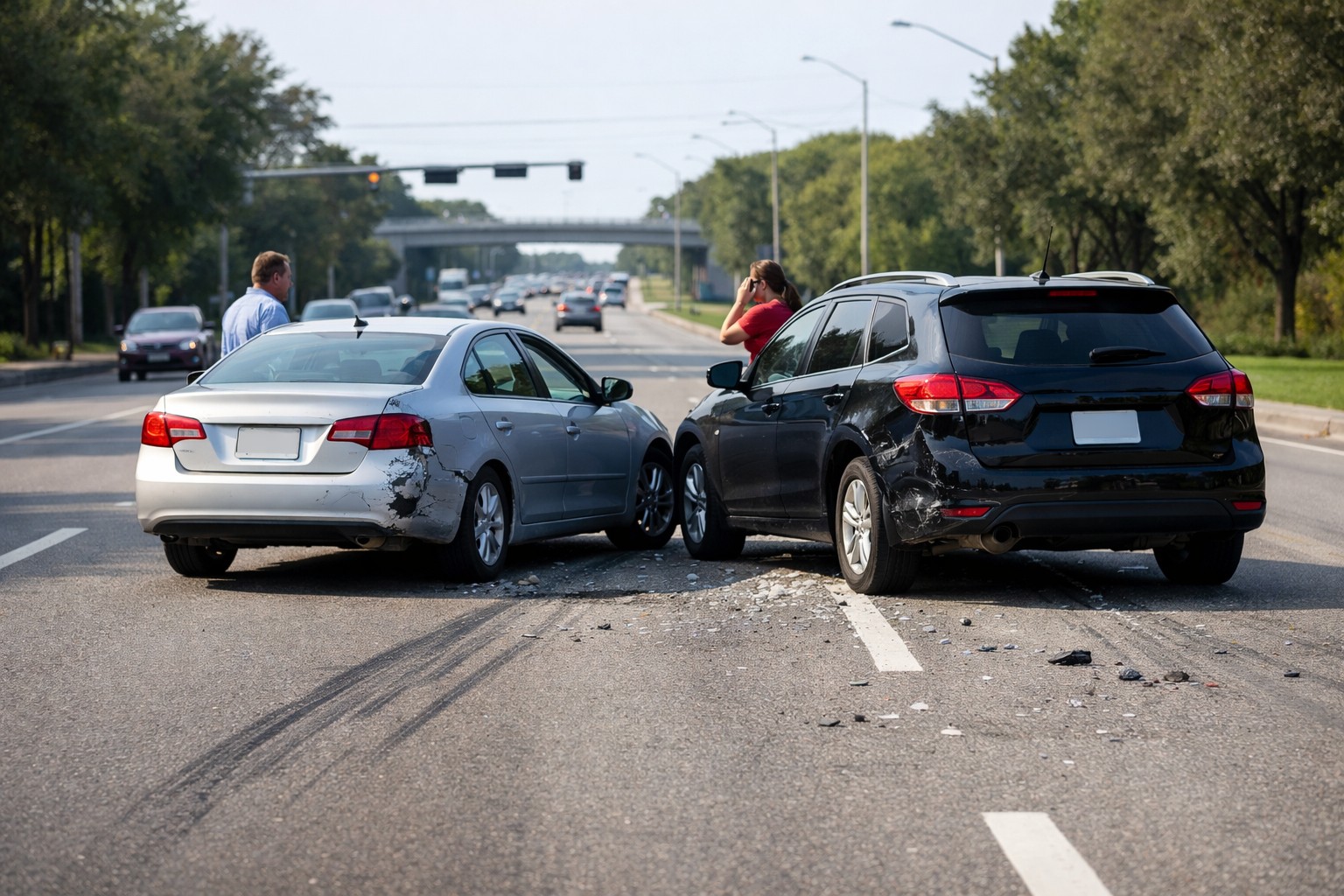
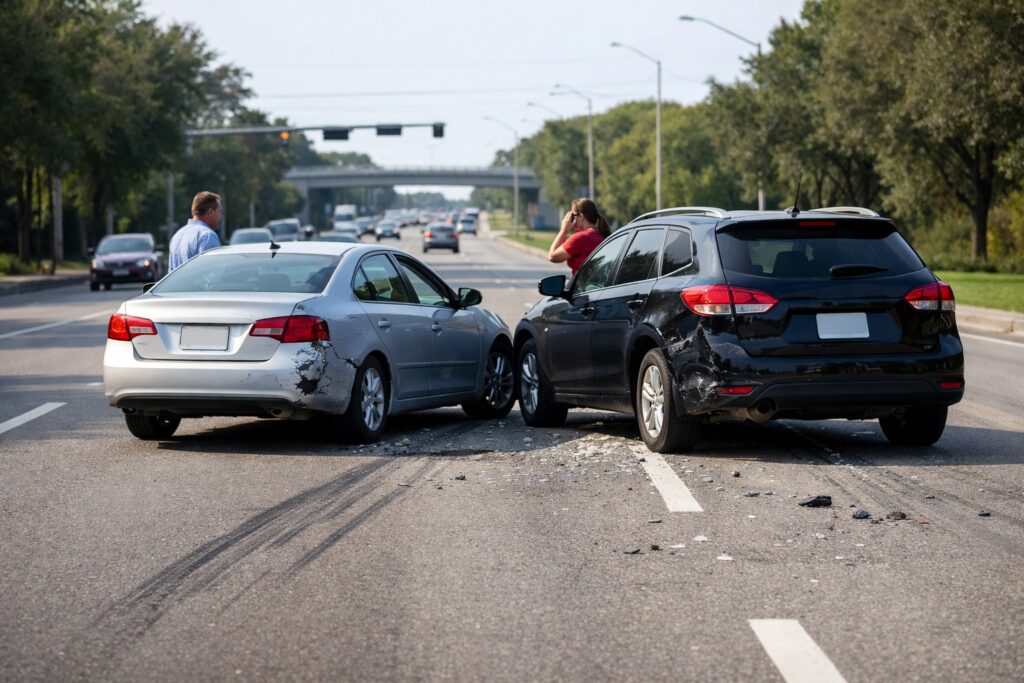
One of the most common post collision errors involves moving vehicles before documenting their position. Vehicle orientation, lane placement, and distance between vehicles provide essential insight into collision dynamics. Once vehicles are moved, that spatial information cannot be recreated.
Even slight repositioning can alter perception of how the impact occurred. Turning angles, proximity to lane markings, and relative alignment often help clarify right of way and reaction timing. In multi vehicle incidents, moving one car can also disturb debris or tire marks that indicate braking or evasive action. Accident analysis relies on these physical cues to interpret the sequence of events.
Expectation Failure and Memory Distortion
Drivers often assume they will remember the details of a crash clearly. In reality, stress interferes with perception and memory formation. Expectation failure occurs when drivers unconsciously rely on assumptions rather than direct observation.
Post collision errors frequently include vague descriptions of the impact. Statements that lack specificity regarding speed, direction, or visibility provide limited analytical value. Over time, memory can change as drivers mentally replay the event, unintentionally filling gaps with assumptions. These distortions make accurate reconstruction more challenging.
Environmental and Secondary Details Often Overlooked
While visible vehicle damage draws attention, environmental factors are often overlooked during post collision moments. These secondary details frequently play a critical role in understanding why a crash occurred.
- Roadway surface conditions
Oil residue, loose debris, uneven pavement, or standing water can affect braking and steering. These conditions may disappear quickly once traffic resumes. - Lighting and visibility factors
Sun glare, shadows from nearby structures, or poor nighttime lighting can limit perception. These factors change rapidly and are often undocumented. - Traffic control visibility
Obstructed signs, faded lane markings, or malfunctioning signals can influence driver decisions. Without early documentation, these conditions may not be apparent later. - Temporary hazards or debris
Construction materials, fallen cargo, or crash debris may affect vehicle movement. These elements are usually cleared quickly, leaving no trace.
Delays in Reporting and Documentation
Time is a critical factor in accident analysis. Delays in reporting collisions often lead to incomplete or inconsistent information. As time passes, environmental conditions change and physical evidence disappears.
Post collision errors related to delayed reporting can also complicate injury evaluations. Some injuries develop gradually rather than immediately. Without early documentation of crash mechanics, linking physical symptoms to collision forces becomes more difficult. Accurate timelines help analysts align injury patterns with vehicle dynamics.
Witness Information and Scene Context
Witnesses provide valuable third party observations that can confirm or clarify driver accounts. However, post collision errors often include incomplete or missing witness information. Drivers may assume witnesses will remain or that their statements will be collected automatically.
In many cases, witnesses leave the scene quickly, especially after minor collisions. Without names or contact information, their observations are lost. Witnesses often notice details drivers miss, such as signal timing or vehicle behavior before impact. Their absence limits the depth of analysis.
Traffic Density and Scene Disruption
High traffic density accelerates disruption of crash scenes. In congested areas, scenes are cleared quickly to restore traffic flow. While this reduces immediate risk, it also eliminates physical evidence.
Passing vehicles may drive over tire marks, scatter debris, or alter surface conditions. Emergency response vehicles and traffic redirection further change the scene. These disruptions increase reliance on indirect information rather than direct observation, making accident analysis more complex.
Common Post Collision Errors That Complicate Analysis
- Failure to document vehicle positions
Without clear documentation, determining lane usage or right of way becomes difficult. - Overlooking minor visible damage
Small dents or scrapes may indicate impact angles or secondary contact points. - Leaving without noting environmental conditions
Lighting, weather, and surface conditions provide essential context. - Providing generalized descriptions
Vague statements limit the ability to reconstruct timing and reaction windows.
Injury Consequences and Analytical Challenges
Injury evaluation relies on understanding how forces were applied during a collision. Direction of impact, speed changes, and restraint use influence injury patterns. When post collision errors obscure these details, correlating symptoms with crash mechanics becomes more difficult.
Neck, back, and soft tissue injuries often result from subtle forces rather than dramatic damage. Without accurate scene context, delayed symptoms may appear disconnected from the event. Comprehensive accident analysis depends on early, accurate information to establish clear relationships between impact and injury.
Summary
The actions taken immediately after a crash play a significant role in how accident analysis unfolds. Post collision errors often occur under stress and time pressure, yet they directly affect the ability to reconstruct events. Vehicle movement, overlooked environmental details, memory distortion, and delayed documentation all contribute to analytical gaps. Recognizing how these post collision errors influence accident evaluation helps explain why early details remain important long after the roadway clears.
Frequently Asked Questions
Why are post collision details important for accident analysis?
Early details capture physical and environmental conditions that disappear quickly and help explain collision dynamics.
How does moving vehicles affect accident reconstruction?
Vehicle position provides insight into lane usage, impact angles, and reaction timing. Once moved, that context is lost.
Can delayed reporting complicate injury evaluations?
Yes. Delays can make it harder to align injury symptoms with collision mechanics.
Why do memories change after a crash?
Stress alters perception and memory formation, leading to unintentional gaps or inaccuracies.
Do minor details really matter in accident analysis?
Small details such as lighting, surface conditions, and signage visibility often clarify why collisions occur.
Contact Lawlor, White & Murphey Today
If you or someone you know has experienced delayed medical care after a car accident, don’t wait any longer. Your health and your legal rights depend on timely action. Speak with a qualified personal injury attorney who can guide you through the process, help you gather evidence, and fight for the compensation you deserve.
Take the next step—schedule a free consultation with Lawlor, White & Murphey today.