
Why Electric Bicycle Collisions With Vehicles Are Rising in Florida Neighborhoods
Electric bicycles have become a common sight on Florida roads, sidewalks, and neighborhood streets. Their popularity stems from convenience, affordability, and ease of use, particularly in warm weather communities where short trips replace longer drives. However, as adoption increases, ebike vehicle collisions are rising at a concerning rate. These incidents often occur not because of reckless behavior, but because neighborhood environments were never designed for fast moving bicycles sharing space with cars.
Unlike traditional bicycles, electric bikes accelerate quickly and maintain higher average speeds with less rider effort. Drivers navigating residential streets often rely on visual cues and timing expectations developed around slower bicycles. When those expectations fail, conflicts emerge at intersections, driveways, and curbside parking zones where reaction time is limited.
Speed Mismatch and Driver Expectation Failure
One of the primary contributors to ebike vehicle collisions is speed mismatch. Electric bicycles can reach speeds that rival or exceed neighborhood traffic flow, yet they retain the visual profile of a standard bicycle. Drivers may perceive an approaching rider as slow moving and underestimate how quickly the bike will close distance.
This expectation failure is most pronounced at intersections and turns. A driver pulling out of a driveway or side street may judge that a bicycle is far enough away to proceed, only to find the ebike arrives seconds sooner than anticipated. These miscalculations reduce available reaction time and increase collision likelihood.
In neighborhoods with frequent stop signs and short block lengths, drivers make rapid decisions based on limited visual information. When ebikes disrupt these assumptions, even cautious drivers can find themselves involved in sudden conflicts.
Inconsistent Riding Environments in Neighborhoods
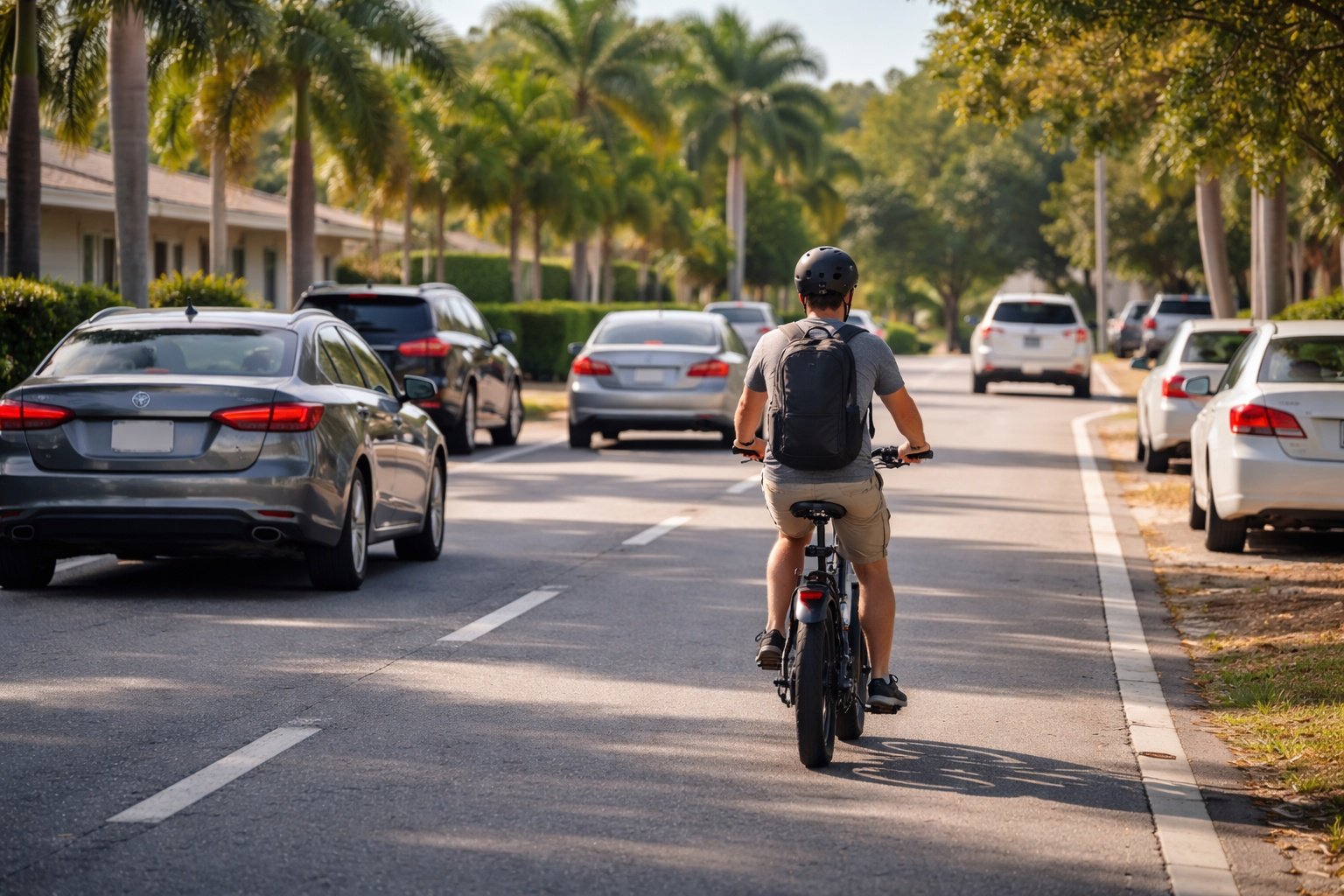
Neighborhood streets present unique challenges for ebike riders and drivers alike. Unlike arterial roads, residential areas mix driveways, parked vehicles, pedestrians, and cyclists in close proximity. Ebike vehicle collisions often occur where these elements intersect.
Parked cars lining narrow streets create visual barriers that obscure riders until the last moment. Sharp turns and short sightlines limit how far drivers can see, especially on winding roads common in waterfront or older communities. When ebikes approach at higher speeds, these design limitations become critical.
Sidewalk and shoulder use adds another layer of unpredictability. Some riders shift between roadway and sidewalk to avoid traffic, while others use shoulders inconsistently. Drivers may not anticipate a fast moving bicycle emerging from a sidewalk or cutting back into the roadway at intersections.
Rapid Acceleration and Stopping Differences
Electric bicycles behave differently than both traditional bikes and motor vehicles. Rapid acceleration allows riders to enter traffic quickly, but stopping distances may vary depending on braking systems, rider experience, and surface conditions. Drivers may assume a bicycle can stop or slow in ways that do not match ebike capabilities.
Ebike vehicle collisions are more likely when drivers expect riders to decelerate smoothly or yield in tight spaces. In reality, heavier frames and higher speeds can increase stopping distance, particularly on uneven pavement or wet surfaces common in Florida neighborhoods.
These differences become more pronounced at night or in rain, when visibility drops and reaction windows narrow further.
Tourist Areas and Inexperienced Riders
Florida neighborhoods near beaches, entertainment districts, and waterfront paths face additional risk factors. Rental ebikes are increasingly popular among visitors who may lack familiarity with local traffic patterns or ebike handling characteristics.
In tourist heavy areas, ebike vehicle collisions often involve riders who are unfamiliar with right of way norms, roadway layouts, or how quickly their bike accelerates. Drivers navigating these neighborhoods may encounter unpredictable riding behavior layered onto already congested streets.
Mixed use paths that intersect with residential roads further complicate the environment. Riders transition from protected spaces to active roadways, sometimes without clear signage or markings. Drivers may not expect fast moving bicycles entering traffic from these access points.
Visibility Challenges in Residential Settings
Visibility plays a critical role in neighborhood collisions. Ebikes are quieter than motor vehicles and may not register audibly with drivers. Visual detection can also be delayed, especially when bikes blend into low contrast backgrounds or are partially obscured by parked cars and landscaping.
Nighttime riding increases these challenges. While many ebikes include lights, their placement and brightness vary widely. Drivers scanning for headlights may not immediately detect smaller light sources, particularly in areas with uneven street lighting.
These factors reduce the time drivers have to recognize and respond to an approaching ebike, increasing collision risk.
Common Collision Patterns Involving Ebikes and Vehicles
- Driveway and side street pullouts
Drivers underestimate ebike speed and pull into the rider’s path. - Right turn conflicts
Vehicles turn across bike paths or lanes without anticipating rapid approach. - Parked car zone impacts
Riders emerge from behind parked vehicles into traffic unexpectedly. - Intersection misjudgments
Speed and distance assumptions fail at stop controlled crossings.
Injury Consequences in Ebike Vehicle Collisions
Collisions involving electric bicycles often result in more severe injuries than traditional bike crashes due to higher speeds and weight. Riders are exposed to direct impact forces with limited protection.
Common injuries include head trauma, fractures, spinal injuries, and soft tissue damage. Vehicle occupants may also sustain injuries from sudden braking or evasive maneuvers. As with many neighborhood collisions, symptoms may not appear immediately, particularly when adrenaline masks pain.
Delayed recognition of injury is common in ebike vehicle collisions, especially when damage appears minor or the rider is able to leave the scene without obvious distress.
What to Do After an Ebike Collision With a Vehicle
The steps taken after an ebike related collision can influence health outcomes and the clarity of available information. Neighborhood incidents often unfold quickly and may lack clear documentation.
Important actions after an ebike vehicle collision include:
- Seek medical evaluation promptly
Head and soft tissue injuries may not be immediately apparent. - Document the scene
Photograph vehicle positions, street layout, parked cars, and visibility conditions. - Note riding environment details
Record whether the bike was on the roadway, shoulder, or sidewalk at the time. - Monitor delayed symptoms
Pain, dizziness, or stiffness may develop hours or days later.
Summary: Why Ebike Vehicle Collisions Continue to Rise
Ebike vehicle collisions are increasing because neighborhood streets were not designed for fast moving bicycles sharing space with cars. Speed mismatch, limited visibility, and inconsistent riding environments create conditions where driver expectations fail.
Florida’s growth, tourism, and adoption of electric bikes amplify these risks. Understanding how ebikes interact with residential road design helps explain why collisions continue to rise and why injuries can be significant even at neighborhood speeds.
Frequently Asked Questions
Why are ebike collisions more common than traditional bicycle crashes?
Electric bikes travel faster and accelerate more quickly, which can disrupt driver expectations and reduce reaction time.
Do ebike collisions often happen in neighborhoods rather than major roads?
Yes. Residential streets combine driveways, parked cars, and limited sightlines that increase conflict points.
Are drivers always at fault in ebike vehicle collisions?
These collisions often involve expectation and visibility failures rather than intentional behavior by either party.
Do ebike collisions usually cause serious injuries?
Higher speeds and rider exposure increase the likelihood of fractures, head injuries, and spinal trauma.
Can symptoms appear later after an ebike collision?
Yes. Adrenaline can mask pain, and inflammation may develop over time.
Contact Lawlor, White & Murphey Today
Nighttime collisions involving unclear lane markings often leave drivers with delayed symptoms and unanswered questions. Reduced visibility and subtle impacts can make it difficult to understand how the collision occurred or why injuries developed later. Speak with a qualified personal injury attorney who can guide you through the process, help you gather evidence, and fight for the compensation you deserve.
Take the next step—schedule a free consultation with Lawlor, White & Murphey today.