
Failure to Yield Crashes at Florida Intersections: T-Bone Impacts and Right-of-Way Disputes
A failure to yield crash at a Florida intersection is one of the most predictable patterns in personal injury law. A driver pulls out from a side street, makes a left turn across oncoming traffic, or rolls through a stop sign without seeing the vehicle that had the right of way. The impact is usually a hard T bone or a high speed left turn collision, and the injuries are far more serious than the average rear end fender bender because the side of the vehicle takes the hit instead of the engine bay.
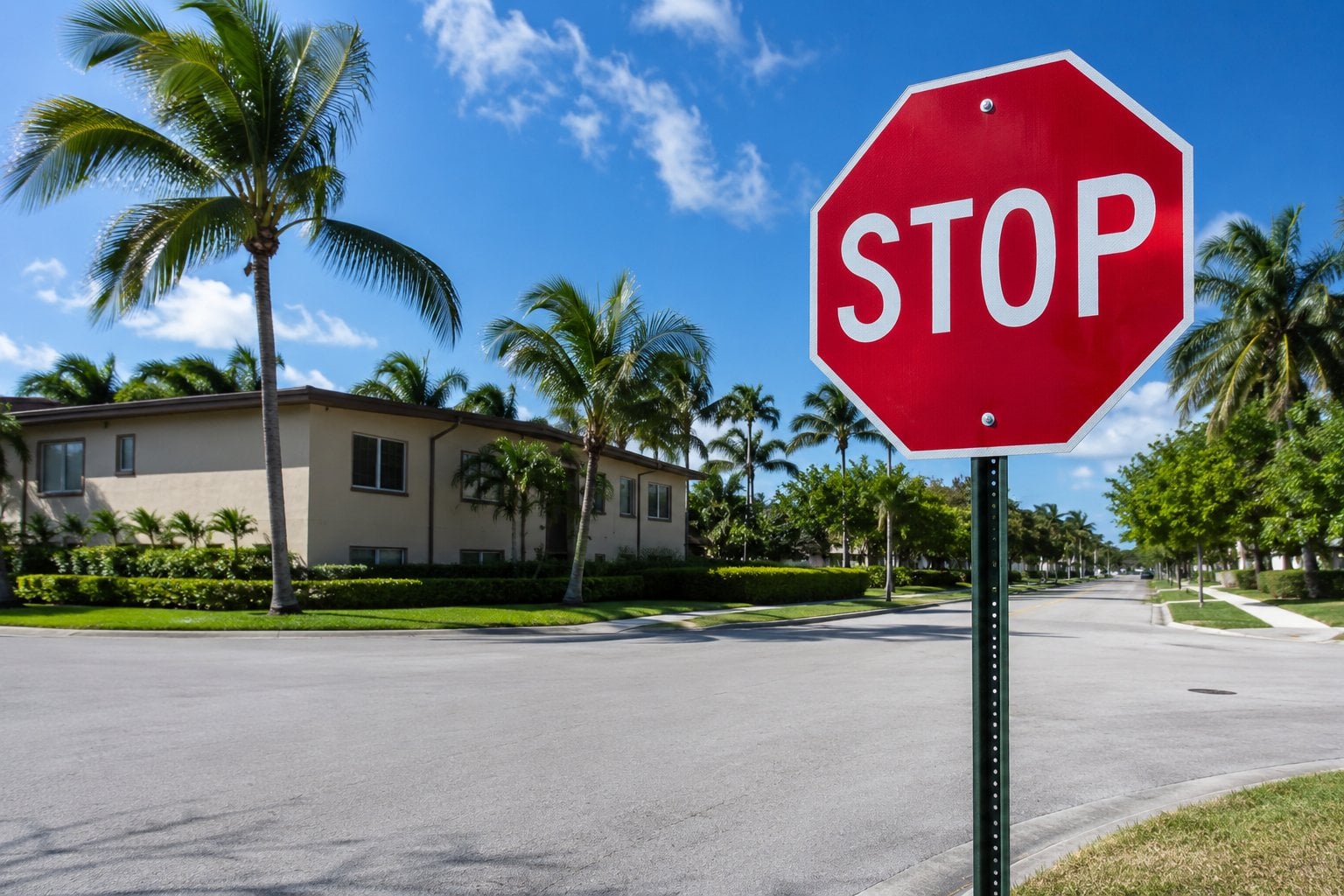
A failure to yield crash usually comes down to inattention and impatience. The driver glances left, decides the gap is good enough, and never looks again until they hear the horn. Florida law is clear about who has the right of way at a stop sign, a yield sign, an uncontrolled intersection, and a left turn across oncoming traffic, but proving the violation in an insurance claim still takes work. Witness statements, traffic camera footage, vehicle damage patterns, and the position of the cars after impact all become part of the story.
What Counts as a Failure to Yield Crash
A failure to yield crash is any collision where one driver did not give the right of way to another driver who was legally entitled to it. The most common patterns are running a stop sign, rolling through a yield, pulling out of a parking lot or driveway into traffic, turning left across oncoming traffic at a green light without a protected arrow, and merging into a lane that is already occupied. In Florida, failure to yield is one of the most frequently cited contributing factors in serious intersection crashes.
How Common Failure to Yield Crashes Are in Florida
Florida intersections see a steady stream of failure to yield crash reports every year. Broward County and Palm Beach County both report tens of thousands of intersection crashes annually, with detail available through Florida Highway Safety and Motor Vehicles crash data, and a large share of the serious injury crashes inside city limits involve a driver who failed to yield. Pedestrian and bicycle crashes also concentrate at the same intersections, because a driver who failed to yield to a car is also likely to have failed to yield to a person crossing on foot or on a bike.
Why Drivers Fail to Yield
The most common reasons behind a failure to yield crash are distraction, impatience, and poor sight lines. A driver who is looking at a phone or fumbling with the radio glances up, sees a gap that looks bigger than it is, and pulls into it. A driver who is running late accepts a smaller gap than they normally would. Older drivers and drivers in unfamiliar vehicles sometimes misjudge the speed of oncoming traffic, especially when the oncoming vehicle is small or low. Florida sun glare during sunrise and sunset hours is another contributing factor that shows up in many failure to yield crash reports.
Common Locations for Failure to Yield Crashes
The intersections most often named in failure to yield crash data are wide multi lane arterials with permissive left turns, the entrances and exits of large shopping plazas, the access roads into apartment complexes and gated communities, school zones during drop off and pick up, and unsignaled side streets that feed into busy through roads. Federal Highway, University Drive, State Road 7, and Glades Road all have intersections that show up repeatedly in failure to yield crash reports.
What Typically Happens After a Failure to Yield Crash
The standard impact pattern in a failure to yield crash is a side impact, often called a T bone, on the vehicle that had the right of way. Side impact crashes are more dangerous than front to rear crashes because the door area absorbs the hit and there is less crumple zone between the occupant and the other vehicle. Injuries from a failure to yield crash often include broken ribs, lung injuries, hip and pelvis injuries from the door pushing inward, concussion or traumatic brain injury from striking the side window or door pillar, and arm injuries from the airbag deployment.
Summary of Failure to Yield Crash Liability
Florida operates under a no fault insurance system, so your own PIP coverage pays first for medical bills and a portion of lost wages. When injuries cross the threshold for serious or permanent impairment, you can step outside of no fault and bring a bodily injury claim against the driver who failed to yield. In a failure to yield crash, fault is usually clear from physical evidence, but it still must be proven. The position of the vehicles, the damage profile, the location of debris, the timing of the traffic signal, and witness statements are the building blocks of the claim.
FAQs About Failure to Yield Crashes
Who is at fault in a failure to yield crash?
The driver who failed to give the right of way is almost always primarily at fault. Florida statutes are specific about who must yield in each intersection scenario.
What if the other driver claims I was speeding before the failure to yield crash?
Speed at impact can be raised as comparative fault. Even if it is true, you can usually still recover, but the recovery may be reduced by your percentage of fault.
Is a left turn across oncoming traffic always the turning driver’s fault?
In Florida, the turning driver usually has the duty to yield. Unless the oncoming driver was speeding, ran a red light, or was clearly negligent, the turning driver is at fault in a left turn failure to yield crash.
What evidence is most useful in a failure to yield crash claim?
Traffic camera footage, dashcam, vehicle damage photos, the crash diagram in the police report, witness statements, and the position of the vehicles after impact are the most important pieces.
Contact a South Florida Failure to Yield Crash Attorney
If you were hurt in a failure to yield crash anywhere in Broward or Palm Beach, the team at Lawlor, White & Murphey can help you prove fault and pursue a motor vehicle accident claim under Florida operates under a no fault insurance system. Call our office for a free consultation.