
Why Florida Parking Garages Turn Minor Errors Into Major Collisions
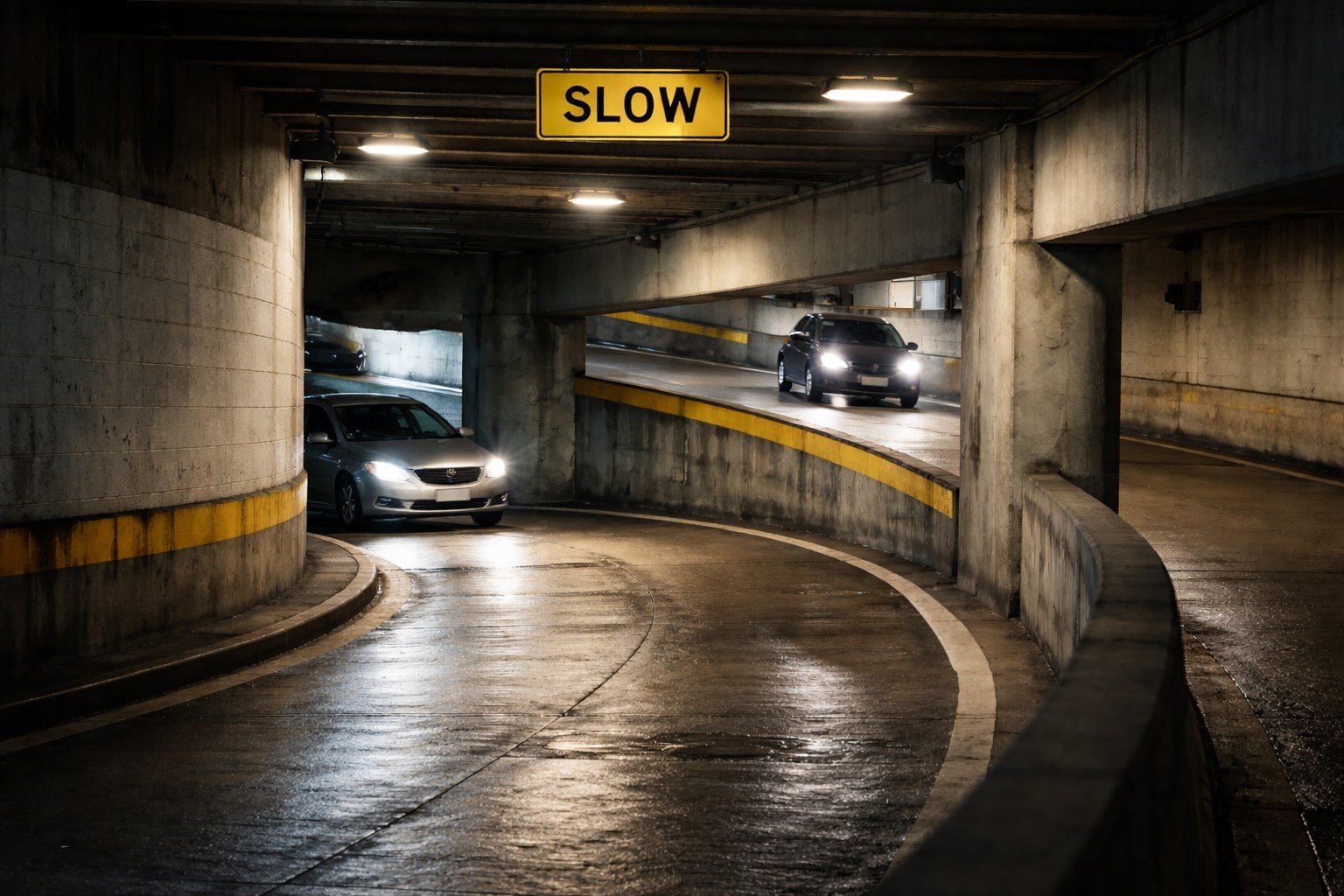
Parking garages are often treated as low risk spaces, but garage collision risks in Florida cities tell a very different story. Drivers enter these structures expecting slower speeds and easier navigation, yet parking garages compress space, visibility, and decision making into an environment with little room for error. Unlike public roadways, garages are storage systems adapted for movement, forcing vehicles, pedestrians, and concrete barriers into constant proximity where even minor mistakes can lead to collisions.
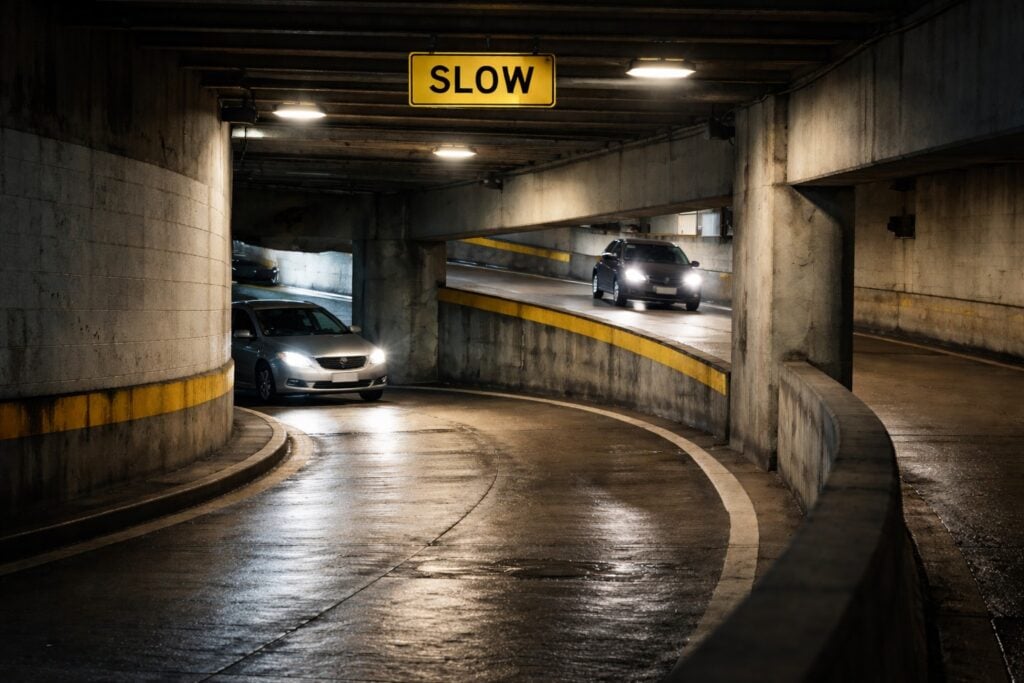
Garage collision risks emerge not because drivers are traveling fast, but because they are forced to operate within inches of fixed objects and other vehicles at all times. Every maneuver takes place near concrete pillars, parked cars, sloped ramps, or pedestrians moving unpredictably through the space. This constant proximity increases pressure on drivers to make precise movements without the visual and spatial buffers they rely on elsewhere. When even a minor misjudgment occurs, there is often no space available to recover before contact is made.
Structural Design Factors Behind Garage Collision Risks
The physical layout of parking garages plays a central role in why collisions occur so frequently. Structural elements that are essential for load bearing and space efficiency simultaneously limit visibility and restrict movement. Drivers are required to navigate these constraints repeatedly as they move between levels and parking rows.
Concrete pillars are one of the most significant contributors to garage collision risks. They are commonly positioned near turns, intersections, and ramp entrances, which are precisely the locations where drivers need clear sightlines. As a result, vehicles often approach one another with no visual warning until they are already committed to a maneuver. These blind interactions create predictable collision points throughout the structure.
Lane width further compounds this issue. Parking garage lanes are intentionally narrow, leaving little lateral clearance between moving vehicles and stationary obstacles. Drivers cannot rely on gradual corrections or evasive maneuvers. Instead, they must execute near perfect steering adjustments while navigating tight turns and passing opposing traffic. This environment magnifies even small errors.
How Ramps Increase Garage Collision Risks
Ramps represent one of the most demanding features of any parking garage. They require drivers to change elevation, adjust speed, steer sharply, and monitor for cross traffic simultaneously. Each of these actions alone requires attention. When combined, they significantly increase cognitive load.
Garage collision risks rise on ramps because visibility is often limited by curvature and structural barriers. Drivers ascending may not see vehicles descending until the final seconds, while those exiting ramps may accelerate to maintain momentum. This mismatch in speed expectations increases the likelihood of sudden braking or abrupt steering corrections.
In Florida cities, many garages incorporate spiral or staggered ramp designs to save space. These layouts further restrict sightlines and increase driver uncertainty, particularly for visitors unfamiliar with the structure.
Pedestrian Movement Inside Garages Creates Unpredictable Conflicts
Parking garages function as shared spaces where vehicles and pedestrians move without clearly separated pathways. Unlike sidewalks or crosswalks, pedestrian routes inside garages are often informal and poorly defined. People walk between parked cars, cross active lanes, and pause unexpectedly near elevators or stairwells.
These behaviors are not reckless, but they are difficult for drivers to anticipate. Vehicles navigating tight lanes may not have a clear view of pedestrians emerging from between parked cars. This is especially true in areas with poor lighting or heavy congestion.
Pedestrian related garage collision risks increase because drivers must divide attention between navigating structural constraints and scanning for foot traffic in spaces not designed for shared use.
Environmental Conditions That Degrade Visibility and Control
Parking garages rely on artificial lighting and ventilation to maintain safe operating conditions. Over time, these systems degrade, particularly in Florida’s humid and coastal climate. Uneven lighting creates shadowed areas that distort depth perception and make hazards harder to detect.
Moisture tracked in by vehicles accumulates on concrete surfaces, especially on sloped ramps. Reduced traction increases the likelihood of sliding during braking or turning, even at low speeds. Salt exposure from coastal air accelerates concrete wear and metal corrosion, affecting surface texture and drainage.
These environmental factors quietly increase garage collision risks by altering vehicle handling and reducing driver perception without obvious warning.
Challenges After Parking Garage Collisions
Collisions inside parking garages often lead to disputes that differ from those arising on public roadways. Because these incidents typically occur at low speeds and within private structures, drivers may argue that damage or injuries could not be serious. Others may claim limited visibility, unfamiliar layout, or unavoidable structural constraints as contributing factors.
Parking garages also present documentation challenges. Surveillance coverage is inconsistent, lighting conditions vary by level, and vehicle positioning can change quickly as other drivers continue to move through the space. These factors make it harder to clearly establish how a collision occurred or who had the right of way at the time.
Common challenges after parking garage collisions include:
- Conflicting accounts of vehicle movement
Drivers may disagree about speed, direction of travel, or which vehicle entered a turn or ramp first. In confined spaces, even small differences in positioning can affect how fault is interpreted. - Limited or partial camera footage
Some garages have cameras, but coverage may not capture blind corners, ramps, or the precise moment of impact. Video may also lack clarity due to lighting or distance. - Unclear sightline and design limitations
Structural pillars, parked vehicles, and elevation changes can obscure what each driver could realistically see before the collision occurred. - Delayed recognition of injuries
Because garage collisions often feel minor initially, occupants may not realize the extent of neck, back, or soft tissue injuries until symptoms develop later.
These factors can complicate the aftermath of a garage accident, particularly when documentation is incomplete or injuries are not immediately obvious.
What to Do After a Parking Garage Collision
The steps taken after a parking garage accident can significantly influence both health outcomes and the clarity of available information. Even low speed collisions inside garages can involve forces that lead to meaningful injuries.
Important actions after a parking garage collision include:
- Seek medical evaluation promptly
Head, neck, and soft tissue injuries may not cause immediate pain. Early evaluation helps identify injuries that can worsen over time. - Photograph the scene before vehicles are moved
Capture vehicle positions, nearby pillars, ramps, signage, lighting conditions, and any visible obstructions. These details are difficult to reconstruct later. - Document the garage layout and level
Note the specific level, ramp, or turn where the collision occurred. Garage design features often play a role in how accidents happen. - Identify witnesses when possible
Other drivers or pedestrians in the garage may have observed part of the incident. Their perspective can help clarify events. - Monitor symptoms that develop after leaving the scene
Keep track of pain, stiffness, dizziness, or other symptoms that appear hours or days later. Delayed symptoms are common in confined space collisions.
Garage related injuries often involve awkward angles and sudden stops, which can lead to lingering discomfort or mobility issues if left unaddressed.
Frequently Asked Questions
Why do parking garage accidents happen so frequently at low speeds?
Parking garages combine tight space, limited visibility, and constant turning into environments where even small errors lead to contact. Low speed does not eliminate collision risk when there is no room for correction.
Are parking garage collisions more likely to involve sideswipe or backing accidents?
Yes. Narrow lanes, tight turns, and limited rear visibility make sideswipe and backing collisions common inside garages.
Do lighting and structural design affect accident risk?
Yes. Poor lighting, blind corners, concrete pillars, and elevation changes all reduce reaction time and increase collision likelihood.
Can injuries from a parking garage accident appear later?
Yes. Neck, back, and soft tissue injuries often develop symptoms hours or days after an accident due to delayed inflammation.
Summary: Why Parking Garages Remain High Risk Collision Environments
Parking garages compress vehicles, pedestrians, and structural barriers into spaces that leave little room for error. Tight layouts, blind turns, inconsistent lighting, and constant maneuvering create conditions where even cautious drivers can become involved in collisions.
Garage collision risks are driven less by speed and more by design limitations and forced proximity. Understanding these factors explains why parking garages across Florida cities remain frequent sites of vehicle related accidents.
Contact Lawlor, White & Murphey Today
If you or someone you know has experienced delayed medical care after a car accident, don’t wait any longer. Your health and your legal rights depend on timely action. Speak with a qualified personal injury attorney who can guide you through the process, help you gather evidence, and fight for the compensation you deserve.
Take the next step—schedule a free consultation with Lawlor, White & Murphey today.