
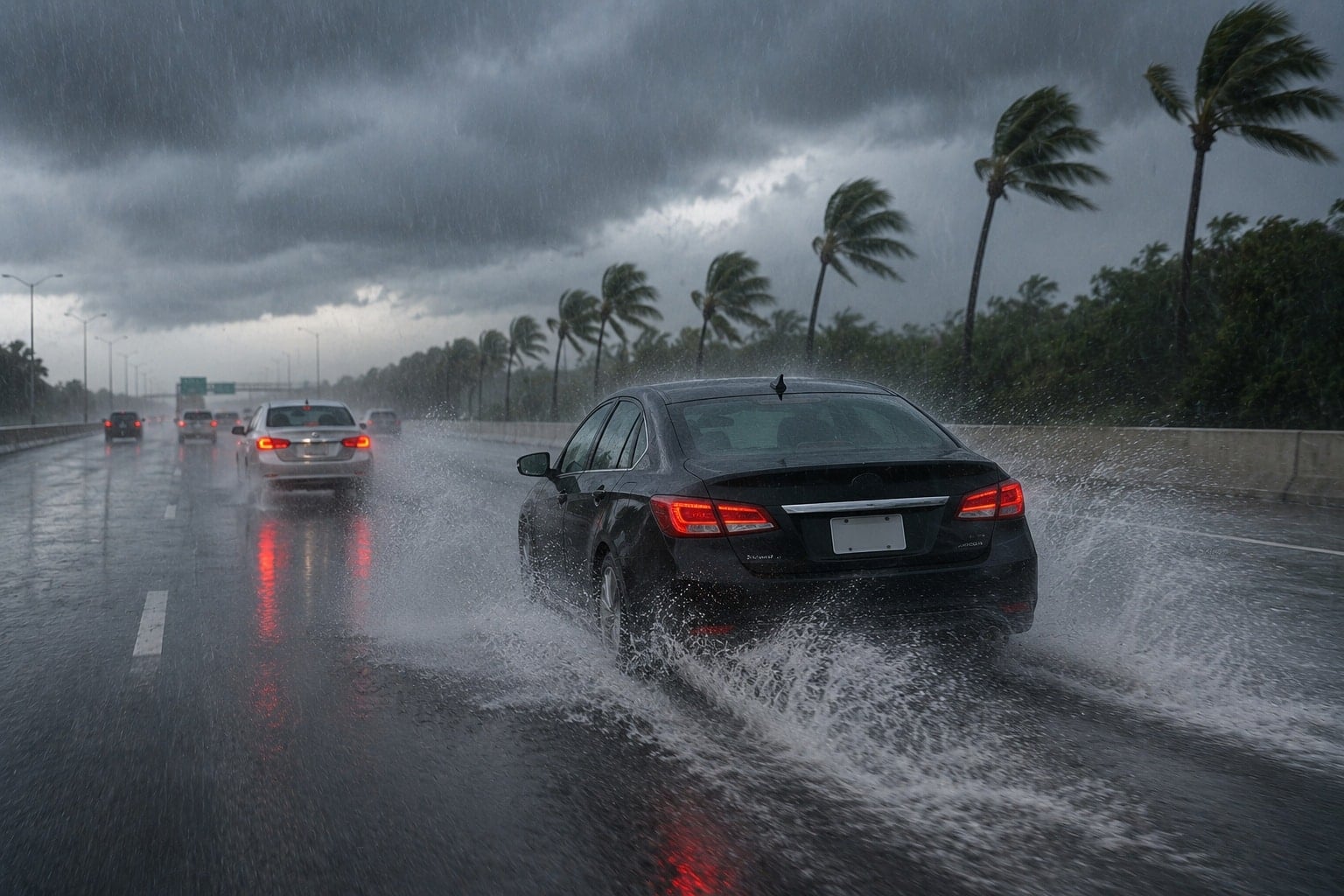
Hydroplaning Crashes at Highway Speed: Why Florida Storms Cause Loss-of-Control Wrecks
A hydroplaning crash at highway speed happens faster than most drivers can react. Florida afternoon thunderstorms drop more rain in twenty minutes than other states see in a week, and standing water in the worn wheel ruts of I 95 or the Turnpike is enough to lift the tires off the pavement. The moment the vehicle goes light, steering and braking stop responding. A driver who tries to correct usually overcorrects, and the spin takes them across multiple lanes in front of traffic that cannot slow down in time.
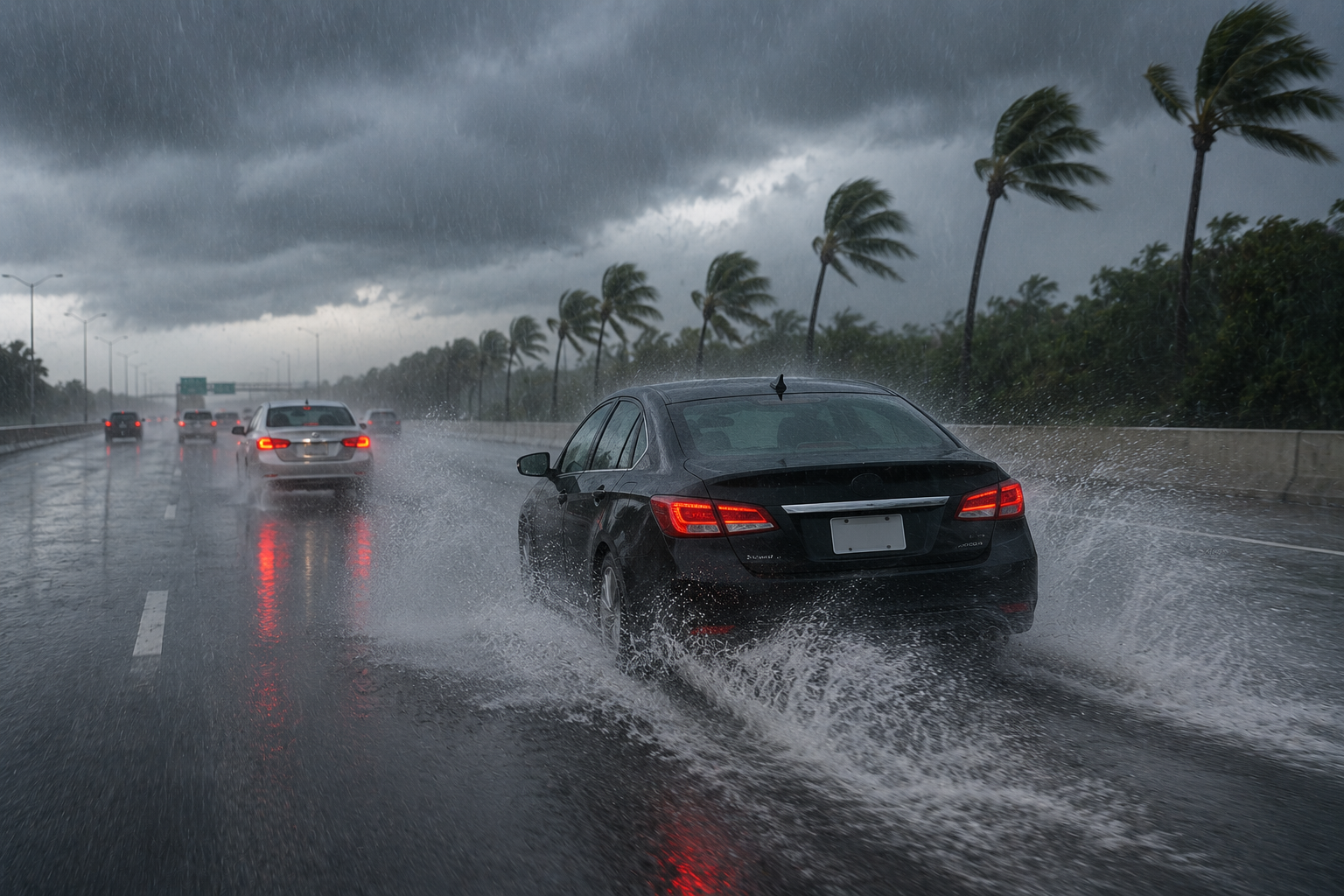
A hydroplaning crash sounds like an act of nature, but in most cases it comes down to choices the driver could have controlled. Speed too high for the conditions, tires worn below safe tread depth, a quick lane change across a flooded wheel rut, or following too closely to see the puddle until it is too late. Florida law expects drivers to adjust to the weather, and a hydroplaning crash is rarely treated as an unavoidable accident by insurance adjusters or by the courts.
What Counts as a Hydroplaning Crash
A hydroplaning crash is any collision caused by a vehicle losing traction on a film of water between the tires and the road surface. It can be a single car spin into the guardrail, a sideswipe of a neighboring vehicle during a slide, a rear end impact after the front car loses control and slows abruptly, or a chain reaction where multiple vehicles slide on the same flooded section of road. In Florida, hydroplaning crashes show up most often during summer thunderstorms and tropical bands, but standing water can also accumulate in low spots and worn wheel ruts on dry days when sprinklers or runoff are involved.
How Common Hydroplaning Crashes Are in Florida
Florida averages more annual rainfall than almost any state in the country, and summer storms are short and intense. Rain related crash totals in Florida regularly reach tens of thousands per year, according to Florida Highway Safety and Motor Vehicles crash data, with a significant portion involving hydroplaning, loss of control, or wet pavement skidding. South Florida interstates and the Turnpike see clusters of hydroplaning crash reports during the early afternoon storms that cross over from the Everglades, and the problem is worst on aging asphalt with deep wheel ruts.
Why Drivers Hydroplane at High Speed
The two biggest factors in a hydroplaning crash are speed and tread depth. Tires can shed water effectively below about thirty five miles per hour with full tread, but as speed rises and tread wears, the water moves faster than the tire can clear it and the contact patch lifts. Add a worn tire, an under inflated tire, or a sudden steering input on a flooded section of road and the loss of traction is almost guaranteed. Drivers also hydroplane because they refuse to slow down for the rain, follow too closely to read the road surface, or change lanes through standing water without checking for a flooded wheel rut.
Common Locations for Florida Hydroplaning Crashes
The corridors most commonly named in hydroplaning crash reports are I 95 through Broward and Palm Beach, the Turnpike from Boynton south, I 595 between University Drive and the Turnpike interchange, and the Sawgrass Expressway near the I 75 split. On surface roads, low lying intersections in Davie, Hollywood, Pompano Beach, and Boca Raton flood quickly during heavy storms. Construction zones with grooved asphalt and worn lane stripes also generate a steady stream of hydroplaning crash reports.
What Typically Happens After a Hydroplaning Crash
The standard hydroplaning crash sequence is a brief slide, an oversteer correction, and a rotation that sends the car across lanes or into the median or guardrail. Secondary impacts are common because the slide takes the vehicle into the path of traffic that has no time to stop. Injuries from a hydroplaning crash often include neck and back strain from the rotation, shoulder injuries from gripping the wheel, head injuries from striking the side window or door frame, and chest contusions from the seatbelt during a side or rear secondary impact.
Summary of Hydroplaning Crash Liability
Florida operates under a no fault insurance system, so your own PIP coverage pays first for medical bills and a portion of lost wages no matter who caused the wreck. But weather is not a free pass for an at fault driver. A hydroplaning crash can support a negligence claim if the driver was speeding for the conditions, was following too closely, had bald or under inflated tires, or made a lane change into standing water without checking. The road surface itself can also be a contributing factor when a public agency or a private property owner allowed the wheel ruts or drainage problem to develop.
FAQs About Hydroplaning Crashes
Is a hydroplaning crash automatically the driver’s fault?
Often yes, because Florida law expects drivers to adjust their speed to the weather. Weather does not excuse a hydroplaning crash by itself.
Can I file a claim if I hydroplaned and hit another driver?
You can still recover under your own PIP coverage for medical bills, and depending on tire condition and speed at the time, you may have a comparative fault claim against the road agency or another driver.
What if my tires were worn at the time of the hydroplaning crash?
Tire condition can affect the claim. Tread depth, age, and pressure are commonly examined when fault is being assigned in a hydroplaning crash.
Are there cases where Florida is responsible for the road surface?
Yes, in rare cases. If deep wheel ruts or a known drainage failure caused the standing water and the responsible agency was on notice, that can support a separate claim.
Contact a South Florida Hydroplaning Crash Attorney
If you were hurt in a hydroplaning crash anywhere in Broward or Palm Beach, the team at Lawlor, White & Murphey can help you sort out fault and pursue a motor vehicle accident claim under Florida operates under a no fault insurance system. Call our office for a free consultation.