
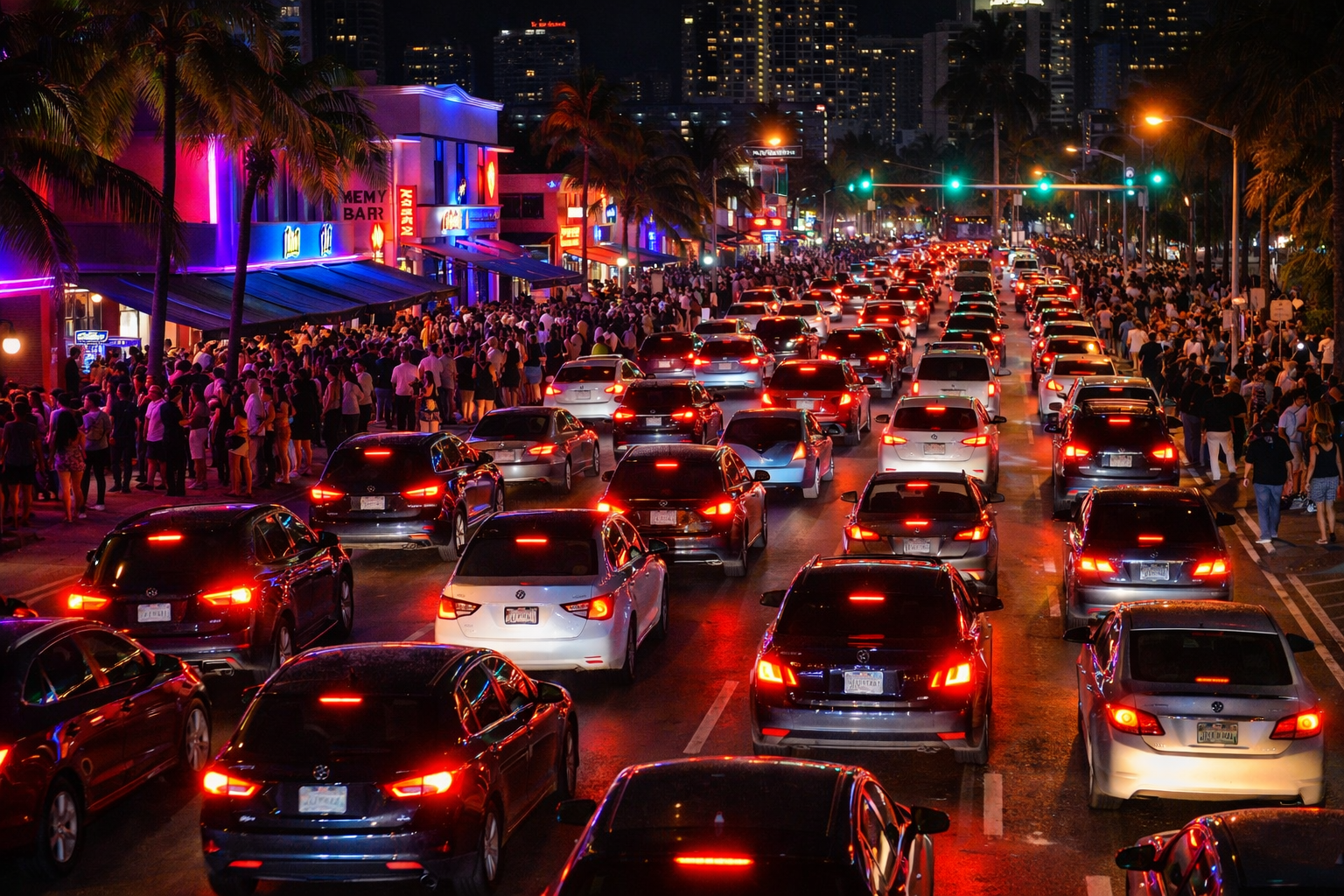
Late Night Rideshare Conditions That Heighten Collision Risks in Florida Nightlife Districts
Many people assume that taking a rideshare late at night is a safer alternative to driving through busy entertainment districts. The expectation is that a professional driver familiar with the area can navigate crowds, traffic, and pickup zones more effectively than an individual driver. However, the rise in nightlife rideshare hazards across Florida suggests that these environments are far more unstable than they appear. Areas surrounding bars, clubs, and late night restaurants create a unique set of risks that intensify after dark.
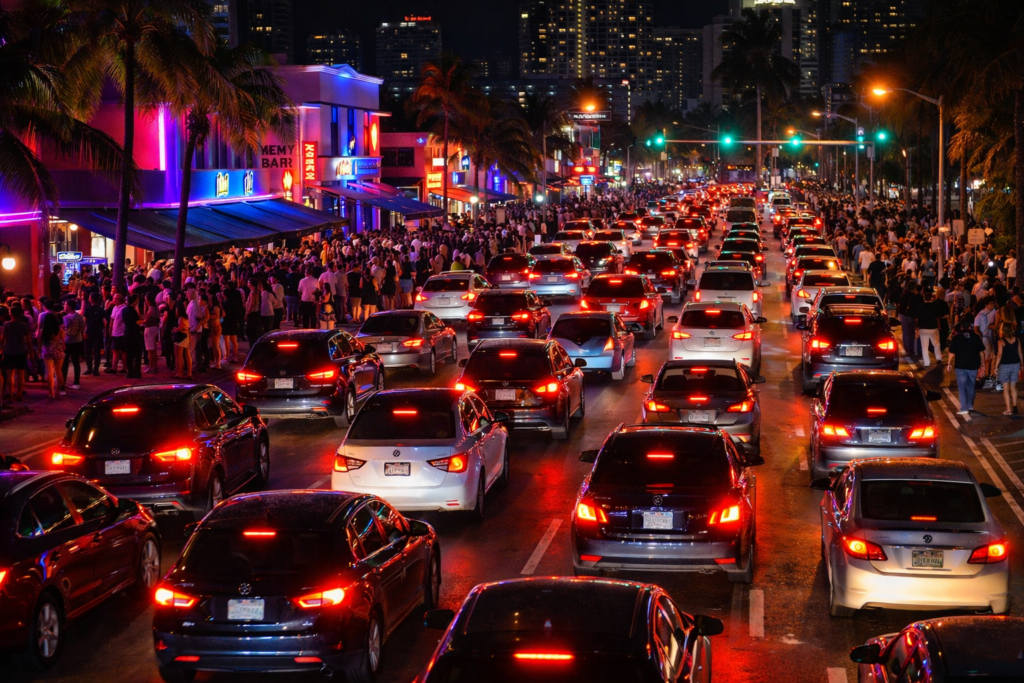
As nightlife districts become more crowded, the physical layout of these areas begins to work against safe traffic flow. Limited curb space, overlapping pickup locations, and high pedestrian density compress the environment into a narrow operating space. Drivers are forced to make rapid decisions while navigating unpredictable movement from both vehicles and pedestrians. These conditions reduce visibility, shorten reaction windows, and increase the likelihood of sudden stops or unexpected maneuvers.
Core Environmental Pressure in Nightlife District Traffic
Nightlife districts are not designed to handle the volume and type of traffic that occurs during peak late night hours. Streets that function normally during the day become congested with double parked vehicles, rideshare drivers waiting for passengers, and vehicles circling for available pickup space. This creates a continuous disruption in traffic flow, forcing drivers to adjust speed and positioning in tight spaces.
The lack of designated pickup zones adds to the pressure. Rideshare drivers often stop wherever space becomes available, even if it interrupts moving traffic. This creates sudden obstacles that trailing vehicles must react to immediately. When multiple drivers behave this way within a confined area, the roadway becomes fragmented, and traffic movement loses consistency.
Lane structure also becomes less meaningful in these environments. Vehicles frequently drift between lanes, stop abruptly, or block partial lanes while waiting for passengers. This removes the predictability that drivers rely on and replaces it with a constantly shifting traffic pattern that requires continuous adjustment.
Expectation Failure in Nightlife Rideshare Hazards
Driver expectations play a critical role in how traffic is navigated. In standard conditions, drivers anticipate steady movement, clear lane boundaries, and visible cues that indicate when to slow or stop. In nightlife districts, those expectations fail.
Drivers approaching these areas may expect traffic to flow slowly but consistently. Instead, they encounter sudden stops, vehicles pulling over without warning, and pedestrians stepping into the roadway outside of designated crossings. These disruptions reduce the ability to anticipate what will happen next, forcing drivers into reactive behavior rather than controlled decision making.
Navigation systems also contribute to expectation failure. Rideshare drivers often receive last second instructions to pick up or drop off passengers, leading to abrupt turns or stops. These actions can occur with minimal signaling, leaving surrounding drivers with limited time to respond. The mismatch between expected and actual behavior creates conditions where collisions become more likely
Environmental and Secondary Factors
Late night conditions introduce additional variables that further increase risk. Lighting, weather, and surface conditions all influence how drivers perceive and respond to their surroundings.
- Poor lighting reduces the ability to judge distance and speed. Shadows, glare from headlights, and inconsistent street lighting make it harder to detect pedestrians and vehicle movement in time to react.
- Moisture on road surfaces, whether from rain or humidity, can reduce traction. Vehicles may require longer distances to stop, especially when braking suddenly in congested areas.
- Visual clutter from signage, storefront lighting, and vehicle headlights creates distraction. Drivers must filter through competing light sources while making rapid decisions.
- Temporary obstructions such as delivery vehicles or rideshare cars waiting in active lanes alter normal traffic patterns. These obstacles often appear without warning and force immediate adjustments.
Traffic Density and Reaction Pressure
As crowds exit nightlife venues, traffic density increases rapidly within a short period. Large numbers of people request rides at the same time, leading to a surge of vehicles entering already crowded streets. This creates a high pressure environment where drivers operate in close proximity with limited space to maneuver.
Stop and go movement becomes constant, with vehicles accelerating briefly before stopping again within a few car lengths. This repetitive pattern increases fatigue and reduces attention over time. Drivers must remain alert to both vehicle movement and pedestrian activity, which divides focus and slows reaction time.
The lack of escape space further intensifies risk. In these dense environments, drivers cannot easily change lanes or move away from hazards. When a vehicle stops suddenly or a pedestrian enters the roadway, braking becomes the only available response. If that response is delayed even slightly, a collision can occur.
Common Collision Patterns in Nightlife Rideshare Hazards
- Rear end collisions in pickup zones: Vehicles stopping abruptly to pick up passengers create sudden braking conditions. Drivers behind may not anticipate these stops, leading to rear end impacts in tight spaces.
- Sideswipe incidents during lane drift: As drivers adjust position to reach passengers or avoid obstacles, vehicles may drift into adjacent lanes. This can result in sideswipe collisions when spacing is limited.
- Pedestrian related impacts: Crowds moving between venues often cross streets outside of marked areas. Drivers navigating traffic may not see pedestrians in time to avoid contact.
- Turning conflicts at intersections: Rideshare drivers making quick turns to reach pickup points may intersect with oncoming traffic. These sudden movements increase the risk of angle collisions.
Summary
The rise in nightlife rideshare hazards across Florida is driven by environmental pressure, disrupted expectations, and increased traffic density in entertainment districts. These areas combine limited space, unpredictable movement, and reduced visibility to create conditions where drivers must react instantly and often without complete information. As rideshare demand continues to grow in nightlife settings, these risks will remain a consistent factor in late night traffic environments.
Frequently Asked Questions
Why are nightlife districts more dangerous for rideshare traffic?
Nightlife districts concentrate high volumes of vehicles and pedestrians into limited space. Drivers must navigate crowded pickup areas, sudden stops, and unpredictable movement. These conditions reduce reaction time and increase the likelihood of collisions.
How do rideshare pickups contribute to crashes?
Rideshare pickups often occur in active traffic lanes due to limited curb space. Drivers may stop abruptly or pull over without warning. This creates sudden obstacles that other drivers must react to quickly.
What role does lighting play in late night accidents?
Lighting affects how well drivers can see and interpret their surroundings. Poor or inconsistent lighting can obscure pedestrians, vehicles, and road conditions. This makes it harder to respond to changes in traffic.
Are pedestrians at higher risk in nightlife areas?
Pedestrians are at higher risk because they often move unpredictably and may cross streets outside designated areas. Drivers focused on traffic may not detect these movements in time to avoid contact.
Why are rear end collisions common in these environments?
Rear end collisions occur frequently because of repeated stopping and starting in tight spaces. Drivers may not anticipate sudden braking, especially when vehicles stop to pick up passengers. This creates conditions where even small delays in reaction can lead to impact.
Contact Lawlor, White & Murphey Today
Nightlife rideshare collisions often involve sudden stops, crowded pickup zones, and unpredictable movement from both drivers and pedestrians. Understanding how these factors contributed to a collision may require careful evaluation of traffic patterns, vehicle positioning, and the conditions present at the time.
If you or someone you know has been injured in a motor vehicle accident, the attorneys at Lawlor, White & Murphey can help review the situation and provide insight into how these complex traffic environments contribute to collision risk.
Take the next step—schedule a free consultation with Lawlor, White & Murphey today.