
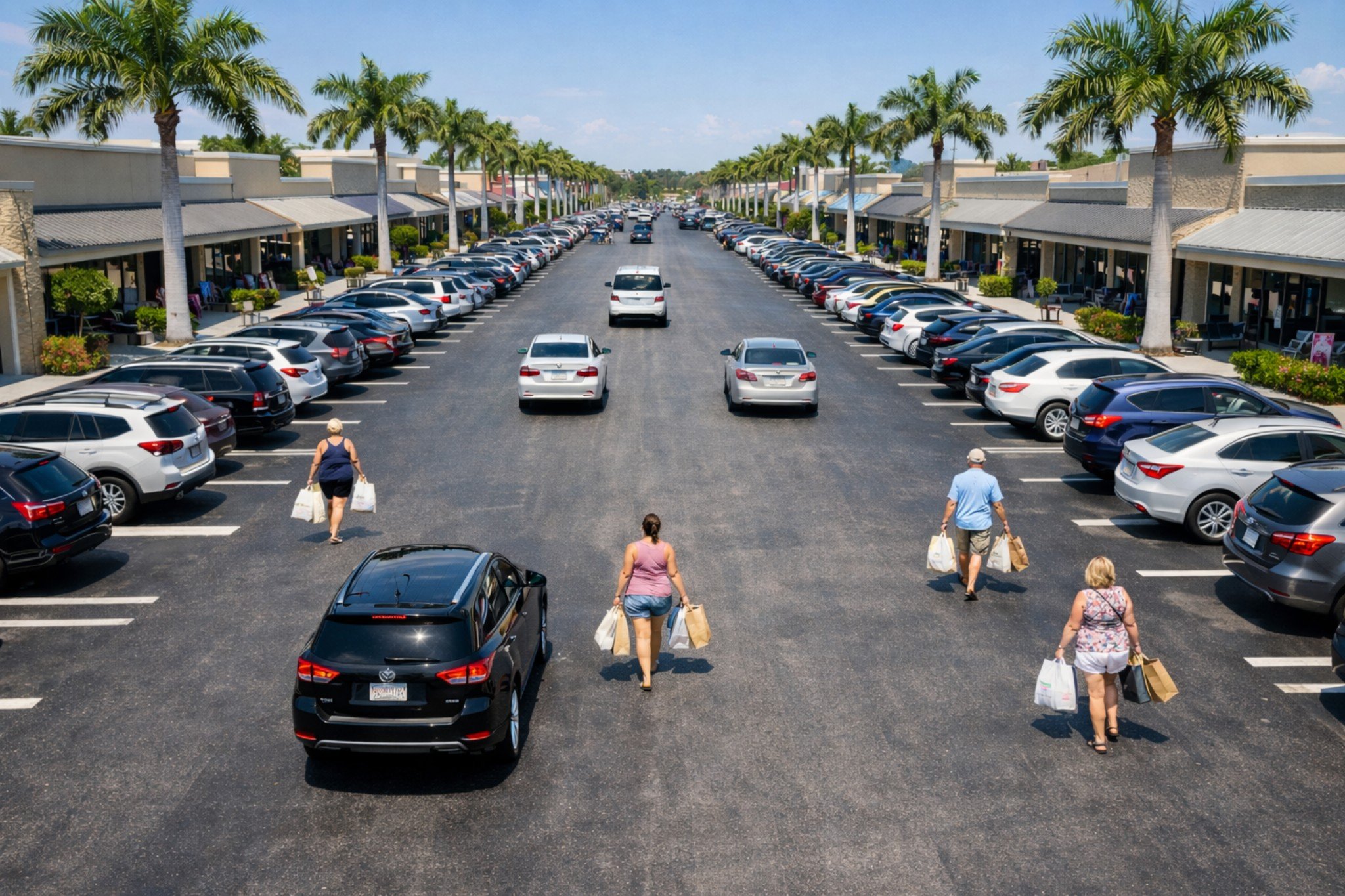
Traffic Flow Problems in Parking Lots That Lead to Motor Vehicle Accidents
Parking lots are widely perceived as low risk driving environments. Speeds are slower, distances are short, and most drivers assume that accidents in these spaces are unlikely to cause serious harm. This assumption shapes how drivers approach commercial lots, garages, and retail plazas across Florida. Yet many low speed crashes occur precisely because drivers underestimate parking traffic risks and rely on instinct rather than structured roadway cues.
In reality, parking lots compress vehicles, pedestrians, and delivery traffic into tight, poorly defined spaces. Unlike public roads, these areas often lack consistent signage, standardized lane widths, or predictable right of way patterns. Drivers are forced to make rapid decisions with limited visibility and minimal reaction time. As traffic density increases, especially in tourist heavy or retail focused areas, the probability of preventable collisions rises sharply.
Parking Traffic Risks Inside Florida Parking Lots
Many Florida parking lots were designed decades ago for lower traffic volumes and smaller vehicles. As commercial centers expanded and vehicle sizes increased, traffic flow layouts often remained unchanged. Narrow drive aisles, tight turning radii, and awkward intersections force drivers into uncomfortable maneuvers. These design constraints directly increase parking traffic risks by reducing margin for error.
Directional arrows and signage are frequently inconsistent or faded, especially in older shopping centers and coastal garages exposed to sun and salt air. Drivers unfamiliar with the lot layout may hesitate, stop abruptly, or attempt last second turns. Delivery vans and rideshare vehicles further complicate circulation patterns by stopping in active lanes or reversing in confined areas. The result is a constant state of low level congestion that leaves little room for safe adjustments.
How Mixed Use Parking Areas Amplify Collision Pressure
Florida parking lots rarely serve a single purpose. Retail customers, restaurant patrons, hotel guests, delivery drivers, and pedestrians all share the same space. This mixed use environment creates overlapping movement patterns that are difficult to anticipate. Drivers may focus on finding parking while pedestrians navigate between vehicles, often outside marked walkways.
Garages near beaches, entertainment districts, and tourist attractions experience especially high turnover. Vehicles enter and exit rapidly while pedestrians move unpredictably toward elevators, stairwells, and street level exits. These conditions compress reaction windows and heighten parking traffic risks even when speeds remain low. Collisions often occur not because drivers are reckless, but because the environment demands too many simultaneous decisions.
Driver Expectation Failure and Parking Traffic Risks
Drivers rely heavily on visual consistency when navigating familiar spaces. Painted lines, signage placement, and predictable traffic flow allow motorists to anticipate movement. Parking lots frequently break these expectations. Lane markings may disappear near intersections, arrows may contradict vehicle positioning, and parked vehicles may obstruct sightlines.
When expectations fail, hesitation increases. Drivers pause mid lane, inch forward cautiously, or commit to turns without clear visibility. These moments of uncertainty are where most parking lot collisions occur. The lack of standardized design forces drivers to improvise, increasing the likelihood of misjudgment and contact with other vehicles or pedestrians.
Environmental and Secondary Factors That Increase Parking Traffic Risks
Environmental conditions often amplify design related hazards within Florida parking lots. Weather, lighting, and surface quality can transform already constrained spaces into high risk environments.
- Lighting degradation and glare
Many parking lots rely on aging lighting systems that create uneven illumination. Shadows obscure pedestrians while glare from low angle sunlight reduces depth perception during morning and evening hours. Drivers may not detect cross traffic or pedestrians until they are dangerously close. - Fading pavement markings
Heat, rain, and constant traffic wear down directional arrows and lane lines. When markings fade, drivers lose visual guidance that normally regulates movement. This increases hesitation and erratic driving behavior, particularly for visitors unfamiliar with the area. - Surface deterioration and uneven pavement
Cracks, potholes, and uneven transitions between surfaces disrupt vehicle control at low speeds. Drivers navigating around damaged pavement may drift out of lane or stop unexpectedly. These micro adjustments contribute to sideswipes and rear end impacts. - Weather related traction loss
Florida rainstorms reduce traction quickly, especially on polished concrete garage surfaces. Even minor braking or steering inputs can lead to sliding in tight quarters. Wet conditions magnify parking traffic risks when visibility and traction decline simultaneously.
Traffic Density and Congestion Pressure
Parking lots function under constant stop and go pressure. Vehicles queue at entrances, circle aisles searching for spaces, and merge unpredictably near exits. Unlike roadways, there is rarely an escape route when congestion builds. Drivers are boxed in by parked vehicles, curbs, and pedestrians.
As density increases, patience declines. Drivers may creep forward aggressively or attempt to squeeze through gaps that are too small. These forced proximity conditions leave no buffer for error. Even cautious drivers may find themselves involved in collisions simply due to lack of space and compressed reaction time.
Common Collision Patterns in Florida Parking Lots
- Rear end collisions
Sudden stops caused by pedestrians, reversing vehicles, or hesitation at intersections often lead to low speed rear end impacts. These crashes frequently occur when drivers assume continuous movement in congested aisles. - Sideswipe incidents
Tight lanes and vehicles drifting while avoiding obstacles contribute to sideswipes. Delivery vans and larger SUVs are particularly susceptible due to limited clearance. - Backing collisions
Poor sightlines and obstructed rear visibility lead to backing accidents. Drivers exiting spaces may not see approaching vehicles or pedestrians until contact occurs. - Barrier and column impacts
In garages, structural columns and concrete barriers sit close to travel lanes. Misjudged turns or glare related visibility issues often result in vehicle to structure impacts.
Injury Consequences of Parking Lot Accidents
Although parking lot collisions occur at lower speeds, injury risks remain significant. Sudden stops and minor impacts can strain the neck and upper back, leading to soft tissue injuries. These injuries may not present immediately, especially when adrenaline masks discomfort.
Pedestrians struck in parking lots face elevated risk due to lack of physical protection. Even low speed impacts can result in fractures or head injuries. The confined nature of these environments often leaves little room for evasive movement, increasing injury severity despite reduced vehicle speed.
Summary
Florida parking lots present a unique set of challenges that are often underestimated by drivers. Design limitations, mixed use traffic, environmental wear, and congestion combine to create consistent parking traffic risks across commercial properties. These environments demand rapid decisions within tight spaces, leaving little margin for error. Understanding how traffic flow and expectation failure contribute to collisions helps explain why so many parking lot accidents are preventable, yet continue to occur throughout the state.
Frequently Asked Questions
Why do parking lot accidents happen so frequently in Florida?
Parking lots combine vehicles, pedestrians, and delivery traffic in confined spaces with inconsistent design standards. Environmental wear and high traffic volume further increase collision risk.
Are parking garages riskier than open lots?
Garages often present greater visibility challenges due to columns, ramps, and lighting conditions. Tight turns and glare can increase the likelihood of impacts.
How do faded markings contribute to accidents?
When directional arrows and lane lines fade, drivers lose visual cues that regulate movement. This leads to hesitation, confusion, and sudden stops.
Can low speed parking lot crashes cause injuries?
Yes, even low speed impacts can cause neck, back, and head injuries. Pedestrians are particularly vulnerable due to direct exposure.
Do tourist areas experience more parking lot collisions?
Tourist heavy areas see higher turnover, unfamiliar drivers, and increased pedestrian activity. These factors significantly elevate parking traffic risks.
Contact Lawlor, White & Murphey Today
If you or someone you know has experienced delayed medical care after a car accident, don’t wait any longer. Your health and your legal rights depend on timely action. Speak with a qualified personal injury attorney who can guide you through the process, help you gather evidence, and fight for the compensation you deserve.
Take the next step—schedule a free consultation with Lawlor, White & Murphey today.