
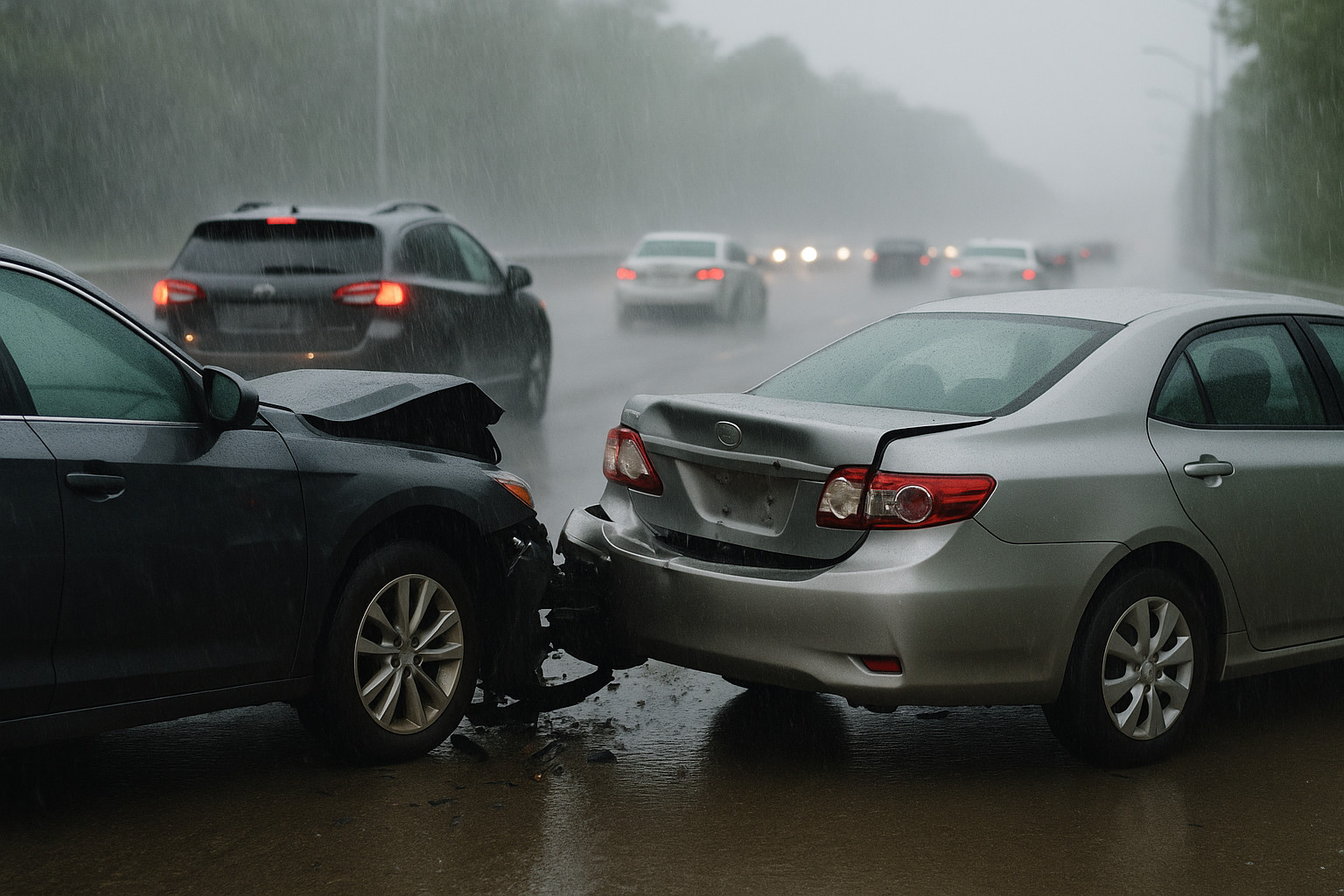
Florida Rainstorms and the Spike in Weather Related Car Accidents
Florida rainstorms are often intense, fast moving, and unpredictable. Clear skies can turn into heavy downpours within minutes, leaving drivers little time to adjust. These sudden changes create dangerous conditions on roadways that are already heavily traveled. Wet pavement, limited visibility, and rapid water buildup make it harder for vehicles to stop, turn, or maintain traction.
Unlike states with seasonal traffic fluctuations, Florida’s congestion rarely subsides. Tourists arrive throughout the year, commercial trucks move goods daily, and construction projects attempt to keep pace with growth. These overlapping demands create dense traffic conditions where vehicles travel close together, speed changes occur abruptly, and driver error becomes far more consequential.
Why Do Rainstorms Lead to More Car Accidents in Florida?
Rainstorms change the way vehicles interact with the road. Water reduces tire grip, obscures lane markings, and limits how well drivers can see what is ahead. When rain begins suddenly, drivers may not immediately reduce speed or increase following distance, which increases the likelihood of a crash.
Florida’s road design also plays a role. Many highways and surface streets are built to handle heavy traffic rather than rapid water runoff. When drainage systems become overwhelmed, water pools on the roadway, creating slippery conditions that increase rainstorm accident risks even during brief storms.
1. Wet Pavement and Loss of Traction
When rain mixes with oil, dirt, and debris already on the road, the surface becomes especially slick. Tires lose grip more easily, increasing stopping distance and reducing steering control. Vehicles may slide through intersections or fail to stop in time, leading to rear end and intersection collisions.
2. Reduced Visibility During Heavy Rain
Rainstorms often reduce visibility quickly. Windshield wipers may struggle to keep up with heavy rainfall, and spray from other vehicles can further obscure vision. Drivers may have difficulty seeing brake lights, lane markings, or stalled vehicles ahead, increasing the risk of sudden impacts.
3. Sudden Weather Shifts
Florida rainstorms can begin without much warning. Drivers who were traveling at normal speeds seconds earlier may not have time to adjust. These abrupt changes contribute to rainstorm accident risks because reaction time is reduced just as conditions become more hazardous.
How Hydroplaning Contributes to Weather Related Crashes
Hydroplaning occurs when a layer of water builds up between a vehicle’s tires and the roadway, causing the tires to lose contact with the surface. When this happens, drivers temporarily lose the ability to steer or brake effectively.
Hydroplaning is more likely at higher speeds and on roads where water accumulates quickly. Even shallow water can cause loss of control if tires are worn or improperly inflated. When a vehicle hydroplanes, it may drift into adjacent lanes, strike barriers, or collide with other vehicles.
Common Hydroplaning Scenarios in Florida
Examples include:
- Multilane highways where water pools between lanes.
- Roads with worn pavement that allows water to collect in grooves.
- Curved roadways where vehicles lose traction mid turn.
- Areas near construction zones where drainage patterns are disrupted.
Hydroplaning related crashes often involve sudden loss of control, making them difficult for other drivers to avoid.
High Risk Locations During Florida Rainstorms
Certain areas consistently see higher crash rates during rainstorms. These locations combine heavy traffic with road features that increase water buildup or limit visibility.
Areas Where Rainstorm Accident Risks Are Highest
- Bridge approaches where water collects and wind reduces visibility.
- Shaded intersections where pavement stays wet longer.
- Multilane highways with poor drainage or worn surfaces.
- Commercial parking areas where runoff flows onto adjacent roads.
- Urban intersections with clogged storm drains.
Drivers often encounter these hazards unexpectedly, especially when storms move quickly through an area.
Why Congested Traffic Makes Rainstorm Crashes Worse
Rainstorms often occur during peak commuting hours, when roads are already congested. When traffic is heavy, drivers have fewer options to maneuver away from danger. Wet pavement further limits braking and steering ability.
In stop and go traffic, rainstorm accident risks increase because drivers must react quickly to sudden slowdowns. Reduced visibility and slick surfaces make it harder to stop safely, leading to chain reaction collisions. Even minor braking errors can cause multiple vehicles to collide when traffic is dense.
Injuries Common in Rainstorm Related Car Accidents
Weather related crashes can result in serious injuries, even at lower speeds. Loss of control and sudden impacts often catch occupants off guard, increasing injury risk.
Injuries Frequently Seen After Rainstorm Crashes
- Whiplash and neck strain from sudden stops.
- Back and spinal injuries from sliding or rear end impacts.
- Traumatic brain injuries caused by rapid deceleration.
- Fractures to arms, wrists, or ribs during collisions.
- Soft tissue injuries that worsen in the days following the crash.
Some injuries may not be immediately apparent. Headaches, dizziness, and stiffness may develop hours or days later as inflammation sets in.
Insurance Challenges After Weather Related Accidents
Weather related crashes often lead to insurance disputes. Insurers may argue that rain was the primary cause of the accident rather than driver behavior. This can complicate claims, especially when multiple vehicles are involved.
In rainstorm crashes, determining fault may involve examining speed, following distance, and whether drivers adjusted to conditions appropriately. Documentation becomes especially important because wet roads alone do not explain how a collision occurred.
Common Claim Complications
- Disputes over whether a driver was traveling too fast for conditions.
- Arguments about whether braking distance was reasonable.
- Conflicting statements from drivers in reduced visibility conditions.
- Delays caused by multi vehicle involvement during storms.
What To Do After a Rainstorm Related Car Accident
Rainstorm crashes often happen quickly and leave drivers shaken. Taking certain steps can help protect health and preserve important information.
Step 1: Seek medical evaluation, even if injuries seem minor.
Step 2: Document weather conditions, road surface, and visibility if possible.
Step 3: Photograph vehicle damage and standing water on the roadway.
Step 4: Obtain witness information, especially in multi vehicle crashes.
Step 5: Keep records of symptoms that develop after the accident.
These steps can be particularly important when injuries or vehicle damage are not immediately obvious.
Frequently Asked Questions
Why do car accidents spike when it rains in Florida?
Rainstorms reduce traction, visibility, and braking ability. Florida’s fast moving storms often arrive suddenly, leaving drivers little time to adjust. Wet pavement and water buildup increase rainstorm accident risks, especially during heavy traffic.
Can hydroplaning happen at low speeds?
Yes. Hydroplaning can occur at relatively low speeds if water accumulates on the roadway and tires are worn or underinflated. Even brief loss of control can lead to a collision.
Are certain roads more dangerous during rainstorms?
Yes. Bridge approaches, multilane highways, shaded intersections, and areas with poor drainage tend to be higher risk during storms because water collects quickly and visibility is limited.
Do injuries sometimes appear after the storm has passed?
Yes. Adrenaline may mask pain immediately after a crash. Symptoms such as headaches, stiffness, and back pain often appear later, particularly after weather related collisions.
Why are insurance claims harder after weather related crashes?
Insurers may argue that weather was the primary cause rather than driver actions. Establishing how the crash occurred often requires detailed documentation of road conditions, vehicle damage, and injuries.
Summary: Why Florida Rainstorms Increase Accident Risks
Florida rainstorms create sudden driving hazards that significantly increase rainstorm accident risks. Wet pavement, reduced visibility, hydroplaning, and rapid water buildup combine to make roads dangerous, even during short storms. These conditions are especially problematic when traffic is already congested.
Understanding how rainstorms affect roadways helps explain why crashes spike during storms and why injuries from these accidents can be serious. Awareness of high risk locations and storm related hazards highlights the importance of caution during Florida’s frequent rain events.
Contact Lawlor, White & Murphey Today
If you or someone you know has experienced delayed medical care after a car accident, don’t wait any longer. Your health and your legal rights depend on timely action. Speak with a qualified personal injury attorney who can guide you through the process, help you gather evidence, and fight for the compensation you deserve.
Take the next step—schedule a free consultation with Lawlor, White & Murphey today.