
Rainy Collision Risks: How Florida’s Rainy Season Increases Truck and Vehicle Collisions
Florida drivers are accustomed to sudden storms, but the state’s rainy season creates roadway conditions that significantly change how vehicles behave. What begins as a routine drive can quickly become dangerous when heavy rainfall reduces traction and visibility at the same time. Rainy collision risks rise sharply during these storms because drivers must react to road conditions that evolve faster than traffic can adjust.
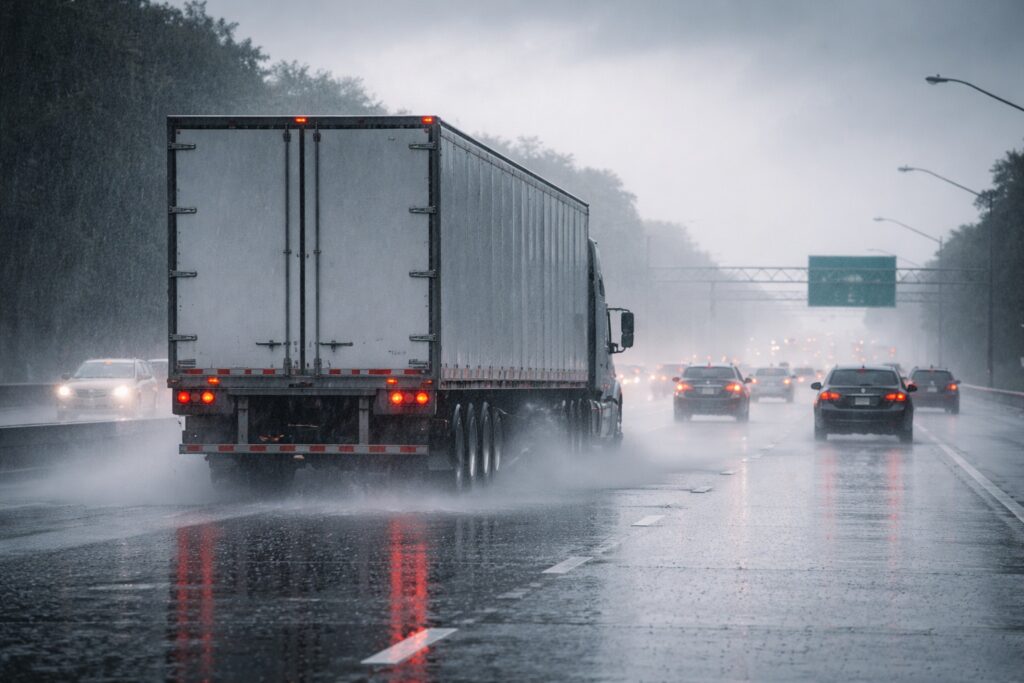
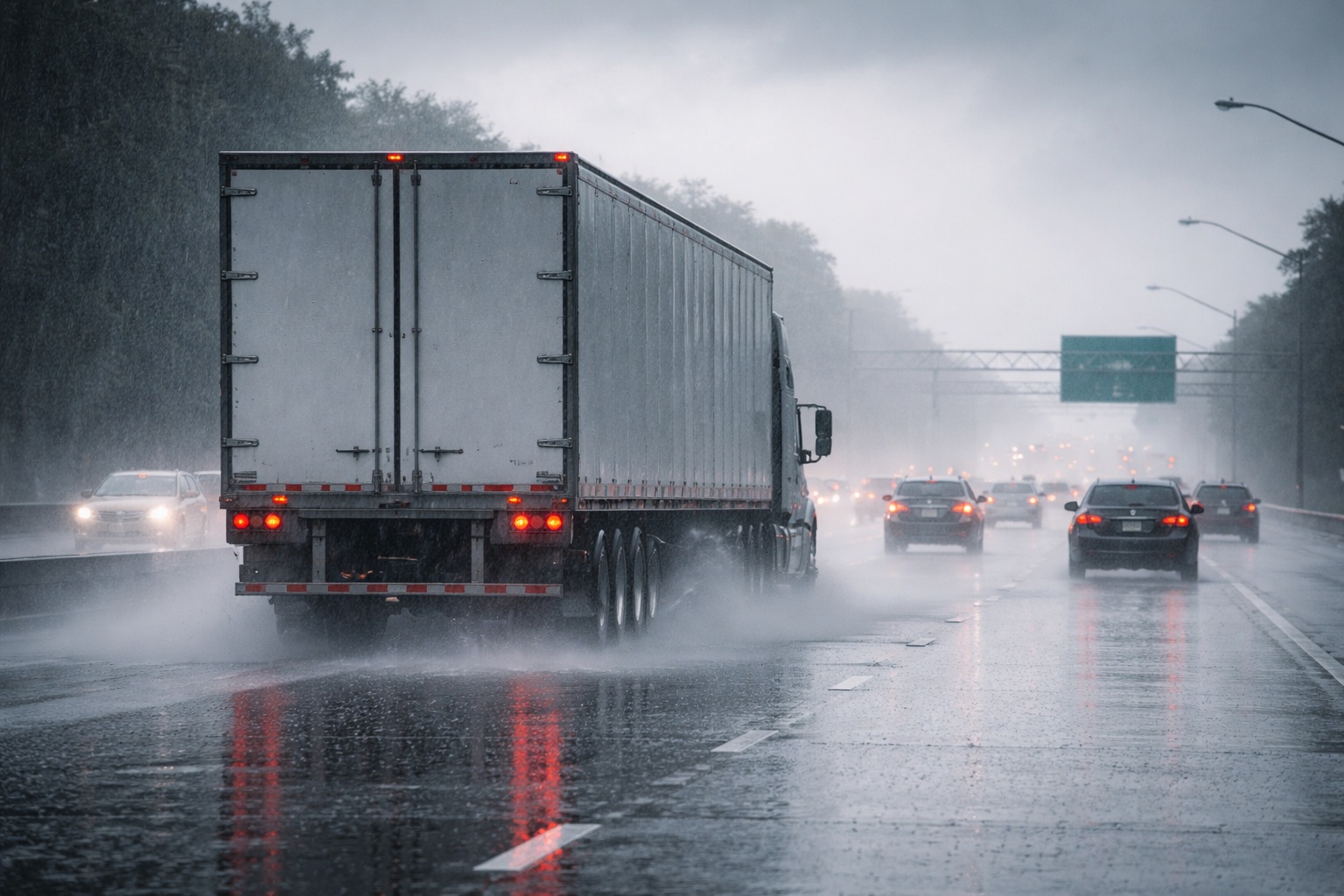
Passenger vehicles and commercial trucks face different challenges during storms, yet they share the same crowded highways. Large trucks require longer stopping distances and more space to maneuver, while passenger vehicles are more prone to hydroplaning in standing water. When both types of vehicles operate on rain soaked highways with limited visibility, even minor driving adjustments can trigger chain reaction crashes.
How Rainfall Changes Roadway Dynamics
Heavy rain does more than simply make pavement wet. It alters the friction between tires and the road surface, reducing the grip that vehicles rely on for braking and steering. This reduction in traction becomes especially dangerous on high speed corridors where vehicles travel close together and reaction windows are already limited.
Rainy collision risks increase because water begins to fill small depressions in the pavement. Even shallow pools of water can create unstable surfaces that disrupt tire contact with the road. Drivers may not notice these changes immediately, particularly during sudden downpours when visibility drops and attention shifts toward the storm itself.
Highway speeds compound this problem. Vehicles traveling at 65 miles per hour or faster have little time to adjust when traction suddenly changes. A small loss of control by one vehicle can quickly involve surrounding traffic.
Why Large Trucks Face Greater Challenges in Storms
Commercial trucks operate under very different physical constraints than passenger vehicles. A fully loaded tractor trailer can weigh tens of thousands of pounds, which increases the distance required to slow down or stop. During dry conditions this difference is manageable, but rain magnifies the problem.
Rainy collision risks increase for trucks because water reduces braking efficiency. Wet pavement requires more time and distance for a truck to slow safely, especially when cargo weight shifts during deceleration. When traffic suddenly slows in front of a truck during a storm, the available stopping distance may shrink faster than the vehicle can respond.
Visibility also becomes a major issue. Trucks produce significant spray from their tires when traveling through rain, which can obscure the view for nearby drivers. Passenger vehicles traveling beside or behind large trucks may struggle to see lane markings, brake lights, or obstacles ahead.
Standing Water and Hydroplaning
One of the most dangerous conditions during Florida storms is standing water. Rainfall can accumulate quickly on highways where drainage systems are overwhelmed or pavement slopes unevenly. These shallow pools may appear harmless, but they can cause vehicles to hydroplane.
Hydroplaning occurs when a layer of water forms between the tires and the road surface. When this happens, tires lose direct contact with the pavement and the driver temporarily loses steering and braking control. Rainy collision risks increase dramatically when hydroplaning occurs in heavy traffic because vehicles can drift across lanes or spin unexpectedly.
Passenger vehicles are particularly vulnerable to hydroplaning due to their lighter weight. However, trucks are not immune to the effects of standing water. A tractor trailer that loses traction may slide or jackknife, creating a serious hazard for surrounding traffic.
Visibility Breakdown During Florida Downpours
Storms in Florida can develop quickly, turning clear skies into intense rainfall within minutes. When visibility deteriorates, drivers rely more heavily on headlights, lane markings, and brake lights to interpret traffic conditions. Unfortunately, heavy rain can obscure these visual cues.
Rainy collision risks increase when drivers cannot clearly see the road ahead. Blurred windshields, reflective glare from wet pavement, and spray from nearby vehicles combine to reduce the ability to judge distance and speed. Drivers may brake abruptly or change lanes unexpectedly when visibility drops, increasing the chance of collisions.
These problems are common on major highways such as Interstate 95 and Interstate 75, where large volumes of traffic continue moving at highway speeds even during severe storms.
Environmental and Secondary Factors
Rainstorms introduce several environmental conditions that quietly increase collision risk without immediately drawing attention.
Wet weather affects both vehicle performance and roadway surfaces in ways that drivers may not recognize until it is too late.
• Standing water accumulation
Heavy rainfall can overwhelm drainage systems and allow water to pool on highway lanes. Even shallow water layers can cause vehicles to hydroplane, temporarily eliminating steering control. When hydroplaning occurs in traffic, surrounding drivers may have little opportunity to avoid the drifting vehicle.
• Reduced pavement traction
Rainwater mixes with oil residue and road debris that accumulate during dry weather. This combination creates a slick surface during the first phase of a storm. Vehicles may require longer distances to slow or change direction safely.
• Headlight glare and reflection
Wet pavement reflects light from headlights, streetlights, and overhead signs. These reflections can distort depth perception and make it harder to judge the distance between vehicles. Drivers may react late when traffic conditions change.
• Tire spray from large trucks
Commercial trucks displace large volumes of water through their tires when traveling through rain. The resulting spray clouds can momentarily blind nearby drivers and obscure lane markings or obstacles in the roadway.
Traffic Density and Reaction Pressure
Florida highways often remain crowded even during severe weather. Drivers may attempt to maintain normal travel speeds despite changing conditions, which compresses the space between vehicles and reduces reaction time.
Rainy collision risks increase when traffic density forces vehicles into close proximity. Drivers must respond quickly to braking vehicles ahead while also monitoring trucks and merging traffic. In storms, this reaction window becomes even smaller as visibility decreases.
When one vehicle brakes suddenly in wet conditions, the vehicles behind it may not have sufficient traction or distance to stop safely. This scenario frequently leads to multi vehicle collisions during heavy rain.
Common Collision Patterns During Rainstorms
- Rear end collisions
Reduced traction and longer stopping distances make it difficult for drivers to slow in time when traffic suddenly changes speed. Rear end crashes often occur when vehicles underestimate how far they will slide on wet pavement. - Sideswipe accidents
Drivers navigating through rain may drift slightly within their lanes or misjudge spacing during lane changes. Poor visibility and wet pavement increase the likelihood of sideswipe collisions. - Hydroplaning loss of control
Vehicles encountering standing water may hydroplane and slide across lanes or spin unexpectedly. These events can involve multiple vehicles if surrounding drivers cannot react quickly enough. - Truck braking collisions
Large trucks require more time and distance to slow during storms. When traffic slows suddenly ahead, trucks may be unable to stop before striking smaller vehicles.
Injury Consequences After Rain Related Crashes
Collisions during storms often involve sudden braking or loss of control rather than high speed impacts alone. Even moderate speed crashes can produce significant forces when vehicles slide or collide unexpectedly.
Injuries commonly associated with rainy season accidents include neck strain, back injuries, and head trauma. These injuries may not always appear immediately after a crash. Adrenaline can mask symptoms in the hours following an accident, and discomfort may develop later as inflammation increases.
Drivers involved in rain related collisions sometimes underestimate the seriousness of their injuries at first because the crash occurred at a lower speed. However, even brief impacts can create lasting physical effects.
What to Do After a Rain Related Highway Accident
The actions taken immediately after a collision during heavy rain can influence both medical outcomes and the clarity of the accident investigation. Storm conditions often reduce visibility, scatter debris across the roadway, and create traffic congestion that changes quickly after a crash. Because rainy collision risks often involve multiple vehicles and sudden loss of traction, documenting the environment and roadway conditions becomes especially important.
Rainstorms can also obscure evidence such as skid marks, standing water patterns, or roadway debris. Taking steps to preserve information about the scene while conditions remain unchanged can help clarify how the crash occurred.
Important actions after a rain related accident include:
- Seek medical evaluation promptly
Even moderate collisions can cause injuries that are not immediately obvious. Neck strain, head injuries, and soft tissue damage may take hours to develop as adrenaline fades and inflammation increases. Early medical evaluation can identify injuries before symptoms worsen. - Document weather and roadway conditions
Photograph standing water, rainfall intensity, traffic congestion, and visibility conditions at the time of the crash. Images of wet pavement, hydroplaning areas, or water pooling on the roadway can help illustrate how rainy collision risks contributed to the accident. - Record the exact location of the crash
Highway collisions during storms often occur near curves, merges, bridges, or areas where drainage is limited. Documenting the exact roadway location helps establish how weather and traffic conditions may have affected the incident. - Identify witnesses and surrounding traffic conditions
Drivers traveling nearby may have observed sudden braking, hydroplaning, or reduced visibility before the crash occurred. Their observations can provide important context about how conditions developed during the storm. - Monitor symptoms that appear later
Pain, stiffness, headaches, or dizziness may not appear until hours after the collision. These delayed symptoms are common after traffic accidents and should be monitored carefully as they develop.
Frequently Asked Questions
Why does Florida’s rainy season increase collision risks on highways?
Heavy rainfall reduces tire traction and visibility at the same time. Wet pavement makes braking and steering less effective, while intense downpours limit how far drivers can see ahead. When vehicles are traveling at highway speeds, these conditions reduce the reaction window and increase the chance of collisions.
Why are commercial trucks more dangerous during heavy rain?
Commercial trucks require longer distances to slow down and stop, especially when carrying heavy cargo. Wet pavement increases braking distance, and water spray from large tires can reduce visibility for nearby drivers. These factors make it harder for surrounding vehicles to anticipate traffic changes during storms.
How does standing water lead to highway accidents?
Standing water can cause hydroplaning, which occurs when a vehicle’s tires lose contact with the road surface and begin riding on top of a thin layer of water. During hydroplaning, drivers temporarily lose steering and braking control. On busy highways, this loss of control can quickly involve multiple vehicles.
Do worn tires increase rainy collision risks?
Yes. Tires with worn tread are less capable of channeling water away from the tire surface. When rain accumulates on the road, worn tires are more likely to hydroplane and lose traction, which increases the likelihood of losing control.
Why do multi vehicle crashes happen more often during storms?
Heavy rain reduces visibility and increases stopping distances for all vehicles on the road. When one vehicle brakes suddenly in poor conditions, the vehicles behind it may not have enough traction or space to slow safely. This chain reaction often leads to multi vehicle collisions.
Contact Lawlor, White & Murphey Today
Motor vehicle accidents during Florida’s rainy season often involve complex roadway conditions and limited visibility that make it difficult to immediately determine how a crash occurred. When severe weather contributes to a collision involving passenger vehicles or commercial trucks, understanding the surrounding conditions can be critical.
Lawlor, White & Murphey represents individuals injured in motor vehicle accidents throughout South Florida. If you or someone you know has been involved in a crash during severe weather, the firm can review the circumstances and discuss the available options.
Take the next step—schedule a free consultation with Lawlor, White & Murphey today.