
Why Rear End Collisions Are Increasing Across Florida’s Urban Corridors
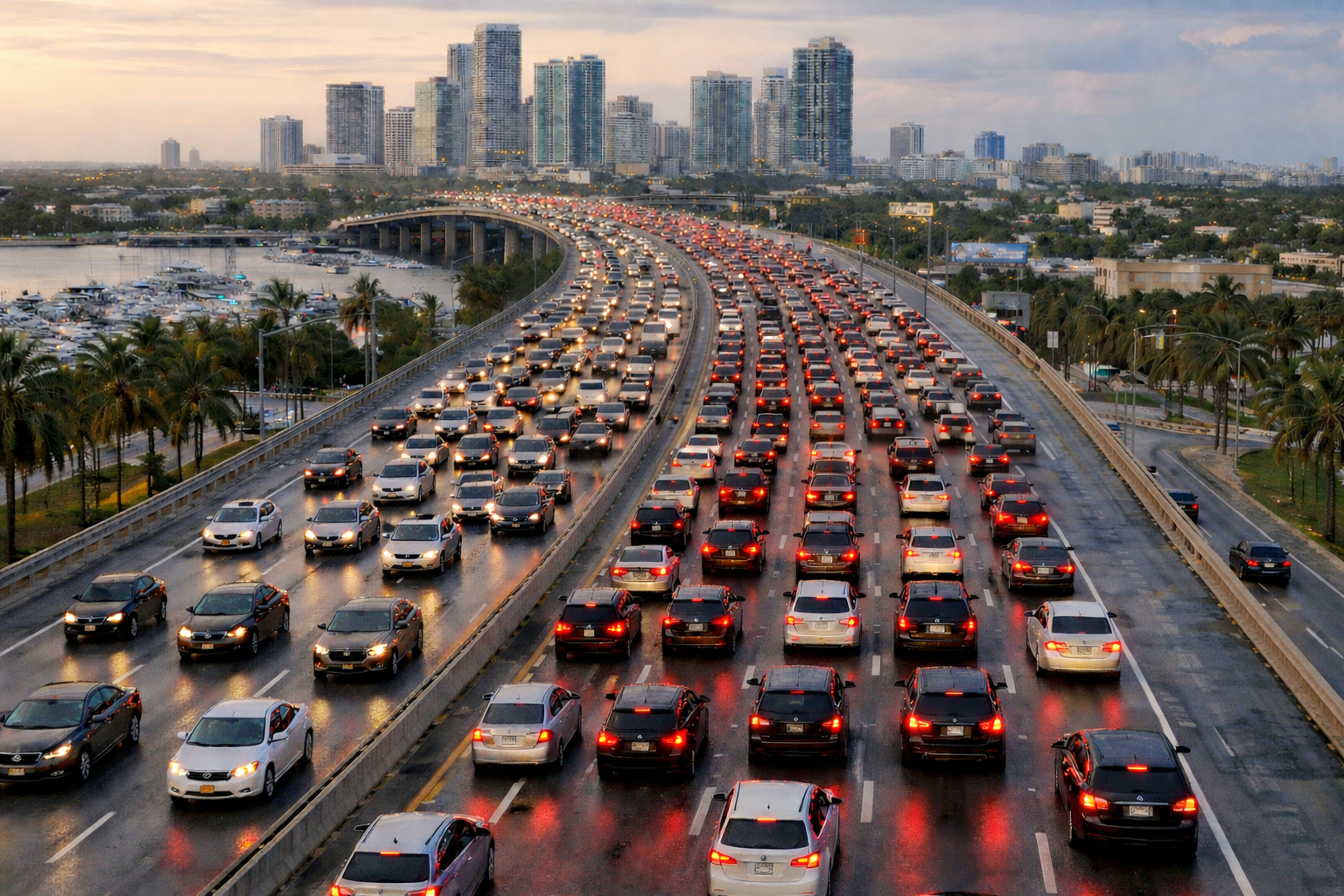
Drivers across Florida often assume that rear end crashes are simple, low severity incidents that occur due to momentary inattention. This perception is especially common in dense urban areas where traffic moves in predictable waves and signals are expected to regulate flow. However, the ongoing rear end surge seen in cities like Miami, Fort Lauderdale, and Tampa suggests that these collisions are not random or isolated. They are the result of increasingly unstable traffic environments where timing, spacing, and driver expectations no longer align.
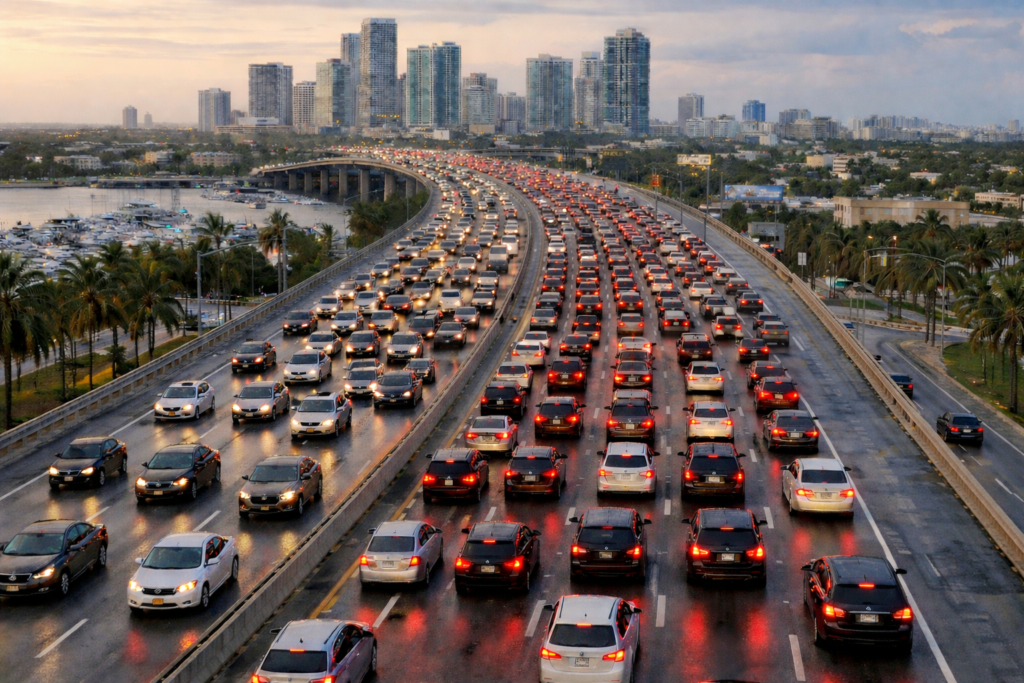
Urban roadway design, combined with evolving traffic volume, has created conditions where drivers are forced into compressed decision making windows. Intersections cycle faster, lanes fill beyond intended capacity, and vehicles travel in tighter clusters than in previous years. These shifts reduce reaction margins and amplify the consequences of even minor delays in braking. What appears to be routine congestion is actually a highly sensitive system where small disruptions cascade into multi vehicle collisions.
Core Environmental Pressure Behind the Rear End Surge
The structure of Florida’s urban corridors places continuous pressure on drivers to maintain pace while navigating limited space. Multi lane roads funnel traffic into bottlenecks at intersections, exit ramps, and merging zones. As volume increases, vehicles are forced into closer proximity, reducing the buffer distance that traditionally allows for gradual braking. This creates a dependency on immediate response rather than anticipatory driving.
Signal timing further contributes to this pressure. Many intersections are calibrated to move high volumes of traffic quickly, which results in shorter yellow light durations and rapid transition cycles. Drivers approaching these intersections must decide whether to stop or proceed within a fraction of a second. When multiple vehicles make conflicting decisions in a compressed timeframe, sudden braking becomes unavoidable, increasing the likelihood of rear end impacts.
Lane density also plays a critical role. In heavily traveled corridors, drivers often lack the option to change lanes or create space when traffic conditions shift. This removes a key safety mechanism and forces drivers to remain in constrained positions. When one vehicle slows unexpectedly, the vehicles behind it must react instantly, often without sufficient distance to do so safely.
Expectation Failure in Modern Traffic Flow
A key factor in the rear end surge is the breakdown of driver expectations. Drivers rely heavily on consistency when navigating traffic. They anticipate gradual deceleration, predictable signal changes, and steady vehicle movement. When these expectations are disrupted, reaction time becomes insufficient.
In Florida’s urban environments, these disruptions occur frequently. Drivers unfamiliar with local roads may hesitate at intersections or slow unexpectedly when navigating complex lane configurations. Navigation systems can also prompt sudden lane changes or braking when drivers realize they are approaching a turn or exit. These behaviors interrupt the flow of traffic and create conditions where following drivers are caught off guard.
Visual cues, which drivers depend on to anticipate movement, are often obscured or inconsistent. Large vehicles, signage congestion, and poorly aligned lanes can limit visibility, making it difficult to detect changes in traffic patterns ahead. As a result, drivers are forced to react based on incomplete information, increasing the likelihood of delayed braking and rear end collisions.
Environmental and Secondary Factors
Beyond roadway design and driver behavior, external conditions further amplify collision risk. Weather, lighting, and surface conditions all influence how quickly a driver can perceive and respond to changes in traffic. In Florida, these variables fluctuate rapidly, especially during afternoon storms and peak tourist seasons.
- Sudden rain reduces tire traction and increases stopping distance. Even light rainfall can create slick road surfaces that delay braking response, especially when combined with oil buildup on pavement.
- Inconsistent lighting conditions, particularly during early evening hours, reduce contrast and make it harder to judge vehicle speed and distance. Glare from the sun or headlights can obscure brake lights ahead.
- Road surface irregularities, including worn pavement or construction patches, can disrupt braking stability. Vehicles may require longer distances to come to a complete stop on uneven surfaces.
- Temporary traffic control measures, such as cones or lane shifts, alter normal driving patterns. These changes often occur with limited warning, forcing drivers to make rapid adjustments that increase the risk of abrupt stops.
Traffic Density and Reaction Pressure
As traffic volume increases, the margin for error decreases significantly. Vehicles traveling in close proximity create a chain reaction environment where one driver’s braking decision affects multiple vehicles behind them. In these conditions, even a slight delay in reaction time can result in a collision.
Stop and go traffic intensifies this effect. Drivers are required to accelerate and decelerate repeatedly within short distances, which increases fatigue and reduces attention over time. The constant need to adjust speed places cognitive strain on drivers, making it more likely that they will misjudge stopping distance or fail to react quickly enough.
Limited escape space further compounds the issue. In dense traffic, drivers cannot swerve or change lanes to avoid a collision. This lack of alternatives means that braking is often the only available response, and when that response is delayed, impact becomes unavoidable.
Common Collision Patterns in Rear End Traffic Conditions
- Chain reaction collisions: A single abrupt stop triggers a sequence of impacts involving multiple vehicles. Each subsequent driver has less time to react, increasing the severity of the collision pattern.
- Low speed impact accumulation: In congested traffic, vehicles collide at lower speeds but with high frequency. These repeated impacts often occur within seconds and can involve several cars in a confined space.
- Intersection approach collisions: Drivers accelerating toward a green light may not anticipate a sudden stop caused by turning vehicles or signal changes. This mismatch in expectation leads to rear end impacts near intersections.
- Merge point disruptions: Vehicles entering highways or changing lanes abruptly can force trailing drivers to brake suddenly. These scenarios are common in areas with heavy tourist traffic and unfamiliar drivers.
Injury Consequences in Rear End Collisions
Although rear end collisions are often perceived as minor, they frequently result in injuries that develop over time. The sudden forward and backward motion of the body places strain on the neck and spine, leading to conditions that may not be immediately apparent. Drivers and passengers may initially feel fine but experience symptoms hours or days later.
Back injuries, soft tissue damage, and head trauma are also common in these incidents. Even at lower speeds, the force of impact can disrupt the body’s alignment and cause lingering discomfort. The repetitive nature of collisions in dense traffic environments increases the likelihood of cumulative injury, particularly when multiple impacts occur in a short period
The ongoing rear end surge across Florida is not simply the result of driver error. It is driven by a combination of environmental pressure, evolving traffic design, and disrupted driver expectations. Urban corridors compress space, reduce reaction time, and introduce unpredictable elements that challenge even attentive drivers. As traffic density increases and conditions become more complex, rear end collisions will continue to rise unless these underlying factors are addressed.
Frequently Asked Questions
Why are rear end collisions becoming more common in Florida?
Rear end collisions are increasing due to higher traffic density, faster signal timing, and reduced following distances. These factors create environments where drivers must react quickly with limited margin for error. As urban areas continue to grow, these conditions become more frequent.
How does traffic design influence rear end crashes?
Roadway design affects how drivers move, react, and anticipate changes. Narrow lanes, rapid signal cycles, and congested intersections reduce the time available to respond. When drivers cannot predict traffic behavior, the likelihood of sudden braking increases.
Do unfamiliar drivers contribute to collision risk?
Out of state and tourist drivers often hesitate or make abrupt decisions when navigating unfamiliar roads. This disrupts traffic flow and creates unexpected braking patterns. These behaviors increase the chances of rear end collisions, especially in high traffic areas.
Why do injuries from rear end accidents sometimes appear later?
The body can absorb impact forces in ways that delay the onset of symptoms. Soft tissue injuries and spinal strain may not be immediately noticeable. Over time, inflammation and muscle tension can lead to pain and reduced mobility.
Are rear end collisions usually low impact incidents?
While some rear end collisions occur at lower speeds, the conditions in which they happen can lead to multiple impacts or chain reactions. These scenarios increase the overall force experienced by occupants. As a result, injuries can still be significant despite the initial perception of a minor crash.
Contact Lawlor, White & Murphey Today
Rear end collisions in Florida’s busiest corridors often develop in seconds, with multiple vehicles involved and limited clarity about how the sequence began. Evaluating these incidents may require a close review of traffic flow, vehicle spacing, signal timing, and the conditions that influenced driver reaction windows at the moment of impact.
If you or someone you know has been injured in a motor vehicle accident, the attorneys at Lawlor, White & Murphey can help assess the circumstances surrounding the collision and provide insight into how these complex traffic patterns may have contributed.
Take the next step—schedule a free consultation with Lawlor, White & Murphey today.