
Red Light Running Accidents: Causes and Catastrophic Injuries at Florida Intersections
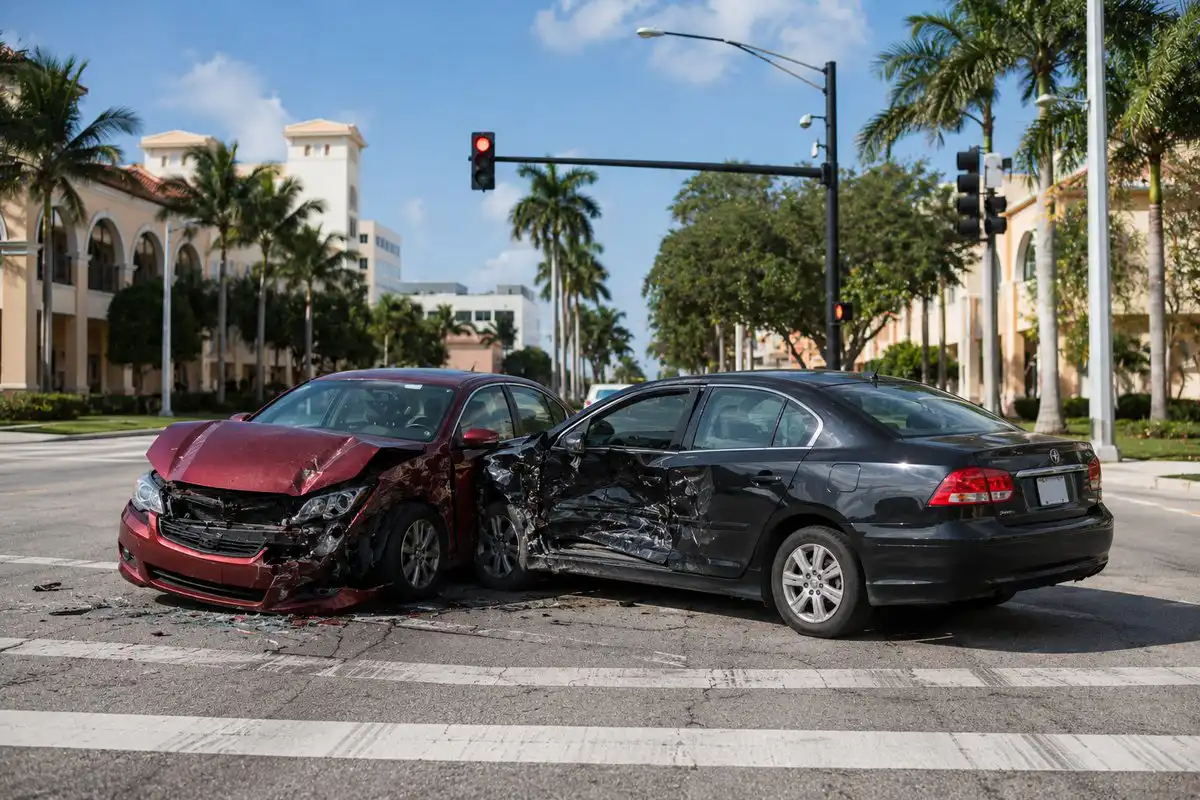
When a driver blows through a red light, the people lawfully crossing the intersection rarely have any chance to react. A red light running accident usually lands as a side-impact, or T-bone, crash at full speed, striking the part of a vehicle with the least protection between the occupant and the road. These are among the most violent wrecks that happen on Florida roads, and they are almost entirely preventable, which is exactly why the law treats the driver who ran the light so seriously and why insurers fight so hard to limit what they pay.
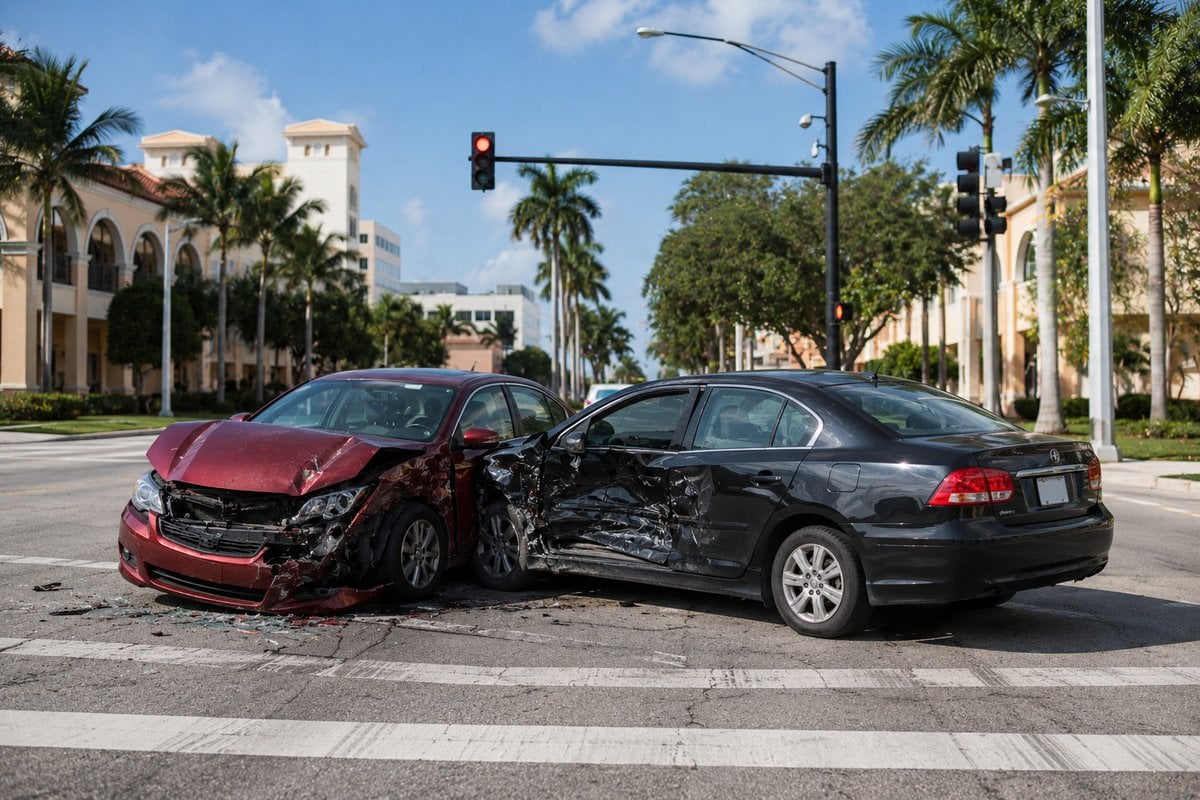
Intersections across Broward and Palm Beach carry heavy, fast-moving traffic all day, and a single driver trying to beat a light can change several lives in an instant. Understanding how these crashes happen, why the injuries are so severe, and how fault is actually established can help you stay safer behind the wheel and protect your rights if someone else’s impatience puts you in the hospital.
What Counts as a Red Light Running Accident
A red light running accident is any collision caused by a driver entering an intersection after the signal has already turned red. That includes the obvious case of a driver speeding up to beat a changing light, but it also covers drivers who roll through a stale red while turning, who are staring at a phone instead of the signal, or who simply misjudge how much time they have left. What ties all of these together is a basic failure to stop when the law required it, leaving cross traffic and pedestrians exposed to a vehicle that should never have been moving through the intersection at all.
Why Red Light Running Accidents Happen in Florida
Most of these crashes trace back to impatience, distraction, or speed rather than any genuine confusion about the law. A driver running late accelerates toward a yellow, a commuter glances down at a text and never sees the light change, or an aggressive driver treats a fresh red as a personal challenge. Florida’s wide, high-speed arterial roads make all of this worse, because the faster a driver is traveling, the more tempting it becomes to push through rather than brake hard and stop. Our attorneys see the same pattern at busy intersections throughout Broward and Palm Beach, where dense traffic and long signal cycles reward the impatient and punish everyone doing the right thing.
Why Red Light Running Accidents Cause Such Catastrophic Injuries
The reason these crashes are so deadly comes down to geometry and speed. Because the at-fault driver is usually crossing the intersection, the impact lands on the side of the other vehicle, where only a door and a few inches separate the occupant from the striking car. Unlike a front or rear collision, there is almost no crumple zone to absorb the force, so the energy of the crash transfers straight into the people inside. The result is frequently broken bones, spinal cord damage, traumatic brain injuries, and internal trauma, even at moderate speeds. Anyone involved in one of these wrecks should be seen by a doctor the same day, because the most serious injuries are often masked by adrenaline at the scene.
Proving Fault in a Red Light Running Accident
Fault in these cases often feels obvious, but proving it still takes real evidence, because the driver who ran the light almost never admits it. The strongest proof usually comes from a combination of the police report, independent witnesses, nearby surveillance or business cameras, and increasingly the data stored inside the vehicles themselves. Intersection traffic cameras, where they exist, can be decisive. The Florida Department of Highway Safety and Motor Vehicles publishes crash and citation data that helps show how dangerous a given intersection really is. Acting quickly matters, because camera footage is often overwritten within days, and the team at Lawlor, White & Murphey works to preserve that evidence before it is gone for good.
How Florida’s No-Fault Rules Apply After a Red Light Running Crash
Florida follows a no-fault insurance system, which means your own personal injury protection coverage pays first for medical bills no matter who caused the crash. The problem is that the minimum required coverage is quickly exhausted by the kind of injuries a red light crash produces. When that happens, the law allows you to step outside the no-fault system and pursue the driver who ran the light directly for the full extent of your losses. Knowing when your injuries clear that threshold is one of the most important parts of any motor vehicle accident claim, and it is rarely something a recovering victim should try to sort out alone.
What to Do After a Red Light Running Accident
If you are able, call law enforcement and make sure an official report is created, since these cases are frequently disputed by the at-fault driver’s insurer. Get medical attention the same day, photograph the vehicles, the signal, and the resting position of each car in the intersection, and collect contact information from anyone who saw the light. Avoid giving a recorded statement to the other driver’s insurance company before you understand your rights, because those early statements are routinely used to shift a share of the blame back onto the victim.
What Compensation a Red Light Crash Victim Can Recover
Because vehicles often enter an intersection at full speed, a red light crash tends to cause serious harm, and a claim should reflect the full scope of it. Compensation can cover emergency and ongoing medical care, surgery and rehabilitation, lost income, and reduced earning capacity when an injury keeps someone from returning to the same work. It can also account for pain, lasting physical limitations, and the disruption to daily life that never appears on a bill but is just as real.
Valuing those losses fairly takes more than adding up current bills, because the largest costs of a serious crash often lie in the future. Medical opinions about long-term care and a realistic look at lost earnings help establish what the claim is actually worth, then that picture has to be presented so the insurer cannot brush it aside. Since early offers tend to fall well short of that number, it is worth understanding your case’s true value before agreeing to anything.
How Comparative Negligence Can Reduce a Red Light Claim
Florida follows a modified comparative negligence standard, which means your compensation is reduced by your share of the blame and barred entirely if you are found more than fifty percent at fault. After a red light crash, the other driver’s insurer will often argue you were speeding, distracted, or could have avoided the impact, hoping to shift part of the fault onto you and cut what it has to pay.
Those arguments are frequently overstated, but they work when no one answers them with evidence. Documenting your own lawful approach to the intersection, preserving the camera footage and witness accounts, and presenting the timeline clearly all keep the fault where it belongs. When the insurer will not offer a fair number, having a lawyer ready to file suit changes how seriously the claim is treated.
Summary of Red Light Running Accident Claims
Red light running accidents are violent, preventable, and usually the fault of the driver who failed to stop, but proving that fault and recovering full compensation still takes fast action and solid evidence.
- These are typically high-speed side-impact (T-bone) collisions with little protection for the victim.
- Impatience, distraction, and speed cause most of them, especially on Florida’s wide arterial roads.
- Police reports, witnesses, and camera footage are key, but footage is often overwritten within days.
- Serious injuries can let you step outside no-fault and pursue the at-fault driver in full.
Frequently Asked Questions About Red Light Running Accidents
How do you prove the other driver ran the red light?
Through a combination of the police report, independent witnesses, and any nearby surveillance or intersection cameras, along with the vehicle data that records speed and braking in the seconds before impact. The physical evidence at the scene, including the point of impact and the resting positions of the vehicles, often confirms who entered against the light. Because intersection footage is frequently overwritten within days, moving quickly to preserve it is one of the most important early steps in the case.
The other driver says the light was only yellow. Can I still recover?
Often, yes. Florida’s comparative negligence rule allows fault to be divided, and the physical evidence and witness accounts frequently show the light was already red when the other driver entered the intersection. A yellow-light defense is common, but it rarely holds up once the timing of the signal, the speeds involved, and the damage pattern are examined together. The key is gathering that proof before memories fade and footage is lost.
How much does it cost to talk to a lawyer?
Your initial consultation with Lawlor, White & Murphey is free, and these cases are handled on a contingency basis. You pay no attorney fees up front and owe nothing unless a recovery is obtained for your claim. An early, no-cost conversation can also keep you from giving a recorded statement or accepting a quick offer that quietly undervalues a serious intersection crash.
Contact a South Florida Red Light Running Accident Lawyer
If you or someone you love was hurt by a driver who ran a red light, the team at Lawlor, White & Murphey can preserve the evidence, establish fault, and pursue the compensation you deserve. Call our office for a free, no-pressure conversation about what happened.