
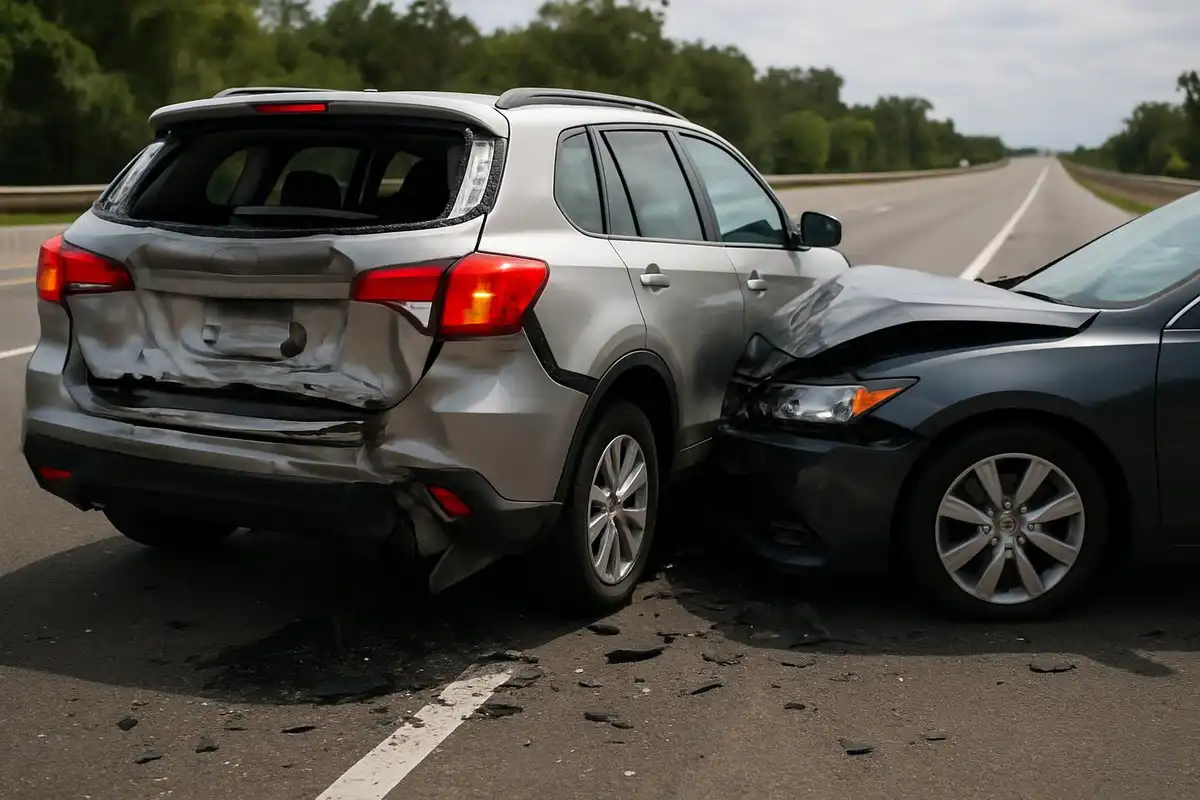
Speed Differential Collisions: When Vehicles Traveling at Different Speeds Create Dangerous Crashes
Speed differential crashes happen when one vehicle is moving far faster or slower than the traffic around it, leaving too little time to react. They are common on South Florida highways and the injuries are often serious, and fault is rarely automatic.
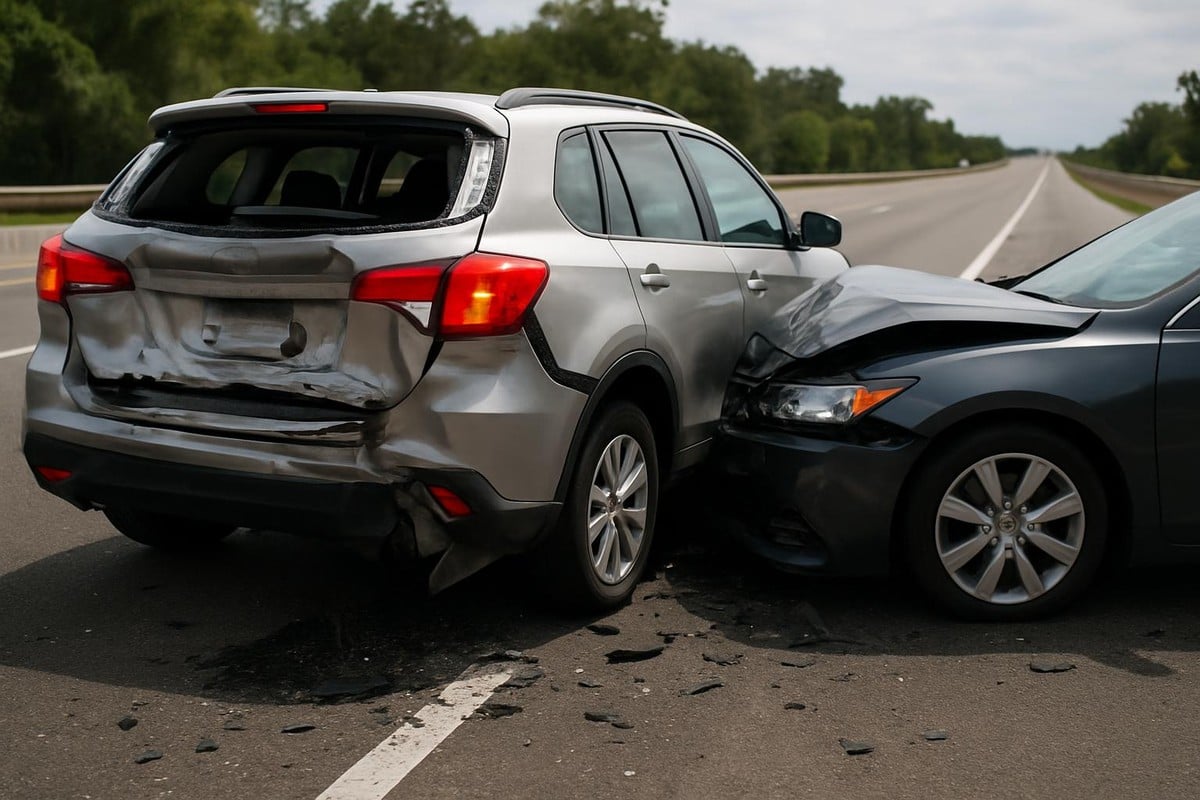
What a Speed Differential Collision Actually Is
A speed differential collision happens when vehicles traveling the same direction are moving at speeds far enough apart that the faster driver cannot slow or change lanes in time. It is not about one set speed being unsafe. It is about the difference. A car going 45 in a 70 zone can be just as dangerous as a car going 90, because the surrounding traffic is not expecting it.
Why the Speed Gap Is So Dangerous
Stopping a vehicle takes distance, and that distance grows quickly with speed. When a driver coming up at highway speed suddenly meets a much slower car, the time available to react can shrink to a second or less. At that point the choices are all bad: brake hard and risk being rear-ended, or swerve and risk clipping another lane. The physics simply do not leave room for a clean escape, and a heavy impact becomes likely.
Where These Crashes Happen Most in South Florida
Merge points are the classic trouble spot. A driver entering from a short on-ramp who never reaches highway speed forces everyone behind to adjust at once. Left-lane slowdowns are another, where a faster flow of traffic stacks up behind one slow vehicle. Construction zones, sudden weather, and drivers hunting for an exit all create the same condition: one pocket of slow traffic inside a fast-moving roadway.
Common Scenarios Behind the Gap
Speed differential crashes usually trace back to a handful of situations. A slow merge or a stalled vehicle in a travel lane. A distracted driver drifting well below the flow of traffic. A large truck losing speed on an incline. A driver who brakes early and hard for an exit they almost missed. In each case the danger is not just the slow vehicle or the fast one, but the mismatch between them.
The Injuries Tend to Be Serious
Because these impacts happen at highway speed, the forces involved are high. Victims often suffer whiplash and other neck and spine injuries, concussions, broken bones, and internal injuries. Symptoms do not always appear at the scene, which is why prompt medical care matters even if you feel mostly fine in the moment. A clear medical record also protects any claim you may need to bring later.
Who Is at Fault Is Not Automatic
People assume the faster driver is always to blame, but fault depends on the facts. A driver traveling at a reasonable speed who is suddenly confronted by a vehicle stopped in a live lane may carry little or no responsibility. A driver going well below the flow without cause, or one who merges without yielding, may share or carry the fault. Florida uses a comparative negligence standard, so more than one driver can be partly responsible, and the share assigned to each affects what a victim can recover. Sorting that out usually takes the police report, witness accounts, and sometimes data from the vehicles themselves. You can review state crash and citation data through the Florida Department of Highway Safety and Motor Vehicles.
How Florida’s Insurance Rules Fit in
Florida operates under a no-fault insurance system, which means your own personal injury protection coverage pays first for medical bills and lost wages, no matter who caused the crash. That coverage has limits, though, and a high-speed collision can blow past them in a hurry. When injuries are serious, the law allows you to step outside the no-fault system and pursue the at-fault driver directly for the full extent of your losses. Knowing when your claim qualifies is one of the most important parts of any motor vehicle accident case.
What to Do after a Speed Differential Crash
If you are able, call law enforcement and make sure a report is created, since these crashes are easy for an insurer to dispute later. Get medical attention the same day, take photos of the vehicles and lane positions, and gather contact information from any witnesses. Avoid giving a recorded statement to the other driver’s insurance company before you understand your rights, because early statements are often used to shift blame onto the victim.
Proving Who Was at Fault After a Speed Differential Crash
Because these collisions are so easy for an insurer to dispute, the evidence gathered in the first hours often decides the case. The crash report is the starting point, but it rarely tells the whole story on its own. Photographs of the vehicles, the lane positions, any skid marks, and the debris field help an investigator reconstruct how fast each car was actually moving and where the impact happened. Statements from independent witnesses carry real weight, especially when one driver insists the other came out of nowhere.
Modern vehicles also keep a record of their own. Many cars store speed, braking, and throttle data in an event data recorder, and that information can confirm whether a driver was traveling with traffic or well outside it. When liability is genuinely contested, an accident reconstruction expert can combine the physical evidence with that data to show the speed gap that caused the crash. Acting early matters, because footage from nearby cameras is often overwritten within days and memories fade quickly. A motor vehicle accident attorney can move to preserve that proof before it is gone.
How Comparative Negligence Affects Your Recovery
Florida follows a modified comparative negligence standard, which means your compensation is reduced by your share of the blame and barred entirely if you are found more than fifty percent at fault. In a speed differential crash, the insurance company will almost always try to push as much of that percentage onto the victim as it can, arguing you were going too slowly, changed lanes carelessly, or had time to avoid the impact. Those arguments are often overstated, but they are effective when no one answers them.
This is why the gap between handling a claim alone and having representation can be wide. A few percentage points of assigned fault can translate into thousands of dollars on a serious injury claim. Documenting your own reasonable behavior, preserving the evidence that shows the real cause, and presenting it clearly to the adjuster all work to keep the fault where it belongs. If the insurer will not offer a fair number, having a lawyer prepared to file suit changes the conversation.
Summary of Speed Differential Collision Claims
- The danger comes from the difference in speed, not one set speed.
- Merge points, left-lane slowdowns, and exit ramps are the usual trouble spots.
- Fault can be shared under Florida’s comparative negligence rule.
- Serious injuries can let you step outside no-fault and pursue the at-fault driver.
Frequently Asked Questions About Speed Differential Collisions in Florida
Is the faster driver always at fault in this kind of crash?
No. Fault depends on what each driver was doing in the moments before impact. A driver moving with the normal flow of traffic who suddenly meets a vehicle stopped or crawling in a live lane may bear little responsibility, while a driver traveling well below the flow for no reason, or one who merges without yielding, may share or carry the blame. Florida’s comparative negligence rule lets fault be divided between drivers, so the share assigned to each one directly affects what a victim can recover. Sorting that out usually takes the crash report, witness statements, and sometimes data pulled from the vehicles themselves.
I felt fine at the scene. Should I still see a doctor?
Yes. Adrenaline can mask serious injuries for hours, and neck, spine, and head injuries from a high-speed impact often do not show their full effect until a day or two later. Getting checked the same day protects your health and creates the medical record that ties your injuries to the crash. Gaps in treatment are one of the first things an insurance company points to when it wants to argue that you were not really hurt, so prompt care is both a health decision and a practical one.
How much does it cost to talk to a lawyer about my crash?
Your initial consultation with Lawlor, White & Murphey is free, and motor vehicle accident cases are handled on a contingency basis. That means you do not pay attorney fees up front, and you owe nothing unless a recovery is obtained for your claim. It costs nothing to learn where you stand, and an early conversation can keep you from the recorded-statement or quick-settlement mistakes that quietly shrink a claim before you understand its real value.
Contact a South Florida Speed Differential Collision Lawyer
If you were hurt in a highway collision and you are not sure who was responsible or how your coverage applies, the team at Lawlor, White & Murphey can review the facts and explain your options. The firm helps crash victims across Broward and Palm Beach, and because Florida follows a no-fault insurance system, it is worth understanding when serious injuries let you step outside it and pursue the at-fault driver. Call our office for a free, no-pressure conversation about what happened.