
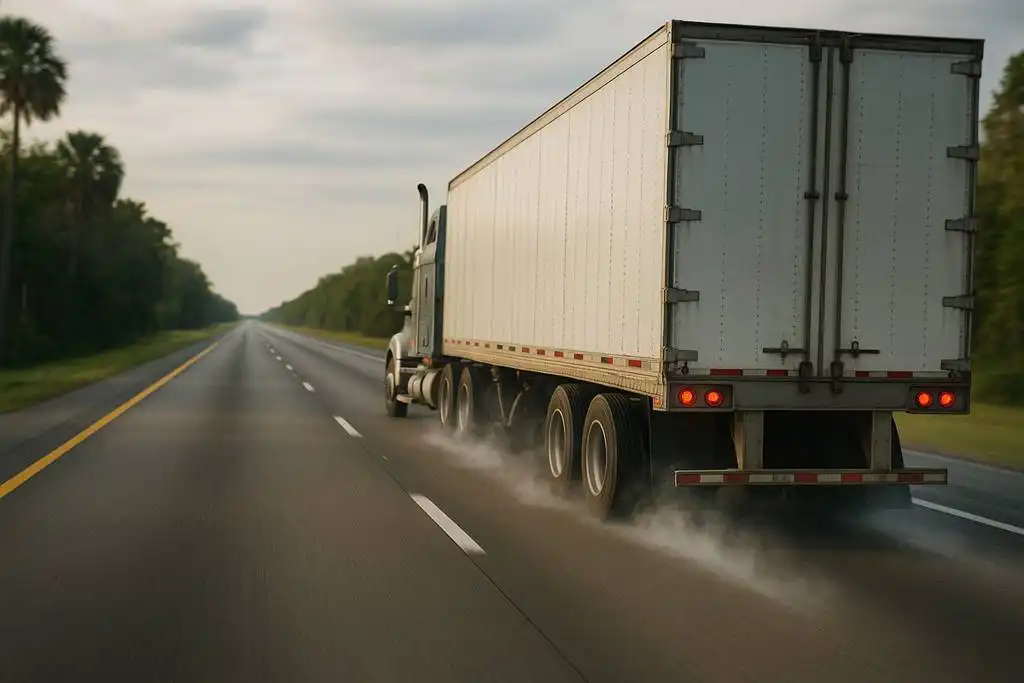
Truck Stopping Distance Myths: Why 18-Wheelers Need Much More Space Than Drivers Realize
Plenty of drivers treat an 18-wheeler like a slightly bigger car. They cut in front of one to catch an exit, brake hard in its lane, or sit in its blind spot without a second thought. The problem is that a fully loaded semi truck does not stop anything like a car, and that single misunderstanding causes some of the most serious crashes on Florida highways.
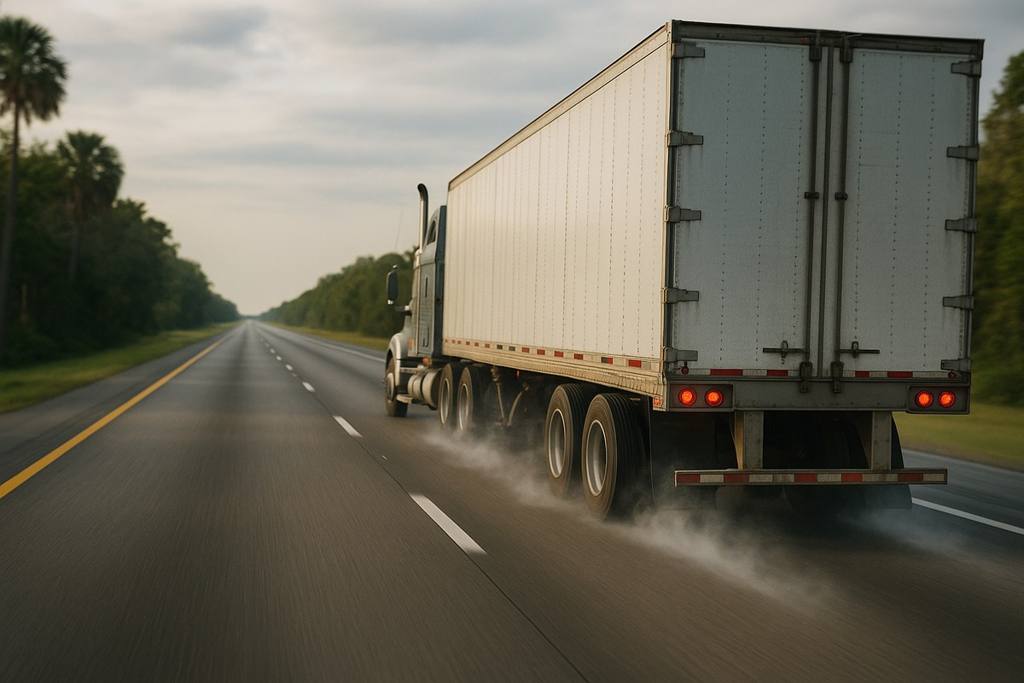
A loaded tractor-trailer can weigh 20 to 30 times more than a passenger vehicle, and all of that weight has to be brought to a stop by brakes that work very differently from yours. Knowing how much room a truck actually needs is not just trivia. It can keep you out of a truck’s path, and it matters a great deal when you are trying to figure out who was responsible after a wreck.
The Myth That Trucks Stop Like Cars
The most common and most dangerous assumption is that if you can stop in a certain distance, the truck behind or beside you can too. It cannot. A car traveling at highway speed might need a couple hundred feet to stop. A loaded semi at the same speed can need far more, and that gap is exactly where rear-end and chain-reaction crashes happen.
How Much More Distance a Loaded Truck Really Needs
At 65 miles per hour, a fully loaded tractor-trailer can require roughly the length of two football fields to come to a complete stop under good conditions. A passenger car needs a fraction of that. When you pull in front of a truck and tap your brakes, you are asking the trucker to erase a margin that physically may not exist.
What Adds to a Truck’s Stopping Distance
Several factors stretch that distance further. A heavier load pushes it up. Worn or poorly maintained brakes add to it. Downhill grades, wet pavement, and worn tires all make it worse. Florida’s sudden rain and standing water are a constant factor, turning an already long stop into a much longer one. Add a tired or distracted driver and the numbers get frightening.
The Dangerous Moves Drivers Make Around Trucks
Most car-versus-truck crashes trace back to a few avoidable choices. Cutting in front of a truck and slowing down. Lingering in the no-zone blind spots along the sides and directly behind. Passing on the right. Merging into the small space a truck leaves ahead of it, which the trucker built on purpose to have room to stop. Each of these erases the cushion a truck depends on.
Where This Plays Out in South Florida
Commercial truck traffic is heavy on I-95, Florida’s Turnpike, I-595, and the roads feeding Port Everglades and the region’s distribution centers. Mix that volume with constant merging, tourist traffic, and afternoon storms, and the conditions for a stopping-distance crash are present nearly every day.
The Injuries in These Collisions Are Severe
When a truck cannot stop in time, the results are rarely minor. Underride crashes, where a smaller vehicle slides beneath the trailer, are especially catastrophic. Even a standard rear impact from a heavy truck can cause spinal injuries, traumatic brain injuries, and broken bones. Prompt medical care protects both your health and the record behind any claim you may need to make.
Who May Be Responsible Is Rarely Just the Driver
Truck crashes often involve more than one liable party. The driver may have been speeding or fatigued. The trucking company may have pushed an unrealistic schedule or skipped maintenance. A cargo loader may have overloaded or unbalanced the trailer. Sorting this out takes the police report, the truck’s maintenance and logbook records, and sometimes data from the truck itself. Florida’s comparative negligence rules mean fault can be shared, which affects what a victim can recover. You can review state crash and citation data through the Florida Department of Highway Safety and Motor Vehicles.
What to Do after a Truck Crash
Call law enforcement and make sure a report is filed, since trucking companies and their insurers move quickly to protect themselves. Get medical attention the same day, photograph the scene and the vehicles, and collect witness contact information. Because a motor vehicle accident involving a commercial truck can involve company records that disappear, it helps to speak with an attorney early so important evidence is preserved.
How Florida’s Insurance Rules Apply to Truck Crashes
Florida operates under a no-fault insurance system, so your own personal injury protection coverage pays first for medical bills and part of your lost wages no matter who caused the crash. Those benefits are capped, and the kind of injuries a heavy truck causes tend to exhaust them quickly. When injuries are serious, the law lets you step outside the no-fault system and pursue the at-fault parties directly for the full range of your losses, which is where the real value of a truck claim usually lies.
Truck cases also differ from ordinary car crashes because more than one insurance policy is normally in play. The driver, the motor carrier, the trailer owner, and sometimes a separate maintenance contractor may each carry coverage, and those commercial policies are far larger than a typical auto policy. Identifying every responsible party and the coverage behind it is one of the most important early steps, because it decides how much compensation is actually available to a victim.
What Compensation May Be Available After a Truck Crash
A serious truck collision can leave a victim with costs that stretch on for years. A claim can seek payment for emergency and ongoing medical care, future treatment and rehabilitation, lost income, and reduced earning capacity when an injury keeps someone from returning to the same work. It can also account for the pain, the physical limitations, and the disruption to daily life that never appear on a billing statement but are just as real.
Putting a fair value on those losses takes more than adding up receipts. It often requires medical opinions about long-term care and an analysis of lost future earnings, then presenting that picture in a way the insurer cannot easily wave off. Because the gap between an early offer and the true value of a serious claim is often wide, it is worth understanding what your case is actually worth before you agree to anything.
Summary of Truck Stopping Distance Crash Liability
A loaded tractor-trailer needs far more room to stop than a car, and drivers who do not account for that cause serious wrecks. Responsibility often reaches beyond the driver.
- A loaded semi can need roughly two football fields to stop at highway speed.
- Weight, worn brakes, downhill grades, and wet roads all stretch that distance.
- The driver, the trucking company, or a cargo loader may share fault.
- Maintenance and logbook records are often the key evidence.
Frequently Asked Questions About Truck Stopping Distance Crashes in Florida
How much longer does a loaded truck take to stop than a car?
A fully loaded tractor-trailer can take roughly fifty percent farther to stop than a passenger car, and at highway speed that difference can stretch to the length of a football field or more. The exact distance depends on the weight of the load, the condition of the brakes and tires, the road surface, and the driver’s reaction time. That is why following too closely or cutting in front of a truck is so dangerous, because the truck simply cannot stop in the space a car would need to avoid a collision.
If a truck rear-ended me, is the trucker automatically at fault?
Often, but not always. A driver is required to leave enough room to stop safely, so a rear-end strike usually points to the following driver. Even so, the trucking company may argue that you stopped short, changed lanes abruptly, or had a brake light out. The federal hours-of-service logs, the truck’s electronic control data, and the carrier’s maintenance records frequently tell the real story, which is why preserving that evidence early can make or break the claim.
How much does it cost to talk to a lawyer about a truck crash?
Your initial consultation with Lawlor, White & Murphey is free, and truck accident cases are handled on a contingency basis. You do not pay attorney fees up front and owe nothing unless a recovery is obtained for your claim. Trucking companies put experienced adjusters and defense lawyers on a serious crash within hours, so an early, no-cost conversation helps level the field before you give a recorded statement or accept a quick offer.
Contact a South Florida Truck Accident Lawyer
If you were hurt in a crash with a commercial truck, the team at Lawlor, White & Murphey can review the records, identify everyone who may be responsible, and explain your options. The firm helps crash victims across Broward and Palm Beach, and because Florida follows a no-fault insurance system, it is worth knowing when serious injuries let you step outside it and pursue the at-fault party. Call our office for a free, no-pressure conversation about what happened.