
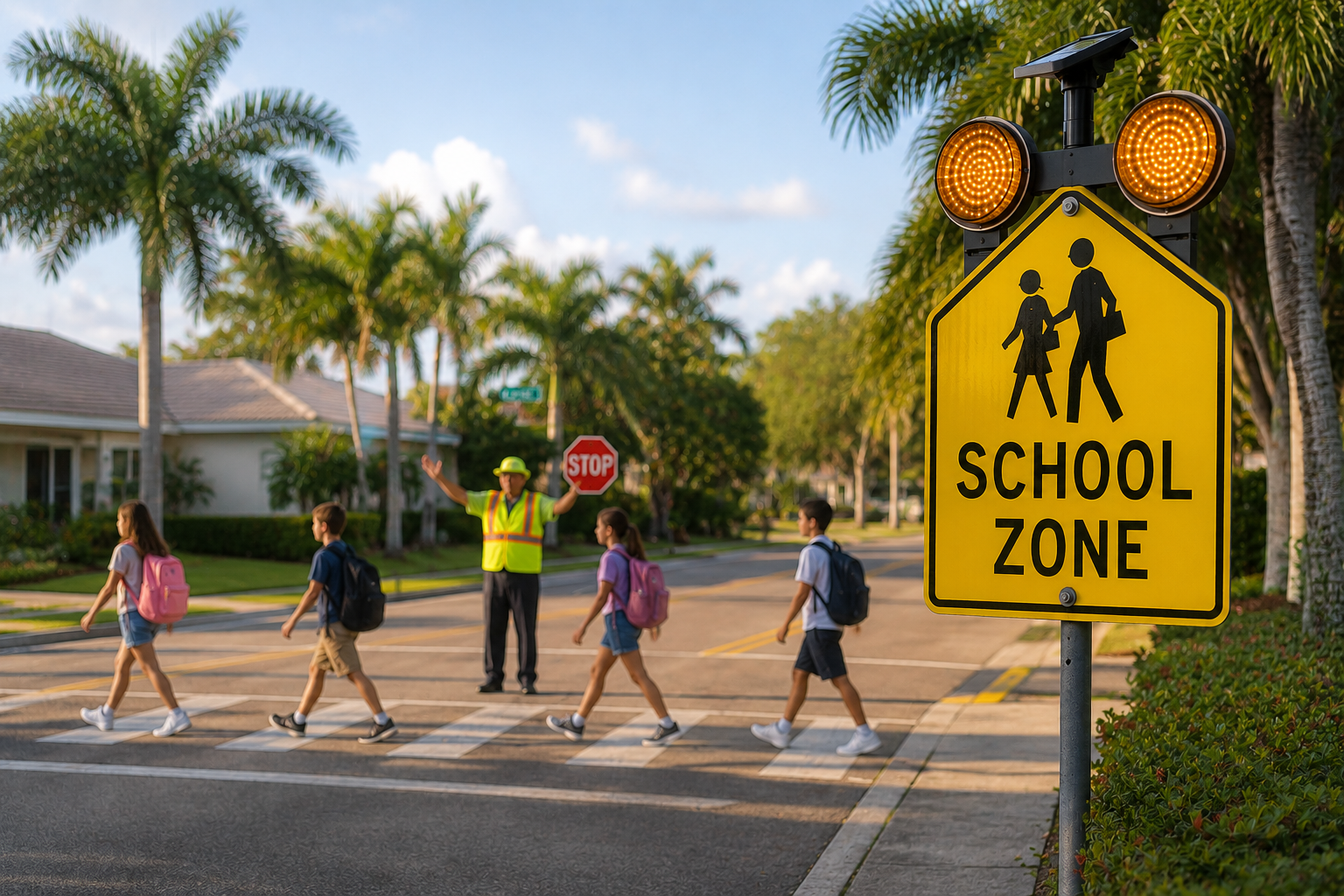
Speed-Related Crashes in Florida School Zones and Residential Areas: Why Lower Speed Limits Matter
A school zone speeding crash in Florida is one of the most preventable yet most damaging types of motor vehicle accident. Speed-related crashes in Florida school zones and residential neighborhoods remain one of the most preventable and yet most damaging causes of serious injury on the road. While interstate highways and major arterials get most of the attention in traffic safety conversations, the slower-speed environments where children walk to school, families ride bikes, and pedestrians cross streets daily are where speeding has some of its most devastating consequences.
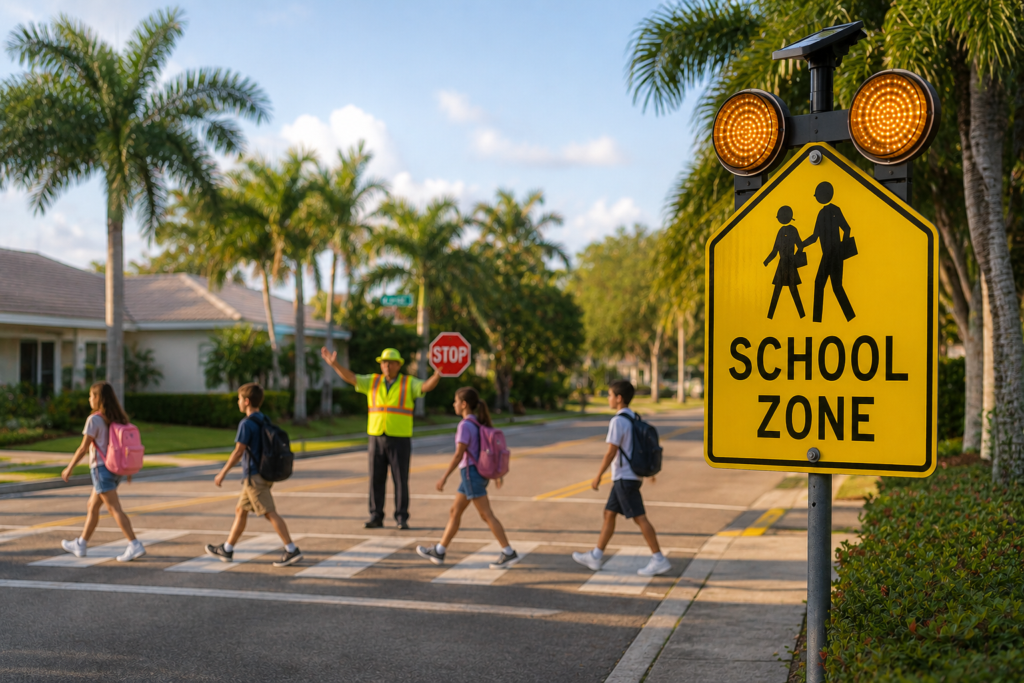
This guide breaks down what counts as a speeding violation in a Florida school zone or residential area, why these crashes keep happening, where they tend to occur, and what to do if you or a loved one is hurt in one.
What Counts as Speeding in a Florida School Zone or Residential Area
Florida law treats speeding in school zones and residential areas more seriously than speeding on highways or commercial roads. School zone speed limits in Florida are typically 15 or 20 miles per hour when posted lights are flashing or during designated school hours. Residential streets are generally limited to 25 to 30 miles per hour unless otherwise posted.
Driving above these limits, even by a few miles per hour, can carry enhanced fines and license points. Florida also has heightened penalties for speeding in school zones, including doubled fines and the possibility of criminal charges in cases involving injury or death.
From an injury claim perspective, exceeding the posted limit in these areas often makes proving negligence more straightforward. A driver who is operating above the speed limit in a posted school zone or residential neighborhood is generally presumed to have failed in their duty of reasonable care.
How Common Is a School Zone Speeding Crash in Florida
The Florida Department of Transportation and the National Highway Traffic Safety Administration both report that pedestrian and bicycle injuries cluster heavily in lower-speed environments, despite the lower posted limits. Many of these crashes occur within a few blocks of a school, park, or residential entrance.
The numbers reflect a clear pattern. A pedestrian struck by a vehicle moving at 20 miles per hour has roughly a 90 percent chance of survival. At 30 miles per hour, that number drops dramatically, and at 40 miles per hour, the survival rate is well under 50 percent. Even a 5 to 10 mile per hour difference in vehicle speed translates into a major difference in injury severity.
Florida consistently ranks among the most dangerous states in the country for pedestrian fatalities, and a meaningful share of those incidents occur in the kinds of slower-speed areas where families expect to feel safe walking.
Why Drivers Speed Through School Zones and Residential Streets
Speeding in lower-speed environments rarely happens because drivers do not know the limits. The behavior is usually driven by a mix of distraction, impatience, and habit.
Common reasons drivers exceed the limit in these areas include:
- Running late and trying to make up time before a school or work drop-off
- Treating residential streets as shortcuts to avoid traffic on main roads
- Distraction from phones, infotainment systems, or passengers
- Familiarity with the route, which leads drivers to assume nothing will surprise them
- Missing or ignoring posted school zone signs and flashing lights
- Modern vehicles that mask the sensation of speed at low velocities
These factors combine to create predictable patterns of risk during morning drop-off, afternoon pickup, and the late-afternoon hours when children return home from school and play outside.
Common Locations and Situations
Most speed-related crashes in school zones and residential areas in South Florida occur in a handful of recurring situations.
Marked crosswalks near elementary, middle, and high schools see the highest concentration of pedestrian incidents during arrival and dismissal windows. Residential intersections without traffic signals are another major site, especially where stop signs are present but routinely ignored. Streets near community parks, neighborhood shopping centers, and church parking lots see clusters of crashes on weekends and during evening events.
Driveways and alley entrances are another frequent site for serious injuries to children, who can be difficult to see when entering or backing out of a driveway. Cul-de-sacs and quiet streets often give drivers a false sense of safety, leading to higher speeds in the very places where children are most likely to be playing.
Cities across Broward and Palm Beach Counties, including Hollywood, Davie, Coral Springs, and Boca Raton, all experience these patterns. Suburban neighborhoods with cut-through traffic from nearby highways tend to see the highest concentration of speed-related incidents.
What Typically Happens After a Speed-Related School Zone or Residential Crash
Injuries from these crashes tend to be severe even when vehicle speeds appear modest, because the victims are often pedestrians, cyclists, or children without the protection of a vehicle. Common injuries include head and brain trauma, fractures, internal injuries, and spinal damage.
Immediately after the crash, several things typically occur in parallel:
- Emergency medical responders evaluate and transport the injured party
- Law enforcement responds, documents the scene, and may issue citations
- The driver’s insurance company is notified and a claim is opened
- The injured party or their family begins receiving medical bills, often within days
Florida operates under a no fault insurance system, which means the injured person’s own Personal Injury Protection coverage pays first for emergency medical care, up to the policy limit. When injuries are serious enough to meet Florida’s threshold, the injured party can pursue a claim against the at-fault driver for additional damages, including pain and suffering, lost wages, and long-term medical needs.
Determining liability often comes down to documenting that the driver was exceeding the posted speed limit at the time of the crash. Crash reconstruction, witness statements, surveillance video from nearby homes or businesses, and data from the vehicle’s event data recorder all play a role.
Summary: Why a School Zone Speeding Crash Remains a Serious Florida Concern
Lower speed limits in school zones and residential areas exist for a reason. The difference between 20 and 35 miles per hour is the difference between a survivable scare and a life-changing injury. Yet enforcement is uneven, drivers regularly exceed the limits, and the people most likely to be hurt are the ones with the least protection.
A school zone speeding crash often involves the most vulnerable road users. Communities throughout South Florida have invested in traffic calming measures, including speed bumps, raised crosswalks, narrower lane markings, and increased school zone enforcement, but speeding behavior continues to drive a meaningful share of pedestrian and bicycle injuries each year.
For families injured in one of these crashes, the path forward depends on careful documentation, prompt medical care, and clear legal guidance.
Frequently Asked Questions
What is the typical speed limit in a Florida school zone?
Most Florida school zones are posted at 15 or 20 miles per hour when school zone lights are flashing or during designated school hours. Outside of those windows, the underlying street speed limit applies.
Can I file a claim if a driver hit my child in a residential area?
Yes. If a driver was negligent, including by speeding, distracted driving, or failing to yield, you may have a claim for medical expenses, pain and suffering, and other damages. An attorney can review the specific facts and help you understand what compensation may be available.
What if the driver who hit me was only going slightly above the speed limit?
Even a small amount over the posted limit can establish negligence, particularly in a school zone or marked residential area. Florida law expects drivers to operate with reasonable care given the conditions, and exceeding the limit in these areas typically falls outside that standard.
How long do I have to file a claim after a Florida crash?
Florida’s statute of limitations for most motor vehicle accident claims is two years from the date of the crash. There are important exceptions and procedural requirements that often have shorter deadlines, so it is best to contact an attorney promptly.
What if my child was injured while walking or biking to school?
Children are protected under Florida personal injury law in the same way as adults. In cases involving children, claims are typically filed by a parent or guardian on the child’s behalf, and Florida law gives additional protections to minors regarding the timing of certain claims.
Contact Lawlor, White & Murphey Today
If you or someone you love has been injured in a speed-related crash in a Florida school zone or residential neighborhood, the team at Lawlor, White & Murphey is ready to help. Our attorneys handle motor vehicle accident cases throughout Broward and Palm Beach Counties and have a long track record of recovering compensation for victims and their families.
To schedule a free consultation, call our office or complete a brief online form describing what happened. One of our attorneys will review your information and follow up to answer your questions.