
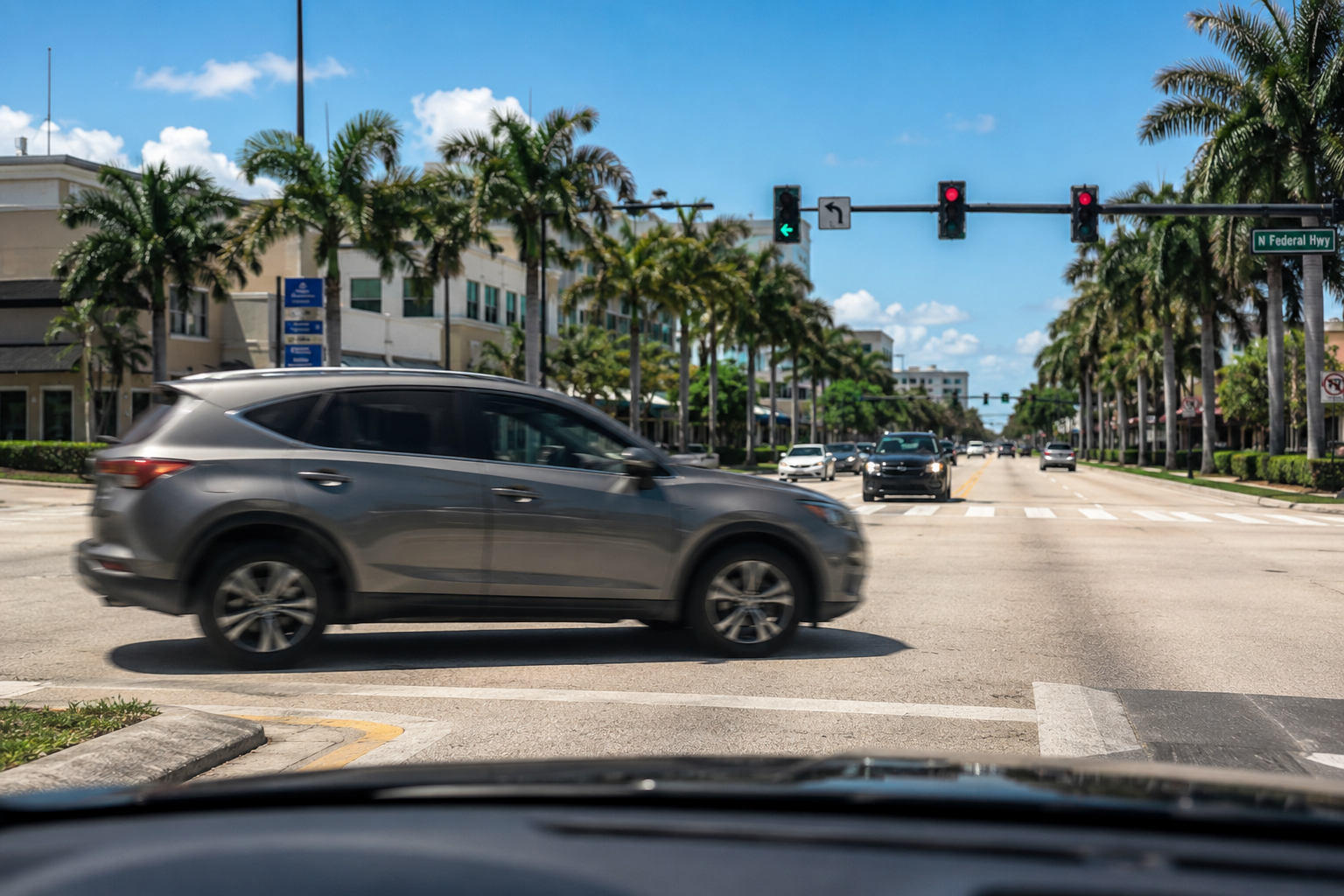
Left Turn Misjudgments: Why Intersection Gaps Lead to Serious Motor Vehicle Accidents
A left turn crash intersection collision is one of the most common and most serious motor vehicle accidents in Florida. Left turn crashes are one of the most common and most serious types of intersection collisions in Florida. The split-second decisions a driver makes when judging the speed, distance, and timing of oncoming traffic determine whether they complete the turn safely or trigger a high-impact crash. When that judgment is wrong, the result is often a T-bone collision, a sideswipe, or a head-on impact that causes severe injuries.
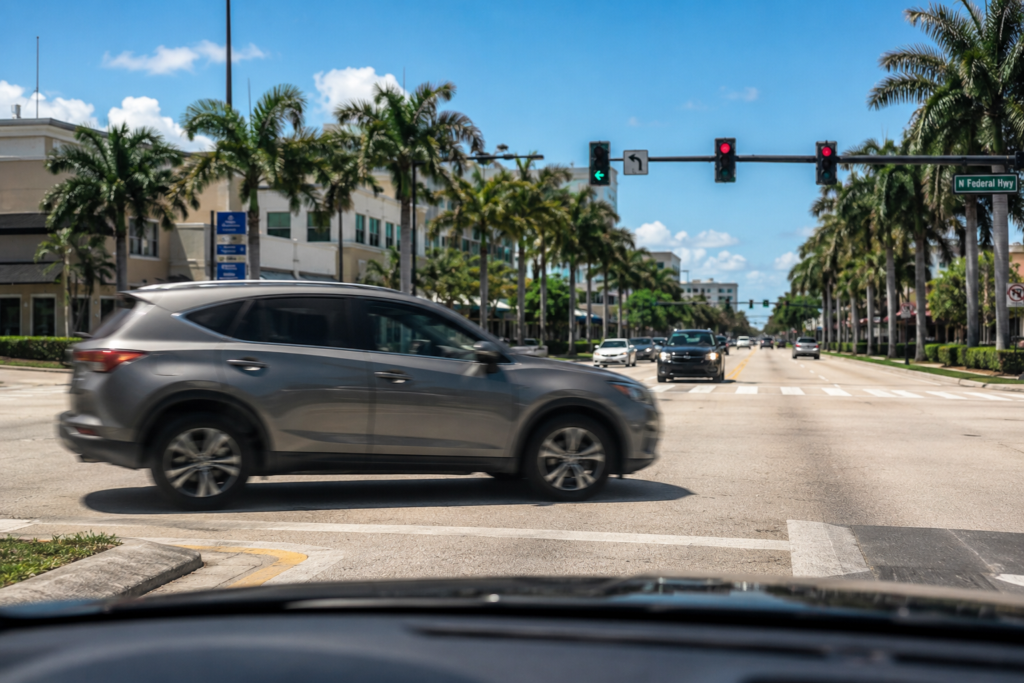
This guide breaks down what counts as a left turn misjudgment under Florida law, why these crashes keep happening, where they tend to occur, and what your rights are if you or a loved one was hurt in one.
What Counts as a Left Turn Crash Intersection Misjudgment in Florida
Florida law generally places the duty of yielding on the left-turning driver. Florida Statute 316.122 requires drivers turning left at an intersection to yield to all oncoming traffic that is close enough to constitute an immediate hazard. The same duty applies when turning across traffic at any point, including across a center turn lane, a driveway, or a parking lot exit.
When a left-turning driver fails to yield and crosses into the path of an oncoming vehicle, they are presumed to be at fault under most fact patterns. There are exceptions, including situations where the oncoming driver was speeding excessively, ran a red light, or was driving without headlights at night, but the starting presumption favors the driver going straight.
From an injury claim perspective, this presumption matters. The left-turning driver typically bears the burden of showing they had a reasonable opportunity to complete the turn safely.
How Common Is a Left Turn Crash Intersection Collision in Florida
National Highway Traffic Safety Administration research has consistently identified left turns as one of the most dangerous maneuvers a driver makes. Intersection-related crashes account for a significant share of all motor vehicle collisions, and a meaningful portion of those involve a left-turning vehicle failing to yield.
A left turn crash intersection injury can be life-altering. Florida sees especially high numbers of these crashes because of its dense network of busy multi-lane arterials, year-round traffic from residents and tourists, and a large number of intersections without protected left turn signals. Older drivers, who make up a larger share of the population in South Florida than in many other states, are also statistically overrepresented in left turn crashes.
Injuries from a left turn crash intersection collision tend to be more severe than the average fender bender. T-bone collisions deliver impact directly into the side of the struck vehicle, where there is less crumple zone protection than at the front or rear. Front-seat passengers in the struck vehicle are especially vulnerable.
Why Left Turn Misjudgments Happen
Left turn crashes rarely happen because the driver did not see oncoming traffic at all. They happen because the driver misread the speed, distance, or timing of the oncoming vehicle.
Common reasons left turn misjudgments occur include:
- Underestimating the speed of an oncoming vehicle, especially motorcycles which appear smaller and farther away
- Misjudging the gap during a permissive (non-protected) green light
- Distraction from phones, infotainment systems, or passengers
- Sun glare or other visibility issues that obscure oncoming traffic
- Following another left-turning vehicle and assuming the gap is still safe
- Trying to complete the turn after the yellow arrow has ended
- Reduced reaction time and depth perception in older drivers
- Impaired or fatigued driving
Motorcycle riders are at particular risk in left turn crashes. Studies consistently show that drivers are more likely to misjudge the distance and speed of an oncoming motorcycle, often because the smaller profile of the bike makes it appear farther away than it actually is.
Common Locations and Situations
The highest concentration of left turn crashes in South Florida occurs at a few specific types of intersections.
Permissive left turn intersections, where drivers turn on a solid green light without a dedicated arrow, are the most dangerous setting for these crashes. The driver is required to judge oncoming gaps in real time, often while multiple lanes of opposing traffic move at different speeds. Major arterials like US 1, Federal Highway, and State Road 7 have numerous permissive left turn intersections.
Driveways and shopping center entrances along busy roads are another frequent site. Drivers exiting a parking lot or attempting to turn left into one routinely misread the gap in oncoming traffic, especially during rush hour or peak shopping periods.
Highway interchanges and intersections near expressway off-ramps see elevated crash rates because oncoming vehicles often arrive at higher speeds than the turning driver anticipates. Intersections in Hollywood, Fort Lauderdale, Davie, and Boca Raton with mixed residential and commercial corridors see particularly heavy left turn crash activity.
What Typically Happens After a Left Turn Crash
Injuries from left turn crashes are often severe because they frequently involve a high-speed impact directly into the side of a vehicle. Common injuries include head and brain trauma, spinal injuries, fractures of the ribs, hips, and pelvis, internal organ damage, and serious lacerations from broken glass.
Immediately after the crash, several things typically happen in parallel:
- Emergency responders treat injuries on scene and transport to a hospital
- Law enforcement investigates and documents the scene
- The at-fault driver is often cited for failure to yield
- Insurance claims begin on both sides
Florida operates under a no fault insurance system, which means the injured person’s own Personal Injury Protection coverage pays first for emergency medical care, up to the policy limit. When injuries meet Florida’s serious injury threshold, the injured party can pursue a claim against the at-fault driver for additional damages, including pain and suffering, lost wages, and long-term medical needs.
Liability in a left turn crash intersection case typically comes down to documenting that the turning driver failed to yield. Crash reconstruction, witness statements, traffic signal timing data, and surveillance video from nearby businesses all play important roles.
Summary: Why Left Turn Misjudgment Crashes Remain a Serious Concern
Left turn crashes happen at the convergence of a difficult judgment task and a high-consequence outcome. A small error in reading the speed or distance of oncoming traffic translates into a severe collision because the struck vehicle has limited protection against side impacts.
Florida transportation engineers have responded by adding protected left turn signals at many of the highest-risk intersections, but the majority of permissive left turn intersections remain in place. As long as drivers are required to judge gaps in oncoming traffic in real time, left turn misjudgments will continue to be a leading cause of intersection crashes.
For drivers and passengers injured in one of these crashes, the path to recovery depends on prompt medical care, careful documentation of the scene, and clear legal guidance.
Frequently Asked Questions
Who is usually at fault in a left turn crash in Florida?
The left-turning driver is typically presumed to be at fault under Florida law because they have the duty to yield to oncoming traffic. There are exceptions, including cases where the oncoming driver was speeding excessively, ran a red light, or violated other traffic laws.
What if the oncoming driver was speeding?
If the oncoming driver was speeding significantly, comparative fault may apply and could reduce the percentage of fault assigned to the left-turning driver. Florida follows a modified comparative negligence rule, so the specific percentages matter for recovery.
How are left turn motorcycle crashes different?
Drivers consistently misjudge the distance and speed of oncoming motorcycles, which makes left turn crashes with motorcycles a particularly common and severe collision type. Motorcyclists often suffer significant injuries because they have far less crash protection than occupants of a passenger vehicle.
What evidence is important after a left turn crash?
Photos of the scene, vehicle positions, traffic signal phasing, witness contact information, and the police report are all valuable. Surveillance video from nearby businesses can also be critical in establishing exactly what happened.
How long do I have to file a claim?
Florida’s statute of limitations for most motor vehicle accident claims is two years from the date of the crash. There are exceptions and shorter procedural deadlines that may apply, so it is best to consult with an attorney promptly after a serious crash.
Contact Lawlor, White & Murphey Today
If you or someone you love has been injured in a left turn crash at a Florida intersection, the team at Lawlor, White & Murphey is ready to help. Our attorneys handle motor vehicle accident cases throughout Broward and Palm Beach Counties and have recovered compensation for many victims and their families.
To schedule a free consultation, call our office or complete a brief online form describing what happened. One of our attorneys will review your information and follow up to answer your questions.