
Highway Exit Lane Confusion: How Sudden Braking and Late Merges Cause Collisions
A highway exit lane crash on a Florida interstate is one of the most preventable types of multi-vehicle collision, yet these crashes happen every day across the state. The combination of high speed, sudden braking, last-second lane changes, and aggressive merging creates the perfect conditions for rear-end collisions, sideswipes, and chain reaction crashes. Drivers who hesitate, react late, or cut across multiple lanes to catch an exit ramp routinely turn an otherwise smooth flow of traffic into a high-impact event.
This guide explains what counts as a highway exit lane crash under Florida law, why these crashes keep happening, where they tend to occur, and what your rights are if you or a loved one was hurt in one.
What Counts as a Highway Exit Lane Crash in Florida
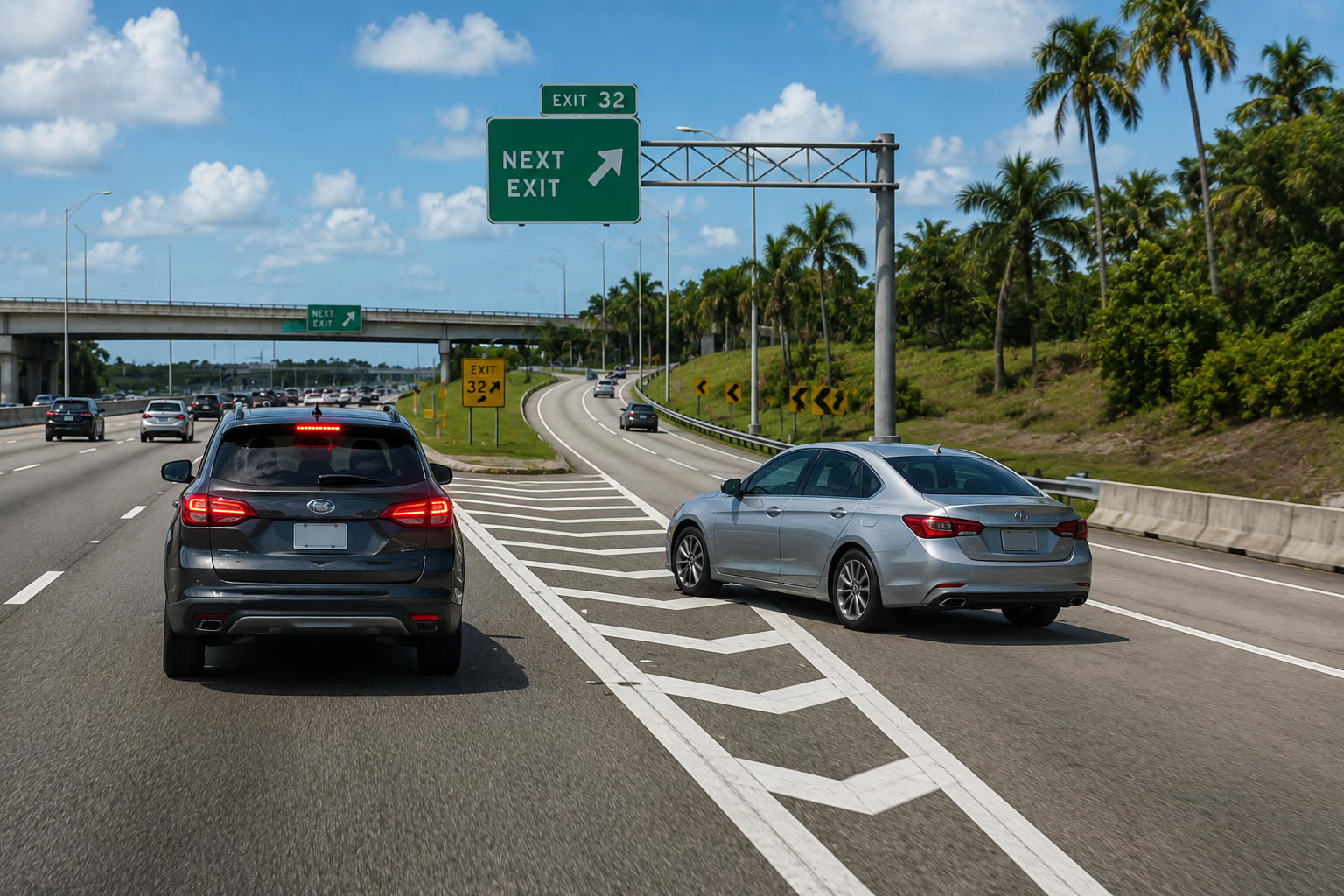
A highway exit lane crash usually refers to a collision that happens at or near a freeway exit ramp because a driver braked suddenly, merged late, or made an abrupt lane change to catch the exit. The most common scenarios involve rear-end collisions on the main travel lane, sideswipes during a forced merge, or chain reaction crashes that ripple back through following traffic.
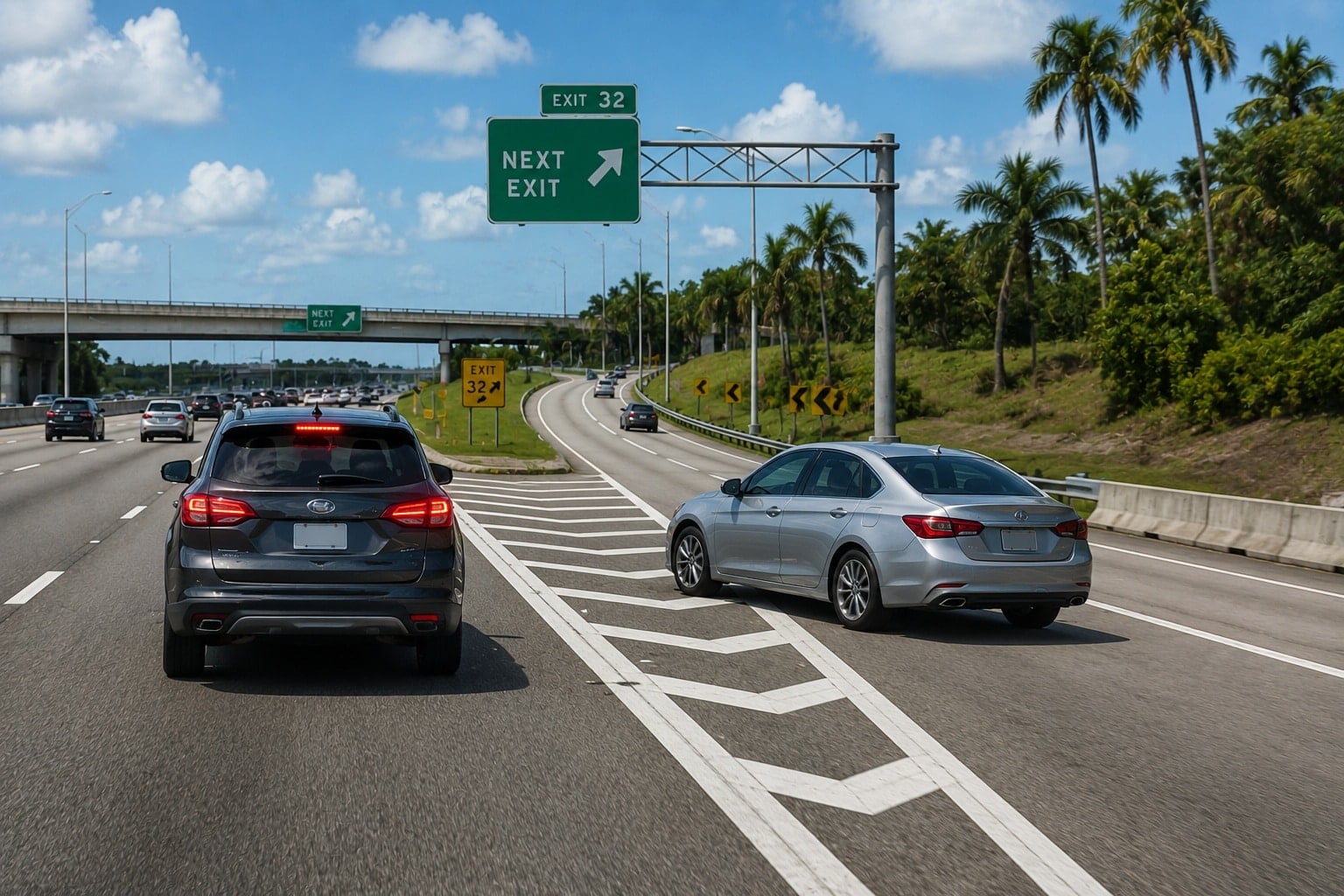
Florida law expects drivers to plan lane changes well in advance of an exit, signal appropriately, and avoid crossing solid white lines that mark the exit gore area. Crossing those lines or merging at the last moment can shift fault toward the merging driver, especially when the maneuver forces other vehicles to brake hard.
From an injury claim perspective, the responding officer’s crash report, dashcam footage, and surveillance video from highway cameras all play a role in establishing how the crash actually happened.
How Common Is a Highway Exit Lane Crash in Florida
Florida interstates carry some of the heaviest mixed traffic in the country, with daily commuters sharing lanes with out-of-state visitors, commercial trucks, and rideshare drivers who may be unfamiliar with the local exit layout. The result is an outsized share of exit-related crashes compared to similarly sized states.
Interstate 95 through Broward and Palm Beach Counties consistently ranks among the busiest stretches of urban highway in the United States, according to Florida Highway Safety and Motor Vehicles crash data. Interstate 595, the Florida Turnpike, and Interstate 75 each have well-known exit corridors where late merges and sudden braking are common contributing factors in collisions.
Even at midday in moderate traffic, the speed differential between a vehicle slowing to exit and a vehicle continuing in the main lane can exceed 30 miles per hour, which is enough to produce serious injuries when a rear-end crash occurs.
Why Highway Exit Lane Crashes Happen
Most highway exit lane crashes share the same handful of root causes. The driver either misjudges the timing, recognizes the exit too late, or tries to muscle across multiple lanes after passing the proper merge point.
Common reasons these crashes occur include:
- Driver realizes the exit is approaching and cuts across solid lines to catch it
- Vehicle in the main lane brakes hard when a slower exit-bound vehicle merges in suddenly
- Distracted driving delays a driver’s recognition of the upcoming exit
- Out-of-area or tourist drivers unfamiliar with the road network making late decisions
- Heavy congestion that masks the location of exit signs until the last moment
- Commercial trucks with longer stopping distances reacting to sudden lane changes
- Following too closely, which leaves no room to react safely to a brake-checking vehicle ahead
- Rideshare and delivery drivers following GPS prompts that update at the last second
The combination of high speed and split-second decision making is what makes these crashes so dangerous compared to lower-speed surface street collisions.
Common Locations and Situations
Certain types of exit ramps consistently produce more crashes than others.
Left-side exits are among the most dangerous because most drivers expect exits on the right. When a left-side exit appears, less-familiar drivers may cross multiple lanes at the last moment to reach it. The Florida Turnpike and parts of Interstate 595 have well-known left-side exit hazards.
Cloverleaf interchanges and dense urban interchanges with closely spaced exits produce another set of recurring crash patterns. Drivers exiting one freeway to merge onto another sometimes encounter slow traffic backed up onto the main lane, leading to chain reaction rear-end collisions.
Cities throughout Broward and Palm Beach Counties, including Hollywood, Fort Lauderdale, Davie, and Boca Raton, see particularly high volumes of exit-ramp crashes due to their dense interchange networks.
What Typically Happens After a Highway Exit Lane Crash
Injuries from highway exit lane crashes tend to be more severe than average rear-end collisions because of the higher speeds involved. Common injuries include whiplash, head and brain trauma, back and spine injuries, and fractures of the ribs, sternum, or wrists from seat belt and steering wheel forces.
Immediately after the crash, several things typically happen in parallel:
- The Florida Highway Patrol or a local agency responds and documents the scene
- Emergency responders treat injuries on scene and transport to a hospital
- Other lanes back up due to the lane closures, sometimes triggering secondary crashes
- Insurance claims begin on both sides, often involving multiple vehicles and drivers
Florida operates under a no fault insurance system, which means the injured person’s own Personal Injury Protection coverage pays first for emergency medical care, up to the policy limit. When the injuries meet Florida’s serious injury threshold, the injured party can pursue a claim against the at-fault driver for additional damages, including pain and suffering, lost wages, and long-term medical needs.
Liability in these crashes often comes down to whether the merging driver crossed the solid line or made an unsafe lane change. Dashcam footage, surveillance from FDOT cameras, witness statements, and the responding officer’s crash report all help establish exactly what happened.
Summary: Why a Highway Exit Lane Crash Remains a Serious Florida Concern
Highway exit lane crashes are among the most preventable serious crashes on Florida interstates. Yet they continue to account for a meaningful share of multi-vehicle pileups, rear-end collisions, and sideswipes year after year. The combination of distracted driving, GPS dependence, last-second decision making, and high speed differentials creates the conditions for repeated injury.
For drivers and passengers injured in one of these crashes, the path to recovery depends on prompt medical care, careful documentation, and clear legal guidance.
Frequently Asked Questions
Who is at fault in a highway exit lane crash?
Fault depends on the specific facts. A driver who crosses a solid white line, cuts across multiple lanes, or merges without signaling is typically presumed to bear a meaningful share of fault. A rear driver who follows too closely or fails to react in time can also bear partial fault.
Is the rear driver always at fault in a rear-end crash on the interstate?
The rear driver is generally presumed to be at fault for rear-end crashes in Florida, but exceptions apply. A driver who brake-checks, suddenly changes lanes without signaling, or stops in a travel lane without justification can shift some or all of the fault back.
What if I was injured by another driver merging late into my lane?
You may have a claim against the driver who made the unsafe merge. Evidence such as dashcam footage, witness statements, and the police report is especially important in these cases because the merging driver may dispute the sequence of events.
Are commercial trucks involved in many highway exit crashes?
Yes. Commercial trucks have longer stopping distances and wider turning paths, which makes them especially vulnerable in situations where smaller vehicles cut across lanes to reach an exit at the last moment.
How long do I have to file a claim?
Florida’s statute of limitations for most motor vehicle accident claims is two years from the date of the crash. There are exceptions and shorter procedural deadlines, so it is best to consult with an attorney promptly.
Contact Lawlor, White & Murphey Today
If you or someone you love has been injured in a highway exit lane crash on a Florida interstate, the team at Lawlor, White & Murphey is ready to help. Our attorneys handle motor vehicle accident cases throughout Broward and Palm Beach Counties and have recovered compensation for many victims and their families.
To schedule a free consultation, call our office or complete a brief online form describing what happened. One of our attorneys will review your information and follow up to answer your questions.