
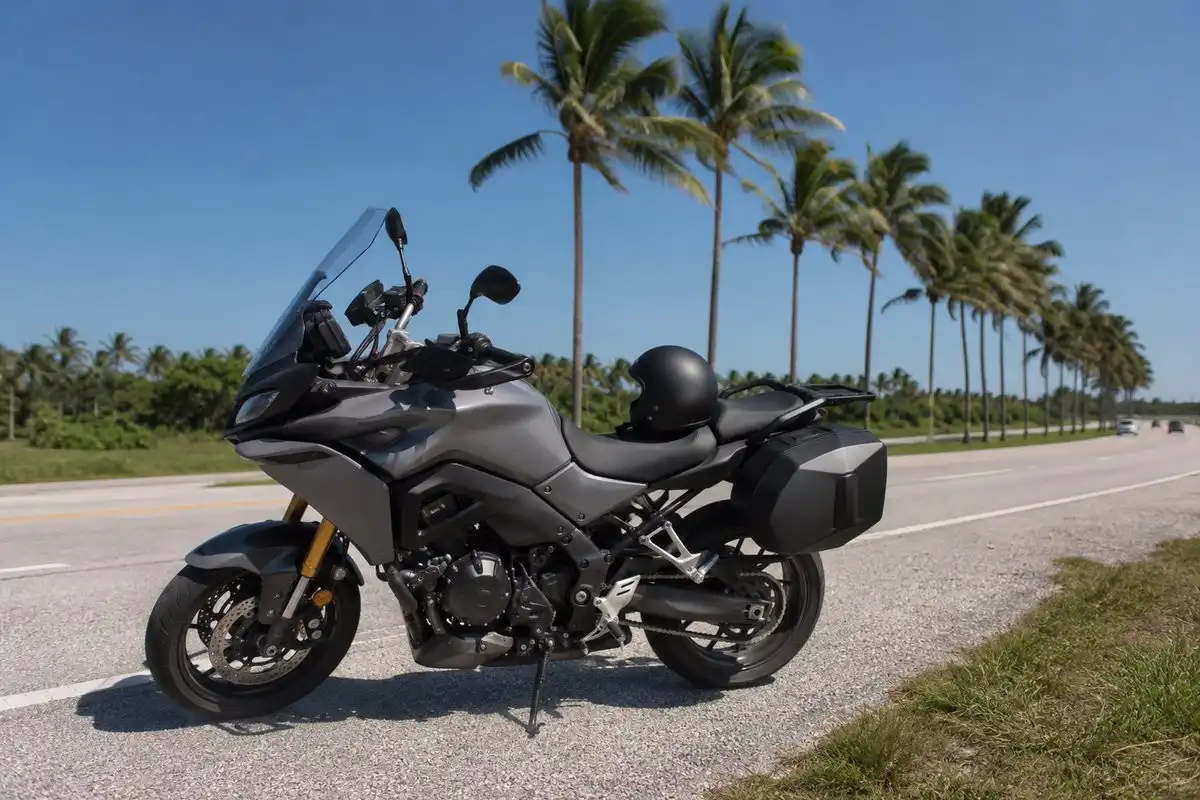
Can I Still Recover After a Florida Motorcycle Accident If I Wasn’t Wearing a Helmet?
Yes. In Florida, not wearing a helmet does not automatically bar you from recovering after a motorcycle accident. Riders 21 and older may legally ride without a helmet if they carry at least $10,000 in medical coverage, and helmet non-use only reduces recovery if it actually contributed to your injuries.
Whether a helmet was on your head is one of the first things an insurer raises after a crash, and it is often used to pressure an injured rider into accepting less. The law is more balanced than that argument suggests. This page explains how Florida’s motorcycle helmet law, the comparative negligence rule, and the state’s no-fault system fit together, and where a helmet decision actually matters to a Florida motorcycle accident recovery.
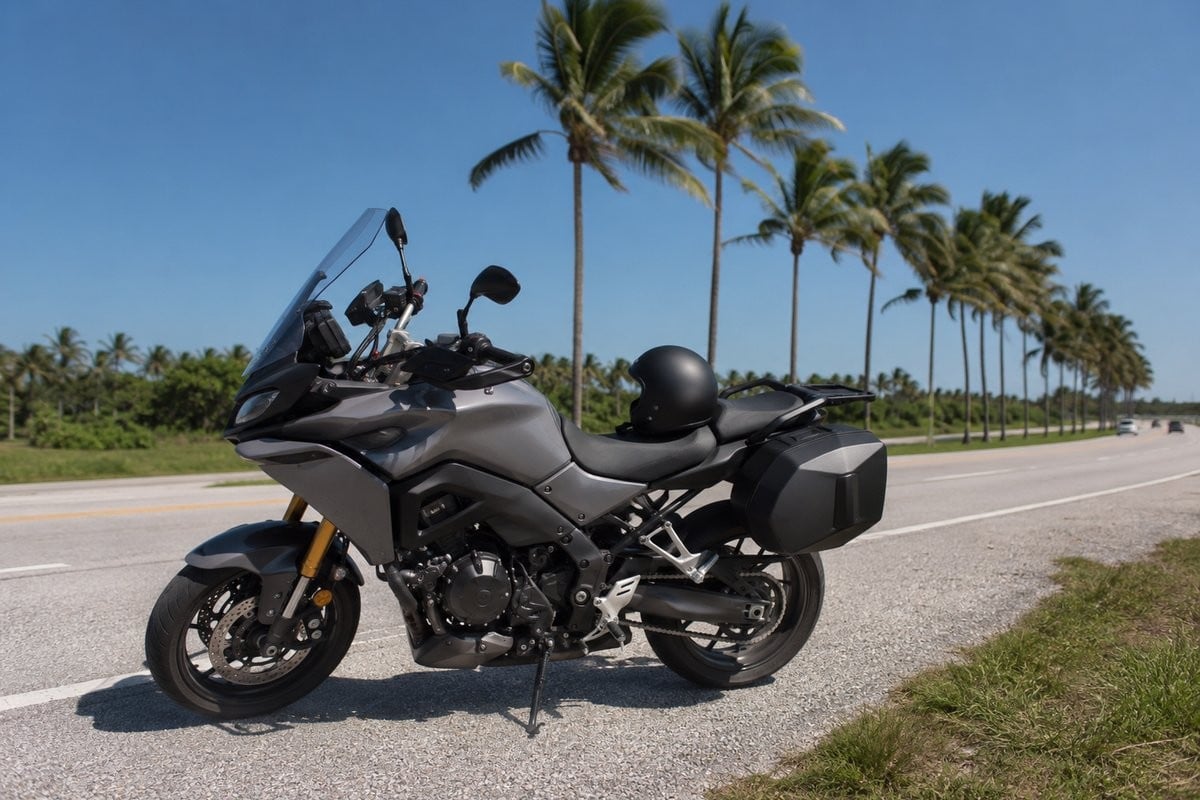
What Counts as a Florida Motorcycle Accident Without a Helmet
A Florida motorcycle accident without a helmet is any crash on a public road in which a rider who was not wearing a helmet is injured, regardless of who caused the collision. That covers a driver turning left across a rider’s path, a car changing lanes into a motorcycle, a rear-end hit at a light, or a single-vehicle crash caused by a road hazard. These cases fall within the broader family of motor vehicle accident claims, but they stand apart because a rider has no steel cage, airbags, or seatbelt to absorb the impact. The same low-speed contact that dents a bumper can throw a rider to the pavement. That exposure is why insurers focus so quickly on the helmet, and why understanding your right to recover matters from the first day.
How Common Are Florida Motorcycle Accident Head Injuries
Florida has ranked among the most dangerous states in the country for motorcyclists for years, and the reasons line up with how the state is built. Warm weather keeps riders on the road every month, tourist and commuter traffic stays heavy, and wide arterial roads mix fast cars with far more vulnerable riders. When a crash does happen, head and brain injuries are among the most serious outcomes, which is exactly why the helmet question surfaces in so many claims. The state publishes detailed crash and citation reports that track motorcycle involvement year over year, and the numbers stay high rather than spiking and settling. That steady volume is part of why the helmet defense comes up so often in a Florida motorcycle accident case.
Why Not Wearing a Helmet Does Not Bar a Florida Motorcycle Accident Recovery
The core answer is that a helmet decision does not cause a crash. Liability turns on who failed to use reasonable care, and a driver who turns across your path or drifts into your lane is responsible for that choice whether or not you had a helmet on. Not wearing a helmet is not a legal cause of the collision, so it cannot erase the driver’s fault. Florida also follows a modified comparative negligence rule with a 51% bar, which means an injured rider can still recover as long as they are not found more than 50% at fault, with any award reduced by their own percentage. The helmet, at most, is one factor a defense may raise about the injuries, and it is a factor the defense has to prove rather than simply assert against your Florida motorcycle accident recovery.
What Florida’s Motorcycle Helmet Law Actually Requires
Under Florida Statute 316.211, a rider who is at least 21 years old may operate a motorcycle without a helmet as long as they are covered by an insurance policy providing at least $10,000 in medical benefits for injuries from a crash. Riders under 21 must wear a helmet with no exception, and every rider, regardless of age, must use eye protection. The practical point for a claim is significant: a covered adult who chooses not to wear a helmet is doing something the law permits. Because the choice is legal, it is not negligence in itself, and it does not automatically count against you. An insurer that treats a bare-headed adult rider as if they broke the law is overstating what the statute says.
How Comparative Negligence Can Reduce a Florida Motorcycle Accident Claim
Comparative negligence is where a helmet can matter, but only within narrow limits. A defense that wants to reduce your recovery has to show that the lack of a helmet actually contributed to the specific injuries you suffered, not just that you were not wearing one. If your injuries are to your legs, hips, spine, or internal organs, a helmet would have changed nothing, and the argument fails. Even for a head injury, the defense generally needs medical or biomechanical evidence that a helmet would have prevented or lessened that particular harm. Insurers across Broward County and throughout Palm Beach County routinely raise the helmet issue to shrink what they pay, and that framing is worth challenging with the facts. Under the 51% bar, even a rider found partly responsible still recovers, with the award reduced by their share rather than wiped out.
Why Florida Motorcycle Accident Claims Fall Outside No-Fault
Florida’s no-fault system, built around personal injury protection, applies to motor vehicles with four or more wheels. Motorcycles are excluded, so a rider is generally outside no-fault and does not carry or collect PIP the way a car driver does. That has two consequences worth understanding. First, the $10,000 medical coverage tied to the helmet exemption is a separate requirement, not the same thing as the PIP that covers four-wheel drivers. Second, because a motorcyclist is not inside the no-fault system, they do not have to clear the serious-injury threshold that a car driver must cross before making a claim, and can pursue the at-fault driver’s liability coverage directly for the full range of damages. Florida’s no-fault insurance system shapes car claims heavily, but for a Florida motorcycle accident it mainly means the path to the responsible driver is more direct.
What Typically Happens After a Florida Motorcycle Accident
Getting medical care comes first, and because a rider sits outside no-fault, that treatment is often billed to health insurance or to any medical payments coverage the rider carries rather than to PIP. From there, the injury claim usually proceeds against the at-fault driver’s bodily injury liability policy, which is the coverage meant to pay for the harm that driver caused. If that driver has no insurance or too little to cover serious injuries, uninsured and underinsured motorist coverage may fill the gap. One clock matters throughout: for most crashes on or after March 24, 2023, an injured rider has two years from the date of the collision to file a lawsuit. Preserving evidence early helps, because the motorcycle, the riding gear, the scene, and any camera footage all speak to how the crash happened and to whether a helmet had any bearing on the injuries at all.
Summary of Florida Motorcycle Accident Helmet Law Recovery
A helmet decision does not decide your case. Fault for a Florida motorcycle accident rests on the driver who failed to use reasonable care, and riding without a helmet is legal for a covered adult and does not bar recovery. It can affect the numbers only if a defense proves the lack of a helmet actually contributed to your injuries, and even then the modified comparative negligence rule reduces rather than eliminates what you recover. Knowing how the helmet law, comparative negligence, and the no-fault exclusion work helps an injured rider protect a Florida motorcycle helmet law recovery from the start.
- Not wearing a helmet is not an automatic bar to recovering after a Florida motorcycle accident.
- Riders 21 and older may legally ride without a helmet if they carry at least $10,000 in medical coverage; riders under 21 must wear one.
- Helmet non-use can reduce recovery under comparative negligence only if it actually contributed to the specific injuries.
- Florida’s 51% bar lets a partly at-fault rider still recover, with the award reduced by their percentage of fault.
- Motorcyclists are generally outside PIP and no-fault, so they can pursue the at-fault driver directly.
- Most crashes on or after March 24, 2023 carry a two-year deadline to file suit.
FAQs About Florida Motorcycle Accident Helmet Law Recovery
Is it illegal to ride a motorcycle without a helmet in Florida?
Not for every rider. Florida allows a rider who is at least 21 years old to ride without a helmet if they are covered by a policy providing at least $10,000 in medical benefits for crash injuries. Riders under 21 must wear a helmet, and all riders must use eye protection. Because a covered adult riding bare-headed is following the law, that choice is not negligence by itself.
Can the insurance company blame me for not wearing a helmet?
They can raise it, but raising it and proving it are different things. To reduce your recovery, the insurer generally has to show with medical or biomechanical evidence that the lack of a helmet actually contributed to the injuries you suffered. If your injuries are to areas a helmet would not protect, the argument does not apply, and even a head injury requires real proof rather than an assumption.
Does my PIP cover my motorcycle accident injuries?
Usually not. Florida’s personal injury protection applies to vehicles with four or more wheels, so motorcyclists are generally outside the no-fault system and do not collect PIP the way a car driver does. Medical bills are often handled through health insurance or medical payments coverage, if any, first, and the injury claim then proceeds against the at-fault driver’s liability policy.
How much can not wearing a helmet reduce my recovery?
There is no fixed percentage. Any reduction depends on whether the defense can prove the missing helmet contributed to your specific injuries and, if so, by how much. Under Florida’s modified comparative negligence rule, an award is reduced by your share of fault, and you are barred from recovering only if you are found more than 50% responsible. In many cases the helmet has no measurable effect on the outcome at all.
How long do I have to file a Florida motorcycle accident claim?
For most crashes on or after March 24, 2023, you have two years from the date of the collision to file a lawsuit. Waiting makes the evidence that decides fault and injury causation harder to preserve, since footage is often erased and physical evidence is repaired or discarded, so it helps to act well before the deadline.
Contact a South Florida Motorcycle Accident Lawyer
If you were hurt in a crash and an insurer is already pointing at your helmet, you do not have to sort out the law alone. Lawlor, White and Murphey helps injured riders throughout Florida, including Broward and Palm Beach County, and you can learn about our firm or call our office to talk through what happened. To reach us, call 954-525-2345 or use our contact page, and a member of our team will help you understand your options. Our Fort Lauderdale office is located at 2211 Davie Boulevard, Fort Lauderdale, FL 33312. This article is for general information only and is not legal advice. Every case is different, and past results do not guarantee a similar outcome.