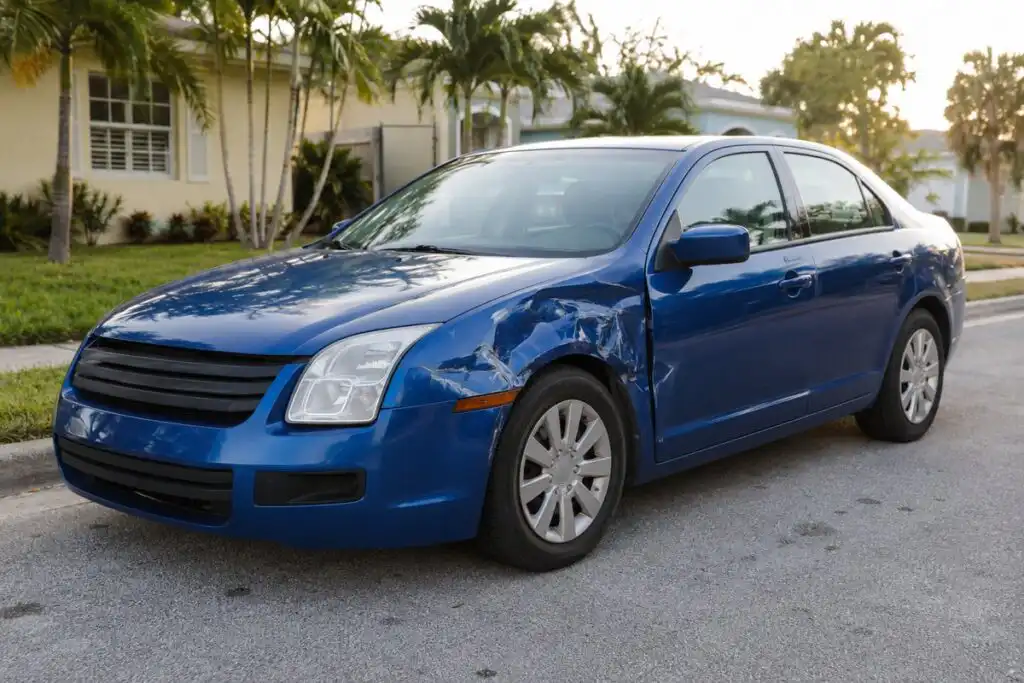

Can I Still Get Money If the Car Accident Was Partly My Fault in Florida?
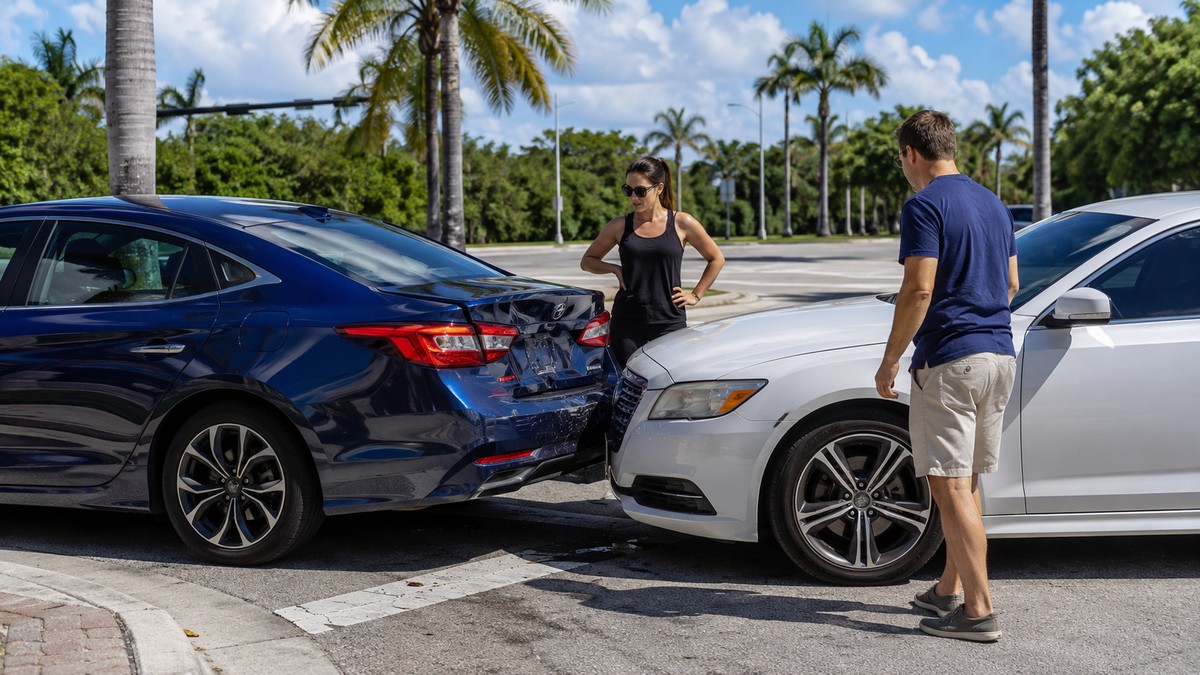
Yes, as long as you were 50% or less at fault. Under Florida’s modified comparative negligence law, you can still recover compensation, but the amount is reduced by your percentage of fault. If you are found more than 50% at fault, you cannot recover from the other driver.
After a crash, it is common to replay the moment and wonder whether something you did helped cause it. A late brake, a quick glance at your phone, or a rolling stop can all leave you second-guessing yourself. In Florida, being partly responsible does not automatically end your case. The way Florida’s car accident laws handle shared blame is built around a percentage, and understanding that percentage is often the difference between a fair recovery and walking away with nothing.
What “Partly My Fault” Means Under Florida Law
Florida uses a system called comparative negligence to divide responsibility after a crash. Instead of asking a simple yes-or-no question about who caused the accident, the law recognizes that two drivers can each carry a share of the blame. One driver might have been speeding while the other failed to signal a lane change. Both contributed, and the law tries to reflect that reality by assigning each person a percentage of fault that adds up to 100%.
When your case is in “partly my fault” territory, that percentage matters more than almost anything else. Your total damages, which include your medical bills, lost wages, vehicle repairs, and pain and suffering, are calculated first. Then your own percentage of fault is subtracted from that amount. The result is the maximum you can recover from the other driver. This is why insurance adjusters, defense lawyers, and your own attorney spend so much energy arguing over what your percentage should be.
It helps to remember that fault in a car accident is rarely as clean as it feels in the moment. You may assume the whole thing was your mistake, only to learn later that the other driver was distracted, impaired, or driving a vehicle with worn brakes. Because Florida looks at the full picture, it is worth having the facts reviewed before you accept that the crash was entirely your responsibility.
The 50 Percent Rule When the Crash Was Partly My Fault
Florida follows a modified comparative negligence rule with a 50% bar. In plain terms, you can still recover money as long as you were 50% or less at fault for the collision. If your share of fault is 50% or below, your compensation is simply reduced by that percentage. If your share climbs to 51% or higher, meaning you were more than half responsible, the law bars you from recovering anything from the other driver.
That single threshold carries enormous weight. The gap between 50% and 51% is only one percentage point, yet it separates a reduced but real recovery from no recovery at all. A person found exactly 50% at fault can still collect half of their damages, while a person found 51% at fault collects nothing from the other side. This is exactly why the fight over your percentage is not a minor detail. It is frequently the whole case.
Because so much rides on which side of that line you land on, the way fault is measured and argued becomes critical. A driver who assumes they were mostly to blame might actually be sitting at 30% or 40% once the full evidence is examined, and that difference can be worth a substantial amount. Understanding the rule is the first step toward protecting yourself when a crash was partly your fault.
How Florida’s Comparative Negligence Law Changed in March 2023
Florida did not always use this 50% bar. Before March 2023, the state followed a pure comparative negligence system. Under the old rule, an injured driver could recover something even if they were 90% at fault, with their award reduced by their share of the blame. A person 80% responsible for a crash could still collect 20% of their damages from the other driver. Fault reduced your recovery, but it almost never eliminated it entirely.
That changed when House Bill 837 took effect on March 24, 2023. The reform moved Florida from pure comparative negligence to the modified system in place today. Now the 51% threshold acts as a hard cutoff. A driver who is more than half at fault recovers nothing, where before that same driver could have recovered a reduced amount. This was one of the most significant shifts in Florida injury law in years, and it directly affects anyone whose crash may have been partly their fault.
The change applies to claims that arose after the law took effect, so the date of your crash matters. If you are unsure how the current rule applies to your situation, this is one of the details worth confirming with someone who handles a motor vehicle accident claim regularly, because the difference between the old and new frameworks can change the entire outlook of a case.
A Worked Example: Recovering When the Accident Was Partly My Fault
A simple example makes the math clear. Imagine your total damages after a crash add up to $100,000 in medical bills, lost income, and other losses. Suppose the evidence shows you were 30% at fault because you were driving slightly over the speed limit, while the other driver was 70% at fault for running a red light. Under the modified comparative negligence rule, your recovery is reduced by your 30% share, leaving you able to collect $70,000 from the other driver.
Now change one number. If the investigation concluded you were 55% at fault, you would be over the 50% line and could not recover anything from the other driver, even though your damages were still $100,000 and the other driver still contributed to the crash. The same losses produce a very different result based entirely on which side of the threshold your percentage falls. That is the practical power of the rule, and it is why the percentage is fought over so hard.
These figures are only an illustration to show how the reduction works, not a prediction about any particular case. Past results do not guarantee a similar outcome, and the value of any claim depends on its own specific facts, evidence, and injuries.
How Fault Is Assigned After a Florida Car Accident
Fault is not decided by whoever sounds most confident at the scene. It is built from evidence. In the early stage, the responding police officer documents the crash and often notes an opinion about what happened in a report. That crash report is one of the first pieces of the puzzle, and you can request a copy through the Florida Highway Safety and Motor Vehicles crash report system. While the officer’s view is influential, it is not the final word, and it can be challenged when the physical evidence tells a different story.
Beyond the report, fault is shaped by photographs of vehicle damage and road conditions, statements from independent witnesses, traffic camera or nearby surveillance footage, and sometimes data from the vehicles themselves. In more serious cases, accident reconstruction can show speed, braking, and the angle of impact. Each of these pieces can push your percentage of fault up or down, which is why gathering and preserving evidence quickly is so valuable. Cases handled across Florida often turn on how thoroughly this evidence is collected in the first days after a crash.
Insurance companies also perform their own investigations and assign their own percentages, and those numbers are not neutral. They are one party’s interpretation of the facts. Having the same evidence reviewed independently is often what keeps your percentage from being inflated beyond what the facts support.
Why Insurers Argue the Crash Was Partly My Fault
Once you understand the 50% bar, the insurance company‘s strategy becomes easy to predict. Every percentage point of fault they can assign to you reduces what they may have to pay, and if they can push your share past 50%, they may owe nothing at all. That financial incentive is exactly why an adjuster may seem friendly while asking questions designed to get you to accept blame you do not actually deserve.
This often shows up in the form of a recorded statement request shortly after the crash, before you have had time to understand your injuries or the facts. A casual comment like “I didn’t see them coming” can be reframed as an admission of inattention. Insurers may also lean heavily on the police report’s initial impression, downplay the other driver’s conduct, or argue that your speed or lane position was the real cause. None of this means the facts are against you. It means the other side has a reason to present them a certain way. Injured drivers throughout Florida run into these same tactics, and recognizing them early helps you avoid handing the insurer an easy argument.
What Evidence Protects You When You Are Partly at Fault
The strongest defense against an inflated fault percentage is documentation, and much of it is easiest to gather at the scene or in the days right after. Clear photographs of both vehicles, the position of the cars, skid marks, traffic signals, and any visible hazards create a record that is hard to dispute later. The names and contact information of independent witnesses can be decisive, because a neutral third party often carries more weight than either driver’s account.
Prompt and consistent medical treatment also matters, both for your health and for your claim. A clear medical record ties your injuries to the crash and undercuts any argument that your damages came from something else. Keeping the vehicle available for inspection, saving any dashcam footage, and writing down your own memory of the sequence while it is fresh all help preserve the details that a percentage of fault ultimately rests on.
It is equally important to avoid actions that hand the other side ammunition. Apologizing at the scene, guessing about speeds, or speculating about what you might have done differently can be twisted into an admission. Sticking to the facts, cooperating with the police, and declining to give the other driver’s insurer a recorded statement until you have advice are all simple steps that protect your position.
Common Shared-Fault Accident Scenarios in Florida
Some crash types are especially likely to involve shared fault. Rear-end collisions are a common example. The trailing driver is usually presumed at fault, but that presumption can shift if the lead driver stopped suddenly without cause, had broken brake lights, or reversed unexpectedly. In those situations both drivers may end up carrying a percentage of the blame.
Lane-change and merging crashes are another frequent source of split fault. If one driver drifts into an occupied lane while the other is speeding or riding in a blind spot, an investigation may assign responsibility to both. Left-turn accidents follow a similar pattern. The turning driver often bears the larger share for failing to yield, yet an oncoming driver who was speeding or ran a yellow-turning-red light can absorb part of the fault as well.
In each of these scenarios, the outcome depends on the details rather than a rigid rule. That is the entire point of comparative negligence. Two drivers can both be partly right and partly wrong, and Florida law tries to divide the responsibility in a way that reflects what actually happened on the road.
Summary of Comparative Negligence in Florida
Florida’s modified comparative negligence system means partial fault does not automatically shut you out of a recovery, but your percentage of fault controls how much you can collect and whether you can collect at all. Keeping the core rules straight helps you understand where your own case stands.
- You can recover compensation as long as you were 50% or less at fault for the crash.
- If you are found more than 50% at fault, you cannot recover from the other driver.
- Your award is reduced by your percentage of fault, so a 30% share cuts a recovery by 30%.
- Florida switched from pure to modified comparative negligence when House Bill 837 took effect on March 24, 2023.
- Fault is built from evidence such as the crash report, photos, witnesses, and footage, not just opinions at the scene.
- Insurance companies have a financial reason to raise your percentage, which is why documenting the crash matters.
Frequently Asked Questions About Shared Fault in Florida
What is modified comparative negligence?
Modified comparative negligence is the Florida rule that divides responsibility for a crash by percentage and lets you recover as long as you are 50% or less at fault. Your compensation is reduced by your share, and being more than 50% at fault bars recovery entirely.
Can I recover if I was 40% at fault?
Yes. Because 40% is below the 50% threshold, you remain eligible to recover from the other driver. Your compensation would be reduced by your 40% share of fault, so on $100,000 in damages you could collect up to $60,000 from the at-fault party.
What if I was more than half at fault?
If the evidence shows you were more than 50% at fault, Florida’s modified comparative negligence rule bars you from recovering from the other driver. This is why the difference between 50% and 51% is so significant and why your percentage is often the central dispute in the case.
Who decides my percentage of fault?
Fault percentages are shaped by the insurance companies during a claim and, if the case does not settle, ultimately decided by a jury. Both rely on evidence like the crash report, photographs, witness statements, and footage, which is why preserving that evidence early is so important.
Does admitting partial fault at the scene hurt my claim?
It can. Statements like apologizing or saying you did not see the other car may be treated as admissions and used to raise your percentage of fault. It is better to stick to the facts, cooperate with police, and avoid speculating about blame before you have spoken with an attorney.
Contact a South Florida Car Accident Lawyer
If you believe a crash may have been partly your fault, that belief alone should not stop you from finding out what you may be owed. The percentage of fault assigned to you is not fixed the moment the accident happens. It is argued, and the evidence often supports a smaller share than an insurer wants to claim. You can learn more about our firm and how we approach these cases, or contact our office to have your situation reviewed. Every case is different, and past results do not guarantee a similar outcome.