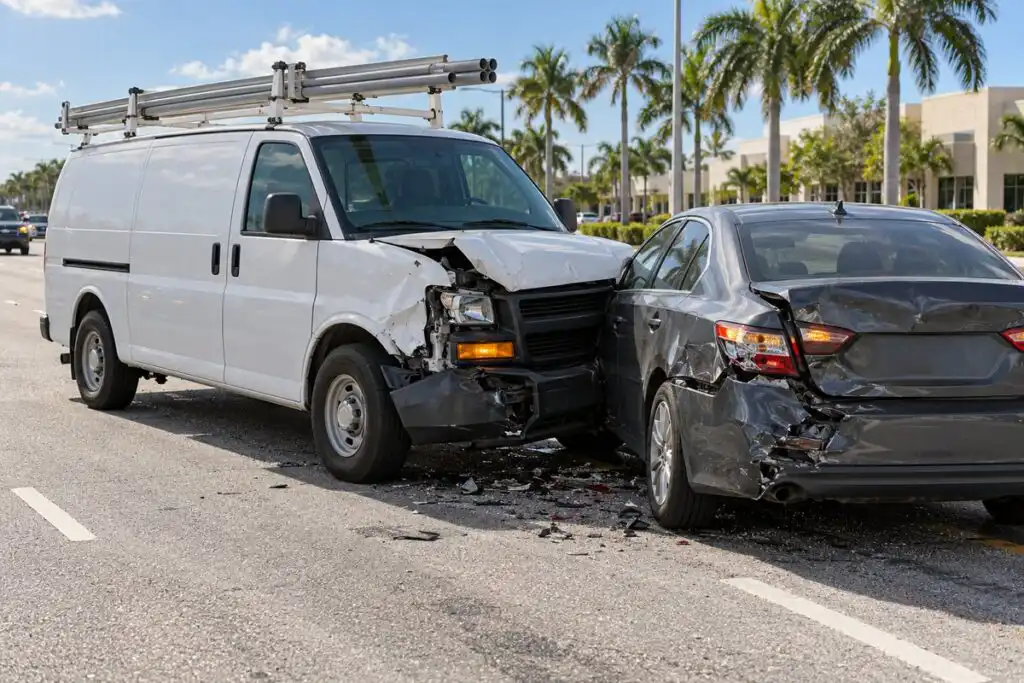
What Happens If Both Insurance Companies Deny Responsibility?
Your claim does not end, and you are not stuck waiting for the two companies to agree. When both insurers deny responsibility, your own Personal Injury Protection coverage, through your own car insurance, keeps paying for medical care regardless of who caused the crash, and neither denial is a legal finding. It is one carrier’s position, written by an adjuster who has heard one driver’s version of events.
What changes the outcome is evidence that belongs to neither driver, and a deadline that keeps running whether or not the two carriers ever cooperate. Nothing about a denial letter stops that clock, and nothing about it stops your own coverage from paying. Here is what actually happens next, which coverage carries you through it, and what tends to move a file that has stopped.
What It Means When Both Insurers Deny Responsibility
A denial from a liability carrier is that company’s conclusion that its own insured did not cause the crash. It is not a court ruling, it does not bind you, and it can be withdrawn when better evidence arrives. When two carriers each reach that conclusion, the practical result is that nobody has accepted the claim, so nobody is paying it.
You have no contract with either liability carrier, which is why you cannot simply escalate inside their process. Your claim is against a driver, and that driver’s insurer chooses whether to pay. With two of them pointing in opposite directions, there is no referee, and the file stops moving until something outside the argument forces a decision.
Why Two Carriers Both Deny Responsibility in Florida
Almost every one of these files has the same hole in it: no independent witness. Left turns across oncoming traffic, unprotected green arrows, lane changes on a wide arterial and chain-reaction rear-end crashes all produce two accounts that cannot both be right, plus damage patterns that are consistent with either story. Neither adjuster has a reason to be the one who blinks first.
A crash report that lists contributing actions for both drivers, or names no violation at all, gives each adjuster something to rely on. Florida’s comparative negligence rule then adds a reason to argue about degree instead of direction, because every percentage point changes what gets paid. Sometimes both carriers also argue that part of the blame belongs to you, which lets each of them hold out a little longer.
What Keeps Paying Your Bills While Both Insurers Deny Responsibility
Florida operates under a no-fault insurance system, which is what protects you here. Your own Personal Injury Protection coverage, through your car insurance, pays your medical bills regardless of fault and does not wait for a liability decision. PIP generally pays 80% of reasonable medical expenses and, if your policy includes wage loss coverage, 60% of lost gross income, all within one $10,000 limit.
Generally, you must seek medical treatment within 14 days of the crash and receive emergency medical care to use PIP, and benefits are limited to $2,500 if a licensed provider does not determine that you had an emergency medical condition. After that, medical payments coverage, if any, and your health insurance can carry treatment, and who pays the medical bills after a crash comes down to which of those coverages you have. Collision coverage repairs the car now rather than leaving it at a shop collecting storage charges.
The Evidence That Moves a Claim When Insurers Deny Responsibility
Start with the crash report, because that is where both adjusters started. Under section 316.066 of the Florida Statutes, crash reports are confidential and exempt from public records for 60 days, with access for the parties, their lawyers and their insurers. The same statute says the report or a statement made to an officer may not be used as evidence in a trial, so it shapes the early decisions and still has to be rebuilt as admissible proof later.
Independent witnesses tend to decide these files. A passenger in either car is easy to discount, but a driver stopped at the cross street, a delivery driver or a shop owner who watched from a doorway is not. Physical evidence does similar work: resting positions, crush patterns, the debris field, gouge marks and paint transfer can establish geometry that neither driver’s account can talk around.
Recorded data and video often finish the job. Many newer vehicles store a few seconds of speed, braking, throttle and seatbelt status, and under the federal Driver Privacy Act of 2015 that data belongs to the vehicle’s owner or lessee, so reaching the other car’s data generally takes consent or a court order. Signal timing records and nearby camera footage matter just as much, and on busy corridors through Broward County most systems overwrite within days. The crash volume reflected in the reports published by the Florida Department of Highway Safety and Motor Vehicles is one reason so little gets documented at the scene.
How a Lawsuit Breaks a Deadlock When Both Insurers Deny Responsibility
A lawsuit is often what ends the standoff, because it removes the carriers’ ability to wait. Both drivers can be named as defendants in the same case, each is questioned under oath, and the vehicle data, phone records, maintenance records and camera footage can be subpoenaed rather than requested. The two insureds then have to argue with each other in front of someone with authority to decide.
It also changes the risk. If a jury apportions fault, each carrier faces the possibility of being assigned most of it, and that risk has a price both companies have to account for. Many disputed claims settle once suit is filed and the evidence is exchanged, without ever reaching a verdict. Because how long a Florida car accident claim takes often depends on that first push, the filing decision is worth reviewing early.
How Comparative Negligence Applies When Insurers Deny Responsibility
Florida follows a modified comparative negligence rule under section 768.81 of the Florida Statutes. A person found more than 50% at fault for their own harm is barred from any recovery, and otherwise the award is reduced by that person’s share of fault. Where two drivers share responsibility, Florida generally apportions damages by each party’s percentage of fault rather than making one defendant answer for the whole award.
That is why the percentages, not just the yes-or-no question, decide what you collect. Whether you can still recover when part of the blame lands on you is worth answering early.
The deadline does not pause for any of this. Florida generally gives you two years from the date of the crash to file a negligence lawsuit against the at-fault party, and that clock runs while the carriers exchange letters. Understanding the deadline for filing a Florida car accident claim matters more in a disputed file than in a clear one, because months can pass with nothing to show for them.
Summary of What Happens When Both Insurers Deny Responsibility
Two denials feel like the end of the claim, but they are two opinions, not a ruling. The essential points are these:
- A liability denial is one carrier’s position on its own insured, not a legal finding, and it can be withdrawn.
- Your own PIP pays your medical bills, regardless of fault, within one $10,000 limit for medical care and wage loss.
- The crash report drives the early decisions but generally cannot be used as evidence at trial.
- Independent witnesses, physical evidence, camera footage and recorded vehicle data are what can move a stalled file.
- Filing suit lets both drivers be named, puts each under oath, and leaves fault to a jury.
- Florida generally gives you two years from the date of the crash to file a negligence lawsuit against the at-fault party.
FAQs About Insurers Who Deny Responsibility in Florida
Is a denial from both insurance companies final?
No. A liability denial is the carrier’s own conclusion about its insured, not a determination by a court, and carriers do reverse position when independent evidence arrives. Fault is ultimately resolved by agreement between the parties or by a jury, not by an adjuster’s letter.
Who pays my treatment if neither carrier accepts fault?
Your own Personal Injury Protection coverage, through your own car insurance, pays regardless of fault and does not wait for a liability decision, followed by medical payments coverage, if any, and your health insurance. That is the main reason PIP exists, and it matters most in exactly this situation.
Should I give a recorded statement to both adjusters?
Speak with a lawyer before you do. In a disputed claim, two carriers are each looking for language that shifts fault toward the other driver or toward you, and an offhand answer about speed, distance or where you were looking can be used later.
Can I sue both drivers instead of picking one?
Often yes, and in a genuinely disputed crash that is usually the sensible approach. Naming both puts the argument in one case, lets each defendant be questioned under oath, and leaves the apportionment of fault to a jury rather than to two adjusters.
What should I do first while the carriers argue?
Keep treating on the schedule your provider sets, keep every bill and record, order the crash report, and ask in writing for nearby camera footage before it is overwritten. Ask that the vehicles and their recorded data be preserved, and route both adjusters through one point of contact.
Contact a South Florida Car Accident Lawyer
If both insurers have denied responsibility and your claim has stopped moving, the team at Lawlor, White & Murphey can gather the independent evidence, press both carriers for a decision, and file suit when that is what it takes. We represent injured people throughout Florida, including Broward and Palm Beach County, and you can call our office to talk through what happened. You can also read about our firm and the attorneys who handle disputed claims. Our office is located at 2211 Davie Boulevard, Fort Lauderdale, FL 33312. Call 954-525-2345 to speak with a Florida car accident lawyer.
This article is for general information only and is not legal advice. Every case is different, and past results do not guarantee a similar outcome.