
Employer Liability After a Florida Crash: When the Driver Was On the Clock
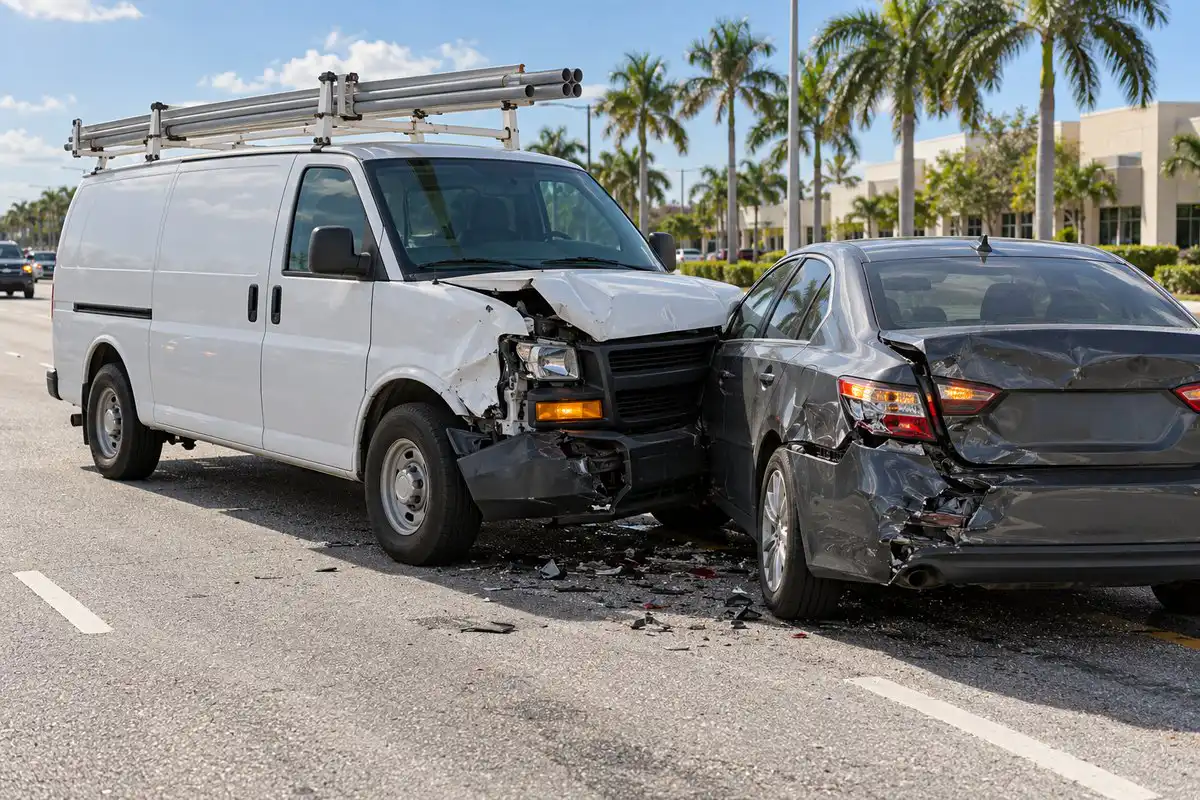
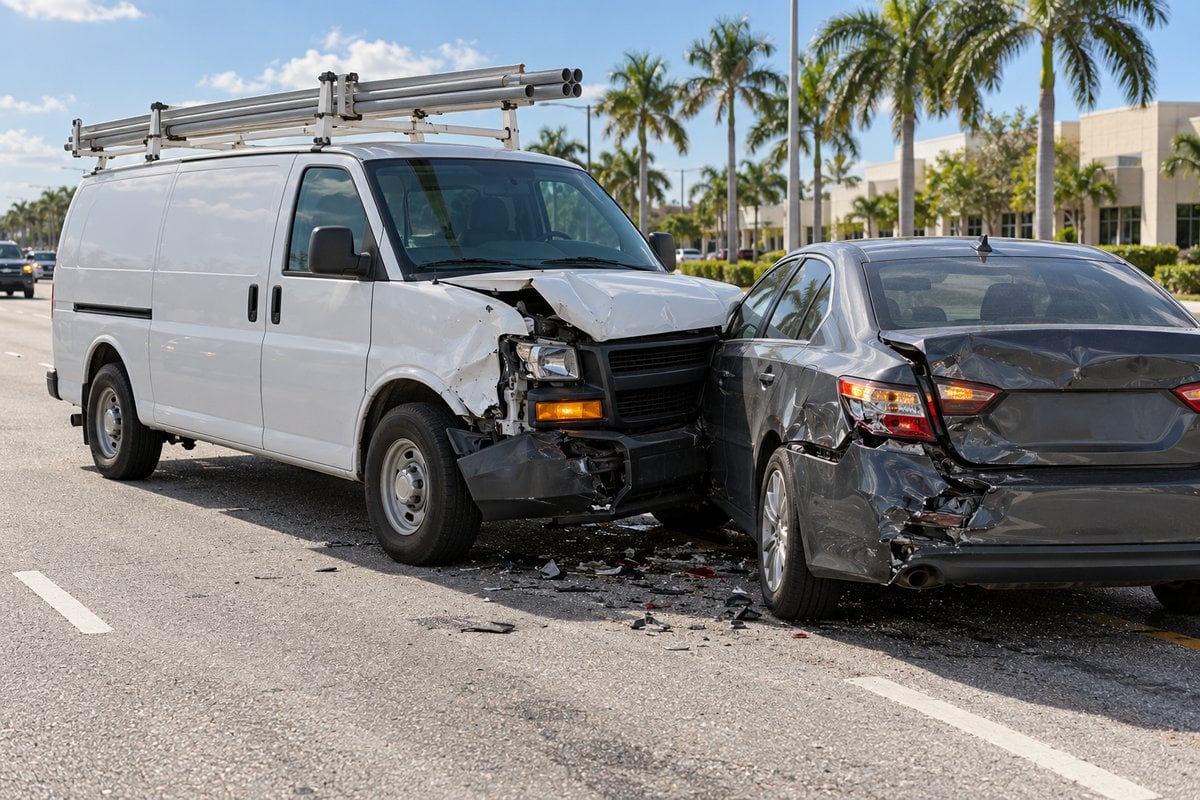
The van that runs a red light on a busy Broward County street has a company name on the door and a phone number under it. The driver apologizes, says he was late to a job across town, and hands over an insurance card. Weeks later, the adjuster who calls does not work for him. She works for the business he was driving for.
That shift matters more than most injured drivers expect. When the driver who caused a crash was on the clock, Florida employer liability rules can place responsibility on the company as well as the driver, and the company’s coverage is often what actually reaches the losses. Whether it does turns on what the driver was doing at the moment of impact.
What Counts as Employer Liability After a Florida Crash
Employer liability is the responsibility a business can carry for a crash caused by one of its workers. The usual route is vicarious liability, sometimes called respondeat superior, which generally makes an employer answerable for an employee’s negligence within the course and scope of employment. The company need not have done anything careless itself, and an injured person can generally pursue both.
A second route looks at what the employer itself did. Claims for negligent hiring, negligent retention and negligent supervision focus on the company’s own conduct, such as putting someone behind the wheel with a driving history it should have found. Florida also treats a motor vehicle as a dangerous instrumentality, so a business that owns the vehicle may answer as the owner who entrusted it.
Why Employer Liability Claims Arise in Florida
South Florida runs on people who drive as part of the job. Plumbers, electricians, landscapers, home health nurses, sales representatives and service technicians spend the day moving between calls, usually during the busiest hours on the busiest roads. The more miles a worker covers against a schedule, the more chances there are for a rushed lane change.
The Florida Department of Highway Safety and Motor Vehicles publishes statewide crash and citation reports each year, and the congested corridors of Broward County contribute a steady share. The pressure in these crashes comes from the work itself. A technician squeezing in one more call before the end of a shift is not distracted by anything personal, and that is what brings the employer into the claim.
Why Employer Liability Claims Often Involve Serious Injuries
Vehicles used for work are often heavier than the cars around them. A cargo van loaded with equipment or a box truck carrying inventory does not slow the way an empty sedan does, and the extra mass transfers into whatever it strikes. Occupants of the smaller vehicle absorb that force, which is why herniated discs, spinal injuries and fractures are common.
Much of this driving happens on arterial roads and interstates at travel speed, and tools or inventory that are not secured can shift in an impact. Injuries at that level often mean surgery, months of therapy and time away from work. The employees themselves move through a different system, since workplace car accidents are generally handled through workers compensation.
Proving Fault in an Employer Liability Claim
Two questions sit at the center of these claims. The first is whether the driver was negligent, proved the way any crash is proved, through the crash report, photographs, physical evidence, witness accounts and vehicle damage. The second is whether the driver was within the course and scope of employment at the moment of impact, because that is what connects the business to the loss.
Florida courts generally ask whether the conduct was the kind the worker was employed to perform, whether it happened within the time and place limits of the job, and whether it was meant at least in part to serve the employer. Commuting is usually treated as personal, while driving between job sites usually is not. A brief personal stop along an assigned route, a detour, may leave the worker within the scope, while a substantial personal trip can place them outside it until the work resumes.
Most of the proof lives in the employer’s records: timecards, dispatch logs, work orders, route assignments, fuel and toll records, and the location data many fleets collect. Companies often respond that the driver was an independent contractor, or had gone off on personal business, so whether you can sue the employer when the driver was working usually depends on records requested early.
How Florida’s No-Fault Rules Apply to an Employer Liability Claim
Florida operates under a no-fault insurance system, so your own Personal Injury Protection coverage, through your own car insurance, generally pays first, no matter who caused the crash. PIP generally pays 80% of reasonable medical expenses, and the $10,000 is one limit that also covers lost wages if your policy includes wage loss coverage. To use those benefits you generally must seek medical treatment within 14 days of the crash and receive emergency medical care to qualify for the maximum benefits available.
To recover pain and suffering from the at-fault side, an injury generally must meet Florida’s serious injury threshold: a significant and permanent loss of an important bodily function, a permanent injury within a reasonable degree of medical probability, or significant and permanent scarring or disfigurement. Employer liability changes the arithmetic here, because the driver’s personal policy may carry little bodily injury coverage while the business usually carries commercial coverage with higher limits, sometimes with an umbrella policy above it.
What to Do After a Crash With an On-the-Clock Driver
The scene holds details that are hard to recreate later. Along with photographs of the vehicles, the road and the damage, capture the company name and any lettering or phone number on the vehicle, and note whether the driver was carrying tools, materials or a work order. Ask who the driver works for and call the police so a crash report is made.
Get medical care promptly so you stay inside the 14-day window, and keep every bill, referral and record. Write down what the driver said about where they were headed, because a comment about a job across town can carry weight later. A lawyer can also ask the business in writing to hold its dispatch logs, location data and personnel records.
What Compensation an Employer Liability Claim Can Recover
Depending on the facts, damages may include past and future medical expenses, lost income and reduced earning capacity, rehabilitation, property damage, and compensation for pain, suffering and lost enjoyment of life. When both the driver and the business are involved, more than one policy may respond.
Value depends on the severity of the injury, the strength of the evidence and how carefully the losses are documented, which is much of what determines what a car accident case is worth. A back injury that ends physical work carries different losses than one that resolves in months. Claims are usually presented to the insurers through a settlement package, and many resolve through negotiation.
How Comparative Negligence Can Reduce an Employer Liability Claim
Florida follows a modified comparative negligence rule under section 768.81 of the Florida Statutes. If you are found more than 50% at fault for your own harm you are barred from recovering any damages, and otherwise your award is reduced by your percentage of fault. The statute also divides responsibility among the parties who contributed, so a business and its driver may each be assigned a share.
The defense here often runs on two tracks. The company may argue that you contributed to the crash by speeding, following too closely or changing lanes without signaling, and separately that its driver had stepped outside the scope of employment. Both arguments tend to be answered with records: crash scene evidence for the first, employment data for the second.
Summary of Employer Liability Claims
Employer liability can put a business and its insurance behind a crash caused by one of its workers, though much depends on what the driver was doing for the job. The key points are:
- An employer can be vicariously liable for an employee driving within the course and scope of employment.
- Negligent hiring, retention and supervision target the employer’s own conduct.
- Commuting is usually personal, while travel between job sites usually is not.
- A brief detour may stay within the scope of employment, while a substantial personal trip may not.
- A commercial policy often carries higher limits than the driver’s personal coverage.
- Florida generally gives you two years from the date of the crash to file a negligence lawsuit against the at-fault party.
Frequently Asked Questions About Employer Liability
Can I pursue both the driver and the employer after a Florida crash?
Often, yes. Vicarious liability generally allows an injured person to pursue the negligent employee and the business, and a separate negligent hiring or retention claim can target the employer’s own conduct.
What happens if the driver was on a personal errand?
It depends how far the errand strayed. A short stop along an assigned route may leave the worker within the course and scope of employment, while a substantial personal trip may not.
Does it matter who owned the vehicle?
It can. Florida treats a motor vehicle as a dangerous instrumentality, so a business that owns the vehicle and entrusts it to a driver may answer as the owner, separate from the on-the-clock question.
What if the company says the driver was an independent contractor?
That response is common and is not always the end of the claim. Courts generally look at the real working relationship, including control over the work, the schedule and how the person was paid.
How long do I have to bring a claim against an employer in Florida?
Florida generally gives you two years from the date of the crash to file a negligence lawsuit against the at-fault party. Employment and location records are often overwritten well before that.
Contact a South Florida Car Accident Lawyer
If you were hurt by a driver who was working at the time of the crash, the team at Lawlor, White & Murphey can review the employment side of the claim as well as the crash. We represent injured people throughout Florida, including Broward and Palm Beach County. You can call our office at 954-525-2345. Our office is located at 2211 Davie Boulevard, Fort Lauderdale, FL 33312.
This article is for general information only and is not legal advice. Every case is different, and past results do not guarantee a similar outcome.