What Evidence From the Crash Scene Actually Matters in a Florida Claim?
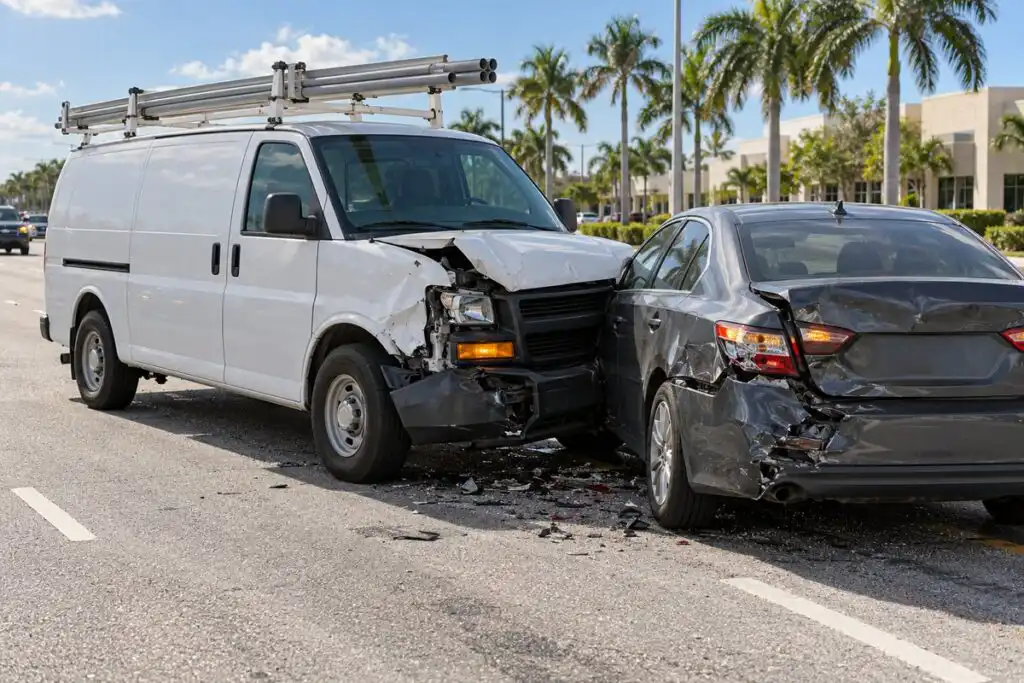
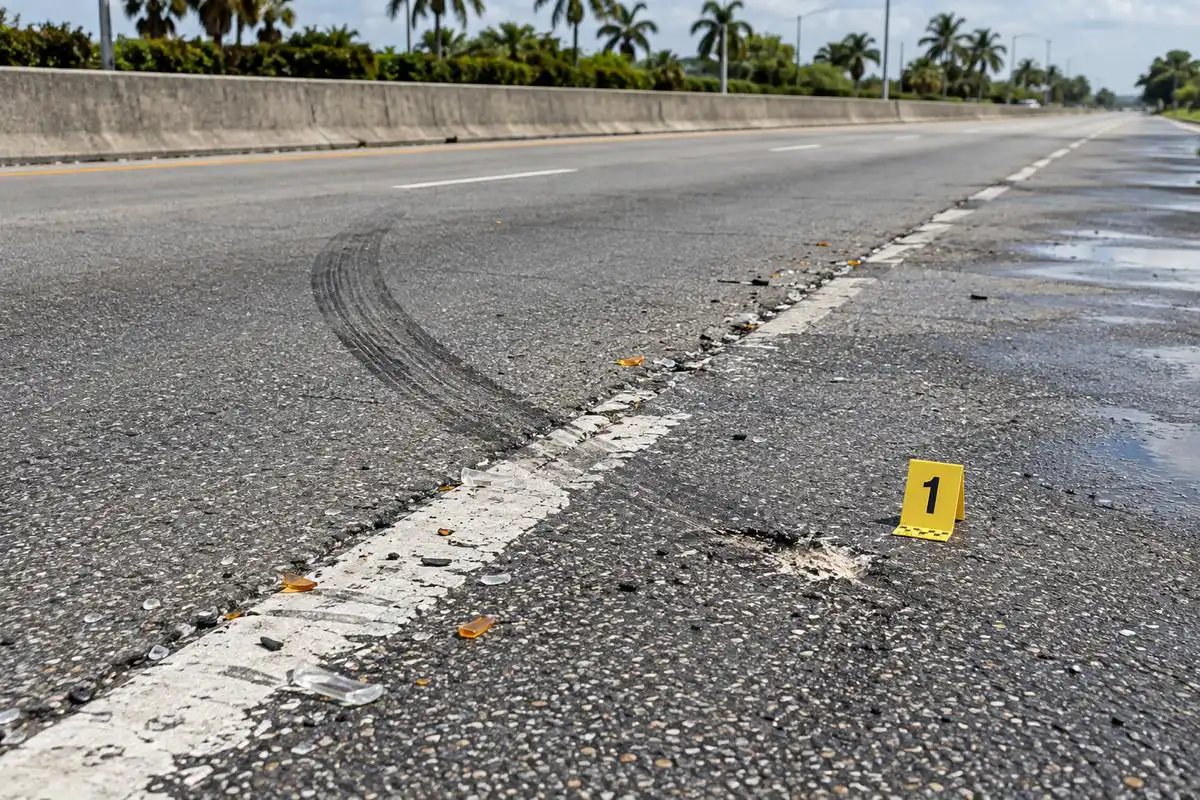
The crash scene evidence that carries the most weight is physical and measurable: gouges and scars cut into the pavement, the final rest positions of the vehicles, the crush on each one, and any event data the cars stored. So do the tire marks, the debris field and fluid deposits, and those disappear first.
That is not usually where people look. The instinct after a crash is to photograph the damaged bumpers and trade insurance cards, which matters but is the easiest part of the file to rebuild later. The parts of the record with a shelf life measured in hours sit on the pavement, and once they are gone nobody can put them back.
What Counts as Crash Scene Evidence in a Florida Claim
Crash scene evidence is everything the collision left at the location, on the roadway and on the vehicles. That covers the position each vehicle came to rest in, tire marks of every type, the spread of broken glass and plastic, fluid deposits, gouges and scrapes cut into the pavement, and the crush across each damaged panel. It also covers the setting: lane widths, grade, surface condition, sight lines and where the signals and signs sit.
It helps to separate that from the rest of a motor vehicle accident file. Medical records, wage records and the other driver’s policy information can be requested months later. Crash scene evidence cannot. Event data stored by the vehicle sits in between, because it survives as long as the car does. What the physical record proves about speed and angle is the subject of post-collision scene documentation, the work of capturing and measuring it.
How Long Crash Scene Evidence Survives in Florida
Every category has its own clock, and in South Florida the clocks run fast. Fluid deposits and the debris field go first, and one afternoon downpour can clear both inside an hour. On a busy arterial, tire marks can be worn away within days, while the same mark on a quiet residential street may last considerably longer. Gouges cut into asphalt often survive until the road is resurfaced.
The vehicles leave fastest of the things people assume are safe. A damaged car moves to a storage yard, then an insurer’s salvage pool, then auction or a dismantler, and the crush profile and any event data go with it. Camera footage from a nearby business is often overwritten on its own cycle within weeks. One exception is the crash report, which is filed and kept, although under Florida law it stays confidential for 60 days and is released in that window only to certain people, including those involved in the crash and their legal representatives.
Why Crash Scene Evidence Outweighs Recollection
Two drivers rarely describe the same crash the same way, and neither is necessarily being dishonest. Memory compresses the seconds before an impact, and most people judge speed, distance and timing poorly even without adrenaline. The Florida Department of Highway Safety and Motor Vehicles publishes statewide crash and citation reports each year, and behind those totals sit a great many disagreements of exactly that kind.
Physical evidence does not revise itself. A gouge in the asphalt is where it is, and the crush on a fender is the depth it is. That is why insurers and juries tend to weigh it heavily, and why an account that conflicts with the pavement is hard to hold. On the arterials across Broward County, where lanes are cleared fast, that record is often the only neutral witness a claim gets.
Which Crash Scene Evidence Carries the Most Weight
The material sorts roughly into tiers. At the top sit the things that are fixed and measurable: gouges and scrapes cut into the road, the rest positions recorded by responders, the crush profile on each vehicle, and event data from cars that store it. Those place the impact, describe its angle and support a range of closing speeds, and none of them depend on anyone’s memory.
Next come the perishable physical marks. Tire marks show the path each vehicle took and whether it was braking or sliding sideways. The leading edge of the debris field, and any dirt shadow left by underbody grime shaken loose on impact, help fix where the vehicles actually met. These are as informative as anything in the top tier, but they vanish first, which is why photographing them immediately is worth more than photographing the cars.
Below that sits the context, most of which can be recovered later. A crash report and its diagram, the roadway geometry, signal timing, weather records and third-party video all fill in the setting. Witness identification belongs here as well, because a name and a phone number keep even though what the witness remembers will fade.
The practical lesson is that the evidence people instinctively capture is often the least decisive. A dramatic photograph of a folded bumper says little about impact angle. A two-inch gouge beside a lane line, shot with something in frame for scale, can say a great deal. Efforts to prove the other driver was at fault usually turn on the dull material rather than the dramatic.
How Crash Scene Evidence Interacts With Florida’s 51% Bar
Florida’s modified comparative negligence rule, found in section 768.81 of the Florida Statutes, reduces your recovery by your own percentage of fault and bars it entirely if you are found more than 50% at fault. Because that reduction is proportional, fault is seldom decided as all or nothing, and each percentage point assigned to you comes straight out of a recovery.
Crash scene evidence is what moves those numbers, in either direction. Marks showing where each vehicle was tracking, a point of impact fixed by a gouge rather than by argument, and crush direction establishing the approach angle can all narrow your share. The same material may also show you were carrying more speed than you recall, and the other side can use it that way, which is a reason to have it read accurately rather than selectively.
What Typically Happens After Crash Scene Evidence Is Preserved
While the analysis runs, Florida’s no-fault insurance system means your own Personal Injury Protection coverage pays first regardless of who caused the crash. PIP generally pays 80% of reasonable medical expenses, and the $10,000 is one combined limit that also covers lost wages if your policy includes wage loss coverage. You generally must seek treatment within 14 days and receive emergency medical care to use that coverage.
To recover pain and suffering from an at-fault driver you generally must meet Florida’s injury threshold: significant and permanent loss of an important bodily function, permanent injury within a reasonable degree of medical probability, or significant and permanent scarring or disfigurement. The scene material, the vehicle findings, the crash report and the medical records then go into a settlement package for the insurer, followed by negotiation and, if it becomes necessary, a lawsuit. Florida generally gives you two years from the date of the crash to file a negligence lawsuit against the at-fault party. A written preservation of evidence request usually goes out long before any of that.
Summary of Crash Scene Evidence in Florida Claims
The most useful crash scene evidence is rarely the most photogenic, and the most telling of it has the shortest life. The points worth holding on to are these:
- Gouges, rest positions, crush profile and event data are the fixed, measurable end of the record.
- Skid and yaw marks, debris and fluid deposits are just as informative and disappear first.
- Florida rain, heat and traffic can clear the perishable material within an hour.
- The vehicles carry the crush profile and event data, so they need to be preserved too.
- A Florida crash report stays confidential for 60 days and is released in that window only to certain people.
- Florida generally gives you two years from the date of the crash to file a negligence lawsuit against the at-fault party.
FAQs About Crash Scene Evidence in Florida
What crash scene evidence should I photograph first?
The pavement. Skid marks, gouges, fluid deposits and the debris field go first, while the vehicles keep their damage for weeks. Shoot wide from several corners so the positions can be tied to something fixed, such as a lane line.
Can I still bring a claim if nothing was photographed at the scene?
Often yes. Responding agencies photograph and diagram many scenes, nearby businesses may still hold footage, gouges can last until the road is resurfaced, and the vehicles usually carry the crush profile and event data for some time afterward.
How do I get the Florida crash report?
Reports are filed with the responding agency and are available through the state. Under Florida law a crash report stays confidential for 60 days, and during that period it goes only to certain people, including those involved and their legal representatives.
Does the other driver’s vehicle count as crash scene evidence?
It often carries the more useful measurements, because crush direction on both vehicles is what establishes the approach angle. A written preservation request can ask that it not be repaired, sold or dismantled while the claim is open.
Who reads crash scene evidence in a Florida claim?
Accident reconstructionists and engineers usually handle the analysis, working from photographs, measurements, the crash report, vehicle inspections and any event data. Their findings are then weighed alongside the medical evidence on how the injuries were caused.
Contact a South Florida Car Accident Lawyer
If your crash is being argued about rather than simply processed, the pavement and the vehicles may still hold the answer, and that window closes quickly. The team at Lawlor, White & Murphey can review what was photographed, what the crash report records and what remains of the vehicles. We represent injured people throughout Florida, including Broward and Palm Beach County. Reach us at 954-525-2345 or through our online contact form. Our office is at 2211 Davie Boulevard, Fort Lauderdale, FL 33312.
This article is for general information only and is not legal advice. Every case is different, and past results do not guarantee a similar outcome.