How Do I Prove the Other Driver Was at Fault in a Florida Car Accident?
To prove the other driver was at fault in a Florida car accident, you build a record that points to their negligence: the police crash report, photographs from the scene, statements from witnesses, and physical evidence like vehicle damage, skid marks, or data pulled from a car’s electronic control module. That combined proof shifts responsibility onto the other driver.
After a serious crash, the other driver’s insurer will look for any reason to shift blame onto you, because Florida’s comparative negligence law lets them cut what they pay by whatever percentage of fault they can assign to you. Knowing what evidence actually proves fault, and how quickly it disappears, puts you in a far stronger position to protect your claim.
What Counts as Proof the Other Driver Was at Fault in Florida
To prove fault in a Florida car accident, you need evidence tending to show that the other driver failed to drive with reasonable care and that their failure caused your injuries. Fault is rarely established by a single dramatic piece of proof. Instead, it is assembled from several sources that, taken together, tell a consistent story about who did what in the seconds before impact. The stronger and more independent those sources are, the harder it becomes for an insurer to argue otherwise.
In practice, the evidence that proves fault falls into a few categories: official documentation such as the crash report and any traffic citation, physical evidence from the vehicles and the roadway, human accounts from drivers and witnesses, and electronic data recorded by the cars or nearby cameras. These are the same building blocks our attorneys rely on across the full range of motor vehicle accidents we handle, from routine rear-end crashes to complex multi-car pileups on I-95.
How Often Fault Is Disputed After a Florida Car Accident
Fault is contested more often than most drivers expect. Even when one driver clearly ran a red light or rear-ended another, insurers routinely assert that the injured person contributed to the crash, because every percentage point of fault they assign reduces what they owe. Disputes are especially common in intersection collisions, lane-change crashes, and multi-vehicle pileups, where the sequence of events is genuinely unclear and each driver remembers it differently.
Statewide crash and citation figures published by the Florida Department of Highway Safety and Motor Vehicles show hundreds of thousands of reportable crashes every year, and a large share involve some argument over who was responsible. That backdrop is why documentation matters so much. When two drivers give conflicting accounts, the objective evidence, the report, the photos, and the physical marks on the road, becomes the tiebreaker that decides whether you recover anything at all.
Why Proving the Other Driver Was at Fault Matters in Florida
Proving the other driver was at fault matters because Florida ties the size of your recovery directly to the percentage of blame assigned to each party. Under the state’s modified comparative negligence standard, an injured person found partly responsible still recovers, but the award is reduced by their share of fault, and anyone found more than 50% responsible recovers nothing at all. A dispute over 10 or 20 percentage points can mean the difference of tens of thousands of dollars.
Fault also determines when you can step outside the no-fault system. Florida operates under a no-fault insurance system, so your own personal injury protection pays first regardless of blame. To pursue the other driver for pain, suffering, and losses beyond those limits, you generally must meet the serious-injury threshold, and you must be able to prove that the other driver caused the crash. Without that proof, even a well-supported injury claim can stall before it ever reaches a fair value.
Evidence That Helps Prove the Other Driver Was at Fault
The police crash report is usually the first and most influential document. A responding officer records the position of the vehicles, road and weather conditions, statements from each driver, and often an opinion on contributing causes or a citation. While the report is not the final word on fault and is not always admissible on its own, insurers weigh it heavily, and a citation issued to the other driver is strong early evidence that they broke a traffic law.
Photographs and physical evidence capture what memories and paperwork miss. Pictures of vehicle damage, final resting positions, skid marks, debris fields, traffic signals, and sightlines can show speed, direction, and point of impact long after the cars are towed. Skid marks and crush patterns let an accident reconstructionist estimate how fast each vehicle was traveling and who had time to react. Because road crews clear debris and skid marks fade within days, this evidence is among the first to vanish, which is why it should be documented immediately. Crashes on busy corridors throughout Broward County are cleared quickly to reopen traffic, taking the physical record with them.
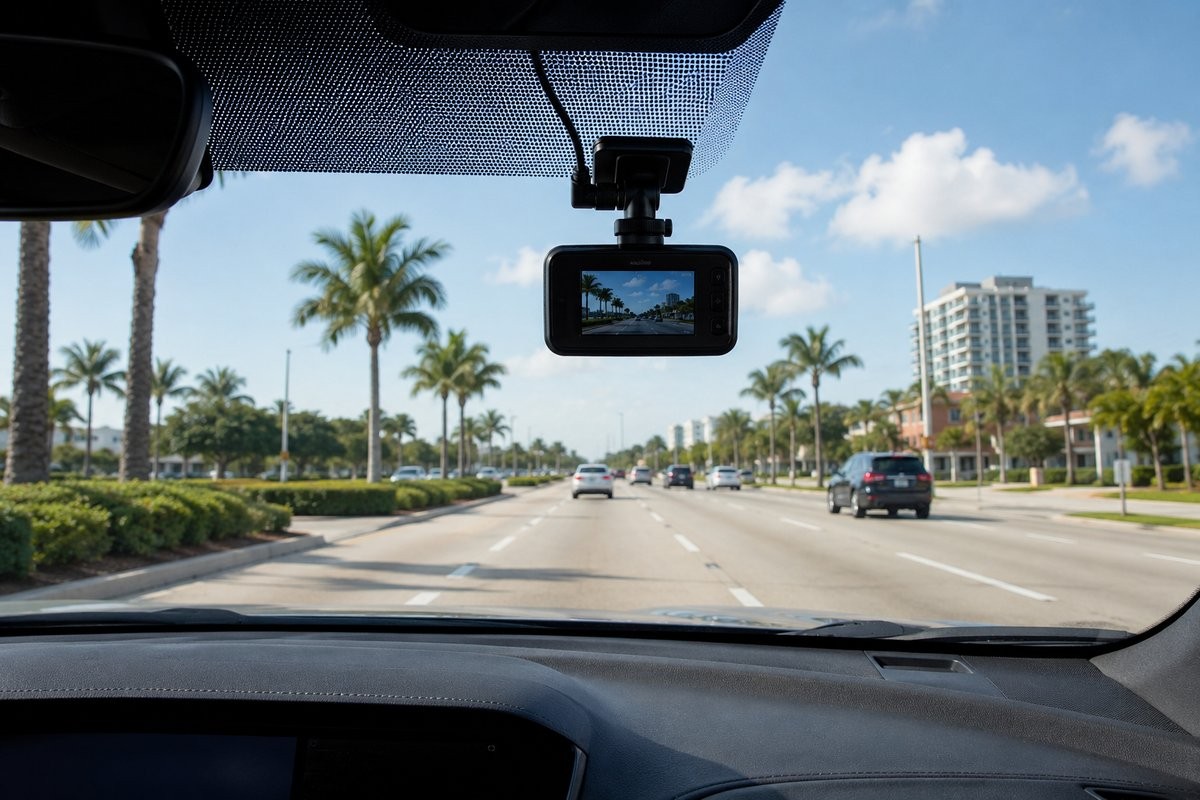
Independent witnesses, electronic data, and phone records round out the picture. A neutral bystander who saw the other driver speed through a light carries weight precisely because they have nothing to gain from the outcome. Most modern vehicles store data in an electronic control module, often called the black box, that can record pre-crash speed, braking, throttle, and seatbelt use in the seconds before impact. Cell phone records, obtained through the claims process or a subpoena, can show that the other driver was texting or on a call when the crash happened. Surveillance footage from nearby businesses and traffic cameras, if preserved quickly, can settle a fault dispute outright.
How Fault Evidence Interacts With Florida’s 51 Percent Bar
Florida’s comparative negligence rule, set out in Florida Statute 768.81, is the reason evidence quality translates directly into dollars. Every party to a crash is assigned a percentage of fault, and your recovery is reduced by your own share. If a jury values your damages at $100,000 and finds you 20% responsible, you recover $80,000. If it finds you 51% responsible, you recover nothing. The evidence you gather is what keeps your assigned percentage low.
This is why insurers work hard to pin part of the blame on you, and why strong proof of the other driver’s fault does double duty. The same crash report, photos, black-box data, and witness statements that establish the other driver’s negligence also rebut the insurer’s attempt to inflate your share. Injured drivers throughout Palm Beach County and the rest of the state of Florida lose real money when they cannot answer a comparative-fault argument with objective evidence. Preserving proof early is the most reliable way to hold your percentage down and your recovery up.
What Typically Happens After You Prove the Other Driver Was at Fault
Even once the fault is clear, Florida’s no-fault system shapes the order of events. Your own personal injury protection coverage of at least $10,000 pays initial medical bills and, if your policy includes wage loss coverage, part of your lost wages, regardless of who caused the crash, and you must seek initial treatment within 14 days to keep that coverage available. Proving the other driver was at fault becomes decisive when your injuries are serious enough to step outside no-fault and pursue that driver directly for the losses PIP does not cover.
From there, the claim moves through an initial offer to settle, negotiation, and, if necessary, a lawsuit. Negligence claims arising after March 24, 2023 carry a two-year statute of limitations, so the report, photos, and data need to be preserved well before that deadline passes. Most personal injury cases are handled on a contingency fee, commonly 33⅓% before a lawsuit is filed and 40% afterward, so there is no fee unless we recover for you. Past results do not guarantee a similar outcome, and every claim turns on its own facts.
Summary of Proving the Other Driver Was at Fault in Florida
Proving the other driver was at fault in a Florida car accident comes down to gathering objective evidence quickly and understanding how the state’s comparative negligence rule turns that evidence into recovery. The essential points to remember are:
- Fault is built from several sources, the crash report, photos, physical evidence, witnesses, and electronic data, not a single piece of proof.
- A citation to the other driver and a favorable crash report are strong early indicators of fault.
- Scene photos, skid marks, and black-box data fade or vanish within days, so they should be documented right away.
- Florida’s 51% bar reduces your recovery by your share of fault and eliminates it entirely above 50%.
- Your PIP coverage pays first, you must treat within 14 days, and serious injuries let you pursue the at-fault driver.
- Negligence claims generally must be filed within two years of the crash.
FAQs About Proving the Other Driver Was at Fault in Florida
Does the police report decide who was at fault in Florida?
No. The crash report is influential and insurers rely on it heavily, but it does not legally decide fault and is not always admissible on its own. Photographs, witness accounts, and physical evidence can support or contradict what the officer wrote at the scene.
What if the other driver and I both blame each other for the crash?
When accounts conflict, objective evidence breaks the tie. Scene photographs, skid marks, vehicle damage patterns, black-box data, and neutral witnesses carry more weight than either driver’s version, which is why preserving that evidence early is so important to your claim.
Can I still recover if the other driver blames me for part of the crash?
Often yes. Under Florida’s comparative negligence rule you can recover as long as you are 50% or less at fault, with your award reduced by your share. Strong proof of the other driver’s fault is what keeps your own percentage low.
How long do I have to act after a Florida car accident?
Generally, you must seek medical treatment within 14 days to protect your PIP coverage, and file any negligence lawsuit within two years of a crash occurring after March 24, 2023. Evidence should be preserved long before those deadlines because it disappears quickly.
What is a car’s black box and can it help prove fault?
Many vehicles store data in an electronic control module that records pre-crash speed, braking, and throttle in the seconds before impact. When preserved, that data can confirm how fast the other driver was going and whether they ever tried to stop.
Contact a South Florida Car Accident Lawyer
If another driver caused your crash and their insurer is now questioning who was really at fault, the team at Lawlor, White & Murphey can help you build the proof your claim needs. We represent injured people throughout Florida, including Broward and Palm Beach County, and you can call our office to talk through what happened and what evidence still needs to be preserved. Many clients come to us because of the way our firm approaches injury claims from the first phone call. Our Fort Lauderdale office is located at 2211 Davie Boulevard, Fort Lauderdale, FL 33312, and consultations are free. Call 954-525-2345 to speak with a Florida car accident lawyer today. This article is for general information only and is not legal advice. Every case is different, and past results do not guarantee a similar outcome.