
Uncontrolled Intersection T-Bone Collisions: When Lack of Signals Creates Right-of-Way Conflicts
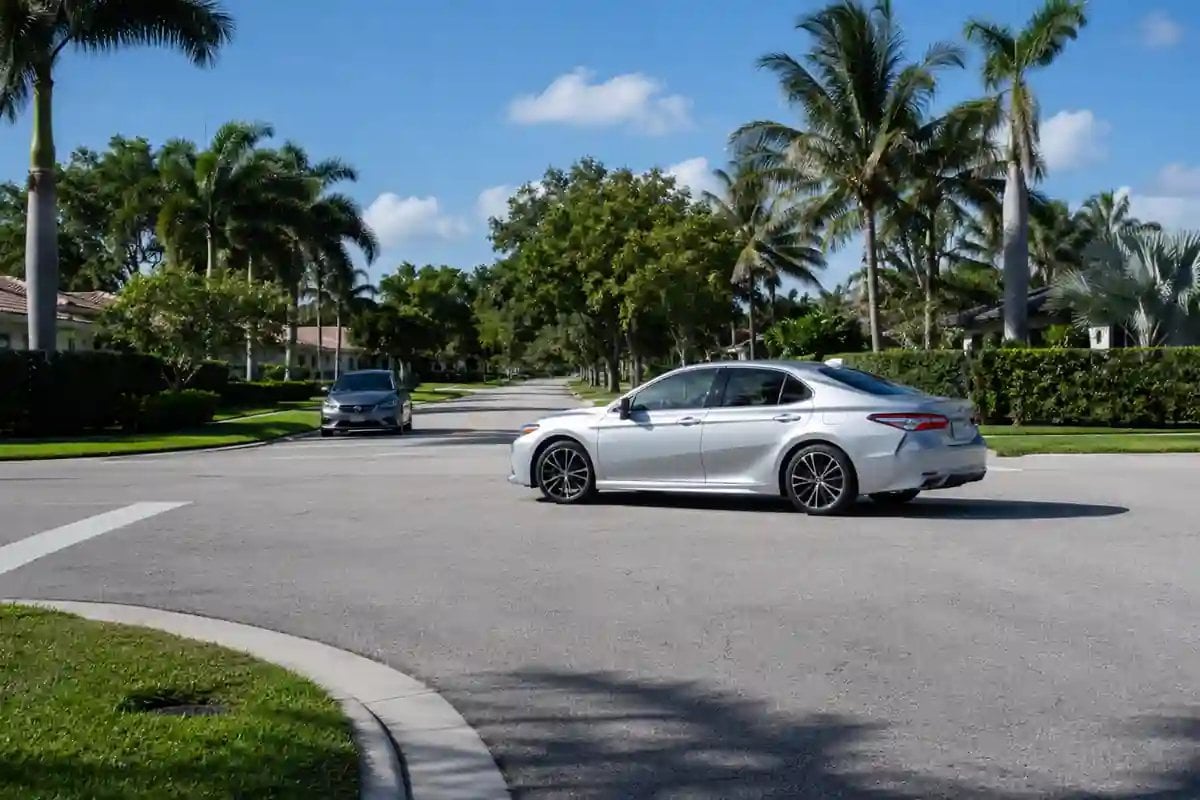
An intersection with no traffic light or stop sign asks every driver to make a judgment call, and when two of them judge wrong at the same moment the result is often a T-bone crash. One car crosses while another arrives from the side street, and the front of one vehicle slams into the side of the other. Unlike a rear-end tap, there is little between the striking car and the person sitting inside the door that takes the hit.
These side-impact crashes happen throughout South Florida on quiet residential grids and older streets where signals were never installed. This article explains how T-bone collisions happen at uncontrolled intersections, how Florida decides who had the right of way, and what an injured driver can do after the crash.
What Counts as a T-Bone Intersection Collision
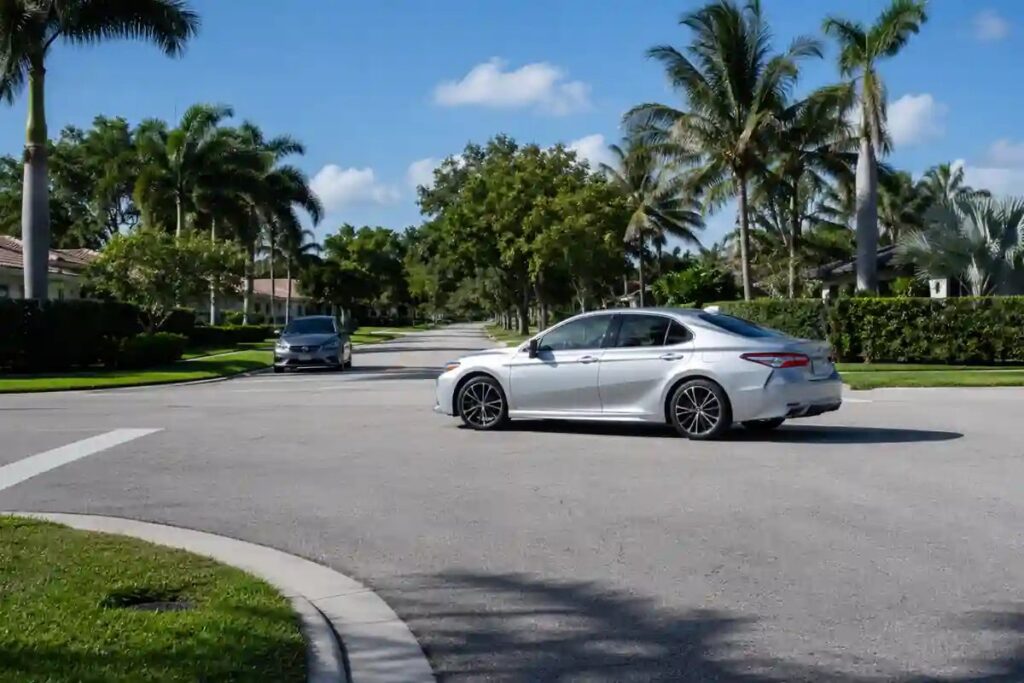
A T-bone collision, also called a side-impact or broadside crash, happens when the front of one vehicle strikes the side of another, forming the shape of the letter T. At an uncontrolled intersection, one with no signal, stop sign, or yield sign, these crashes usually come down to which driver had the right of way and which one failed to yield it. Because the crash is a motor vehicle accident under Florida law, the standard insurance rules and deadlines apply.
The defining feature is the angle of impact. A driver crossing or entering the intersection is struck on the side, where the vehicle offers the least protection to the people inside.
Why T-Bone Collisions Happen at Uncontrolled Intersections in Florida
Without a signal to sort out the order, drivers rely on judgment, and two drivers often reach the intersection believing each has the right to go. A driver who rolls through without slowing, misjudges the speed of a car coming from the side, or simply does not look both ways sets up the collision. Overgrown hedges, parked cars, and poor sight lines make it worse by hiding cross traffic until it is too late. Statewide figures from the Florida Department of Highway Safety and Motor Vehicles show how often these crashes happen on Florida roads.
These conditions are common across older South Florida neighborhoods, where four-way residential intersections carry real traffic but were never signalized. A driver who instead runs a controlled signal can cause a red-light-running crash with the same violent side impact. You can review how often intersection crashes occur in the crash and citation data published by the Florida Department of Highway Safety and Motor Vehicles.
Why T-Bone Collisions Cause Such Serious Injuries
The side of a car has only a door, a window, and a few inches of frame between an occupant and an oncoming vehicle. That is far less protection than the crumple zones at the front and rear, so the force of a side impact reaches the body almost directly. Broken ribs, shoulder and pelvic injuries, spinal damage, and head injuries are all common in these crashes.
The injury is often most severe for the occupant seated on the struck side, who absorbs the impact with little cushioning. Even at moderate speeds, a T-bone crash can cause harm that far exceeds what the dented door might suggest.
Proving Fault in a T-Bone Intersection Collision
At an uncontrolled intersection, Florida law sets the order of priority. A driver must yield to a vehicle that has already entered the intersection, and when two vehicles arrive at about the same time, the driver on the left must yield to the driver on the right. Fault usually turns on who failed to follow that rule.
Because both drivers often insist they had the right of way, evidence decides these cases. The crash report, damage patterns that show the point of impact, witness accounts, and any nearby camera footage help establish who entered first. Injured drivers across Broward County and Palm Beach County benefit from preserving that proof quickly, before memories fade and vehicles are repaired.
How Florida’s No-Fault Rules Apply After a T-Bone Collision
Florida’s no-fault system means your own Personal Injury Protection coverage pays first, no matter who caused the crash. PIP covers eighty percent of your reasonable medical bills up to the $10,000 limit, as long as you seek initial treatment within fourteen days of the collision and receive emergency medical care. Missing that window can forfeit the benefit.
Given how severe side-impact injuries tend to be, many T-bone cases cross Florida’s injury threshold, which allows the injured driver to step outside no-fault and pursue the at-fault driver directly. Knowing how Florida’s no-fault insurance system works helps you understand why prompt medical care is so important.
What to Do After a T-Bone Collision
Call the police and make sure a report is created, because the officer’s account of the intersection and the vehicles’ positions can be central to proving right of way. Photograph both vehicles, the intersection, any obstructions that blocked the view, and the final resting positions before the cars are moved.
Collect contact details for the other driver and any witnesses, since witness testimony is often decisive when two drivers disagree. See a doctor promptly, keep every record connected to the crash, and be cautious about giving a recorded statement to the other insurer before you understand your rights.
What Compensation a T-Bone Crash Victim Can Recover
An injured driver can pursue compensation for medical care, both past and future, along with lost income and reduced earning capacity when the injury keeps them from working. When the case moves beyond no-fault, recovery can also include pain and suffering for the physical and emotional impact of a serious side-impact crash.
What a claim is worth depends on the severity of the injuries, the treatment required, and how the crash has changed daily life. Past results do not guarantee a similar outcome.
How Comparative Negligence Can Reduce a T-Bone Claim
Florida follows a modified comparative negligence rule, so fault is shared by percentage when both drivers contributed to a crash. Your recovery is reduced by your share of the blame, and being found more than fifty percent at fault bars recovery from the other driver entirely.
T-bone cases often involve a fault dispute, because each driver may claim priority at the intersection. If the evidence shows you entered first or had the right of way, it protects your claim from being reduced by an insurer eager to split the blame.
Summary of T-Bone Intersection Collision Claims
Crashes at uncontrolled intersections come down to the right of way, and the injuries are often severe. Here are the key points to keep in mind.
- A T-bone crash strikes the side of a vehicle, where occupants have the least protection.
- At an uncontrolled intersection, a driver must yield to a vehicle already there, and the driver on the left yields to the one on the right.
- Side-impact injuries are frequently serious, from broken ribs to spinal and head injuries.
- Your own PIP pays the first $10,000 in medical bills if you treat within fourteen days and receive emergency care treatment.
- Comparative negligence can reduce recovery, so evidence of right of way matters.
- You generally have two years from the crash to file a lawsuit.
Frequently Asked Questions About T-Bone Intersection Collisions
Who has the right of way at an intersection with no stop sign or signal?
Under Florida law, a driver must yield to any vehicle that has already entered the intersection. When two vehicles arrive at roughly the same time, the driver on the left must yield to the driver on the right.
What if both drivers say they had the right of way?
That disagreement is common, which is why evidence matters so much. The crash report, the point of impact on each vehicle, witness statements, and any camera footage often show which driver actually entered the intersection first.
Why are T-bone crashes more dangerous than other collisions?
The side of a vehicle has far less structure to absorb a crash than the front or rear. A side impact transfers force almost directly to the occupants, which is why broken bones, spinal injuries, and head trauma are so common in these crashes.
Does Florida no-fault insurance still apply to a T-bone crash?
Yes. Your own Personal Injury Protection pays your first medical bills regardless of fault, up to $10,000, if you treat within fourteen days. Serious injuries can let you step outside no-fault and pursue the at-fault driver for additional losses.
How long do I have to file a claim after a T-bone accident?
For most crash claims arising after March 24, 2023, you have two years from the date of the collision to file a lawsuit in Florida. Missing that deadline usually ends the right to recover, so it is wise to act well before it runs out.
Contact a South Florida T-Bone Accident Lawyer
If another driver failed to yield and struck the side of your car, you should not let their insurer decide the crash was your fault. The attorneys at Lawlor, White and Murphey have spent decades helping injured drivers sort out right of way and hold careless drivers accountable, and you are welcome to learn about our firm before you decide anything. Our Fort Lauderdale office is located at 2211 Davie Boulevard, Fort Lauderdale, FL 33312, and we help injured people throughout Florida, including Broward and Palm Beach County.
Consultations are free, and we handle these cases on a contingency basis, which means no fee unless there is a recovery. If you are trying to recover while the bills add up, call our office at 954-525-2345 and let us take that pressure off your shoulders.
This article is for general information only and is not legal advice. Every case is different, and past results do not guarantee a similar outcome.