
Move Over Law Collisions: Why Failing to Slow for Stopped Vehicles Causes Crashes
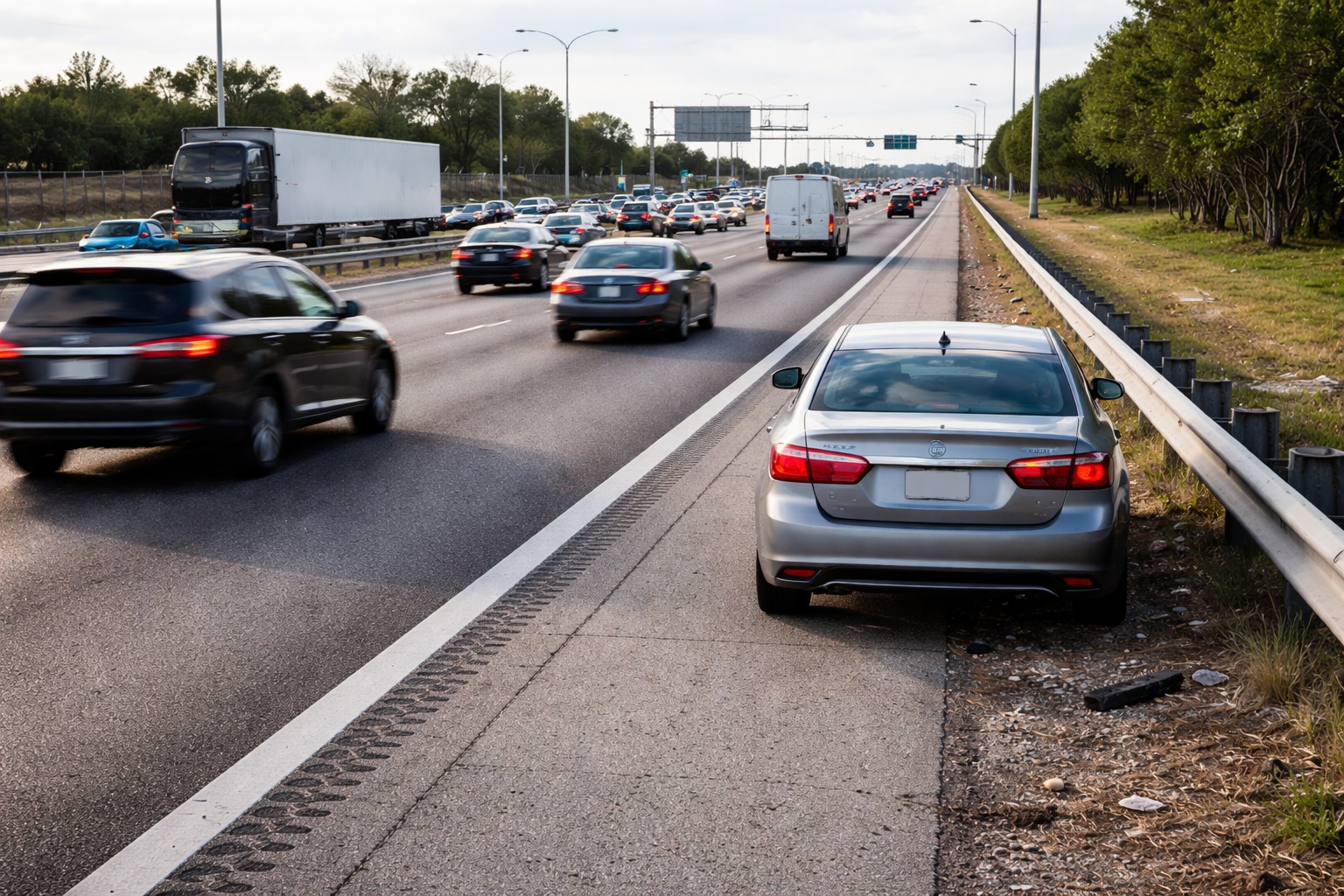
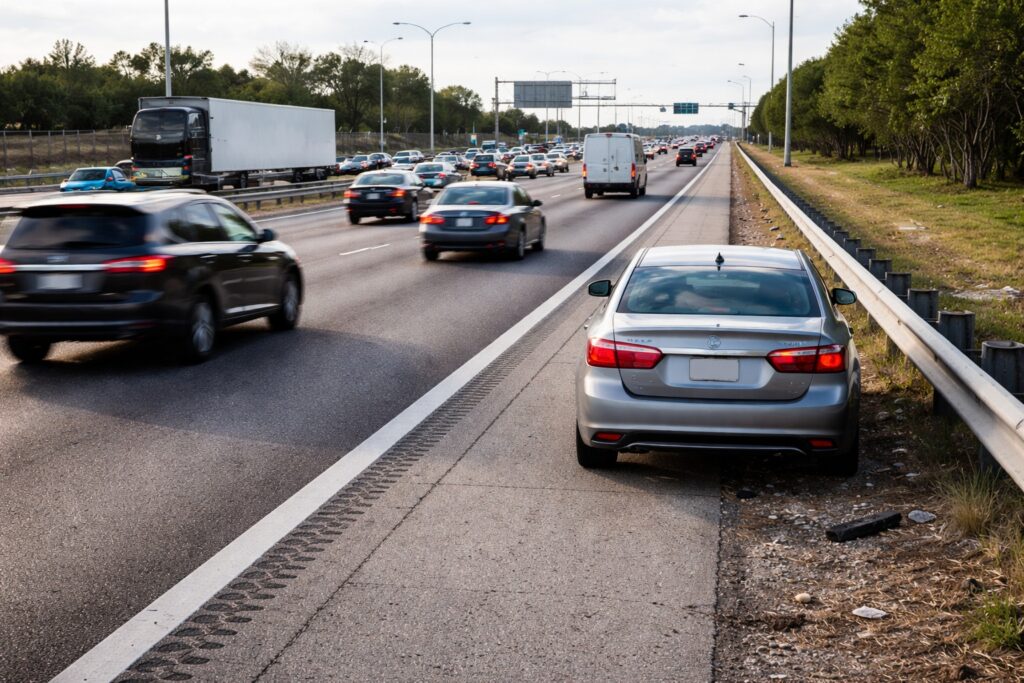
Every day on Florida’s highways, someone is stopped on the shoulder. It might be a state trooper writing a ticket, a tow operator hooking up a disabled car, a road ranger changing a tire, or a stranded driver waiting for help. They are only a few feet from traffic moving at highway speed, and their safety depends on the drivers going past them paying attention and giving them room.
Florida’s Move Over Law exists for exactly this reason. It requires drivers to move over a lane or slow down when they approach a stopped vehicle with its lights flashing. When a driver ignores that duty, the result can be a devastating shoulder crash that strikes a person who has nowhere to go. If you or someone you love was hurt this way, this guide explains how Florida handles a move over law collision.
What Counts as a Move Over Law Collision
A move over law collision is a crash that happens when a driver fails to slow down or move over for a stopped vehicle on the side of the road and strikes it, or the people around it. These crashes are a specific kind of motor vehicle collision, tied directly to a driver’s duty as they pass a vehicle stopped on the shoulder with its warning lights on.
Florida’s Move Over Law originally protected emergency, law enforcement, and utility vehicles, and it has since been expanded to cover any disabled vehicle displaying hazard lights, flares, or other warning signals. The duty is straightforward: on a road with more than one lane in the same direction, a driver must move over a lane when it is safe to do so, and if they cannot, they must slow to a speed well below the posted limit. A collision that happens because a driver did neither is a move over law collision.
Why Move Over Law Collisions Happen in Florida
Florida’s busy highways create constant opportunities for these crashes. You can review the state’s crash trends through the Florida crash and citation data published by the FLHSMV, which tracks reported crashes and the citations issued for violations like failing to move over. The pattern is consistent, and it reflects how much shoulder activity there is on Florida’s interstates and expressways at any given hour.
High-speed roads such as I-95, I-75, the Turnpike, and the busy expressways that cross Broward and Palm Beach County see a steady stream of traffic stops, disabled vehicles, and tow operations. Speeding, distraction, and drivers who simply do not know the Move Over Law drive right past stopped vehicles without slowing. When traffic is heavy and a driver is looking at a phone instead of the shoulder, the few seconds of warning a flashing light provides are lost.
Why Move Over Law Collisions Cause Serious Injuries
Move over law collisions are among the most severe crashes on the road because of who they tend to hurt. The person struck is often standing outside their vehicle, an officer at a driver’s window, a tow operator behind a truck, or a motorist checking a flat tire. A body has no protection against a vehicle traveling at highway speed, so these strikes are frequently catastrophic or fatal.
Even when the impact is vehicle to vehicle, the speed difference between fast-moving traffic and a stopped car concentrates enormous force into the crash. Occupants of the stopped vehicle, who may not even realize a car is bearing down on them, absorb that force with no chance to brace. Traumatic brain injuries, spinal damage, and multiple fractures are common outcomes of a move over law collision.
Proving Fault in a Move Over Law Collision
Fault in a move over law collision often starts with a clear legal standard. Because Florida law requires drivers to move over or slow down for a stopped vehicle with its lights flashing, a driver who fails to do so and causes a crash has violated a specific safety statute. That violation is strong evidence of negligence and gives an injured person a solid starting point.
Building the case still requires proof of what happened. The crash report, the citing officer’s account, dashcam and any patrol vehicle or body camera footage, the position of the vehicles and warning lights, and witness statements all help show that the stopped vehicle was visible and that the approaching driver had time to react. This evidence is often strong in these cases, but it needs to be gathered before it disappears.
How Florida’s No-Fault Rules Apply After a Move Over Law Collision
Florida operates under a no-fault insurance system, so an injured person generally files first with their own personal injury protection, or PIP, coverage. PIP pays up to $10,000 toward medical care, and lost wages if your policy includes wage loss coverage, regardless of fault, and treatment must begin within 14 days of the crash and have emergency medical care or those benefits can be denied. This applies even when the other driver’s failure to move over is obvious.
Because move over law collisions so often cause serious injuries, many victims meet the Florida injury threshold and can step outside the no-fault system to pursue the at-fault driver for the full range of their losses. If that driver lacks adequate insurance, uninsured and underinsured motorist coverage may help. For most crashes on or after March 24, 2023, you have two years from the date of the collision to file a lawsuit.
What to Do After a Move Over Law Collision
If you are involved in a move over law collision, safety comes first, because you are near live traffic. Get yourself and others as far from the travel lanes as possible and call 911 immediately. Because an officer or tow operator is often at the scene, the crash is usually documented thoroughly, but you should still note the flashing lights, the position of the stopped vehicle, and how the approaching driver behaved.
Photograph the scene if you can do so safely, and get the names of witnesses, who saw the crash. Seek medical care right away given the high speeds involved and the 14-day PIP deadline. Avoid discussing fault beyond the facts, and preserve every record of your treatment, expenses, and lost income to support your claim.
What Compensation a Move Over Law Collision Victim Can Recover
Move over law collisions frequently cause serious, life-altering injuries, and Florida law allows recovery for the full scope of those losses. Compensation can include past and future medical bills, rehabilitation, lost income, reduced or lost earning capacity, and pain and suffering. In the most serious cases, including those involving permanent disability or the loss of a family member, the value of a claim reflects the depth of that harm.
The amount depends on the evidence and the severity of the injuries, reduced by any share of fault assigned to you. Our firm handles these cases on a contingency fee of 33 1/3% before a lawsuit is filed and 40% afterward, and you pay no attorney fee unless we recover money for you. Every case is evaluated on its own facts.
How Comparative Negligence Can Reduce a Move Over Law Collision Claim
Even when a driver clearly failed to move over, Florida’s modified comparative negligence rule can come into play. Your compensation is reduced by your percentage of fault, and a person found more than 50% at fault recovers nothing under the state’s 51% bar. Insurers often look for any way to place part of the blame on the injured person.
In a move over law collision, a defense might argue that a stopped vehicle was not far enough onto the shoulder, that its warning lights were not on, or that a person outside the vehicle stepped too close to the travel lane. These arguments are exactly why documenting the flashing lights and the position of the stopped vehicle matters so much. Solid evidence keeps the fault where it belongs, with the driver who did not slow down.
Summary of Move Over Law Collision Claims
A move over law collision comes down to a driver who did not give a stopped vehicle the room the law requires, and Florida provides a path to recovery for the people they hurt. Keep these points in mind.
- Florida’s Move Over Law requires drivers to move over a lane or slow well below the limit for stopped vehicles with warning lights.
- The law now covers any disabled vehicle showing hazard lights, not just emergency and service vehicles.
- These crashes are often severe because they strike people standing outside their vehicles at highway speed.
- Violating the Move Over Law is strong evidence of negligence against the passing driver.
- PIP pays up to $10,000 first, treatment must begin within 14 days, have emergency medical care, and most claims must be filed within two years.
- Florida uses modified comparative negligence with a 51% bar, and attorney fees are contingency based.
Frequently Asked Questions About Move Over Law Collisions
What does Florida’s Move Over Law require?
On a road with more than one lane in the same direction, drivers must move over a lane when approaching a stopped vehicle with its warning lights flashing. If they cannot move over safely, they must slow to a speed well below the posted limit until they have passed.
Who is at fault in a move over law collision?
Usually the driver who failed to move over or slow down for the stopped vehicle, since that duty is set by law. Violating the Move Over Law is strong evidence of negligence, though the case still has to be proven with the crash report and other evidence.
Does the Move Over Law only apply to police and emergency vehicles?
No. Florida expanded the law so it now applies to any disabled vehicle displaying hazard lights, flares, or other warning signals, in addition to law enforcement, emergency, and service vehicles. Drivers must slow down or move over for all of them.
Does PIP cover my injuries after a move over law collision?
Yes. Florida’s no-fault system requires you to file first with your own personal injury protection coverage, which pays up to $10,000 for medical care, and lost wages if your policy includes wage loss coverage, regardless of fault. You must begin treatment within 14 days of the crash and receive emergency medical care for those benefits to apply.
How long do I have to file a claim after a Move Over law collision?
For most negligence claims arising after March 24, 2023, Florida gives you two years from the date of the crash to file a lawsuit. Acting early helps preserve the crash report, camera footage, and witness accounts these cases rely on before they are lost.
Contact a South Florida Move Over Law Collision Lawyer
If a driver who failed to slow down struck you or a loved one on the shoulder, you are likely facing serious injuries and hard questions at the same time. Our attorneys help people throughout Florida, including Broward and Palm Beach County, understand their rights and pursue full recovery after a move over law collision. You can read about our attorneys and how we handle these cases when you are ready to take the next step. Past results do not guarantee a similar outcome, and every case is evaluated on its own facts.
To speak with someone about your case, call our office at 954-525-2345 for a free consultation. Our Fort Lauderdale office is located at 2211 Davie Boulevard, Fort Lauderdale, FL 33312, and we serve injured clients across the state.