Who Is Responsible If I Slip and Fall in a Store in Florida?
A Florida business can be liable if it knew, or should have known, about a dangerous condition and failed to fix it or warn about it. For a transitory substance like a spill, Florida law requires showing the business had actual or constructive knowledge of the hazard. Proving that notice is the heart of a slip-and-fall case.
A slip and fall in a store in Florida can leave you with real injuries and a store that quickly points the blame back at you. These cases are a form of premises liability, and they rise or fall on one question: did the business know, or should it have known, about the hazard that caused your fall. Understanding how that standard works helps you protect your claim from the very first day.
A Store’s Duty of Care to Customers in Florida
When you walk into a grocery store, a pharmacy, or a big-box retailer as a paying customer, Florida law treats you as an invitee. That legal status matters. A business that invites the public onto its property owes invitees the highest duty of care under Florida premises law, which means it must keep the premises reasonably safe and warn about hazards that are not open and obvious. Most questions about a slip and fall in a store in Florida start with whether the store lived up to that duty.
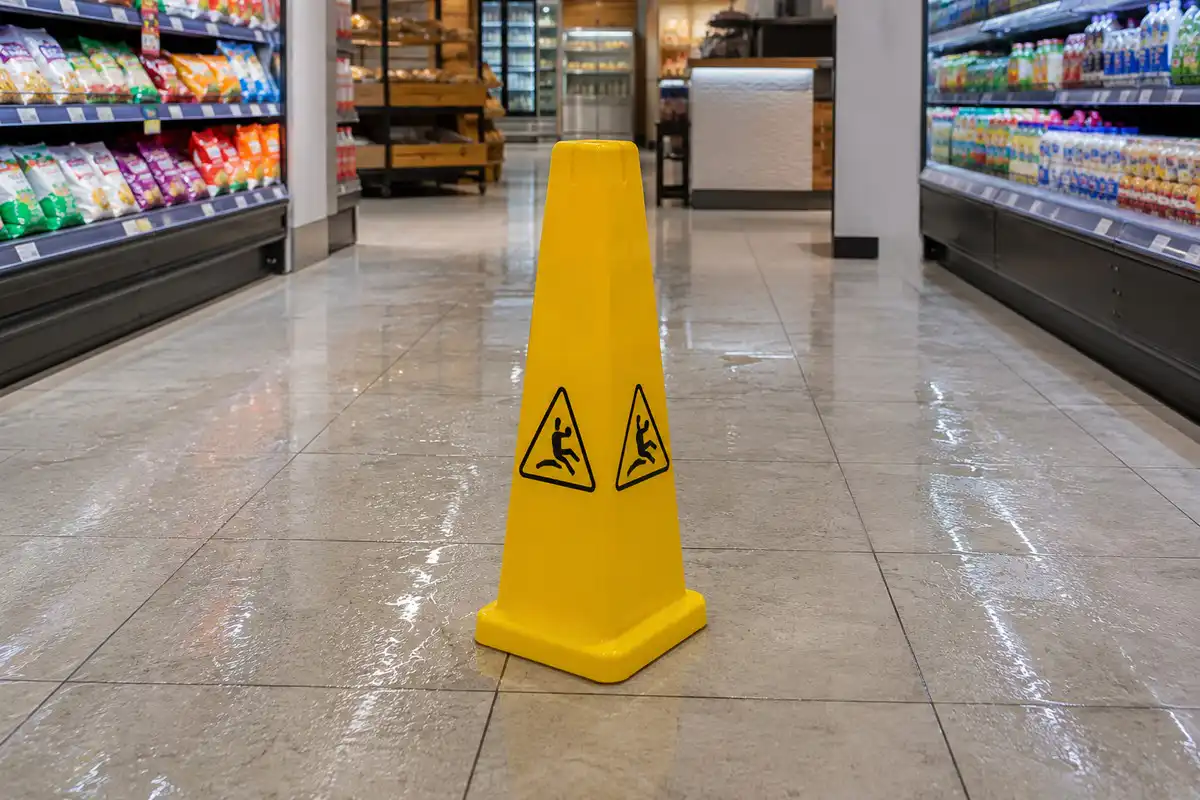
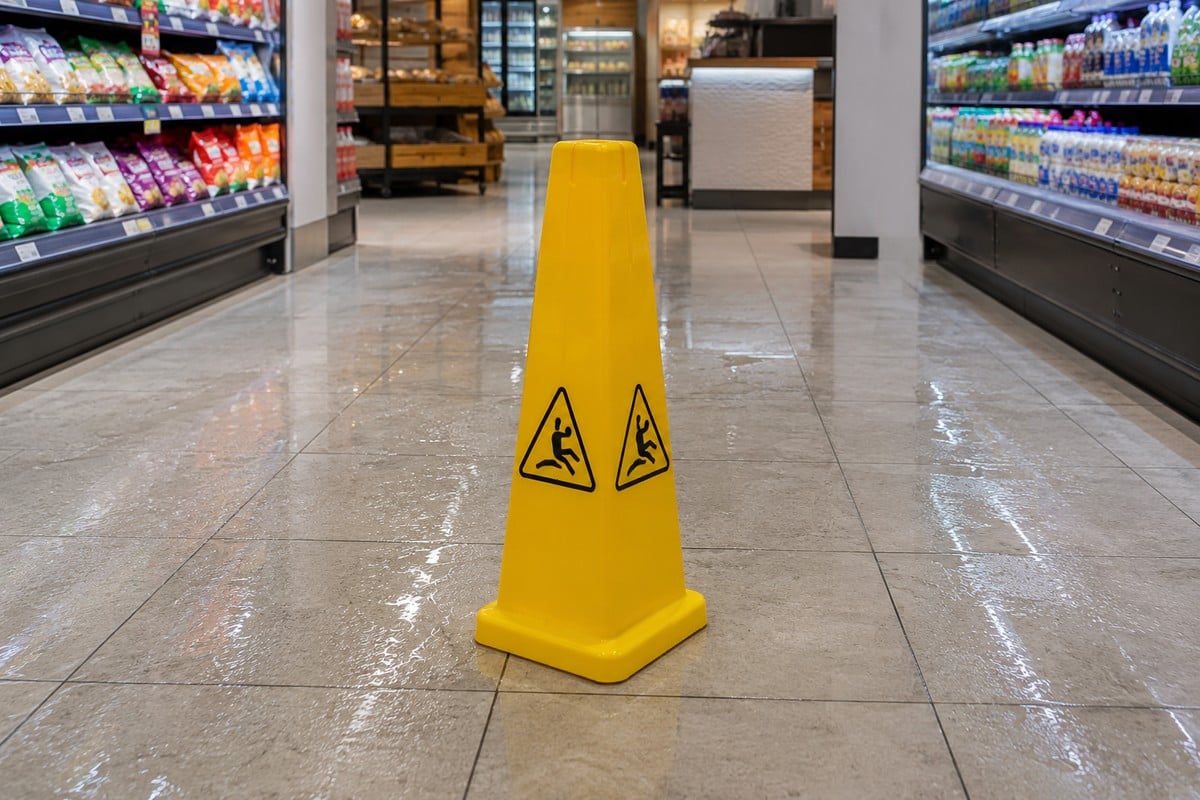
This duty is not a promise that nothing will ever go wrong, and a store is not automatically responsible every time someone falls. What the law requires is reasonable care: routine inspections, prompt cleanup of spills, and clear warnings such as cones or signs when a floor is known to be wet. When a business skips those reasonable steps and a customer gets hurt as a result, that failure is where liability begins to take shape.
What Counts as a Dangerous Condition in a Slip and Fall in a Store in Florida
A dangerous condition is anything on the property that creates an unreasonable risk of harm to a customer using the space in an ordinary way. In a slip and fall in a store in Florida, that often means a wet or slick surface, but it can also mean a torn floor mat, a cracked tile, a poorly lit stairwell, merchandise left sitting in an aisle, or a piece of produce on the ground near the displays.
The condition usually has to be something a customer would not reasonably expect or easily see and avoid. A large, brightly marked display in the middle of an aisle may be considered open and obvious, which can weaken a claim. A clear liquid on a polished floor near the deli, on the other hand, is exactly the kind of hidden hazard these cases are built around, because a shopper focused on the shelves has little chance to spot it in time.
Florida’s Transitory Substance Rule for a Slip and Fall in a Store
Florida has a specific statute for these cases. Under Fla. Stat. 768.0755, when a slip and fall happens because of a transitory foreign substance in a business establishment, the injured person must prove the business had actual or constructive knowledge of the dangerous condition and should have taken action to correct it. A transitory substance is something temporary that does not belong on the floor, such as a spilled drink, tracked-in rainwater, or crushed produce.
Actual knowledge means someone at the store genuinely knew about the hazard, for example an employee who saw the spill or was told about it. Constructive knowledge is the harder and far more common battleground. It means the condition existed long enough that the business should have discovered and addressed it through reasonable care, or that the condition happened so regularly it was foreseeable. Proving that notice is the core of a slip and fall in a store in Florida.
How You Prove a Store Should Have Known About the Hazard
Because constructive knowledge is often the deciding issue, the evidence tends to focus on time and patterns. The statute lets you show constructive knowledge in two ways: that the dangerous condition existed for a length of time long enough that the business should have known about it, or that the condition occurred with regularity and was therefore foreseeable. Many times the evidence is what the store can document about the floor.
Inspection and cleanup logs are central. If a store claims it checks its aisles every thirty minutes but has no record of an inspection for two hours before your fall, that gap helps show the hazard sat there too long. Surveillance video is powerful for the same reason, since it can timestamp when a spill happened and how long it stayed. Footprints or cart tracks through a substance, dried or dirty edges on a puddle, and witnesses who noticed the mess earlier all point to a condition the store had time to catch. A knowledgeable slip and fall attorney moves quickly to preserve that footage before it is recorded over.
Common Store Hazards Behind a Slip and Fall in a Store in Florida
Certain hazards show up again and again across South Florida retailers. Spilled liquids in grocery aisles are the classic example, along with leaked product from a broken jar or bottle. Produce sections carry extra risk because grapes, lettuce, and similar items fall to the floor and get stepped on. Freezer and refrigerator cases can drip or leak melted condensation onto the tile below, creating a slick patch that is very hard to see until you are already on it.
Weather adds another layer in Florida. During the rainy season, water tracked in at entrances and near shopping cart corrals turns smooth flooring into a slip risk, and stores are expected to use mats, signage, and mopping to manage it. Whether your fall happened at a store in Broward County or one farther north in Palm Beach County, the same core question applies: did the business take reasonable steps to find and fix the hazard before you were hurt.
How Comparative Negligence Can Reduce a Slip and Fall Recovery in Florida
Florida uses a modified comparative negligence rule, and it directly affects slip and fall claims. If you are found partly responsible for your own fall, your compensation is reduced by your percentage of fault. If you are found more than 50 percent at fault, you recover nothing at all. Stores and their insurers understand this rule well, so they often argue the customer was the careless one.
Common arguments include that you were looking at your phone, wearing unsafe footwear, walking through an area that was blocked off, or ignoring a visible warning cone. These arguments do not automatically defeat a claim, but they can shrink it, which is why the details of how the fall happened matter so much. Every case is different, and past results do not guarantee a similar outcome, so it helps to have your specific facts reviewed rather than assuming how fault will be divided.
Evidence to Gather After a Slip and Fall in a Store in Florida
What you do in the minutes and days after a fall can shape the entire case. If you are physically able, photograph the exact hazard before anyone cleans it up, including wide shots that show the surrounding area and close shots of the substance itself. Capture whatever caused the fall, the lighting, and any missing or misplaced warning signs. Make a note of the aisle or department and the time it happened.
Report the fall to a manager and ask that an incident report be created, then request a copy or at least the report number. Get the names and phone numbers of any witnesses, since store employees may not stay reachable later on. Keep the shoes and clothing you were wearing, and see a doctor promptly so your injuries are documented and clearly connected to the fall. This record becomes the foundation your claim is built on, and it is difficult to recreate weeks after the fact.
The Deadline to File a Slip and Fall in a Store Claim in Florida
Florida sets a firm time limit on these cases. Slip and fall claims are negligence claims, and for incidents occurring on or after March 24, 2023, the statute of limitations is generally two years from the date of the fall. That is shorter than the four-year window that applied under the old law, so waiting too long can cost you the right to recover anything at all.
A few situations can change the timeline, such as a claim involving a government-owned property, which carries its own notice requirements and deadlines. Because the exact deadline depends on the facts, a reviewing attorney should confirm the specific limitation period that applies to your situation. The safest approach is to speak with a lawyer well before any deadline approaches, while evidence like surveillance video still exists and witnesses are easy to reach.
Summary of Store Slip-and-Fall Liability in Florida
A slip and fall in a store in Florida comes down to notice: a business is liable when it knew or should have known about a hazard, failed to fix it or warn you, and you were injured as a result. The points below capture what these cases usually turn on.
- As a paying customer you are an invitee, and Florida stores owe you a duty of reasonable care.
- For a spill or other transitory substance, Fla. Stat. 768.0755 requires proof the store had actual or constructive knowledge of the hazard.
- Constructive knowledge usually turns on how long the hazard was present or whether it happened regularly, shown through inspection logs, video, and witnesses.
- Under modified comparative negligence, being partly at fault reduces your recovery, and being more than 50 percent at fault bars it entirely.
- Most slip and fall claims must be filed within two years, so acting early protects both your evidence and your rights.
Frequently Asked Questions About Slip-and-Fall Claims in Florida
What do I have to prove in a Florida slip-and-fall case?
You generally have to prove the store had a dangerous condition, that it had actual or constructive knowledge of that condition, that it failed to fix the hazard or warn you about it, and that this failure caused your injuries. For a spill or similar transitory substance, that knowledge requirement comes directly from Fla. Stat. 768.0755.
What is constructive knowledge?
Constructive knowledge means the store should have known about the hazard even if no employee actually saw it. It applies when the dangerous condition existed long enough that reasonable inspections would have caught it, or when the condition happened so regularly that it was foreseeable. Proving it usually depends on timing evidence such as inspection logs and surveillance video.
Is the store automatically liable if I fell?
No. Falling in a store does not by itself make the business responsible. Florida law requires proof that the store knew or should have known about the dangerous condition and failed to act with reasonable care. A store can also argue that the hazard was open and obvious, or that you were partly at fault, both of which affect the outcome.
What if I was partly at fault?
You can still pursue a claim as long as you were not more than 50 percent at fault. Under Florida’s modified comparative negligence rule, your compensation is reduced by your share of fault, and if you are found more than 50 percent responsible you recover nothing. How fault is divided depends heavily on the specific facts of your fall.
How long do I have to file a slip-and-fall claim?
For falls on or after March 24, 2023, the statute of limitations is generally two years from the date of the incident. Certain situations, such as claims against a government property, have different and often shorter deadlines. Because exceptions exist, a reviewing attorney should confirm the deadline that applies to your case.
Contact a South Florida Slip-and-Fall Lawyer
If you were hurt in a fall at a store, moving quickly matters, because the hazard gets cleaned up, inspection records get filed away, and surveillance video is often recorded over within days. The attorneys at our firm handle premises liability and slip and fall claims throughout Florida, including Broward and Palm Beach County, and can review what happened and explain your options. When you are ready, contact our office to have your case looked at. Past results do not guarantee a similar outcome, and every claim is evaluated on its own facts.