Who Is at Fault in a Florida Bicycle Accident?
Fault in a Florida bicycle accident usually falls on whoever failed to use reasonable care, most often a driver who did not yield, pass safely, or watch for a cyclist. Florida treats bicycles as vehicles, so the same right-of-way and negligence rules that govern cars decide who is at fault.
Sorting out who is at fault after a bicycle crash rarely comes down to a single moment. It depends on how each person on the road met the duties Florida places on them, what the physical evidence shows, and how the state’s negligence and no-fault rules apply once the injuries are counted. This page walks through that framework so an injured rider can see where responsibility is likely to land.
What Counts as a Florida Bicycle Accident
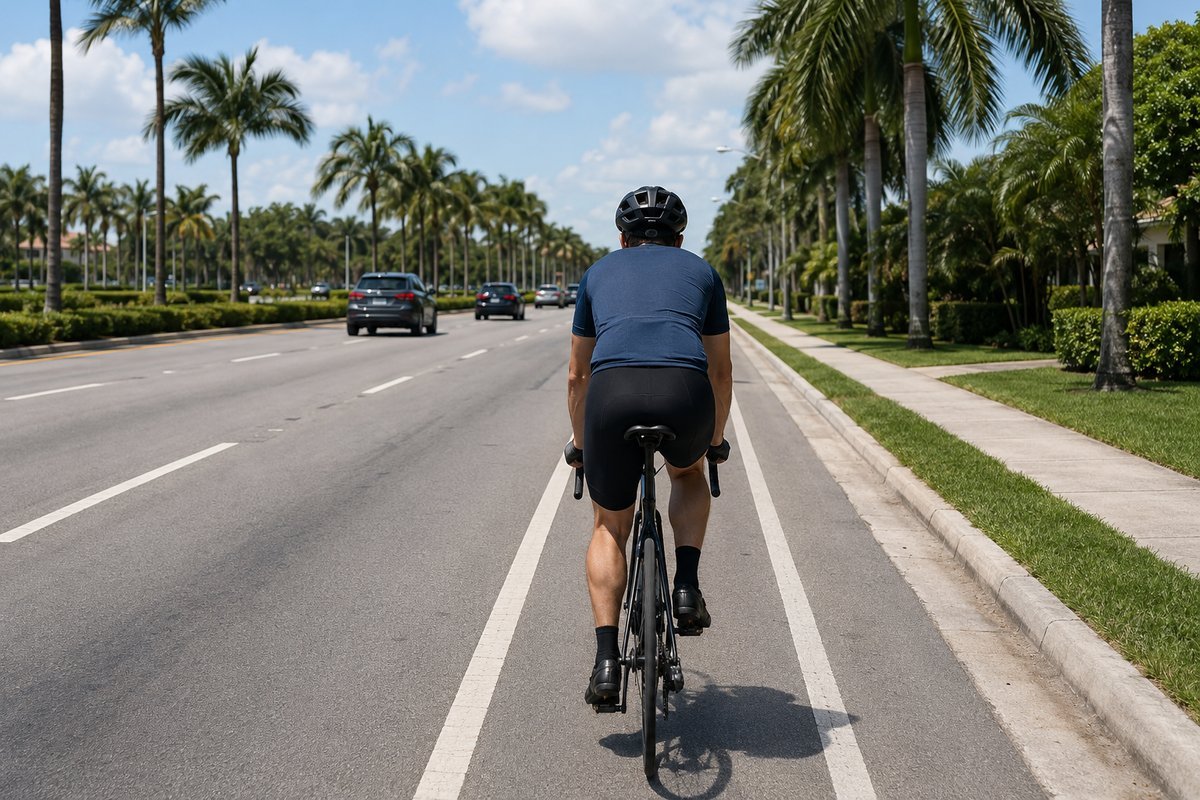
A Florida bicycle accident is any crash on a public road in which a person riding a bicycle is struck by, or collides with, a motor vehicle. That covers intersections, driveways, marked bike lanes, shared travel lanes, and even low-speed contact in a parking lot. These cases sit within the broader family of motor vehicle accident claims, but they stand apart because the rider has no steel cage, airbags, or seatbelt to absorb the impact. A minor error by a driver that would leave two cars with dented bumpers can send a cyclist to the hospital. Because the injuries are usually one-sided, the question of who is at fault carries real weight for the person on the bike, and it is the first thing a claim has to establish.
How Common Are Florida Bicycle Accidents
Florida has ranked among the most dangerous states in the country for people on bicycles for years, and the reasons line up with how the state is built. Warm weather keeps riders on the road in every month, tourist and commuter traffic stays heavy, and many wide arterial roads carry fast-moving cars right beside a narrow painted lane. Dense corridors through Broward County and across Palm Beach County put commuters, rideshare pickups, and delivery stops within a few feet of cyclists all day. The state publishes detailed crash and citation reports that track bicycle involvement year over year, and the numbers stay high rather than spiking and settling. That steady volume is part of why fault disputes in these cases are so common.
Why a Florida Bicycle Accident Happens
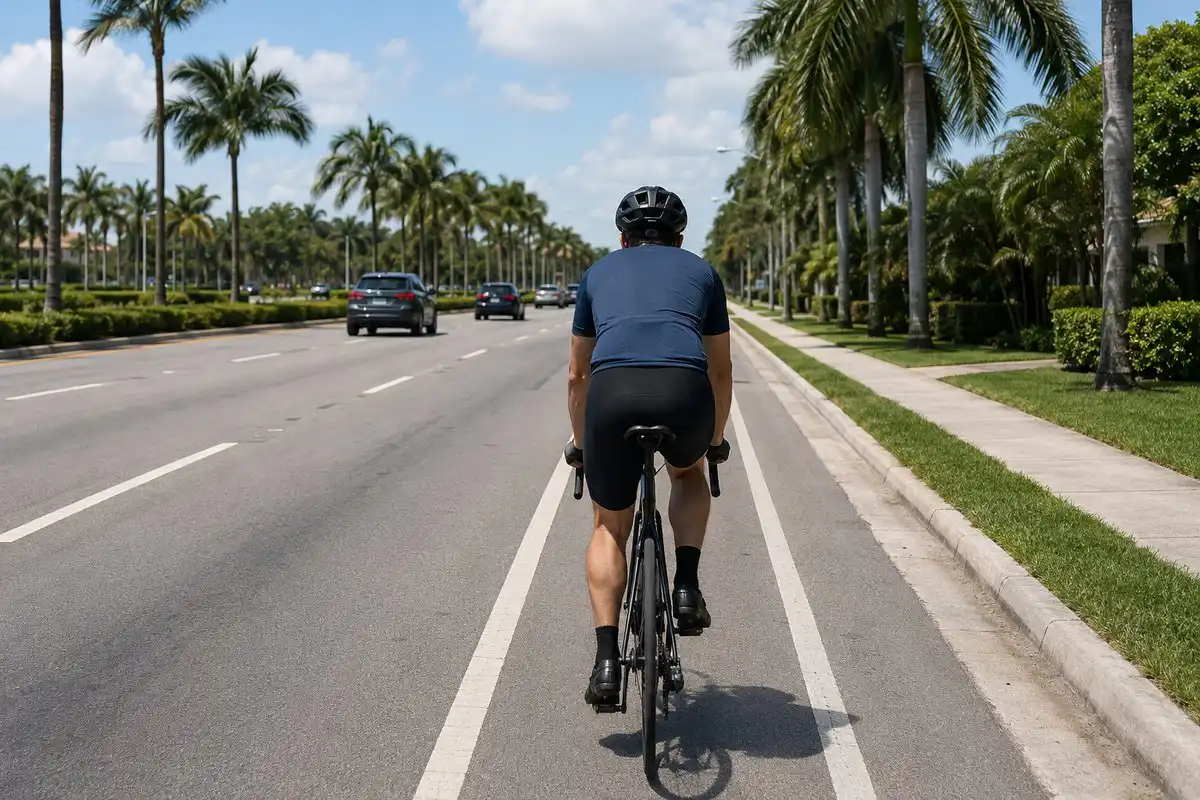
Most of these crashes trace back to a driver who never registered the rider at all. The recurring failures are familiar ones: turning right or left across a cyclist’s path without yielding, passing too close, opening a car door into the lane, drifting while distracted, or rolling through a signal or stop sign. Each of those is a breach of a duty the driver owed, which is exactly why the driver so often ends up at fault. One especially common pattern is a driver who encroaches on a marked bike lane and clips a rider who has nowhere to go. The mechanics of how those lane-encroachment crashes unfold, and how both sides can prevent them, are worth understanding in their own right, but for the purpose of fault the key point is simpler: the driver left the space the law reserved for the cyclist.
Florida Bicycle Accident Law Treats Cyclists as Drivers
The legal spine of any fault analysis is a single idea. Under Florida Statute 316.2065, a person riding a bicycle has all the rights and must follow all the duties of the driver of any other vehicle. A cyclist is not a pedestrian and not an obstacle in the road. That means the ordinary rules of the road decide the case: who had the right of way, who was required to yield, and who moved into space they were not entitled to. It also means drivers owe cyclists concrete, enforceable duties. Florida law requires a driver to leave at least three feet of clearance when passing a bicycle, to yield before turning across a rider’s path, and to treat the rider as traffic rather than something to squeeze past. When a driver breaks one of those rules and a crash follows, that violation is powerful evidence of negligence, the same as it would be if the driver had struck another car.
Who Is at Fault in a Florida Bicycle Accident
Fault in these cases is a negligence question: which person on the road failed to use reasonable care, and did that failure cause the harm. Because Florida follows a modified comparative negligence rule with a 51% bar, the answer does not have to be all or nothing. If a cyclist is found partly responsible, they can still recover, with the award reduced by their percentage of fault, and they are barred from recovering only when their share climbs above 50%. Riders carry duties too, so a rider’s own conduct can shift some blame: riding against traffic, running a red light, or riding at night without the lights the statute requires are all things a defense will raise. Helmet use fits the same pattern. Florida requires a helmet only for riders under 16, so an adult who rides without one has broken no law, and going without a helmet never bars a claim. A defense may still argue that a missing helmet made a head injury worse and try to use that to trim recovery under the same comparative negligence rule, which is one more reason the facts of the crash matter. This is why evidence matters so much to Florida bicycle accident fault. Paint transfer, camera and doorbell footage, the position of the vehicles, the crash report, and independent witnesses often decide how fault is split. Insurers routinely try to pin more of the blame on the cyclist to shrink what they pay, and that framing is worth challenging with facts.
What Typically Happens After a Florida Bicycle Accident
Getting medical care comes first, and Florida’s no-fault insurance system shapes what follows. Personal injury protection can reach an injured cyclist, so a rider often begins treatment under a personal injury protection policy that pays up to $10,000 for medical bills and, if the policy includes wage loss coverage, lost wages, regardless of who caused the crash. That care needs to start within 14 days of the collision for those benefits to apply, which is a deadline many riders do not know about. Because bicycle injuries are frequently serious, many cases meet the injury threshold that lets the claim step outside no-fault and proceed directly against the at-fault driver for the full range of damages. If that driver has no insurance or too little, uninsured and underinsured motorist coverage may fill the gap. One more clock matters: for most crashes on or after March 24, 2023, an injured rider has two years from the date of the collision to file a lawsuit, and waiting makes the evidence that decides fault harder to preserve.
Summary of Florida Bicycle Accident Fault
Fault in a Florida bicycle accident turns on the ordinary rules of the road, because state law treats a cyclist as the driver of a vehicle. The driver who failed to yield, pass safely, or share the lane is usually the one at fault, though a rider’s own conduct can reduce recovery under comparative negligence. Knowing how fault is decided, and how the no-fault and deadline rules work, helps an injured rider protect a claim from the start.
- Florida Statute 316.2065 gives cyclists the same rights and duties as drivers, so right-of-way rules decide fault.
- Drivers must give at least three feet when passing and must yield before turning across a rider’s path.
- Under modified comparative negligence, a partly at-fault rider still recovers unless their share of fault climbs above 50%.
- Personal injury protection can pay an injured cyclist up to $10,000, but treatment must begin within 14 days.
- Not wearing a helmet can reduce a rider’s recovery through comparative negligence, but it does not bar a claim.
- Most crashes on or after March 24, 2023 carry a two-year deadline to file suit, and the evidence that decides fault fades quickly.
FAQs About Florida Bicycle Accident Fault
Are bicycles treated as vehicles under Florida law?
Yes. Florida Statute 316.2065 gives a cyclist the same rights and duties as the driver of any other vehicle. That means the ordinary rules of the road, including right of way and the duty to yield, are what decide who is at fault after a bicycle crash, rather than treating the rider as a pedestrian.
Does a driver have to give space when passing a cyclist in Florida?
Yes. Florida law requires a driver to leave at least three feet of clearance when passing a bicycle. A driver who crowds, clips, or sideswipes a rider while passing has broken that duty, and that violation is strong evidence of negligence when a crash follows so close to the pass.
Can I still recover if I was partly at fault for the bicycle accident?
Often yes. Florida follows a modified comparative negligence rule with a 51% bar, so a rider who is 50% or less at fault still recovers, with the award reduced by their share. Only a rider found more than 50% at fault is barred from recovering anything at all.
Does not wearing a helmet affect my Florida bicycle accident claim?
Florida requires helmets only for riders under 16, so an adult who rides without one has broken no law. Going without a helmet does not bar a claim, but an insurer may argue it made a head injury worse and use that argument to reduce recovery under comparative negligence.
Does no-fault insurance cover an injured cyclist in Florida?
It can. Personal injury protection may pay an injured cyclist up to $10,000 for medical bills and, if the policy includes wage loss coverage, lost wages, regardless of who caused the crash, but treatment must begin within 14 days. When injuries are serious, a rider can step outside no-fault and pursue the at-fault driver directly.
Contact a South Florida Bicycle Accident Lawyer
If a driver left you injured on your bike and their insurer is already trying to pin the blame on you, the team at Lawlor, White & Murphey can help you sort out who is truly at fault and what your claim is worth. We represent injured cyclists throughout Florida, including Broward and Palm Beach County, and we work on a contingency fee, so there is no fee unless we win. You can call our office or visit our Fort Lauderdale location at 2211 Davie Boulevard, Fort Lauderdale, FL 33312. To talk with a member of our team about a Florida bicycle accident, call 954-525-2345 for a free consultation. This article is for general information only and is not legal advice. Every case is different, and past results do not guarantee a similar outcome.