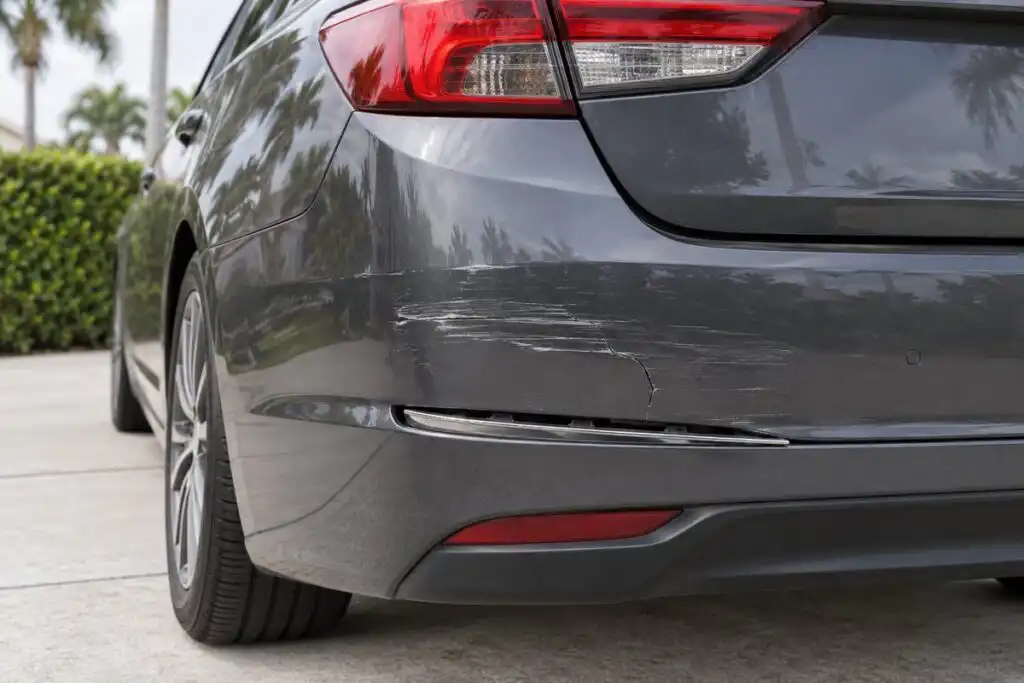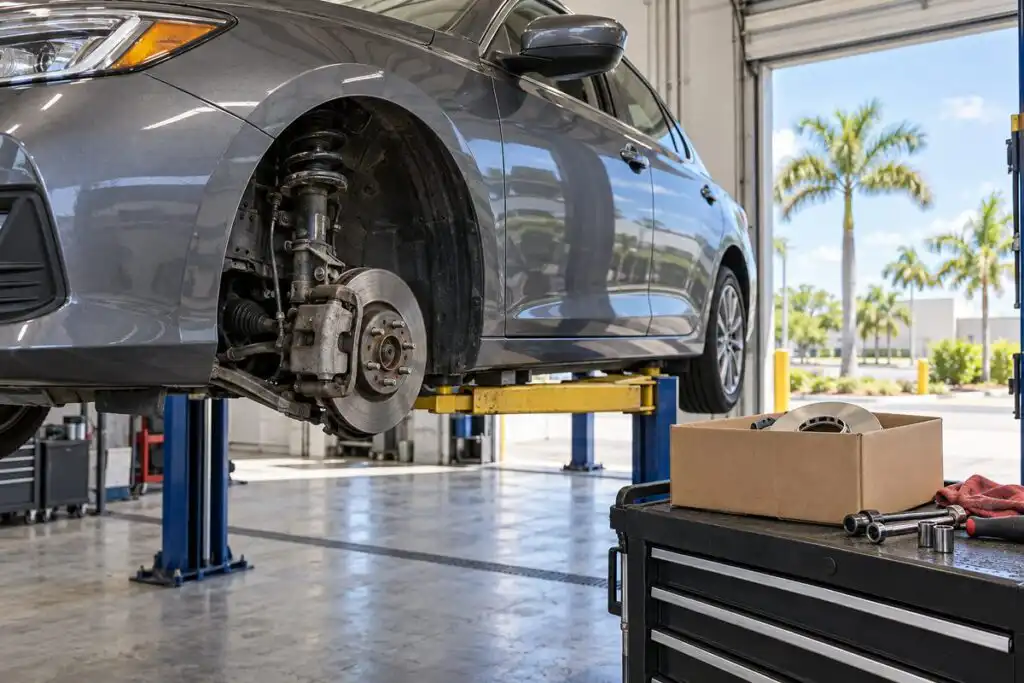
What Should I Do If a Car Defect Caused My Accident in Florida?
If a car defect caused your accident in Florida, get medical care within 14 days to protect your PIP benefits, report the crash, and photograph everything. Then keep the car as it is. Do not repair, sell, scrap, or release it until a lawyer reviews it, because the vehicle and its data are often the key evidence.
A defect is not always obvious at the scene. The crash report may point to driver error, the car may be moved to a tow or salvage yard, and the property damage claim can move quickly. The steps you take in the first days can decide whether anyone is able to show that the car caused the crash, and whether a manufacturer, parts maker, seller, or repair shop may be held responsible.
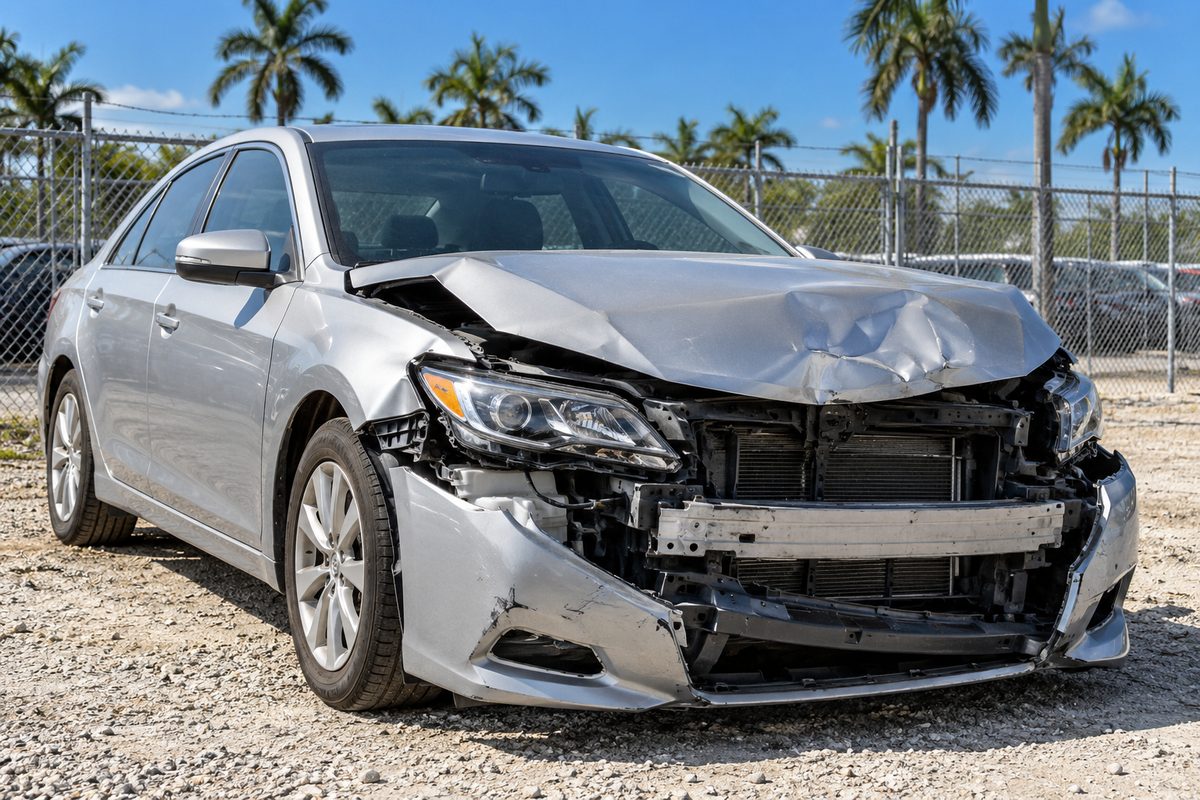
What It Means When a Car Defect Caused Your Accident in Florida
A car defect caused your accident when a flaw in the vehicle or one of its parts, rather than a driver’s choices alone, led to the crash. The flaw may be a design defect shared by every vehicle built the same way, a manufacturing defect in one particular car or part, or a failure to warn about a known danger. Failing brakes, tires, steering, airbags, seatbelts, and a throttle malfunction that sends a car surging forward are all examples.
Not every mechanical failure is a defect. Brakes that wore out because maintenance was skipped, or a part that failed after a poor repair, may point to an owner or a repair shop instead. Claims involving a true defect fall under Florida’s defective products law, and sorting out which kind of failure happened usually takes an inspection by engineers or other qualified professionals.
How Florida Drivers Learn a Car Defect Caused Their Crash
Most drivers do not learn about a defect at the scene. The Florida Department of Highway Safety and Motor Vehicles publishes annual crash and citation reports drawn from officers’ crash reports, and those reports are generally built from what an officer can observe in the moment, such as vehicle positions, road conditions, statements, and citations. A failed part hidden inside a pedal assembly, a brake line, or a control module rarely shows up there.
Instead, the problem often surfaces later. A recall notice may arrive in the mail, a driver may remember that the car pulled, stuck, or flashed a warning light before the crash, or a mechanic may spot a failed part during an inspection. A crash in Broward County or Palm Beach County that first looked like ordinary driver error can look very different once someone examines the car.
Why Acting Quickly Matters When a Car Defect Caused the Crash
The car is usually the most important evidence in a defect claim, and it is also the easiest evidence to lose. Once the car is repaired, sold, scrapped, or released to an insurer or salvage yard, the parts that could show a defect may be gone. The vehicle’s event data recorder, often called the black box, can be lost the same way, and downloading its data takes dedicated equipment.
Timing matters for deadlines too. Florida generally gives you two years from the date of the crash to file a negligence lawsuit against the at-fault party. Product claims against a manufacturer, parts maker, or seller can follow different deadlines, and Florida also has a statute of repose for product claims, so the timing can be complicated and is worth reviewing early with a lawyer.
Steps to Take When a Car Defect Caused Your Accident
The goal in the first days is to protect your health, your insurance benefits, and the evidence at the same time. If you are able, these are the steps that tend to matter most, and a lawyer can take on the ones that involve insurers, tow yards, or the vehicle itself while you focus on getting better:
- Get medical care right away, and within 14 days, so you can use your PIP coverage.
- Call the police so the crash is documented in an official report.
- Photograph the vehicles, the scene, any dashboard warning lights, and the damaged parts.
- Keep the car as it is, and tell your insurer and any tow or salvage yard that you want it preserved.
- Protect the black box data by keeping the car from being repaired, sold, or scrapped.
- Gather your maintenance records, repair invoices, and any recall notices you received.
- Check for open recalls and report the problem to the National Highway Traffic Safety Administration.
- Talk to a lawyer before giving a recorded statement to another driver’s insurer.
A lawyer can send a formal preservation of evidence letter to the parties holding the car and its records, which puts them on notice that the evidence matters. To check for recalls, enter the vehicle’s 17-character VIN in the NHTSA recall lookup. Recall repairs are generally free at an authorized dealer, but if the car is evidence, talk to a lawyer before anyone replaces the part that failed.
How Florida’s 51 Percent Bar Applies When a Car Defect Caused a Crash
Florida’s modified comparative negligence rule applies to defect claims as well as ordinary crash claims. Section 768.81 of the Florida Statutes defines a negligence action to include strict liability and products liability, so a jury can weigh the role of each party, including the manufacturer, any other driver, and you. If you are found more than 50 percent at fault, you cannot recover, and otherwise your award is reduced by your share.
The other side may argue that the crash came from driver error, skipped maintenance, an ignored recall notice or warning light, or a later modification or poor repair rather than a defect. The preserved vehicle, maintenance records, and black box data are how those arguments get tested, and in a crash involving another car, that driver may still share responsibility, just as in any other motor vehicle accident.
What Typically Happens After a Car Defect Caused a Crash
Florida operates under a no-fault insurance system, so your own PIP coverage, through your own car insurance, pays first regardless of fault. PIP pays 80% of reasonable medical expenses, and up to the $10,000 limit for medical care and, if your policy includes it, wage loss coverage. To seek pain and suffering from an at-fault driver, you generally must meet Florida’s injury threshold, which means a significant and permanent loss of an important bodily function, a permanent injury within a reasonable degree of medical probability, or significant and permanent scarring or disfigurement.
From there, engineers may inspect the car and download its data, and the claim may involve the manufacturer, a parts maker, a seller, a repair shop, or another driver’s insurer. Once the evidence is gathered, a settlement package is typically prepared and negotiations begin, with a lawsuit filed if needed. Product cases can take longer than ordinary crash claims. Our firm generally handles these cases on a contingency fee of 33 1/3 percent before a lawsuit is filed and 40 percent after, subject to a sliding scale for larger recoveries, and there is no fee unless there is a recovery.
Summary of What to Do When a Car Defect Caused Your Accident
When a car defect caused your accident, the most useful things you can do are protect your health, protect your PIP benefits, and keep the vehicle and its data from disappearing before anyone can examine them. The essential points to remember are:
- Get medical care within 14 days so you can use your PIP coverage.
- Do not repair, sell, scrap, or release the car without advice, and ask that it be preserved.
- The black box data can be lost if the car is repaired, sold, or scrapped.
- Keep maintenance records and check for open recalls with the 17-character VIN.
- Florida’s 51% bar applies to product claims, so your share of fault can reduce your recovery.
- Negligence claims generally must be filed within two years against the at-fault party, and product claims can follow different deadlines.
FAQs About What to Do When a Car Defect Caused Your Accident
Should I let a dealer do the recall repair after my crash?
Recall repairs are generally free, but the repair may replace the very part that failed. If the car may be evidence in a claim, talk to a lawyer first so the vehicle can be inspected and documented before anything is changed or thrown away.
What if my insurer wants to total the car and take it?
Tell your insurer that you want the vehicle preserved and access for inspection, and ask where it will be stored. A lawyer can contact the insurer and any salvage yard to request that the car and its data be kept intact until it can be properly inspected.
Does the car’s black box data really matter?
It can. Most newer vehicles carry an event data recorder that typically captures a few seconds of pre-crash data, such as speed, accelerator and brake use, and seatbelt status. That data can support or contradict what the drivers remember, but it can be lost if the car is repaired, sold, or scrapped.
Should I report a car defect to NHTSA?
You can. Owners can report safety problems to the National Highway Traffic Safety Administration, and it is also worth checking for open recalls with your 17-character VIN. A report to NHTSA does not replace an injury claim, so keep a copy of anything you submit.
How long do I have to act after a car defect caused my crash?
Florida generally gives you two years from the date of the crash to file a negligence lawsuit against the at-fault party. Claims against a manufacturer, parts maker, or seller can follow different deadlines, and Florida also has a statute of repose, so the timing is worth reviewing early. To use PIP, seek medical care within 14 days.
Contact a South Florida Car Accident Lawyer
If you believe a car defect caused your crash, the team at Lawlor, White & Murphey can help you protect the evidence and sort out who may be responsible. We represent injured people throughout Florida, including Broward and Palm Beach County, and you can call our office to talk through what happened. You can read about our firm and the attorneys who handle these claims. Our office is located at 2211 Davie Boulevard, Fort Lauderdale, FL 33312, and you can reach us at 954-525-2345.
This article is for general information only and is not legal advice. Every case is different, and past results do not guarantee a similar outcome.