
Engine Failure Traffic Collisions: How Sudden Power Loss Creates Hazardous Roadway Conditions
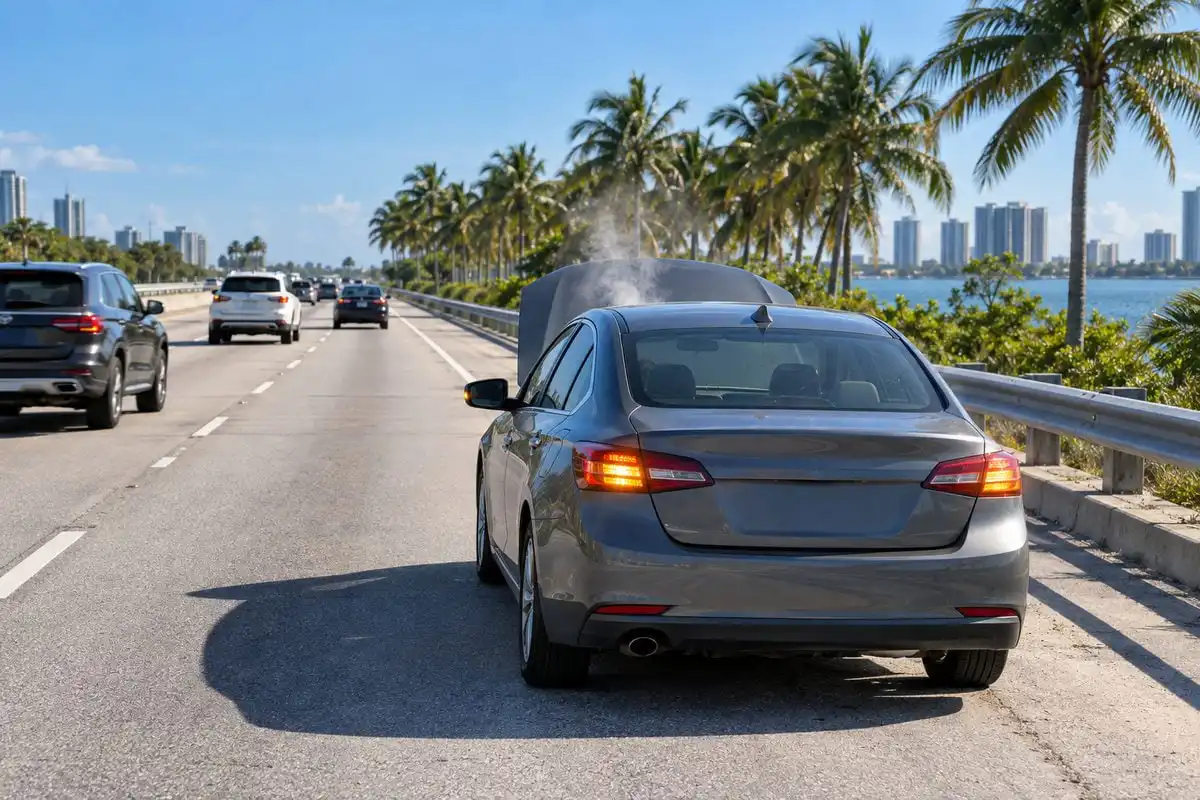
A driver merging onto I-95 near Fort Lauderdale feels the car shudder, sees a warning light flash and hears the engine go quiet. It is the start of an engine failure. The steering wheel suddenly feels heavy, the brake pedal grows harder to press, and the car keeps losing speed in a lane where everyone else is still moving at highway pace.
A car that suddenly loses power can become an obstacle in a travel lane, on a narrow shoulder or in an intersection, and the drivers behind it may have only seconds to react. Knowing why these crashes happen and who may be responsible can help anyone hurt in one protect their options.
What Counts as an Engine Failure Collision
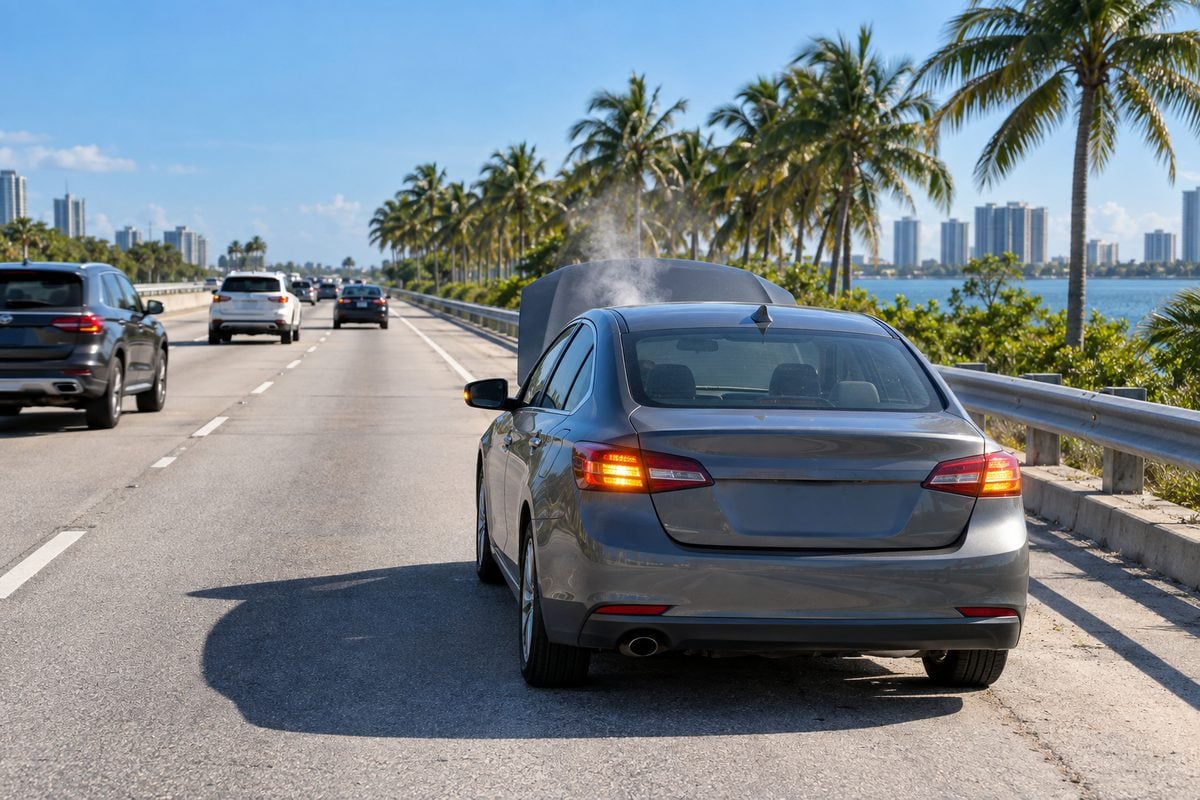
An engine failure collision is a crash in which a vehicle’s engine stops producing power, or loses so much power that the car cannot keep pace with traffic, and that loss of power leads to or contributes to the impact. The car may be struck from behind as it slows or while stranded in a lane, or its driver may hit something while fighting heavier steering.
Why the engine failed, and how everyone on the road responded, shapes any claim. A stall caused by a defective part raises different questions than a failure that followed weeks of ignored warning lights, and like any motor vehicle accident, these crashes are sorted out through the facts and the duties each driver owed.
Why Engine Failure Collisions Happen in Florida
A failing fuel pump can starve an engine of fuel, an alternator or battery problem can shut down the electrical systems it needs, and an engine that overheats, often because of low coolant or a failing cooling part, can lose power or shut down. A broken timing belt can stop an engine from running. Some failures give warning signs, while others trace back to a defective part or a poor repair.
Florida heat adds strain, since high temperatures can hinder a battery’s ability to hold a charge and make cooling systems work harder. The Florida Department of Highway Safety and Motor Vehicles publishes statewide crash and citation reports, and on highways through Broward County and Palm Beach County, a stall in heavy traffic can set off a chain of collisions within seconds.
Why Engine Failure Collisions Cause Serious Injuries
The danger comes from the sudden gap in speed. A car that loses power at highway speed quickly becomes far slower than the traffic around it, and drivers approaching from behind may not notice until they are very close. Even a car that reaches the shoulder can remain in danger, which is why highway shoulder breakdowns can lead to collisions of their own.
Losing the engine can also make the car harder to control. In many vehicles the power steering and brake assist depend on the running engine, so the wheel can feel heavier right away and the brake assist may last for only a limited number of presses. Rear impacts at a large speed difference can cause whiplash, neck and back injuries, concussions and broken bones.
Proving Fault in an Engine Failure Collision
Fault in an engine failure collision depends on the facts. Under section 316.0895 of the Florida Statutes, a driver may not follow another vehicle more closely than is reasonable and prudent, so a following driver who was too close may bear responsibility. A driver who kept going on a car that was clearly failing, or who stopped in a travel lane when a safer spot was reachable, may share fault.
Beyond the drivers, an owner who skipped needed maintenance or a shop that did poor repair work may be responsible, and when a defective component caused the failure, the manufacturer or parts maker may face defective product claims based on a design defect, a manufacturing defect, a failure to warn, negligence or breach of warranty. Those claims can follow different deadlines, and Florida also has a statute of repose for product claims, so the timing is worth reviewing early.
Evidence often decides these questions, including the crash report, photographs, witness statements, dashcam footage, maintenance records and the vehicle itself. The engine and its failed parts may need to be examined by engineers, so it matters to preserve the car before anything is repaired or scrapped.
How Florida’s No-Fault Rules Apply After an Engine Failure Collision
Florida operates under a no-fault insurance system, so your own Personal Injury Protection coverage generally pays first, regardless of who caused the crash. PIP generally pays 80 percent of reasonable medical expenses, and the $10,000 is one combined limit that also covers lost wages if your policy includes wage loss coverage. Initial treatment within 14 days is generally required to use it.
To pursue the at-fault driver for pain and suffering, your injury generally must meet Florida’s injury threshold: a significant and permanent loss of an important bodily function, a permanent injury within a reasonable degree of medical probability, or significant and permanent scarring or disfigurement. Coverage questions often follow, because car insurance can treat the crash differently from the mechanical failure that caused it.
What to Do After an Engine Failure Collision
If your engine fails while you are driving, turning on your hazard lights, easing toward the shoulder if you can do so safely and calling for help can reduce the danger. After a crash, call the police so a report is made, photograph the vehicles, the scene and any dashboard warning lights if it is safe, and get medical care promptly to stay within PIP’s 14-day window.
Do not repair, sell, scrap or release the car before it can be inspected, and tell your insurer and the tow or storage yard that you want it preserved. Keep your maintenance records, check for open recalls through the National Highway Traffic Safety Administration’s recall lookup using the 17-character VIN, and talk with a lawyer before giving a recorded statement to another driver’s insurer.
What Compensation an Engine Failure Collision Victim Can Recover
When a claim moves beyond PIP, recoverable losses may include past and future medical expenses, lost income and earning capacity, rehabilitation costs and damage to your vehicle. For injuries that meet the injury threshold, compensation for pain, suffering and diminished quality of life may also be available from the at-fault driver, and a product claim may add another source of recovery when a defect played a role.
The value of any claim depends on the severity of the injuries, the strength of the evidence and how well the losses are documented. Claims are often presented through a settlement package that gathers the medical records, bills and proof of lost income. Uninsured and underinsured motorist coverage can help when the at-fault driver has no bodily injury coverage or too little.
How Comparative Negligence Can Reduce an Engine Failure Collision Claim
Florida follows a modified comparative negligence rule. If you are found more than 50 percent at fault, you cannot recover damages, and otherwise your award is reduced by your share of fault. Florida’s comparative fault statute expressly includes strict liability and products liability actions, so the rule can apply to claims against a manufacturer as well as a driver.
In engine failure cases, the other side may argue that the driver ignored warning lights, skipped maintenance, kept driving on an engine that was running hot or stopped in a lane when the shoulder was reachable. Maintenance records, photographs, vehicle data and witness accounts often answer those arguments and can help limit your share of fault.
Summary of Engine Failure Collision Claims
Engine failure collisions happen when a car loses power in traffic and the drivers around it cannot react in time. Here are the key points to remember:
- Fuel pump and electrical failures, overheating and broken timing belts can strand a car in traffic.
- Losing the engine can make steering heavier and braking harder.
- Fault may rest with a following driver, the failing car’s driver, an owner, a shop or a manufacturer.
- Your own PIP coverage generally pays first, and initial treatment within 14 days is generally required.
- Preserving the car and its failed parts can be key to proving what happened.
- Florida generally gives you two years from the date of the crash to file a negligence lawsuit against the at-fault party.
Frequently Asked Questions About Engine Failure Collisions
Who is at fault if my engine stalls in traffic and another car hits me?
It depends on the facts. A following driver who was too close or inattentive may be responsible, while the other side may argue that you ignored warning signs or stopped when a safer spot was reachable.
Can I bring a claim against the manufacturer if a defect caused my engine to fail?
It may be possible. Product claims can rest on a design defect, a manufacturing defect, a failure to warn, negligence or breach of warranty, and proof usually requires engineers to examine the preserved vehicle.
Does my PIP coverage apply if my own car’s engine failed?
Generally, yes. Your own PIP pays regardless of fault, covering 80 percent of reasonable medical expenses within the $10,000 combined limit, which also covers lost wages if your policy includes wage loss coverage.
What should I do with my car after an engine failure collision?
Keep it as it is until it can be inspected. Do not repair, sell or scrap it, and tell your insurer and the tow or storage yard that you want it preserved.
How long do I have to file a claim after an engine failure collision in Florida?
Florida generally gives you two years from the date of the crash to file a negligence lawsuit against the at-fault party. Claims against a manufacturer or parts maker can follow different deadlines, and Florida also has a statute of repose for product claims, so the timing is worth reviewing early.
Contact a South Florida Engine Failure Collision Lawyer
If you were hurt in a crash involving a car that lost power, the team at Lawlor, White & Murphey can review what happened and explain your options. We represent injured people throughout Florida, including Broward and Palm Beach County. You can reach our office at 954-525-2345 or through our online contact form. Our office is located at 2211 Davie Boulevard, Fort Lauderdale, FL 33312.
This article is for general information only and is not legal advice. Every case is different, and past results do not guarantee a similar outcome.