
Rear-End Stoplight Collisions: Why Delayed Driver Reaction Causes Preventable Impacts
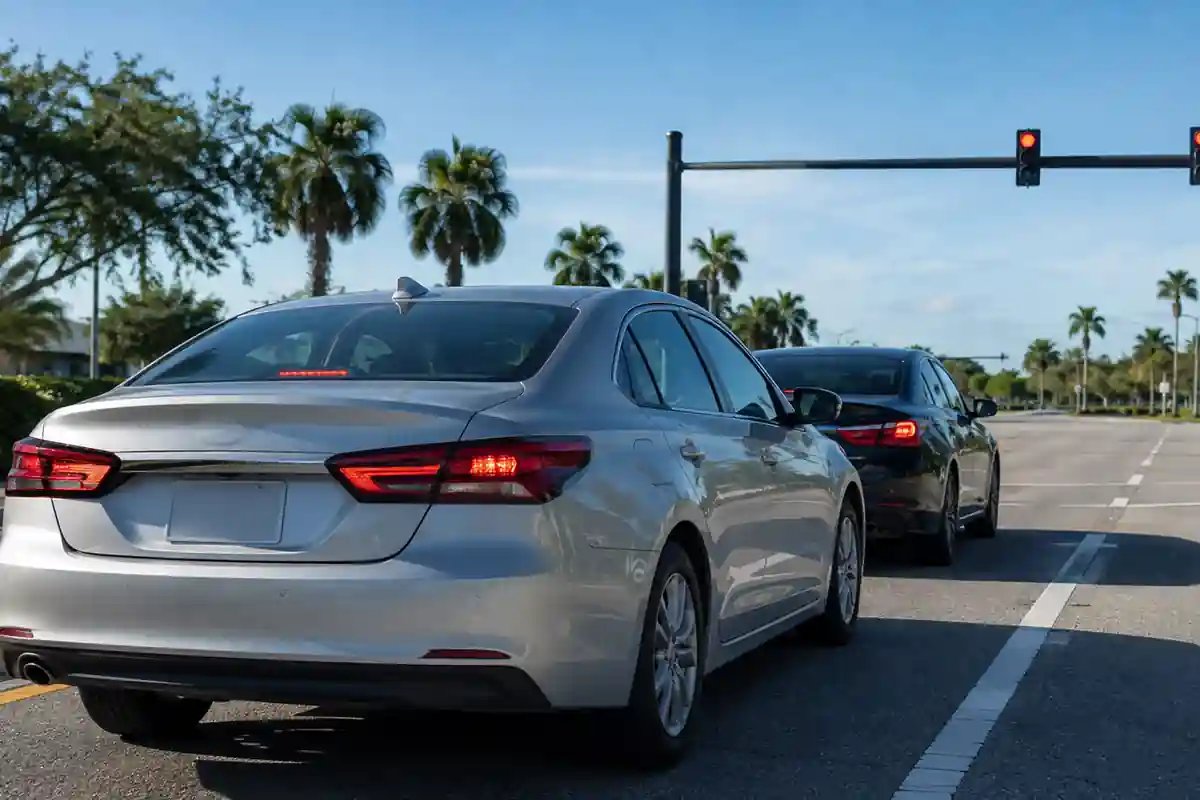
Few crashes feel as avoidable as the one that happens while everyone is sitting still at a red light. Traffic is stopped, the intersection is calm, and then a driver who looked away for a second or misjudged the gap drives into the back of the car ahead. A rear-end stoplight collision rarely happens at highway speed, yet the sudden jolt is more than enough to injure the neck, back, and spine of the person who never saw it coming.
These crashes happen every day on Florida roads, and the driver who was stopped almost never did anything wrong. This article looks at how rear-end stoplight collisions happen, how Florida law assigns fault, and what an injured driver can do to protect a claim after the impact.
What Counts as a Rear-End Stoplight Collision
A rear-end stoplight collision is a crash in which one vehicle strikes the back of another that is stopped or slowing for a red light or a light that has just changed. It covers the classic case of a distracted driver rolling into a stopped car, but it also includes chain-reaction crashes where one impact pushes a vehicle into the one ahead of it. Because these crashes are treated as motor vehicle accidents under Florida law, the same insurance rules, duties, and deadlines that govern any car crash apply here.
The common thread is that the lead vehicle was doing exactly what the law requires, coming to a stop for the signal, when it was hit from behind. That fact shapes everything that follows in the claim.
Why Rear-End Stoplight Collisions Happen in Florida
The overwhelming cause is a driver who is not paying attention in the seconds before a light. Texting, glancing at a phone, adjusting the radio, or simply following too closely leaves no time to react when traffic stops ahead. Drivers also misjudge a stale green light, expecting the car in front to accelerate through when it stops for a yellow instead. The same inattention behind these crashes also causes side-impact crashes at intersections. Statewide figures from the Florida Department of Highway Safety and Motor Vehicles show how often these crashes happen on Florida roads.
South Florida traffic makes all of this worse. Heavy congestion on wide arterial roads, frequent signalized intersections, and stop-and-go conditions mean drivers are constantly braking, and a moment of inattention turns into contact. You can review how often these crashes occur on the crash and citation data published by the Florida Department of Highway Safety and Motor Vehicles.
Why Rear-End Stoplight Collisions Cause Serious Injuries
People assume a low-speed crash cannot do much harm, but the human neck and spine tell a different story. A sudden rear impact snaps the head backward and then forward, straining the soft tissue of the neck in the classic whiplash pattern. Even a crash at fifteen or twenty miles per hour can cause herniated discs, shoulder injuries, and concussions that take months to resolve.
Because the stopped driver is relaxed and unaware, the body has no chance to brace, which often makes the injury worse than the modest vehicle damage would suggest. That mismatch between minor bumper damage and real, lasting pain is one reason insurers push back so hard on these claims.
Proving Fault in a Rear-End Stoplight Collision
Florida law gives the injured driver a strong starting point. A driver who rear-ends a stopped vehicle is presumed negligent, because the law expects every driver to leave enough following distance to stop safely. That presumption is not automatic proof, but it puts the burden on the rear driver to explain why they were not at fault.
Solid evidence still matters. The crash report, photographs of both vehicles, statements from any witnesses, and nearby traffic or business camera footage all help confirm what happened. Drivers across Broward County and up through Palm Beach County run into insurers who try to blame the lead driver for stopping short, so preserving that evidence early protects the value of the claim.
How Florida’s No-Fault Rules Apply After a Rear-End Stoplight Collision
Florida is a no-fault state, so your own Personal Injury Protection coverage pays first regardless of who caused the crash. PIP covers eighty percent of your reasonable medical bills up to the ten thousand dollar limit, but only if you get initial treatment within fourteen days of the collision. The full ten thousand dollars is available only if a medical provider determines you had an emergency medical condition. Without that determination, PIP medical benefits are generally capped at 2,500 dollars. Missing that window can cost you the benefit entirely.
PIP is only the first layer. When injuries are serious and permanent enough to cross Florida’s injury threshold, you can step outside the no-fault system and pursue the at-fault driver directly. Understanding how Florida’s no-fault insurance system works helps you see why prompt treatment matters so much.
What to Do After a Rear-End Stoplight Collision
Start by calling the police and reporting the crash, even when the damage looks minor, because the official report documents the sequence of events. Photograph both vehicles, the intersection, and the position of the cars before anyone moves them. Get contact information for the other driver and any witnesses.
Then see a doctor within a few days, whether or not you feel hurt, since neck and back injuries often surface later. Avoid giving a recorded statement to the other driver’s insurer before you understand your rights, and keep every bill and record connected to the crash. These simple steps preserve both your health and your claim.
What Compensation a Rear-End Collision Victim Can Recover
An injured driver can seek payment for medical treatment, both the care already received and what the injury will require going forward. Lost wages from missed work, and reduced earning capacity when the injury lingers, are also recoverable. When the case moves outside no-fault, compensation can include pain and suffering for the physical and emotional toll of the crash.
The value of any claim depends on the severity of the injury, the treatment involved, and how the crash has affected daily life, so no two cases are alike. Past results do not guarantee a similar outcome.
How Comparative Negligence Can Reduce a Rear-End Claim
Florida uses a modified comparative negligence rule, which means fault is divided by percentage when more than one driver contributed to a crash. Your recovery is reduced by your share of the blame, and if you are found more than fifty percent at fault, you cannot recover from the other party at all.
In a rear-end stoplight collision the lead driver is rarely blamed, but insurers sometimes argue that a sudden stop or a broken brake light shifted part of the fault. Countering that argument with clear evidence is often what keeps a claim from being cut down.
Summary of Rear-End Stoplight Collision Claims
Rear-end crashes at a light are common, and the stopped driver almost always has the stronger position. Here are the key points to keep in mind.
- A driver who rear-ends a stopped vehicle is presumed negligent under Florida law.
- Low-speed rear impacts still cause real whiplash, disc, and spine injuries.
- Your own PIP pays the first ten thousand dollars in medical bills, but you must treat within fourteen days.
- Serious, permanent injuries let you step outside no-fault and pursue the at-fault driver.
- Comparative negligence can reduce your recovery, so early evidence matters.
- You generally have two years from the crash to file a lawsuit.
Frequently Asked Questions About Rear-End Stoplight Collisions
Is the driver who rear-ends me always at fault in Florida?
Usually, yes. Florida law presumes that a driver who rear-ends a stopped vehicle was negligent for following too closely or not paying attention. That presumption can be rebutted in unusual cases, but it gives the driver who was hit a strong starting position.
Can I recover if my injuries did not appear until days after the crash?
Yes. Neck and back injuries from rear-end crashes often show up a day or two later. This is one reason to see a doctor within fourteen days of the crash, both to protect your health and to keep your Personal Injury Protection benefits intact.
What if the other driver says I stopped too suddenly?
Insurers often raise that argument to shift blame, but drivers are required to leave enough room to stop for the traffic ahead. Photographs, the crash report, and witness statements usually show that the stop was ordinary and the following driver was too close.
How long do I have to file a claim after a rear-end collision?
For most crash claims arising after March 24, 2023, Florida gives you two years from the date of the collision to file a lawsuit. Waiting too long can end your right to recover, so it is wise to speak with a lawyer well before the deadline.
Do I have to use my own insurance if the other driver caused the crash?
In Florida your own PIP pays your first medical bills no matter who was at fault. If your injuries are serious, you can then pursue the at-fault driver for the losses PIP does not cover, including pain and suffering.
Contact a South Florida Rear-End Accident Lawyer
If you were stopped at a light and hit from behind, you should not let an insurance company decide on its own that the crash was partly your fault. The attorneys at Lawlor, White and Murphey have spent decades helping injured drivers hold careless drivers accountable, and you are welcome to learn about our firm before you decide anything. Our Fort Lauderdale office is located at 2211 Davie Boulevard, Fort Lauderdale, FL 33312, and we help injured people throughout Florida, including Broward and Palm Beach County.
Consultations are free, and we handle these cases on a contingency basis, which means no fee unless there is a recovery. If the bills are piling up and the adjuster keeps calling, call our office at 954-525-2345 and let us take that pressure off your shoulders.
This article is for general information only and is not legal advice. Every case is different, and past results do not guarantee a similar outcome.