
Sun Glare Collisions: Why Florida’s Low Sun Causes Preventable Crashes
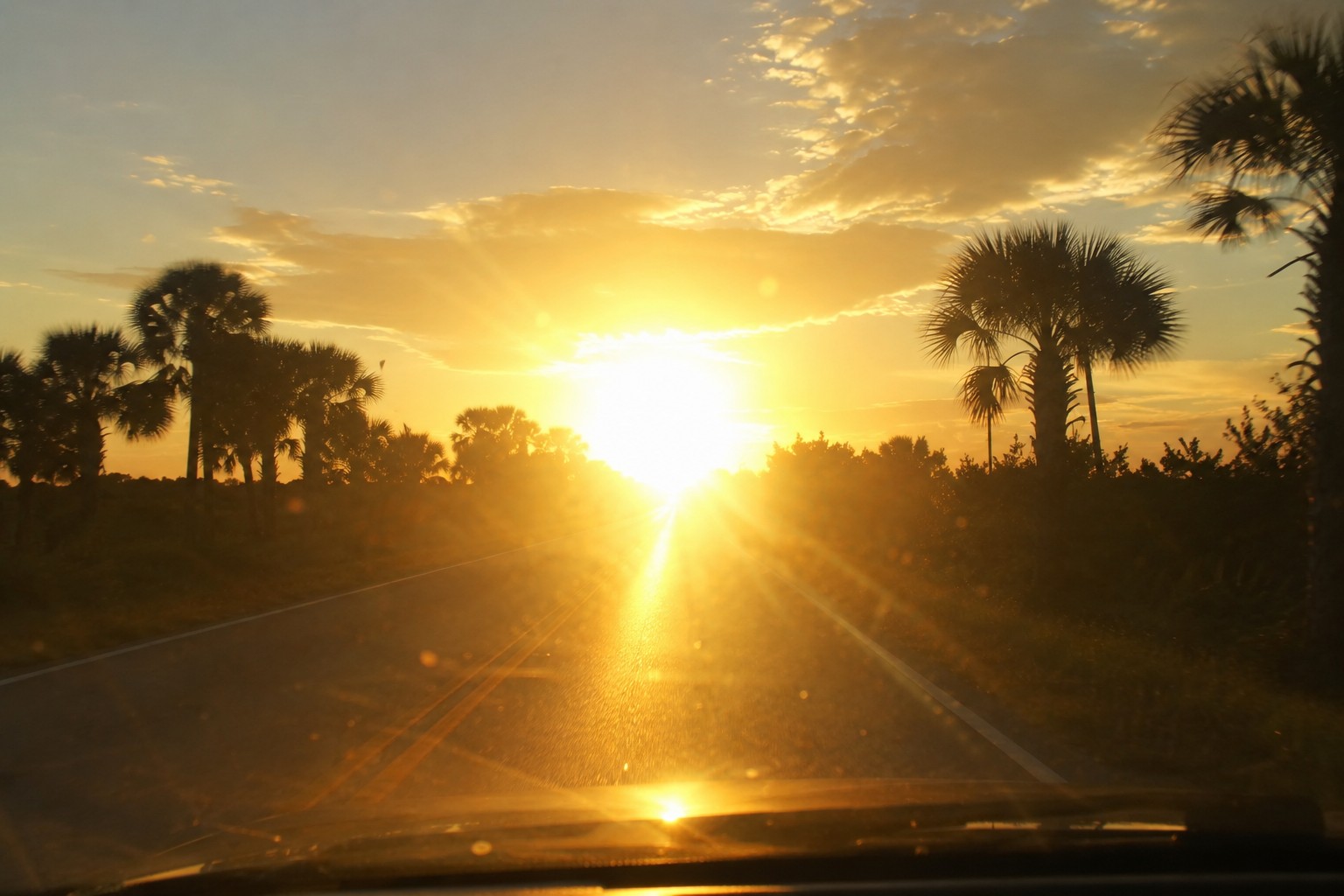
Anyone who has driven east on a Florida road just after sunrise knows the feeling. The sun sits low and blinding on the horizon, the visor does nothing, and for a few seconds the road ahead simply disappears into white light. Most drivers slow down and squint through it. The ones who do not are how sun glare collisions happen.
These crashes rarely make headlines, but they are common on Florida’s flat, straight roads at the start and end of the day. A driver blinded by low sun misses a stopped car, a red light, or a person in the crosswalk, and by the time the road reappears it is too late. If you were hurt by a driver who says the sun was in their eyes, you may be wondering whether that is a real excuse. This guide explains how Florida treats a sun glare collision.
What Counts as a Sun Glare Collision
A sun glare collision is a crash caused when low-angle sunlight blinds or badly impairs a driver’s vision. It is not a separate legal category so much as a cause behind familiar crash types, including rear-end impacts, failure-to-yield crashes, and pedestrian strikes. Like other motor vehicle collisions, these cases turn on whether a driver behaved reasonably, and glare does not automatically excuse a driver who could not see the road.
The defining feature is timing and direction. Sun glare collisions cluster in the hour after sunrise and the hour before sunset, when the sun sits low enough to shine directly into drivers’ eyes. A driver heading east in the morning or west in the evening on an exposed stretch of road faces the worst of it, and if they keep driving at full speed into that glare, the law expects them to answer for the harm that follows.
Why Sun Glare Collisions Happen in Florida
Florida’s landscape is close to ideal for producing glare. The terrain is flat, many arterials run in long straight east-west lines, and there are few hills or tree lines to block a low sun. You can review the state’s broader crash trends through the Florida crash and citation data published by the FLHSMV, which records the conditions surrounding reported crashes each year, including the times of day when visibility problems spike.
The problem is worst during morning and evening commutes, when heavy traffic on east-west corridors lines up with the sun’s lowest angle. Across Broward and Palm Beach County, wide arterial roads carry thousands of commuters directly toward the rising or setting sun, and winter months push the sun lower for a larger part of the day. A dirty windshield, worn wiper blades, or a driver without sunglasses turns a manageable glare into a blackout that a careful driver would have slowed for.
Why Sun Glare Collisions Cause Serious Injuries
Sun glare collisions are dangerous because the blinded driver usually never brakes. When a driver cannot see the stopped traffic or the crosswalk ahead, they strike it at or near full speed, with none of the slowing that reduces the force of an ordinary crash. That full-speed impact is what makes these collisions so harmful, especially for people the driver never saw.
The injuries mirror the crash type the glare produced. A glare-driven rear-end impact brings whiplash, herniated discs, and back injuries. A glare-driven pedestrian or cyclist strike can be catastrophic, because a person on foot has no protection against a vehicle that never slowed. Because the driver was blinded, they often have no memory of the seconds before impact, which makes the physical evidence all the more important.
Proving Fault in a Sun Glare Collision
The most important legal point in a sun glare collision is that glare is not a defense to negligence. Florida drivers are required to control their vehicles and drive at a speed that is reasonable for the conditions, and blinding sun is a condition a careful driver adjusts to by slowing down, increasing following distance, or using the visor and sunglasses. A driver who plows ahead into glare they cannot see through has not met that duty.
Proving the case means documenting the conditions and the driver’s choices. The time of day, the direction of travel, the position of the sun, the driver’s speed, and whether they took any evasive action all matter. The crash report, witness statements, the vehicles’ electronic data, and any nearby camera footage help establish that the driver had the information and the time to slow down and chose not to.
How Florida’s No-Fault Rules Apply After a Sun Glare Collision
Florida operates under a no-fault insurance system, so the first stop after a sun glare collision is your own coverage. Personal injury protection, or PIP, pays up to 10,000 dollars toward medical care regardless of who was blinded and who was struck. The full 10,000 dollars is available only if a medical provider determines you had an emergency medical condition. Without that determination, PIP medical benefits are generally capped at 2,500 dollars. As with any crash, you must begin treatment within 14 days of the collision, or the insurer can deny those benefits.
If the collision caused serious injuries, and glare-driven crashes often do because of the full-speed impact, you may meet the Florida serious injury threshold and step outside no-fault to pursue the at-fault driver directly. Should that driver be uninsured or underinsured, your own uninsured and underinsured motorist coverage may apply. For most crashes on or after March 24, 2023, the deadline to file a lawsuit is two years from the date of the collision.
What to Do After a Sun Glare Collision
After a sun glare collision, the same steps that protect any injury claim apply, with a few worth emphasizing. Call 911 and let the crash be documented, then, if you can, note the time and the direction everyone was traveling, because those details establish that the sun was a factor. Photographs of the scene, the vehicles, and the road’s orientation help capture what the light was doing.
Seek prompt medical care even if you feel steady, both because injuries can surface later and because the 14-day PIP deadline leaves no room to wait. Be careful not to accept a driver’s “the sun was in my eyes” as the end of the story, and avoid guessing about fault yourself. Save your medical records, your expenses, and any documentation of missed work to support the claim.
What Compensation a Sun Glare Collision Victim Can Recover
When a blinded driver injures someone they never slowed for, the losses can be significant, and Florida law allows recovery for the full range of them. Compensation can include past and future medical bills, rehabilitation, lost wages, reduced earning capacity, and pain and suffering. For pedestrians and cyclists struck in these crashes, the medical needs and long-term effects can be especially serious.
The amount you can recover depends on the evidence and the severity of your injuries, reduced by any fault attributed to you. Our firm handles these cases on a contingency fee of 33 1/3 percent before a lawsuit is filed and 40 percent afterward, and you pay no attorney fee unless we recover money for you. Every case is evaluated on its own facts.
How Comparative Negligence Can Reduce a Sun Glare Collision Claim
Florida’s modified comparative negligence rule allows fault to be shared, and your compensation is reduced by your percentage of fault. A person found more than 50 percent at fault recovers nothing under the state’s 51 percent bar. Insurers know this, so in a sun glare collision they often try to spread some of the blame to the injured person.
For example, an insurer might argue that a pedestrian crossed outside a marked crosswalk, or that another driver could have anticipated the blinded car. Even if the sun-blinded driver is clearly the primary cause, a percentage assigned to you lowers your recovery, and too high a share can eliminate it. Strong evidence about the conditions and each person’s actions is what keeps the fault where it belongs.
Summary of Sun Glare Collision Claims
A sun glare collision comes down to a driver who kept going when they should have slowed, and Florida law gives the people they hurt a path to recovery. Keep these points in mind.
- Sun glare collisions happen when a driver keeps going despite being blinded by low sun.
- Glare is not a legal excuse; drivers must slow and adjust to the conditions.
- These crashes are severe because the blinded driver usually never brakes.
- PIP pays up to 10,000 dollars first, and treatment must begin within 14 days.
- Florida uses modified comparative negligence with a 51 percent bar to recovery.
- Most claims must be filed within two years, and attorney fees are contingency based.
Frequently Asked Questions About Sun Glare Collisions
Is sun glare a valid excuse for causing a crash in Florida?
No. Florida drivers must control their vehicles and drive reasonably for the conditions, and blinding sun is a condition that calls for slowing down. A driver who keeps going into glare they cannot see through can still be held at fault for the crash they cause.
Who is at fault in a sun glare collision?
Usually the driver who was blinded and failed to slow, since the law expects drivers to adjust to poor visibility. Proving it relies on the time of day, direction of travel, the driver’s speed, and evidence such as the crash report and any camera footage.
Does PIP cover my injuries after a sun glare collision?
Yes. Florida’s no-fault system requires you to file first with your own personal injury protection coverage, which pays up to 10,000 dollars for medical care regardless of fault. You must begin treatment within 14 days of the crash for those benefits to apply.
How long do I have to file a claim after a sun glare collision?
For most negligence claims arising after March 24, 2023, Florida gives you two years from the date of the crash to file a lawsuit. Acting well before that deadline helps preserve witness memories and the details that show the sun was a factor in the crash.
What does it cost to hire a lawyer for a sun glare collision?
Our firm handles these cases on a contingency fee, which is 33 1/3 percent before a lawsuit is filed and 40 percent afterward. You pay no attorney fee unless we recover money for you, so there is no upfront cost to have your questions answered.
Contact a South Florida Sun Glare Collision Lawyer
If a driver who could not see the road left you injured, you should not have to untangle PIP, fault, and deadlines while you recover. Our attorneys help people throughout Florida, including Broward and Palm Beach County, understand their options and pursue full recovery after a sun glare collision. You can read about our attorneys and how we approach these cases as you decide what to do next. Past results do not guarantee a similar outcome, and every case is evaluated on its own facts.
To speak with someone about your case, call our office at 954-525-2345 for a free consultation. Our Fort Lauderdale office is located at 2211 Davie Boulevard, Fort Lauderdale, FL 33312, and we serve injured clients across the state.
This article is for general information only and is not legal advice. Every case is different, and past results do not guarantee a similar outcome.