
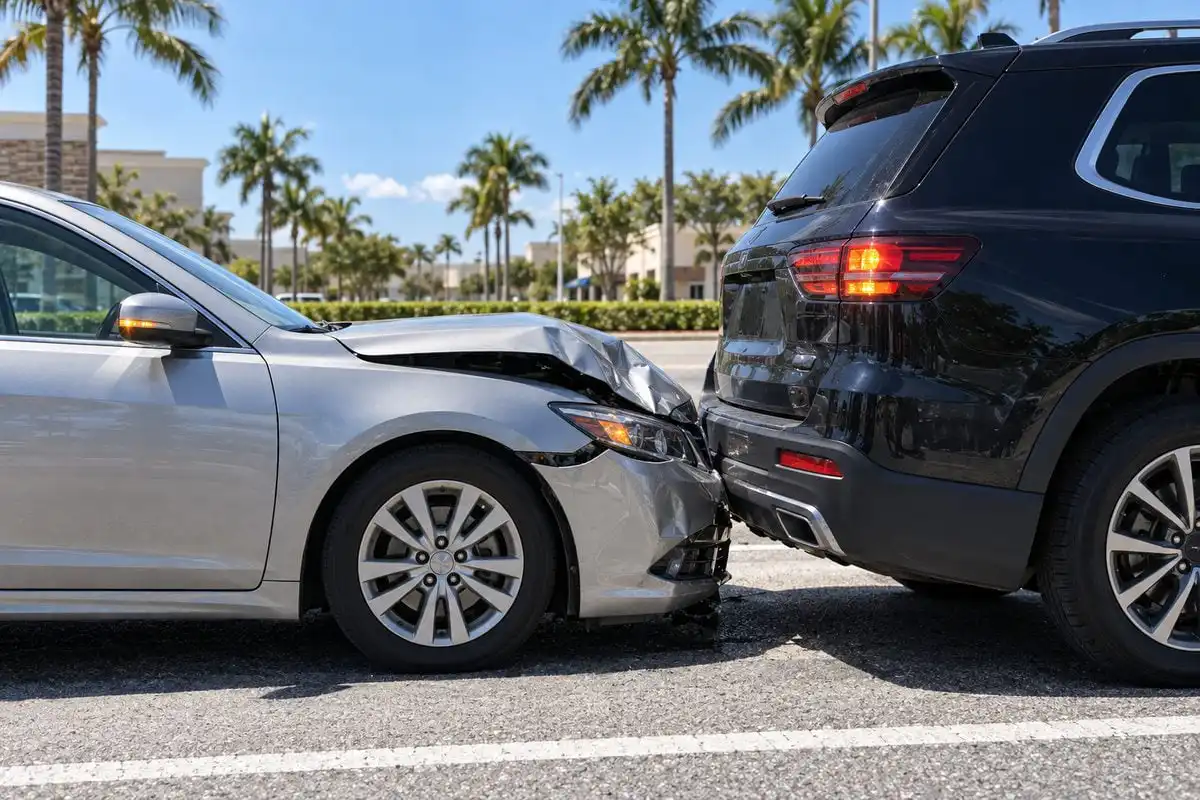
Brake Failure Vehicle Collisions: How Loss of Stopping Power Leads to High-Impact Crashes
The light ahead on Broward Boulevard turns red, and the driver of a small SUV presses the brake the way she has thousands of times before. This time the pedal sinks toward the floor and the vehicle barely slows, leaving her only seconds to look for an open lane or brace for the stopped cars ahead.
A brake failure turns an ordinary stop into a crash that no one in its path had time to avoid. It also raises hard questions about why the brakes gave out and who should answer for it, whether that is the driver, the owner, a repair shop or the maker of a defective part.
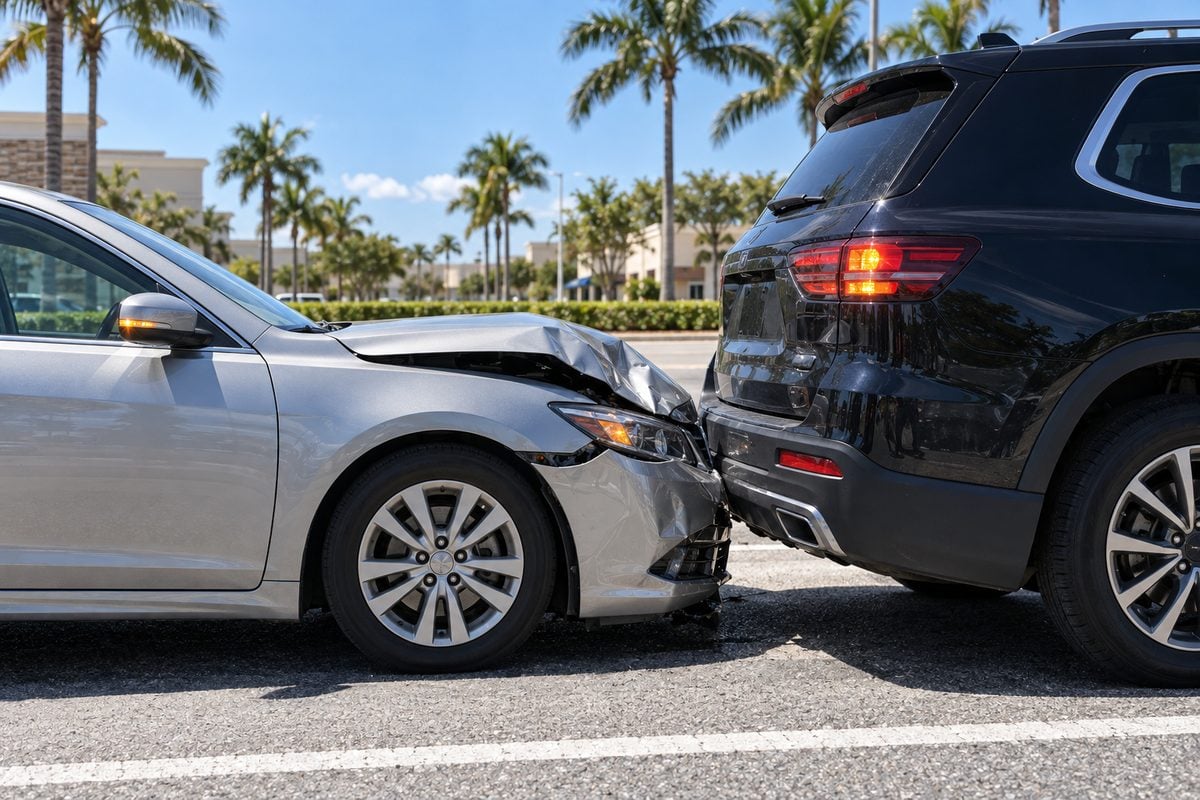
What Counts as a Brake Failure Collision
A brake failure collision is a crash that happens because a vehicle’s brakes did not slow or stop it as they should have. The failure can be total, with the pedal dropping to the floor, or partial, such as a spongy pedal, brakes that pull to one side or a car that needs far more room to stop, and the result is often a rear-end impact, an intersection crash or a chain reaction.
Not every crash blamed on the brakes involves a brake failure. A driver who followed too closely may simply have braked too late, and some crashes involve acceleration pedal confusion, where a driver presses the gas while believing it is the brake. Sorting out which happened is often the first question in a claim.
Why Brake Failure Collisions Happen in Florida
Most passenger vehicles use hydraulic brakes. Pressing the pedal pushes brake fluid from the master cylinder through the brake lines to calipers at the wheels, which press the pads against the rotors. A leaking line or failing seal can let fluid escape, worn pads often squeal or grind before anyone acts, anti-lock braking systems can develop sensor or wiring faults, and a defective part or a brake job done wrong can fail with little warning.
Stop-and-go traffic on I-95 and across Broward County, Miami-Dade County and Palm Beach County means constant braking, and repeated or sustained braking builds heat that can reduce stopping power, a condition known as brake fade. The Florida Department of Highway Safety and Motor Vehicles publishes statewide crash and citation reports each year, a reminder of how little margin drivers have when a car cannot stop.
Why Brake Failure Collisions Cause Serious Injuries
A driver whose brakes fail often cannot shed speed, so the impact happens at or near travel speed. A rear-end collision that might have been a light tap becomes a hard strike, and at an intersection a car that cannot stop may roll into cross traffic and hit another vehicle broadside. When the first impact pushes one car into the next, several vehicles can be involved.
Occupants of a car struck from behind absorb the force through the neck and spine, which is why whiplash, herniated discs and back injuries are common. People in a broadside crash can suffer head injuries, including traumatic brain injuries, as well as broken bones. Many of these injuries take months of treatment, and some leave lasting limitations.
Proving Fault in a Brake Failure Collision
Fault depends on why the brakes failed and who knew or should have known about the problem. Florida law requires vehicles to have service brakes adequate to control, stop and hold the vehicle, and a driver or owner who kept driving with a brake warning light on or grinding brakes may share responsibility. That driver may argue the failure was sudden and could not have been foreseen, so the maintenance history often matters.
Others can be responsible too. A repair shop that installed the wrong parts or missed a leak it should have caught may be accountable, which is why injured drivers often ask whether they can sue a mechanic after a bad brake job. When a brake part was defective, the manufacturer or parts supplier may face defective product claims based on a design defect, a manufacturing defect, a failure to warn, negligence or breach of warranty.
Engineers and accident reconstructionists can examine the brake components, but only if the car has not been repaired, sold or scrapped. Maintenance records and repair invoices show who worked on the brakes, and most newer vehicles carry an event data recorder that typically captures a few seconds of pre-crash data, including speed and brake use.
How Florida’s No-Fault Rules Apply After a Brake Failure Collision
Florida operates under a no-fault insurance system, so your own Personal Injury Protection coverage pays first after a brake failure collision, regardless of fault. PIP generally pays 80% of reasonable medical expenses, and the $10,000 is one limit that also covers lost wages if your policy includes wage loss coverage, if you elected that coverage. Initial treatment within 14 days is generally required to use it, along with emergency medical care to receive the full extent of your benefits.
To pursue the at-fault driver for pain and suffering, your injury generally must meet Florida’s injury threshold: a significant and permanent loss of an important bodily function, a permanent injury within a reasonable degree of medical probability, or significant and permanent scarring or disfigurement. That threshold applies to claims against the owner or driver of an insured vehicle, and claims against a shop or manufacturer can work differently. Uninsured and underinsured motorist coverage can also help.
What to Do After a Brake Failure Collision
The first days after the crash often decide whether the cause can be proven. Call the police so a crash report is made, photograph the vehicles and the road, physical evidence and collect witness contact information. Get medical care promptly to stay within the 14-day window for PIP, and gather every maintenance record and repair invoice for the vehicle.
Do not repair, sell, scrap or release the vehicle until you have had advice, and tell your insurer and any tow or salvage yard that you want it preserved. Check for open recalls through NHTSA’s recall lookup using the 17-character vehicle identification number, report a suspected brake defect to NHTSA, and talk with a lawyer before giving a recorded statement to another driver’s insurer.
What Compensation a Brake Failure Collision Victim Can Recover
Like other motor vehicle accident claims, a brake failure claim can reach beyond what PIP pays. Depending on the facts, damages may include past and future medical expenses, lost income and earning capacity, rehabilitation costs, property damage, and compensation for pain, suffering and loss of enjoyment of life. When several parties contributed, a claim may involve more than one insurer.
The value of any claim depends on the severity of the injuries, the strength of the evidence and how well the losses are documented. A permanent back injury, or an injury that keeps someone from returning to physical work, can shape a claim well beyond the immediate medical bills. Records of treatment and missed work help document those losses.
How Comparative Negligence Can Reduce a Brake Failure Claim
Florida follows a modified comparative negligence rule. If you are found more than 50% at fault, you cannot recover damages, and otherwise your award is reduced by your percentage of fault. Florida’s comparative fault statute expressly includes strict liability and products liability actions, so the rule applies to claims against a manufacturer as well as against another driver.
In a brake failure case, the other side may argue that you ignored a warning light, skipped recommended brake service or followed too closely. A shop may blame a defective part, and a manufacturer may blame poor maintenance or a bad repair. Maintenance records, vehicle data and an independent inspection often answer those arguments and help protect the value of a claim.
Summary of Brake Failure Collision Claims
Brake failure collisions happen when a vehicle cannot slow or stop as expected, and responsibility can rest with a driver, an owner, a repair shop or a manufacturer. Here are the key points to remember:
- Brake failures can be total or partial, and late braking is sometimes mistaken for one.
- Fluid leaks, worn pads, overheated brakes, defective parts and bad repairs are among the causes.
- Ignored warning signs can shift responsibility to the driver or owner.
- Your own PIP coverage pays first, and treatment within 14 days is generally required as well as emergency medical care.
- Preserving the vehicle and its records is often the key to proving what failed.
- Florida generally gives you two years from the date of the crash to file a negligence lawsuit against the at-fault party.
Frequently Asked Questions About Brake Failure Collisions
Who is responsible when brake failure causes a crash in Florida?
A driver or owner who ignored warning signs, a shop that did a bad brake job, or the maker of a defective part may be responsible, and more than one party can share the blame.
Can I still recover if the other driver says their brakes failed?
Possibly. The other driver may argue the failure was sudden and could not have been foreseen, but the vehicle’s condition, maintenance history and event data can show whether the brakes really failed and whether the problem was known.
Does PIP cover my injuries after a brake failure collision?
Your own PIP coverage may pay first regardless of fault, generally 80% of reasonable medical expenses within the $10,000 limit, which covers lost wages if your policy includes wage loss coverage.
Should I get my car repaired right after a brake failure collision?
Not until you have had advice. Repairs, a sale or scrapping can destroy the brake components and event data that show what failed, so tell your insurer and any tow or salvage yard that you want the vehicle preserved.
How long do I have to file a claim after a brake failure collision in Florida?
Florida generally gives you two years from the date of the crash to file a negligence lawsuit against the at-fault party. Product claims can follow different deadlines, and Florida also has a statute of repose for product claims, so the timing is worth reviewing early.
Contact a South Florida Brake Failure Collision Lawyer
If you were hurt in a crash caused by brakes that failed, the team at Lawlor, White & Murphey can review what happened and explain your options. We represent injured people throughout Florida, including Miami-Dade, Broward and Palm Beach County. You can reach our office at 954-525-2345 or through our online contact form. Our office is located at 2211 Davie Boulevard, Fort Lauderdale, FL 33312.
This article is for general information only and is not legal advice. Every case is different, and past results do not guarantee a similar outcome.